Review: RBG

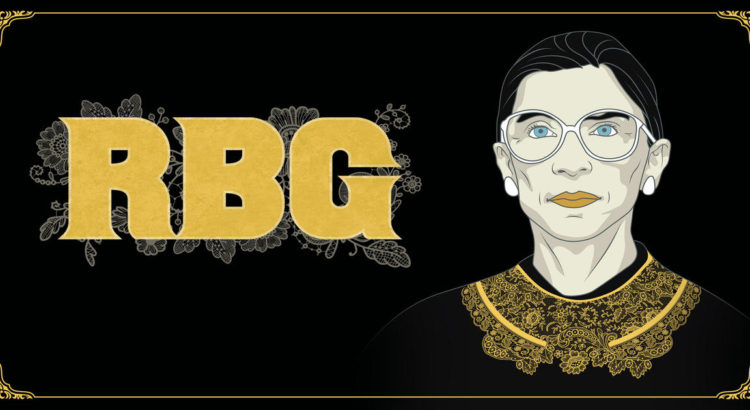
The RBG documentary follows the legal life of Ruth Bader Ginsberg, from her days as a young lawyer all the way to her time on the Supreme Court. I was very moved by this documentary to an extent that I did not expect, and I encourage anyone (especially women) who do not know about the profound change that she brought about in this country to watch it.

First off, I did not know the extreme injustices in the law education and job field that she had to endure as “being a woman was an impediment”. I could not believe the laws that were in place that discriminated against women when she was getting an education and beginning to work in the legal field. I feel like after watching this movie there is an extremely large amount of things in my daily life I have taken for granted in terms of the equality of women in the education system and beyond. Justice Ginsberg forged a path and formed laws that protect women in ways that I did not know she orchestrated, like allowing them to attend an all male military school, including them in service as jurors, and hundreds of other federal laws that discriminated on the basis of sex.

The documentary also commented on her day-to-day life and some more personal aspects other than her impacts in the legal world. I was amazed at how she burned the candle at both ends, caring for a 14-month old child while still in law school full time, and raising a family as she became a more prominent and important lawyer, especially while she was working for the ACLU. She also worked extremely hard at every case she was part of, working until early in the morning until apparently 4 or 5 am. Even into her older life when serving on the Supreme Court, she would stay up working and then go to the court at like 7 am.  Her husband and family described how she had to literally be pried away from her work at the office, with her husband sometimes coming to physically bring her home to have dinner and go to bed.

Moreover, the documentary had a lot more instances of Ruth herself talking about her life or commentating on major events than I expected. I really enjoyed hearing things from her point of view. My favorite part was when they asked her to watch the SNL skit that parodies her, which made her laugh very much. She was also so cute, with specific neck laces for dissenting or majority opinion, as well as a dry and clever sense of humor.

Overall, I really enjoyed watching the documentary and I would recommend. It is terribly disheartening to know that she is no longer around to help the Supreme Court see right and wrong and come together on a decision, and I can only hope that the future looks like what she imagined: with equality for all people under the law.
REVIEW: The Trial of the Chicago 7

Spoilers ahead, but this film is based on a historical event so…


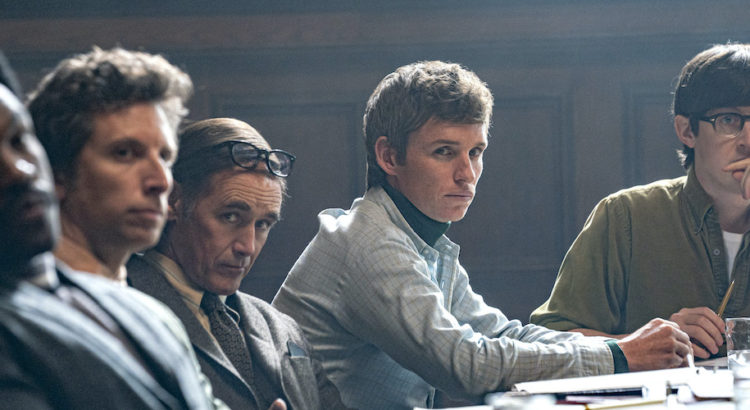
The Trial of the Chicago 7, written and directed by Aaron Sorkin, follows the court case in which eight, later seven, defendants were accused of conspiracy during the summer of 1968. The defendants were accused of inciting riots during the Democratic National Convention which took place during a particularly turbulent time of anti-Vietnam War and counterculture protests and the civil rights movement. The film stars Sacha Baron Cohen, Eddie Redmayne, Joseph Gordon-Levitt, Yahya Abdul-Mateen II, Jeremy Strong, Mark Rylance, and Michael Keaton.

The film, overall, is fine. The acting is quite good – Sacha Baron Cohen proves he can take on a dramatic role; Jeremy Strong proves he can take on a comedic role; Eddie Redmayne, Joseph Gordon-Levitt, Yahya Abdul-Mateen II, Mark Rylance, and Michael Keaton all prove that they still know how to act. Aaron Sorkin proves, once again, that he is capable of writing snappy dialogue, and also that maybe he should leave the directing to someone else. The film has been executed in the same manner as The Social Network – written by Sorkin, directed by David Fincher – with its fast-speaking actors and more light-hearted, generally goofier dramatization of a legal case. However, this kind of style seems better-suited to lawsuits involving Mark Zuckerberg and the events of his college days rather than a court case addressing antiwar protests and racial tensions.

The film is not insensitive. That sentence is not meant as a litotes – I am not trying to say that the film is not not insensitive. I just left the film confused about how I was supposed to feel. The film includes lines such as “Who started the riots?” and “the police don’t start riots,” and it ends with defendant Tom Hayden reading off the names of Americans who had died in Vietnam as Judge Hoffman demands that there be order in the court. The film also depicts Judge Julius Hoffman ordering that the eighth defendant, Black Panther Party co-founder Bobby Seale, be bound, gagged, and chained to his chair for disrupting the court, despite his fellow white defendants being equally, if not more, disruptive. Seale was ultimately severed from the case – this is what makes it the Trial of the Chicago 7, not 8 – and the case was inherently about the Vietnam War rather than civil rights, however it is impossible to watch this film about protests, rioting, and police brutality in 2020 without drawing connections to race and racism. There was no way for Sorkin to predict the political climate of summer 2020, but “here is a film about some things that happened during the summer of 1968” comes across as a little lackluster. Sorkin does not take the police brutality, Vietnam death toll, or blatant racism against Seale lightly, but after having seen films that successfully balance humor and a modern political perspective on historical events – Blackkklansman comes to mind – The Trial of the Chicago 7 just falls a little flat.

Perhaps it is just simply disheartening to see the evolution of racism and police brutality since 1968. And it is a little bizarre to see this timely film take on the same tone as a film where Andrew Garfield and Jesse Eisenberg argue about feeding chicken nuggets to a chicken. That being said, The Trial of the Chicago 7 may not be revolutionary, but that does not mean it is inherently a bad film.


The Trial of the Chicago 7 is now streaming on Netflix.

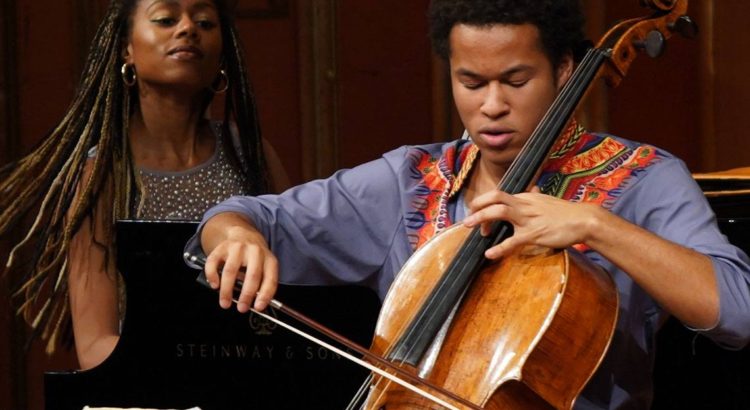
PREVIEW: Sheku and Isata Kanneh-Mason Digital Recital

Watch sibling duo Sheku (cello) and Isata (piano) Kanneh-Mason perform in a special digital recital that will be streaming on the UMS website from 2 pm on October 25 through November 4! I am especially excited to watch this after seeing Sheku Kanneh-Mason’s performance of Camille Saint-Saëns’s Cello Concerto in A Minor as part of the City of Birmingham Symphony Orchestra’s 100th Birthday Celebration.

The digital recital, which was filmed specifically for UMS audiences from the Kanneh-Mason’s home in Nottingham, UK, will include an excerpt from Beethoven’s Cello Sonata in C Major and Rachmaninoff’s Cello Sonata. On Wednesday, October 28 at 8pm, there will be a watch party for University of Michigan Students on Facebook.

Visit the UMS website starting October 25 at 2 pm to stream the recital!

Sheku Kanneh-Mason and Isata Kanneh-Mason (UMS Digital Presentation)


REVIEW: A. M. I.

I knew this movie was going to be sort of bad before I watched it; Netflix doesn’t put brand-new horror movies on their site unless they’re fairly sub-par. However, for whatever reason, I’m a bad movie junkie: I love anything campy or a little trite and easy to consume. Movies that make you analyze them have a definite place and value, but I’m doing enough schoolwork already.

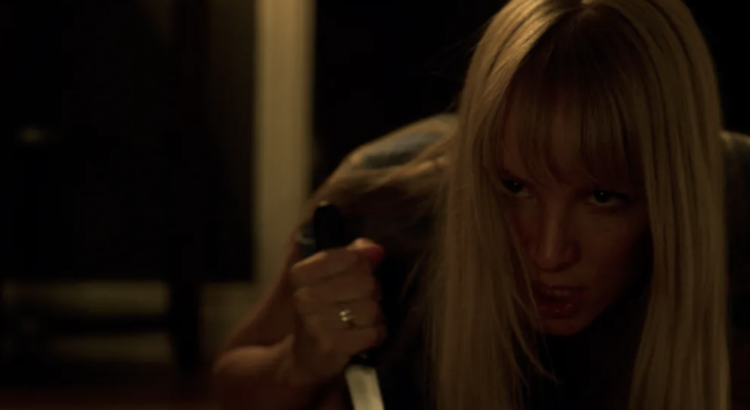
So objectively, this is not a good movie. The acting was flat, the main character was cast way outside the actress’s age, the fairytale structure that A.M.I. followed to tell Cassie to kill everyone was completely out of place. It’s a step above a soap opera only in that the background music and sound quality are all right. Overall, the thing would have fit better on the Lifetime channel, where it belongs.

But the concept is still interesting; that’s why it caught my eye in the first place. Besides all of the actual cinematic qualities of this movie, the reality that technology is filling every inch of space in our lives is a startling truth, and it’s happening so fast we don’t have the time to reckon with it. Classes on Zoom, delivery of anything via an app, conveniently equipment-free workouts on YouTube, and virtual meetings have made leaving the house a necessity of the distant past. I feel like my body can’t handle sitting in temperatures below 72 anymore; I venture into the outdoors like a Floridian explorer going out into the Antarctic wilderness. I might snag a lungful of fresh air when I go for a jog long after the sun has gone down, but I come crawling back to the comfort of my computer in no time at all. Of course, all of this is amplified by the virus, but it is just a tilt upwards in a long trend with no endpoint. 

For a moment, I’d like you to imagine this movie was done by the producers of Black Mirror, and casted with actors like Daniel Kaluuya and Bryce Dallas Howard instead of a side character from iZombie. All technology-based horror has the potential of becoming gimmicky, and definitely dating itself in a few short years (the first movie in the Unfriended series, which came out in 2014, now looks like a relic of yesteryear with its old Skype interface). Simplicity is everything. It allows imagination to fill in the rest, just hinting at the depth of something gone wrong. If under different direction, and with a different cast, this movie could have made Cassie slower to blindly accept that her dead mother’s personality was captured in a cell phone she found. Her friends could have been a little less one-dimensional; I would have liked less overt direction in whom I should root for. Adding in some good nature or innocence to her victims would make their murders more chilling. Cassie could have periods of lost consciousness, showing us only hazily the work of her disintegrating mind. The audience should be just as bewildered by the events as she is, confusing justice and tragedy. I wanted flashes of the murders, just the creeping edges and muffled violence. Instead I got one or two camera angles of uninspired stabbing. 

I’m sure there will be many more movies like this one in the coming years. Maybe they won’t try to go beyond what they need to in terms of overtness, and will start straying farther from tired story structures. Here’s to hoping.

PREVIEW: A.M.I.

Between online classes, meetings, schoolwork, and arts events, most of us are beginning to resent our forced bond with technology. Still, somehow, staring lovingly at our screens on Netflix remains our go-to pastime (or procrastination habit, if we’re being honest here). Lucky for us all, I have a movie suggestion that might just marry the two conflicting sentiments: A.M.I.

It’s about a gal mourning the loss of her mother, then happening upon a new app with customizable artificial intelligence personalities. She forms a deeply emotional relationship with the voice, but it soon turns much more sinister than sweet mother-daughter talks…

This sounds like an interesting concept, but still an easily consumable slasher flick perfect for the Halloween season and our stressed brains decaying from midterms.


REVIEW: Paul Taylor: Celebrate the Dancemaker

Though it was not a traditional performance, UMS’s online presentation of Paul Taylor: Celebrate the Dancemaker was nonetheless something special. Near-equal parts dialogue and archival footage, it featured University of Michigan dance historian and educator Angela Kane and Paul Taylor Dance Company Artistic Director Michael Novak in conversation about the works of modern dance choreographer Paul Taylor, as well as the history of the dance company he founded. Because it was a presentation specifically for UMS audiences, Paul Taylor: Celebrate the Dancemaker was also able to provide a sense of local community, despite being an asynchronously viewed video.

One of the best parts of the event was the insight that it offered into Paul Taylor’s wide-ranging and ground-breaking career. Taylor’s experiences as a painter and a collegiate swimmer informed his understanding of depth and movement onstage. Expanding the boundaries of modern dance at the time, he was also one of the first artists to employ a year-round, full-time dance company.  After opening with a rapid-fire montage of selections from Paul Taylor’s 147 works, the video featured Novak and Kane discussing some of Taylor’s most monumental works, and then showing excerpts of them.

The first work explored during the presentation was Taylor’s 1962 work Aureole, which challenged the notion that modern dance was limited to “modern music and weighty meanings.” In fact, Aureole was a lyrical, flowing, light work that, in the grainy black-and-white original film of Paul Taylor and Liz Walton, appeared to be almost be a modern impression of a classical ballet.

Then, Kane and Novak introduced audiences to Aureole’s opposite, Scudorama (1963). Lyricism was replaced with sharp angles, jarring rhythms, and a weighty, almost apocalyptic feel. Given the immediately apparent contrast between these two works, it is no surprise that Michael Novak referred to Taylor as the “master of light and dark.”

If the previous two works illustrated Taylor’s artist range, the next work featured, Le Sacre du Printemps (the Rehearsal), illustrated his artistic genius. A hyper-stylization of Igor Stravinsky’s (notoriously controversial in 190) ballet Le Sacre du Printemps, or The Rite of Spring, Taylor’s work challenges audiences to reexamine the original. Taylor’s work features a rehearsal for Stravinsky’s work inside of it, along with a plot line that closely mirrors that of the original ballet (which reminded me of the musical Kiss Me Kate, which does the same with Shakespeare’s play The Taming of the Shrew; also similar in its reimagination of an existing work is Max Richter’s work Vivaldi Recomposed).

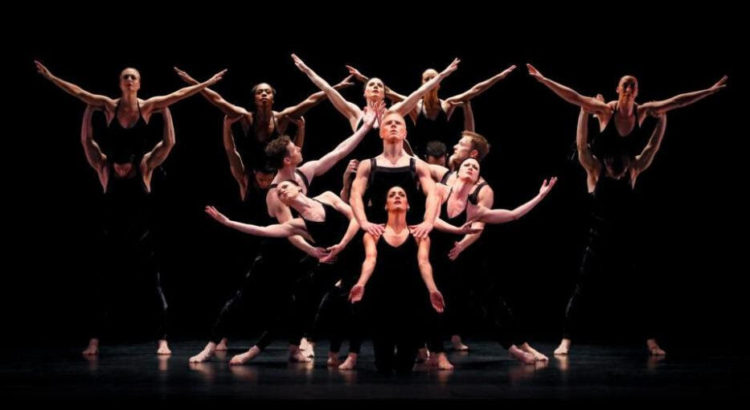
After a short clip from the Academy Award-nominated documentary Dancemaker (1998), which offered a candid view of Taylor’s creative process, the presentation culminated in video of Taylor’s monumental work Promethean Fire (2002) in full. Like Aureole, the work juxtapositions modern dance with music that is decidedly not modern (In this case, it is Leopold Stokowski’s orchestral arrangement based on three of Bach’s keyboard pieces – the Toccata and Fugue in D minor, the Prelude in E-flat minor from Book I of The Well-Tempered Clavier, and the chorale prelude “Wir glauben all’ an einen Gott.” Chances are, you may recognize the beginning from the Toccata and Fugue in D minor). However, unlike Aureole’s quiet lyricism, Promethean Fire makes a much bolder statement: it is tense, fiery-seeming, and almost overwhelming during parts. In fact, it was the first and last time that Paul Taylor would utilize all sixteen dancers in the company in one work, on one stage. UMS calls Promethean Fire  ”arguably one of his greatest artistic achievements created in the wake of 9/11, proclaiming that even after a cataclysmic event, the human spirit finds renewal and emerges triumphant.” For an audience in today’s landscape, however, the work felt timely, and was a fitting conclusion to an artistically informative presentation.