Everyday Artists at UMich: Julia Finley

“I started painting near the end of elementary school. It became a more intense hobby; first, it was just something me and my friends did. Then it became a solace for me whenever I was stressed, or had anxiety: I would go paint. 

I study biomedical engineering,  . . . and a lot of my interest in that came from classes I took in high school. As art has become more of a big part of my life, I’ve noticed that I need to do it for my job, so I’ve looked into more of the design based BME type things. I did an internship at a medical device company, and they taught us the basics of the design process. A lot of it is really just graphic design; people are basically doing art all day, just sketching and drawing and stuff. 

I’d like to think my interests in arts and engineering will overlap soon. Engineering is a bit of a stressor right now. The art is getting away from all that. I know I’ll love it when it’s my job, but right now it’s just a lot of work. I was a Girl Scout for all of high school, and I made art a big part of that. When you’re a Girl Scout for that long, you can kinda do what you want with it, and so I started teaching it to younger girls and making it a part of meetings. I like teaching. I’ve always joked around that if the engineering doesn’t work out, I want to be an art teacher, but it’s not really a joke. I’d maybe do it as an old grandma. I’ll retire and be an art teacher.”

Weird and Wonderful: “House”

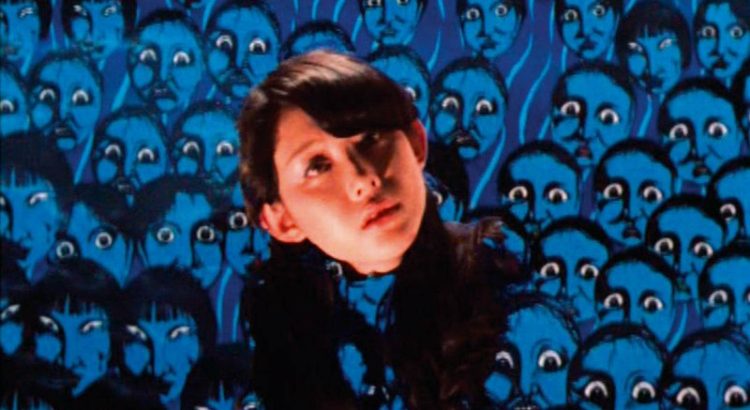
When I first heard about Nobuhiko Obayashi’s 1977 film House, I read that it was intended to be Japan’s Jaws. This comedy-horror gem may not have accomplished that, but it cemented itself as a cult classic nonetheless. It’s been described as a fever dream, an experience, and a “candy-colored style bomb” (seanax.com). At the same time, it’s been called indescribable. So what is the experience of House?


In essence, House is a summer vacation gone wrong. The main character, Gorgeous, and her friends Melody, Fantasy, Kung Fu, Prof, Mac, and Sweet (all named after their most prominent character trait) go on a trip to get away from Gorgeous’ creepy new stepmom. As soon as they arrive at Gorgeous’ aunt’s house, things instantly feel off. I won’t give away the plot, but there’s definitely not a happy ending.


House is one of those films where the style surpasses the substance, but that’s the entire point. It isn’t something to passively watch for entertainment. The plot heavily relies on the viewer picking up on hints throughout the film (make sure to take notice of the cat). It can get pretty confusing at times, especially near the end. However, the plot isn’t the reason I’m in love with this film. There is no other film that looks like House. It’s pretty hard to describe what happens, and the only way I can describe it visually is “Scooby Doo-esque Suspiria”.

The strangest and most amazing aspect of House is the editing and visual effects. Certain moments look like a tragic-yet-magical collage. Body parts spin across the screen, heads change color and float, and people turn into fruit in the blink of an eye. Not only are these effects impressive but the film’s use of color is absolutely dazzling. 


The way Obayashi incorporates drawings, transparent layers, and missing images is worth the watch. After watching, I had to research how the filmmakers pulled off many of the special effects. For 1977, the editing is way ahead of its time.

Though the plot goes a bit off the rails, the themes of the film come through well. House is about war, friendship, family, and the magic of childhood. Obayashi reportedly spoke with his daughter, Chigumi, while writing the script, and many of her ideas were included in the film. 


Chigumi contributed her own childhood fantasies and fears. The balance between fantasy and fear is a very fine line in House, which makes for a mind-melting mix of emotions as a viewer. Should you laugh? Should you scream? Which character should you feel bad for? This film will leave the viewer with lots of questions, but that’s the best part. As soon as it was over I already wanted to watch it again, hoping that I would get some answers (spoiler alert: I don’t think I’ll ever get them).


Though House may still be relatively unknown to the general public, it is the ultimate cult classic. I highly recommend it to anyone who has seen it all and is look for a film unlike any other. If you get the chance, get ready to experience childhood nightmares at their strangest through Obayashi’s masterpiece.


Poetry v. The World: “We’ll get back to you”

This week I had an interview, (believe it or not), and it served as an odd moment of self reflection for me.

There’s quite a few anxieties I’m usually prone to having before one. It’s essentially you selling yourself, a pitch for you by you. I’m not super comfortable when I have to do something like that. Talking myself up has always been a rough spot for me. Not because I’m modest, but because I value the appeal of seeming modest when I’m not. (And I’m only half joking.)

But nonetheless our insecurities can really surface in those moments before. Ones concerning appearance, attitude, intelligence. The problem is it’s me as a whole that I have to maintain, not just one or a couple facets of myself. Usually in essays I just have to worry about my language, in sports I just need to worry if I’m achieving good results with physical movement. So I’m not used to everything needing to have purpose, to have weight. My posture, my responses, how I deliver my responses, how I handle stress. Covering all these bases while simultaneously having to work it all out on the fly is challenging.

That being said, it’s not like I haven’t overcome these to some degree. I’m not the perfect interviewee, don’t get me wrong. But I maintain a level of clarity during interviews, despite the constant need to freak out. I think it comes from a place of necessity. At some level I understand that the calm and relaxed version of me is more likely to get hired than a tense, on-edge version. Since my end desire is wanting to get hired, I can manually turn the volume down on the things that would slow me down.

Or at least, that’s what I do. What do you do to prepare for an interview? I honestly could use more tips and tricks to get me through it.

In any case, please stay safe and have fun! Until next time…

jonahso

-Jonah J. Sobczak

The Poetry Snapshot: Here and Gone like a Breeze

Sleeping Bear Dunes, Michigan

One single moment,
so sweet as sugar,
only to leave behind a cavity that lasts forever.
How can someone touch you so lightly,
that you question the embrace,
but then find a scar on your body?

Here and gone like the wind,
but softer and silently,
like a breeze.

I feared her free-spirit,
but found asylum in her affection.
She filled me with rage and so much wonder,
but when she was gone, I had this everlasting hunger.

Only three raindrops hit my skin before she got bored.
Wanting more, but locked at her core,
she did not mind leaving; that’s all she was good for.
For summoning up a storm and then ‘running away’.

Never afraid but always awake,
because dreams never lie and they testify
against everything we try to hide.

Green grass in the field mocks my jealously,
but I thought it was love?
I called it affection,
but just wanted attention.

When she first came here,
the field was frozen.
Then it melted tears as she disappeared.
How was she chosen?
Freshly plucked out of the field,
the star Rose in my eye.
But of course I had to say goodbye,
eventually flowers decay.
Perhaps tomorrow the sky won’t be so gray.

Hidden Gems: The Null Coalescence Operator

In a previous Hidden Gems post, I covered the artistic side of programming as expressed through the use of the ternary operator. Here is the original post if you’re interested, otherwise here’s a quick summary of the concept: programming relies on the use of conditional statements, where a certain path is taken depending on the value of a variable or expression, and a ternary operator is an elegant, shorthand way of writing these conditionals. In the example below, the function isItSnowing() will return a true or false value telling us if it is snowing. If it is snowing, then we’ll stay inside, and if it is not, then we’ll go outside. The ternary operator has unlimited potential, with the ability to string multiple conditions together, but must be used carefully; just because it improves readability and style in this scenario does not mean it always will.

The null coalescence operator is a slightly more nuanced version of the ternary operator, but even more interesting due to it’s use cases. Oftentimes in programming, you want to assign a value to a variable, but you don’t know for sure that the value exists. The value might come from another source and you can’t guarantee that it was received correctly or as expected. In most programming languages, trying to use a value that was never created causes a disaster (one can easily see why), and will usually crash the program. However, programmers would usually prefer to provide some default value instead, to prevent the program from crashing. Here is that exact situation presented in relatively simple, but verbose code:

This is a fairly straightforward conditional statement, which says in plain English, “if the value of temperature is known, the message will be that value, but if for some reason we don’t have the temperature, let the message be a default warning that we don’t have the temperature”. If you’ve been paying close attention, you might have noticed that this conditional is very similar to the one we explored when discussing ternary operators, and as a matter of fact, this conditional can be expressed using a ternary operator, as demonstrated here:

Notice again the power of the ternary operator in simplifying the conditional. It compacts the same logic into one statement, which reduces the number of lines and is more efficient to run. Now behold the same statement written using the null coalescence operator:

The differences may be subtle at first, but they are extremely important. Notice that there is no expression to test whether or not “temperature” exists, as it is built into the operator. Also see that it automatically assigns the value of “temperature” if it exists. Finally notice that the default message comes after the null coalescence operator, and is assigned when the value of “temperature” does not exist. A common way to read the operator in English is “reading from left to right, give me back the first thing that exists”. This use case is extremely common in programming, which is what ultimately led to the null coalescence operator being created. Personally, I was thrilled when I discovered this: after writing hundreds of the equivalent ternary versions, I had finally discovered a way to write less code while also improving the style of my code. Once a programmer is used to using this operator, it reads much more naturally than the ternary operator and saves valuable time when trying to understand the code. This operator can also be chained, similar to the ternary operator, as shown in this example, where the default string is used if both the “temperature” and “backupMessage” variables are null:

At the end of the day, the null coalescence operator may not seem like a revolutionary idea, and it isn’t. However, it is a testament to the ingenuity and artistry of programmers, motivated by a unique combination of laziness and empathy for the programmers who follow. It is the accumulation of these small improvements that evolve into the modern programming languages we have today, which are more powerful and easier to read than ever before.