Yuru-chara and the Tokyo 2020 Mascots

What in the world is ゆるキャラ, or yuru-chara?

Directly translated, yuru-chara (and the full terminology: yurui kyarakutaa) means “loose” or “laid back” characters. These characters are mascots that embody numerous Japanese regions, organizations, and more. The characters, often endearing and cutesy in nature, appeal to residents and foreigners alike.

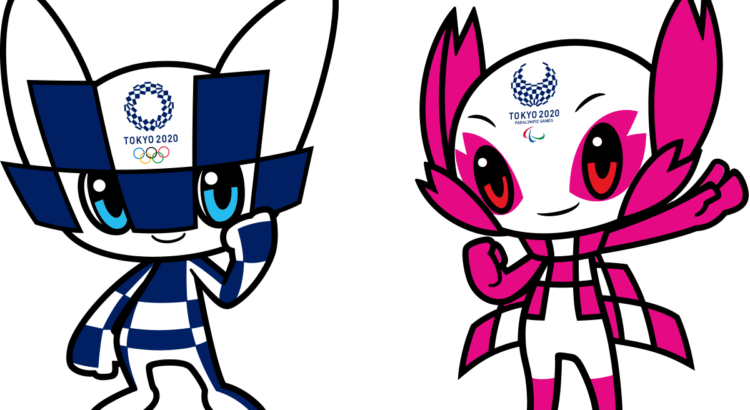
Visually, yuru-chara have some sort of visual connection to the location or organization they represent. They also have a background story and specific traits that make them unique. For example, the official mascot for the Tokyo 2020 Olympics, Miraitowa, is named after the Japanese words mirai (future) and towa (eternity). According to the Olympic website, the name “was chosen to promote a future full of eternal hope in the hearts of people all over the world.” The mascot’s indigo blue checkered-like pattern represents the Tokyo 2020 emblems, while its personality is said to be based on an old Japanese proverb reflecting on new knowledge gained from old things. Miraitowa even has the super power of teleportation to compliment the mascot’s dedication to both tradition and innovation.

On the flip side, the Tokyo 2020 Paralympic Games mascot, Someity, has telepathic powers. Someity’s name comes from “Someiyoshino”, a type of Japanese cherry blossom, and the phrase “so mighty”. The mascot’s pink color was inspired by cherry blossoms, while the character’s gentle yet tough personality represents that of determined Paralympic athletes.

It’s evident that a great deal of thought is put into the design and story behind yuru-charas. From a business standpoint, the rising demand for yuru-charas is great for building a following. The beloved characters draw fans in at events, conferences, and more. As such, many characters even have their own social media profiles! With their cute designs and cultural motifs, it’s no surprise for their rising popularity in promoting tourism and economic development for the companies, local governments, and organizations they represent.

Has this article piqued your interest in yuru-charas? This year, U of M’s own Center for Japanese Studies (CJS) is actually hosting a contest for people to design their own yuru-charas! Anyone can enter, and the chosen design will be the next face of the Center for Japanese Studies. Click this link to enter and find out more.

For More Information:

Click here for articles about yuru-chara from The Japan Times, and click here for more information about the Tokyo 2020 Mascots.

Ranking the 2020 Presidential Candidate Logos

With the growing importance of a specific brand image, I thought it would be fascinating to look at and rank each of the current (as of January 24th) 2020 presidential candidates’ campaign logos. Whether put on websites, podiums, stickers, signs, or t-shirts, logos say a lot about a person or a company, and are one of the most important things when it comes to recognition among diverse audiences. This grading will be absent of any political/ideological judgments, but will be purely based upon aesthetic design. Also, due to the large number of running democrats, the democratic candidates included in this discussion will only be those that qualified for the last democratic debate held on January 14th.


Biden (D)

Image result for biden logo

Biden’s logo is visually bold and simple. The clever “E” representing red stripes alludes to the American flag and works quite well in this design. However, the logo’s simplicity lacks a sense of personality and presents itself as pretty generic. 6/10


Buttigieg (D)
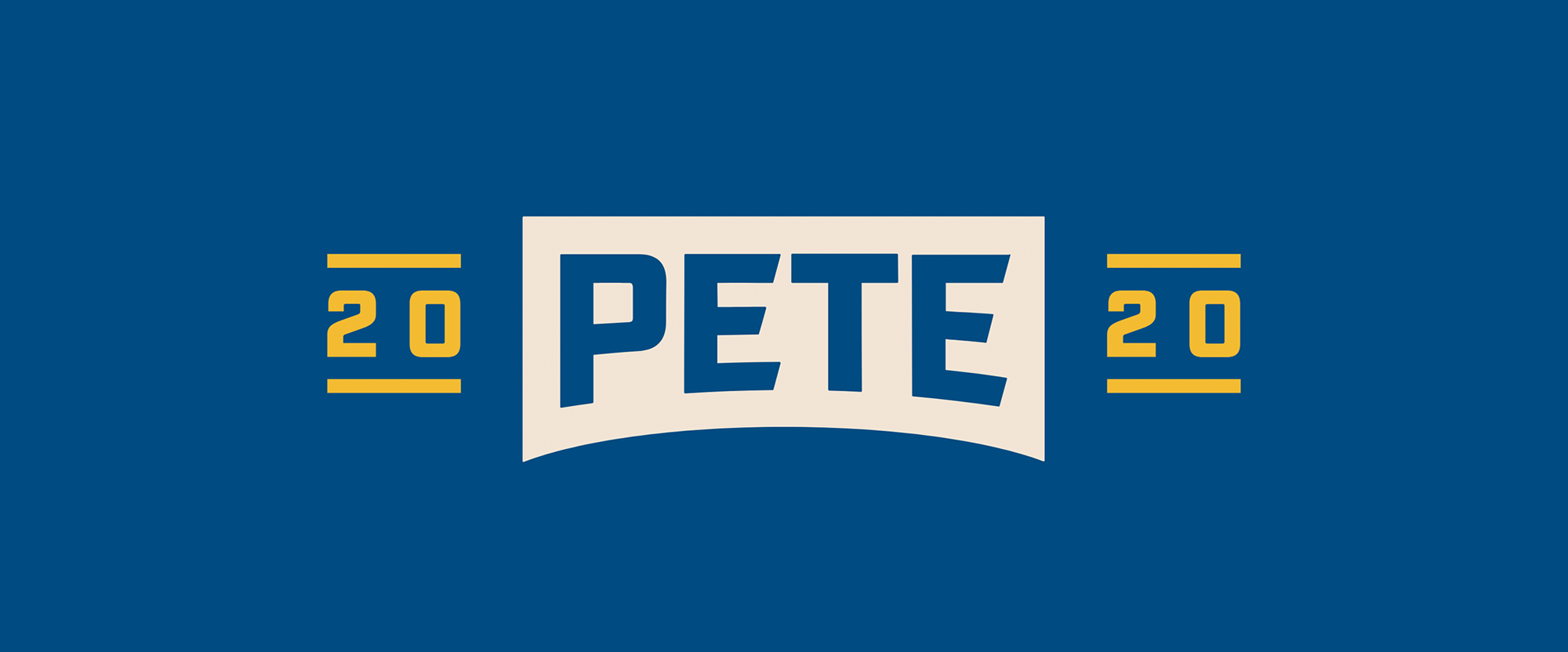
Image result for buttigieg logo

Pete’s logo is interesting in that he has a lot of logo variations intended for the public to use as they wish. His main logo shown here contains a mixture of strong typography and slight curves, giving a hint of youth and contemporary awareness. The cream, gold, and blue color give off a very athletic, vintage sports feeling as well – which could be detrimental for older audiences. 8/10


Klobuchar (D)

Related image

Klobuchar’s logo displays “Amy” large, immediately catching the viewer’s eye. Although simple, the combination of three different typefaces at different sizes and colors makes the design lack a cohesive direction. 3/10


Sanders (D)

Image result for bernie 2020 logo

Bernie’s logo utilizes a slab serif typeface and curving lines to indicate a sense of both historical experience and dynamic movement. The star is a nice, playful touch, and the overall design uses classic red and blue colors that are not too harsh. But, the lines are a bit too reminiscent of toothpaste.  7/10


Steyer (D)

Related image

Steyer’s logo immediately stands out for its arresting thick text, accompanied with an orange 2020. The usage of navy and orange is interesting, as orange is uncommon among presidential logos. Yet, the typography doesn’t work too well here. 3/10


Warren (D)

Image result for warren logo

Warren’s logo contains large, unconventional lettering – a good choice for a progressive candidate. While the horizontal line is fine, the purplish-navy and mint green colors don’t suggest much, and are rather holding back any sense of distinctive personality. 4/10


Trump (R)

Image result for trump logo

Trump’s logo is very strong, recognizable, and pretty straightforward. Bold navy and red create a mood of patriotism, and the red stars and navy box frame the logo well. The exclamation mark seems a bit unprofessional, however. 6/10


Walsh (R)

Walsh for President

Walsh’s logo is pretty much as simple as it gets – just text in two colors. The black and firetruck red seems like a strange choice, and a bit too arresting. It’s unmemorable and doesn’t contain much information, as if a high schooler designed it in five minutes. 2/10


Weld (R)

WELD 2020

Weld’s logo takes a different approach in structure, with a combination of lines and text. However, the innovative look does not work well visually, and appears quite messy. The two shades of blue also don’t lend themself well to a presidential campaign. The “Weld 2020” would work fine on their own, but the addition of a subtitle makes the design quite clunky and awkward. 2/10


“what is art” Post #12 – The Framers of the Constitution

Opinion piece: 


At some point in every art and art history course, one will most likely learn and talk about why a specific piece was created and what its function is. Never when joining the course, American Constitutional Rights and History, did I think these questions would arise during my discussion.


For homework this week we had to read the entire American Constitution and its annotation. A real joy honestly. My fellow students and I were also tasked with marking/tabbing every indirect and direct reference to slavery we could find in the reading. Then when we got to class, the discussion objective written on the board read, “To take the framers off a pedestal and critique them.” Reading it again I had no idea what my GSI was referring to until she began talking and questioning us about moral embarrassment related to the constitution. 


An example of moral embarrassment in the constitution for an example is if it contained a pro-slavery law but then years later people realized it was immoral and stripped it. The embarrassment would be that whoever created it was indeed in the wrong. 


In this case, we compared this example to why the framers of the constitution did not include the word slave(ry) anywhere in the constitution considering some of the framers themselves had slaves. They mentioned “Native Americans”, however, they only hinted at slaves with indirect and arguably some direct references. Did they know slavery would once be illegal? Were they trying not to face moral embarrassment themselves?


When considering why the framers did not include slavery in the constitution it made me realize they definitely knew slavery was immoral and were bystanders as well as some being owners themselves. This then made me think about how growing up history classes praise these framers and make you believe they were some sort of genius like gods, when in fact they weren’t so perfect after all.


(Here comes my connection to art finally)


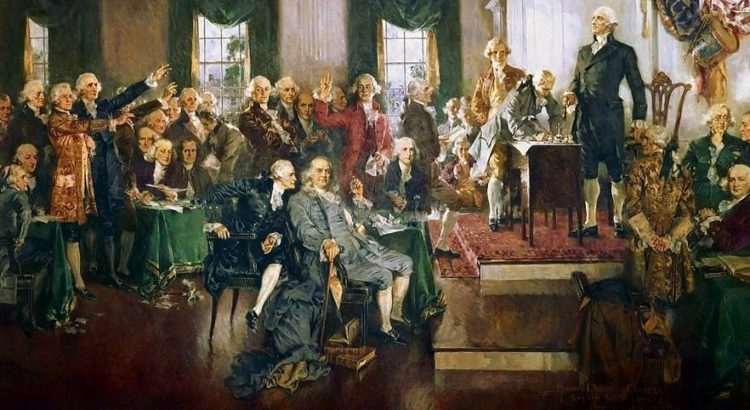
We see it in textbooks, on the 4th of July, and in national art galleries how these framers are represented in a glowing manner. There are many elements of how the framers are represented that display this moment as historic and these characters as having lots of power. From the consistency of how they are displayed, it is inevitable for most to think of them as god-like. 


The way the framers have been artistically represented in our culture has construed minds to believe these people were extraordinary. However, they were simply just smart and wealthy individuals carrying immoral baggage who had the opportunity to alter our history for hundreds of years to come. 


To have an open mind about these framers is to become aware of the power art has on our society. By observing the warped history our early creators wanted us to see in these paintings, our society sometimes falls on the fact that there is much more truth to be uncovered. These framers should be known and appreciated for laying the foundation of our government but we should not glorify them if who they were as a person is against our ethical beliefs. 


The Poetry Snapshot: Community

To your left,
a man with a briefcase
and slicked back hair.

His face is motionless,
as though captured in a photograph.
He keeps his head tucked down
and is lost in regret.

To your right,
a mother with a small child,
crying for care.

The mother’s eyes blink in exhaustion,
but the child commands her full attention.
Still, the mother carries unconditional love and gratitude,
for finally being able to hold a child of her own.

Nashville, Tennessee

All of you cross the street
without acknowledging each other;
without realizing how different
your paths have been.

But somehow,
right now,
you all cross the street.
For the next ten seconds,
you will share your lives together.
And then,
you will never see them again.

What a magical effort of time,
to bring together people
in such small ways.