Reconciling Nostalgia and Change

There has been a lot of upset in popular culture recently due to drastic changes in media that a lot of people are nostalgic about. Currently the millennial generation is starting to experience this, specifically referring to the new Sonic the Hedgehog movie, Spongebob Squarepants movie, Scooby Doo movie, and Pokemon games. Personally having been born in 2000, I grew up with these characters and franchises and they found a unique place in my heart and childhood. As time has gone on I’ve grown out of those interests, but I can still appreciate them for their quality and the importance they had on influencing me as a person. Even now I will testify that the first 4 generations of Pokemon games are timeless, and that the classic Scooby Doo movies are iconic due to their quality animation and plots. However, growing up means moving on, and as a result I haven’t kept up to date with a majority of the developments in those franchises. My attitude is simply this: I enjoyed them when I was young, and now it’s the younger generation’s turn to enjoy them, and I can’t blame the companies that have to change to fit this new demographic. However, I’ve recently given this change a lot of thought, and have come to a few conclusion about what it means for my nostalgia.

1st gen pokemon starters
1st Generation Pokemon
8th Generation Pokemon


The new 8th generation Pokemon games that came out earlier this month are especially interesting to me in exploring this question of reconciling change and nostalgia. Before it was released, it was announced that there would be no more National Pokedex, a staple in all of the previous games that allowed you to “catch them all”, the slogan of the entire franchise. The reason for its removal: they didn’t want to make models for all of the Pokemon. Obviously fans were disappointed and rightfully upset; like me, they had grown up playing these games and were used to this important feature of the game. Personally, I haven’t even played a Pokemon game since the 4th generation, and I’ve been a critic of the direction of the series for awhile.

Usually I criticize the declining creativity in creating new Pokemon; they have worse names, concepts, designs, and generally look more and more cartoonish and childish. People might rebuke me and argue that the original Pokemon were even less creative, specifically noting Rattata, a Pokemon that is essentially just a rat. However, I’m quick to point out that at least those designs were consistent and developed a believable and interesting world; compare the 1st generation Pokemon to the 8th generation Pokemon and you wouldn’t recognize them as both being from the same game. The reason for this is obvious to me, and it is simply that the series has aimed to cater to younger and younger children, not to the original fans like me who have grown out of playing the games. This trend is apparent in almost every other franchise that I remember from my childhood. I’ve come to the conclusion that change is inevitable, but I still don’t agree with how these companies tamper with my nostalgia. I wish the new media didn’t reflect so poorly on the franchises as a whole; it’s frankly embarrassing that something I hold in such high nostalgic regard is now ridiculous and childish. All I can really do is ignore the changes and focus on the original art that I fell in love with.

I think a lot of people from any generation can relate to these feelings; almost all franchises that endure undergo changes that break away from the original. A great example of this is the Star Wars movie franchise, which has been added on to drastically, more than 30 years after the original movies came out. It is not uncommon for those who saw the originals when they were young to be nostalgic for them and resent the new direction of the franchise. Many people boycott the new movies, or become harsh critics of them in a way that can ruin it for the younger generation that the new movies are targeted at. Personally, I think it’s unfair that those nostalgic people try to ruin it for everyone else, and that’s why I try to stay out of the debates over my favorite franchises changing. In the end, I’m just happy that I got to experience the golden age of entertainment in my childhood, and I’ll always appreciate the originals and my memories of them.
From the Eyes of an Architecture Student: Studio Workspace Experience

Hi Everyone!

I’m back again to discuss this week’s topic: Studio Workplace Experience.
You’re probably going back to the title, re-reading it, and scratching your head in confusion, like what the heck is she talking about?!
Well, to clarify, this week I will be sharing with you my experience and observance of how my classmates and I work on projects (and sometimes a plethora of other assignments and activities)in our work spaces within studio or our other favorite lounges or nooks within the Art and Architecture Building.
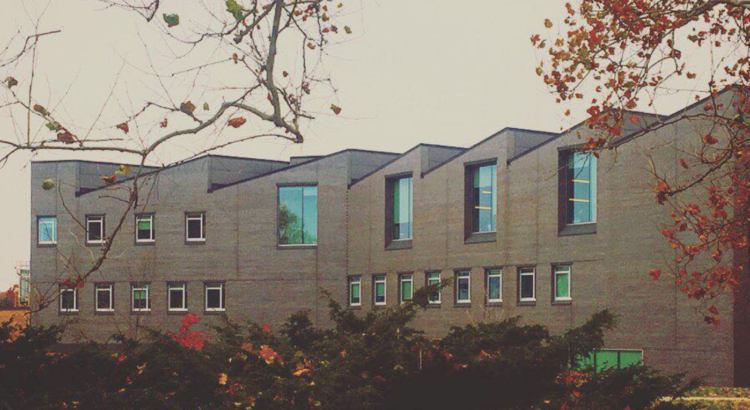
So, in case I have not mentioned in my previous posts, our studio space is located on the third floor of the architecture side of the building, and extends across the common space of the new wing, into the new, secluded studios. “Studio space” simply refers to the literal rows of desks that we do all of our project crafting in. Often, whenever you walk by, it’s quite easy to tell when a review (presentation) is coming up, because that is when most (or all) our desks are junked up with piles and piles of papers of various sizes (there’s blueprint sized papers, and then there’s nicer expensive print-outs on poster-sized papers, and then there’s just ordinary print papers too), piles of models and sometimes even residue of the craft (scraps of material, crumbs, knives, trash bags, you name it).
Personally, I really love my studio desk. Why? Well, it’s my personal space. I store whatever I want there conveniently, I decorate it however I wish, there’s plenty of USB and electrical outlet plugs right at my desk, and I’m a bit of a clean freak so it’s often impossible for me to efficiently work elsewhere because I’d spend too much time pickily searching for the “perfect desk” where it’s non-shaky, it’s clean, and spacious, with easy access to electrical outlets. Also, it’s considered my property (at least for the time being until I switch to a new desk next semester) so even if there is someone borrowing my desk, I can kick them out back to their own desk or some other space. Elsewhere, I own no property, and it’s often packed with people, so I waste my time looking for the space, and it does not even guarantee that I will get a spot.
And I even have a key to the drawers that I store my materials in. Oftentimes people leave them unlocked because of the natural “sharing culture” we have within studio, but I wouldn’t recommend doing that because:
 1) you’ve already paid $20 deposit for your drawer key. Might as well use it, right?
2) materials are expensive!! Often, I developed favorites amongst my supplies, and if it’s missing it literally feels like someone stole my child. Not to mention, sometimes things are hard to obtain another duplicate of because it’s very commonplace that the company of that object no longer produces that exact version OR they produced other versions that you aren’t fond of due to unfamiliarity or pricing.
AND
3) Our media center (where we buy food and materials) is not always open, so if someone sees material on your desk, it’s pretty much fair game to them, and it’s often awkward and difficult to hunt down your thief due to the sharing culture of studio, along with the fact that people will take free materials whenever possible!
Anyway, all of those above reasons are likely reasons why nearly most of the people who attend our college are usually around all the time, even if we don’t have something assigned for studio. Sometimes people just hang here out of convenience. Legit, people will have meals together at their desks, and sometimes have hours’ worth of The Office watch party (using their monitors or one of the moveable campus monitors) for leisure. Or, I’ve often found myself doing non-studio work at my desk as well because of the sort of factory-like, productive nature of our studio space, along with the fact that people are constantly moving in this space, and they can and will see whatever I do and they may or may not judge my actions. I often find difficulties focusing sometimes, so this productive environment really helps keep me motivated and productive! Many of my friends feel the same way, so they do the same.
As for workplace habits, I’d say I see most people having headphones in, either listening to music or podcasts or Netflix white-noise, or even talking on the phone/video-calling. I’m one of those people who really enjoy working alongside music, and feel less motivated without the audio stimulation, especially for model-making. Other classmates I’ve seen, and definitely been sort of admirable but also confused about how they can still craft meticulously alongside watching a show. Like, come on, are you not worried you’ll slice your finger, when you’re holding one side of the material down as you slice, but your eyes aren’t the material you’re cutting?! Trust me, I’ve seen countless accidents occur simply from fatigue at 2am where the knife slips and you slice off a part of your hand- which isn’t very fun! Or, other people who are able to craft while eating a  multiple-pieced snack, like wow, are you not worried your fingerprints are gonna make an appearance on that perfect model? Or, you feel indifferent about having a sticky project? Or even a project that smells like vinegar? Anyway, who am I to judge? I just find some of my peers’ habits interesting, and accept that we are all different in our habits and values.
Well, that is all for today!
I’d love to hear your views on my insights!
As usual, if you’re interested in seeing more of my photography and studio work, give me a follow on Instagram: @themichiganarchitect !
Ciao for now 🙂

Basil + Gideon #4: Fairytale?


I love stories about fairies. The combination of mischievousness and selfishness make them very fun characters to work with! Fairy/Fae lore is also super interesting because fairies have their own set of laws that they operate under and if any mortal wants to interact with fairies it has to be by their rules. The concept of a group of people who on one hand are hedonistic and manipulative, but simultaneously are strictly rule driven fascinates me.

Basil + Gideon is an ongoing narrative comic, if this is your first time reading check out the first installment here!

letting yourself be lost

“Wait, how do we get to Fifth Avenue again?”, asked my aunt. She was trying to understand how to navigate the NYC subway system and she thought she could figure it out by observing how I did it. This was my 4th time here, so I took the navigation process for granted.

“Oh, so it says here we need to take line 1. First look at the direction train 1 is headed to, either downtown or uptown, then you double check when you get down there that the last stops are the same as the one on your phone. Also, make sure you’re going down the right subway entrance. Oh, oh and check if it’s the express or local! Makes a difference”, I said. Yeah she still didn’t get it.

Then, she commented “Well I suppose if I really wanted to figure it out, I’d have to do it myself without you”.

I thought about that. I suppose it didn’t occur to me that I was better at this because I had gotten lost so many times. Sometimes, it’d be the wrong entrance, another time I accidentally took the express instead of the local. There were also many instances when I was trying to get to a particular building and I’d miss it by five blocks. These mistakes taught me well and my sense of visualization of myself on a map eventually became heaps better.

Whenever I got lost (usually when driving), I’d always think “Well, at least now I know what not to do”. I’d once accidentally missed a turn on the way to Kroger and ended up on the highway and in a small neighborhood near AA. It was pitch dark and when I tried to steer the car into the opposite side of the road, I was afraid I’d nearly end up in a ditch I couldn’t see. Nonetheless, I got to Kroger and shopped before it closed.

All this business of getting lost served me well when someone commented, “You have a good sense of direction” as we got back on route after my shotgun rider forgot to inform me to get off the next exit.

Maybe amidst all this grappling and flailing with ‘life’, we have to accept that we may never have a great sense of direction in our lives. We can’t have it all, not when we’re so young. I suppose if we just lived, accepting everything that we choose in the moment, disastrous or not, we’ll know if it is right for us. We’ll know what we want, what makes us truly happy or how to find those answers.

We’ll also have to acknowledge that we won’t necessarily know what is good for us. What seem like a bugger now may turn out to be an opportunity later. The challenges we are trying to breathe through right now may just equip us to manage or avoid future situations. So take it in now, breathe. Think, maybe this is a lesson I need to learn.

Have I ever regretted anything I’ve done? No. Have I regretted being friends with people who weren’t good for me? Not really. We’ve all been there, made mistakes, stumble into thorns and emerge scarred. But hey, at least now you know what not to do.

And even if we make the mistake of repeating it, it’ll just affirm the previous lesson we learnt.

A Reminder


On Friday evening I had the pleasure of seeing Teac Damsa’s Production of  Loch Na Heala (Swan Lake). If you haven’t heard of it, it is and Irish take on the tale of swan lake, with an Irish myth and a true story also mixed into the plot. It was presented by UMS in the Power Center for two nights only, this past Friday and Saturday.

I was encouraged to go see it for one of my classes and I am so glad I did. I managed to get one of only 2 student tickets left for Friday night, which was exciting. Going into the theatre I only knew that it was a take on swan lake and that it had good reviews. But what I actually saw was much different than expected.

For probably the first half of the 75 minute show, I thought I was going to leave the theatre with a sense of disappointment in not liking it. It started in such a strange way, that I’m still not sure what it was supposed to mean. But perhaps that was point.

But as the show continued, things began to click. It turns out that the show deals greatly with themes of abuse and mental illness, and is very raw in its portrayal of each. The sparse set and small cast, many playing multiple personas, was to the shows advantage. It allowed you to hone in on those themes, and to truly see the beautiful dances performed by the cast.

Though the themes were quite dark, it managed to end with an incredible scene of catharsis. At the end of the show, the audience immediately stood up without a pause for a standing ovation, and clapped for so long that the cast had to come back out on stage three times to bow before it died down and people started to leave.

As I left, I couldn’t stop thinking about the show. It was beautiful, haunting, at times disturbing, but mainly it was something different and unique. It wasn’t some American tour of a famous broadway show. It was a work of passion for these dancers and choreographers and they were able to create something that people of all ages and backgrounds seemed to love, despite the themes that are still hardly talked about in today’s society.

That is what this is a reminder of. If you have a story, you can tell it your own way. People will listen. People will care.

Theatre can do this for some people.

And this is the kind of theatre I want to create as a theatre artist.

3 Possible Sources of the Meaning of Life – Proust (Part 3)

To understand something is the human obsession. We can understand the value of money; we literally print the value on the face of the currency. We can understand the value of love; we articulate it through words, quality time, gifts, other love languages. However, we cannot understand the value of art. Think about your most recent encounter with a work of art, like that orange structure on State Street between the UMMA and Angell Hall. Some people analyze it in efforts to find meaning in the artist’s choices. Others stare blankly at the piece wondering what the heck is this garbage or I don’t get it.

Everyone processes art differently, creating an infinitely dimensional character. This is precisely the point of my series of 3 Possible Sources of the Meaning of Life. We attempt to outline the nature of human beings through personality tests or zodiac signs, confining a person to a boxed off “type.” While these conceptions are valuable prompts for self reflection, I do not believe that they are completely valid, yet we accept them in order to satisfy our obsession. Each stimulant in the world around us registers differently and our reaction cannot necessarily be calculated. It may be predicted by trends in our personality, I suppose, but personalities can evolve. We cannot understand the value of art because everyone values are differently. You can never fully conclude someone’s motives behind a piece, but you can appreciate the artwork in your own way. Furthermore, you can be the artist, accepting that not everyone will “get you” but you produce your own meaning.