
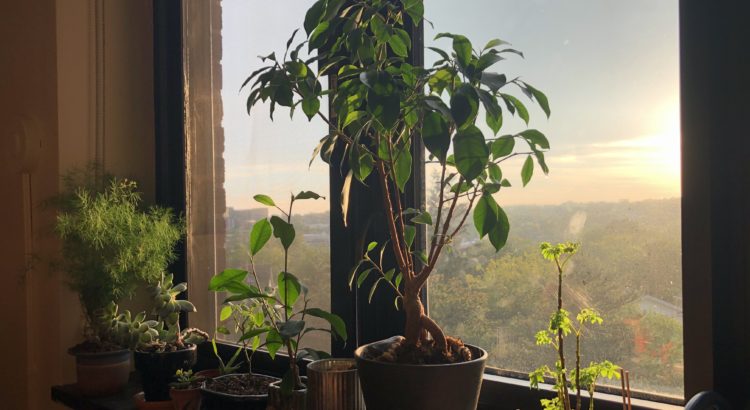
My windowsill is a small greenhouse, covered end to end in a variety of fascinating plants, each with their own personality. I grew up surrounded by trees and nature, which helps to explain why I have such a fondness and appreciation for plants of all varieties. Plants not only represent growth, life, and survival, but more importantly they each carry their own story, a unique tale that can offer knowledge of life on a smaller, pot size scale. A unique relationship is formed when you’re responsible for life, no matter how small, and the trials and errors that come along with this responsibility have more impact than they might seem. I specifically have 10 plants, comprised of succulents, bonsai, cacti, and a rose bush, the oldest one being a succulent that I’ve had for at least 4 years. I wasn’t always skilled at raising plants however, and I’ve accidentally killed more than I would care to admit (me and bamboo are particularly incompatible, although I’ve tried many times to make it work). Now that I’ve figured out a system that works for me and the plants, I’ve had the confidence to expand my little garden, the most recent addition being the small rose bush which blooms during the winter.

One of my most ambitious and difficult projects is pictured to the left, a square ceramic planter with a sand garden and spot of land just barely big enough for a bonsai tree and a monkey sitting underneath it. The concept was simple: a zen garden combined with a bonsai tree, representing a miniature place of solitude. Originally there were two trees, which I learned the hard way was overly ambitious, and it has also been a struggle to keep the sand separate from the soil, especially when watering the bonsai. Just recently the last tree suffered from the move back to college; a lot of it inexplicably turned brown and fell off, and I was prepared for the worst. But now it is teeming with new life, sprouts up and down, growing rapidly with renewed vigor. The personality of this plant is young, and its story shows that sometimes starting over is the best way to grow into something better.
Each one of my plants has their own story, each of them unique and equally interesting. Although it can be a challenge to take care of them during a busy college schedule, the reward is always worth it and I’m always glad I have them. They offer a reprieve from the city and remind me of the beauty of nature, something that I find is often forgotten about today.


 These houses would have a kitchen, bathroom and bed, all at an average size of 180 square feet. Some of these houses feature a composting toilet, a type of toilet I know exists in the Dana building but have yet to set foot in it. Besides that, I find it fascinating that people elect to live in a small space, acknowledging that most of their time will be spent outdoors anyway. Another perk of living in a tiny house is that you won’t be tied to a hefty mortgage in the years to come as they cost anywhere between $10,000-$180,000, a whole lot less than what typical houses cost.



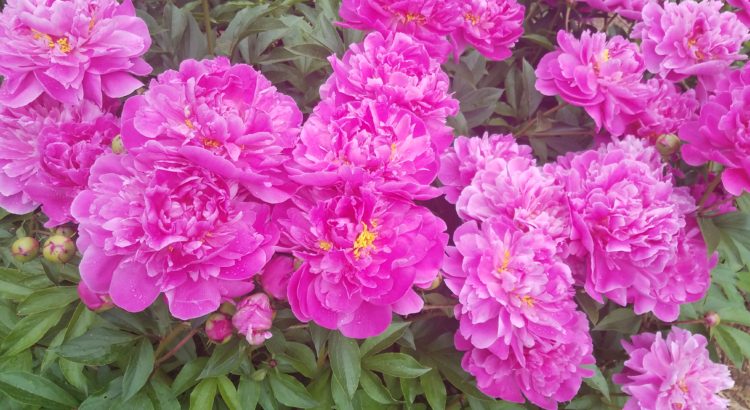
 During my free time, there were a plethora of wonderful things to do. Campus was breathtakingly beautiful throughout the spring and summer, with flowers in full bloom
 Nonetheless, it was very cool to see four independent fairs – each featuring incredible art – simultaneously occur to form one huge event. I was thoroughly impressed by the quality, beauty, and diversity of all of the art being presented. Live music, interesting food, and good friends contributed to a positive experience.