
Why I Love Taking an Acting Class

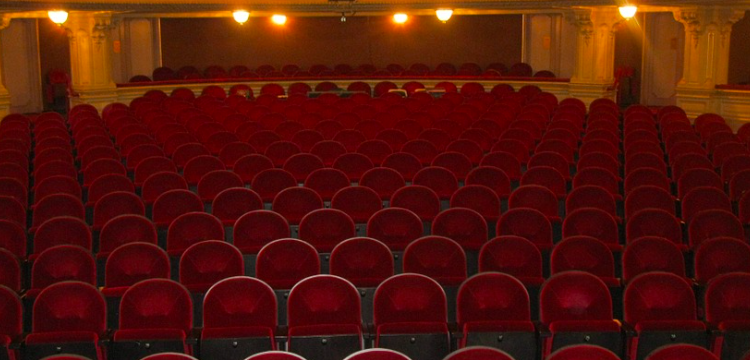
This semester, I wanted to take some type of humanities course that wouldn’t be too demanding on top of my other fourteen credits. I’ve always enjoyed subjects related to the arts, so it seemed to be a good idea to take a course that would be interesting but also act as a form of creative expression. An acting class, which goes towards the Humanities and RC requirements, seemed like the perfect option.

Like many others at U of M, my high school career was a busy one, filled with various  extracurricular activities. One of these activities was drama, primarily through my high school’s theater program. Musicals, plays, etc. were a huge part of my life. By being in an acting class, I’ve been given a convenient way to continue doing something that I enjoy. Having a class based on it forces me to keep it in my life without feeling guilty for dedicating so much time to it (at least for this semester).

Acting class, for me, is a huge stress reliever. While there are times I don’t feel like trudging to outside rehearsals or spending my Friday nights memorizing lines, drama is an escape from everything else that is going on. I can walk into the theater and immediately become immersed in the story at hand. For a moment, my worries melt away as I turn my attention towards the director and other actors. Rather than thinking about the upcoming midterms or essays due dates, I can focus on developing a character and making the scene come to life.

In my acting class, there are no specialized auditions, no ensemble characters, and no hiding in the background. Everyone is thrust into a role that’s been assigned and encouraged to step out of their comfort zone. There is a sense of vulnerability as classmates – and eventually audience members – see you portray emotional or outrageous characters. In my class’s  production of Love and Information last Saturday, I had the opportunity to play a series of characters (which I’ll talk about more in my next post). In our next project, I play a girl with a stutter who is remarkably kind, naive, and humorous. In this class, I’ve had the opportunity to portray both sensitive and comedic characters that don’t always follow the basic typecasting based on appearance or demeanor.

Many other students hold similar experiences in taking on different roles within our class. My peers represent a diversity of majors and have varying skill levels when it comes to acting, but have stepped up to the challenge in building characters and their unique story lines. While many people are taking the class because they enjoyed participating in plays or musicals in high school, there are other students who’ve never set foot on a stage before. In addition to the personal benefits I’ve received in taking this class, it’s been amazing to see several people discover a new passion, and I’ve loved seeing everyone in general continue to develop in confidence and communication skills.

(Image Credits: Google Images)

Twenty One Pilots Peaked with Vessel

Somebody has to say it: Twenty One Pilots isn’t as good as they used to be. After listening to their newest album, Trench, I was taken aback by how synthesized and monotonous the band was sounding. The band I loved made cutting-edge music with clever lyrics and interesting instrumentation; this band was boringly consistent with repetitive lyrics and a choppy delivery. I started to wonder what happened; where did they go wrong?

This question brought me back to the best album they’ve ever made: Vessel. Released in 2013, this album features classics such as Ode to Sleep, Guns for Hands, Car Radio, and House of Gold, which show off the genre-pushing ideas the band was capable of. From the almost symphonic layout of Ode to Sleep with it’s grand transitions and build up, to the simple and wholesome House of Gold, featuring an iconic ukulele (which didn’t make it into Trench), the band was unique in almost every way. The lyrics were often clever, and although they could be dark and introspective, they never tried to be edgy; they were sincere. This album brought a large amount of well-deserved attention to the band, and their next studio album was an even bigger success.

Released in 2015, Blurryface gained popularity due to catchy and rhythmic songs like Ride and Stressed Out. As a result, the band entered the mainstream culture and was even played on the radio (ironic when you listen to Fairly Local). At first I couldn’t stop listening, but this album certainly didn’t age as well as Vessel. I noticed it the more I listened: the songs were formulaic. A majority of them featured prominent electronic melodies, edgy lyrics, and stripped down instrumentation. They were pushing the envelope for sure, but in the wrong direction, not to mention the lyrics were much more repetitive than those in Vessel. I wasn’t really upset about Blurryface, just disappointed. I figured they were just trying to appeal to a more mainstream audience and I couldn’t blame them for that. However, by the time they started releasing singles off of Trench, something had gone too far.

These songs were so ridiculously edgy and cliche, it was almost unbearable. From the constant references to death and depression, to the empty critiques of “culture”, you could tell they had lost their original spirit. Most likely, they saw how popular their darker songs on Blurryface were and they ran with it, essentially filling the void of the “edgy” band. In the short-run it’s no big deal, but I guarantee Trench won’t have the same longevity as Vessel: the newer fans of Trench are going to get tired of the edgy vocals and repetition and move on, while the older fans will still be listening to Vessel. Moving forward I’m curious to see where they go; they might prove me right by dropping another repetitive and monotonous album, or maybe they’ll surprise me with a revival of the energy that made them so great. Either way I’ll be keeping an eye out, because at the end of the day, they’re still one of the most interesting bands around.

(Image credits: Google Images)

You’re Invited: Blank Space Workshop

FINALLY, a student run organization dedicated to showcasing glimpses into a creative process. Her name is Blank Space Workshop. Thank you Eli Rallo, Miss Artistic Director extraordinaire, for making this work possible.

“The point of Blank Space Workshop is not to produce finished work or full productions. Rather, we hope to provide a space for emerging projects, early drafts and young pieces of original theatre to grow and mature. Through the workshop process, the writer and director will collaborate with the actors to make changes to the piece and help it grow into itself. The staged readings will be an extension of this process—inviting more people into the conversation about the piece and its potential. Sometimes, we are so focused on our final product—Blank Space will allow all of us to take a deep breath and realize how lucky we are to have the space to focus on our process.”

This past weekend, Blank Space hosted a double feature evening comprised of two student works: “Fire + Ice” by Emily Russell and “Exhibits from the Zoo” by Matt Harmon. In between works, audience members were encouraged to pick up a feedback card and participate in the creative process by positing initial thoughts, lasting impressions, likes and dislikes, criticisms and interpretations.

My very good friend and I put our heads together and came up with the following.

“Fire + Ice” was a short, poignant piece built around a conversation between an American girl and Icelandic guy while in a scenic geotherm, a typical place for solitude in Iceland. The calm, yet emotionally charged dialogue served to comment on how the American way differs vastly from other thought practices. The harsh encompassing ideals are so much so that citizens need to leave the country to find themselves, as if their whole self is not welcome in the “US regime.” Juxtaposed with self-sustaining, nature-focused Icelandic culture, a hidden examination of human nature was revealed.

“Exhibits in the Zoo,” an award winning student piece, was unique in that the main character was mute. All the actors and actresses involved were challenged to maintain the same level of complexity that is achieved by dialogue through other modes of communication. Content-wise, in short: a beautiful story of a boy in the wrong place, at the wrong time.

I’ll be the first to recognize that art, all too commonly, exists in a pretentious context. How could it not with the endless auditions, required professional training, nights rehearsing, hot stage lights, looming expectations, and almost enforced hipster aesthetic. Art is elevated: put on a pedestal by all the great artists that have come before and before. The pressure of contributing to that “name,” to be given the opportunity to create something considered “art” is a tall enough order for someone who truly respects art.

This new organization does the hard work of making art less scary, and more accessible by illuminating what is normally in the dark—behind the scenes work makes a debut on the main stage.

If you’re curious about getting to know Blank Space Workshop more, visit https://blankspacewsumich.com or @blankspacews on social media platforms.

Upcoming show in late March:

“Horns” by Sara Pendergast, directed by Isabel Olson. Walgreen Drama Center. Free admission. Go check it out and support process.


(Image credit: Google Images)

Moral Compass

I’m sure most of us have lost our way even with our moral compass in sight. Even so, that is the point of a compass, to guide us to the right way even as we stray away from the path. Our moral compass can be our religion, principles, values and beliefs we hold close to heart.

For me, my moral compass is mostly composed of my religion. Some times I’m glad I never really had to decide what I feel about certain things because my faith has decided that those things are not okay to do. But even so, it demands me to be kind, compassionate and forgiving towards those whose actions I don’t necessarily condone. My faith demands that I do not judge people for their actions, because I don’t have the whole picture.

Even as I err, I don’t condone my own mistakes or actions. I don’t tell other people it’s okay to do certain things, because it simply isn’t (in consideration of my own principles and beliefs). I believe people should be smart enough to make their own decisions based off their own personal choices and after some rumination.

Morality is relative. However, be sure to know that even if you stray away, you can always refer back to your moral compass or change the direction of your moral compass, if the need arises.

(Image credits: Google Images)

how to write as a non writer

If you’re an individual like me who intends to hop into the pool of people who can smoothly formulate words, you must sound as confident as they do. Although you might sound like an imbecile, accept it but act like you don’t know. Act like you are right and that your opinion means something. Don’t try to use semicolons, colons, dashes, or even commas if you don’t know the proper way. Pretend that by leaving them out, you are shooting for an eerie and interesting writing style. For a good piece, write how you would speak. For a great piece, write how you would talk. Sound assertive, curious, and with your own little twang. Use thesaurus.com. Trust me, you will sound like Ernest Hemingway’s protégé. Okay, maybe not his protégé, but at least a fan of his. Use slang. This will help you sound like you have an in and allow you to connect with an audience by making them feel comfortable. Lastly, always believe that you can and deserve to write. Whether your writing makes sense or is a jumble of words written down, at least you have ideas. Ideas are always the start.


Reading Party

How do you incorporate creativity into your social life?

Tonight, I’m heading to a friend’s house for a “Reading Party.”

Beverages and snacks are included of course.

For the first 30-40 minutes we are to engage in silent reading with a book of our choice, then move on to an open mic session where people are invited to play instruments, read something, sing, act, etc.. In a way it’s kind of like the anti-house-party. It’s still a social gathering, but it gives people to focus on themselves and engage in sharing art.

It’s still a “party” though, so it’s necessary to end the night with some karaoke.

A few blocks away, my girlfriend’s co-op is hosting a “progressive” party, meaning that the house collectively agrees to a party theme and each person decorates their room to fit their own interpretation of the theme. Everyone in the house starts in the same room and progresses to the next room at the same time. Tonight the progressive theme is “Powerpoint Presentations.” The prompt exists on its own with no rules or limitations, so everyone in the house is able to get creative with their decorations and in-room activities.

I think the key to a really great party is a solid theme. I would argue that dedication to a theme allows both the party planners and guests to express themselves in creative ways that they would not otherwise have. My roommate turned 21 this week, so tomorrow we’re hosting a disco party for her in our basement. As hosts we have the responsibility of turning our dingy basement into a boogie haven, and guests will only be allowed to enter if they are dressed for the disco.

In this current pre-Spring Break slump, it’s important that students find ways to relax on the weekends. Even though many of us are still busy, we have a little bit more time in the day to practice self-care. I think socializing is a really important aspect of self-care, and attending/hosting parties/hangs with friends is an easy way to accomplish that. Adding a creative twist or theme can make the whole experience all the more memorable.

There are also plenty of ways to practice creativity that have nothing to do with socializing or partying. What are you doing this weekend?