
Winter Blues

As the snow and cold descend upon Ann Arbor, it’s easy to be affected by the weather. At least for me, I know that the earlier darkness and bitter cold make it harder to get outside and leave my warm bed. It can be difficult to both literally and figuratively see the sunshine.

It seems as if the first autumn leaves had just dropped, and winter is still more than a month away. Yet, you can’t escape the ice when walking to class. I am a fan of snow, at first–the beautiful flakes falling from the sky, the jubilance upon seeing the first blanket of white. After a few days, it becomes a nuisance to clean and avoid the dirty slush piled up on the sidewalks.

Of course, there are good things about winter, like any other season. There’s the holiday season, cheesy movies, and the coziness of cuddling up in a big blanket with loved ones. Every season is distinct, yet provides a different perspective on life. Even though winter may be dark and cold, it’s important to remember the positives: it harbors a period of change. Spring will bloom after the storm.

Some reminders to carry you through the winter: bundle up, listen to your favorite music, cozy up with a hot beverage, spend time with friends and family, and remember to get some exercise and eat well. Although the seasons change every few months, be sure to enjoy them while they last!
Healthy Thanksgiving

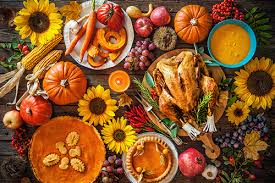
Thanksgiving is seen as a time for family and friends to come together and be thankful for the things they have in their lives.  It has also become synonymous with lots of good food. The traditional Thanksgiving meal includes a giant turkey, stuffing, bread, cranberry sauce, pumpkin pie, and cherry pie.  My family is one of these traditional families who always eat the same food every year with no exceptions. But with people now being more conscious of their diet and how food impacts the environment some Thanksgiving dinners are transforming from the norm.

The biggest Thanksgiving food trope is having a gigantic turkey.  My family even eats a turkey from my aunts farm that they have raised for the event.  Now there are healthier options that people are choosing to eat as their main dish. Stuffed butternut squash is a great alternative because it is filling and squash still has the same nice fall feeling that turkey has.  You can stuff the squash with other vegetables and rice that way if people do not like squash then they can eat the things that are stuffed in it.

My family always has snacks out before the big meal so that people can munch on them while they wait and watch football.  We usually have different types of cookies and chips and dip. Having snacks out before the meal is a great idea to keep people from getting antsy while the food is cooking, but chips and cookies are not the healthiest way to do it.  A healthier option is to just put out a fruit and veggie tray. Everyone likes at least one type of fruit and/or vegetable. It will keep them occupied but it won’t fill them up before dinner.

Mashed potatoes are another staple Thanksgiving food.  Every family has their own mashed potato recipes and some are healthier than others.  A good alternative to mashed potatoes is cauliflower mashed potatoes. This is a good alternative to mashed potatoes every day, not just Thanksgiving.  A way to spruce up the cauliflower mashed potatoes for Thanksgiving is to make sweet potato and cauliflower mashed potatoes. You are still using potatoes, but you are not using as much because the cauliflower is most of the side dish.

The last food that is popular at Thanksgiving is the dessert.  A good alternative to apple of cherry pie is cranberry and blueberry crisp.  You use fresh cranberries and blueberries so you are eating healthy fruit, and you are just putting granola on top instead of the less healthy pie crust.

Podcast Starter Pack

I can’t leave the house without my earbuds. Or my headphones, depending on my mood. Although I will say that since my headphone cord broke last week and I switched to $5 earbuds, I am seriously missing the noise cancelling technology. (Thanks but no thanks, Bose.)

I would say that most of the time I listen to podcasts as I walk to and from class. I’m never in the mood to listen to music for some reason, maybe because I studying music at school all day, or maybe I’m just a really curious person. It’s a combination of both, I imagine.

There’s something about stories for radio that makes them so meaningful. I understand that if you were to read the transcript of a radio show from a screen or piece of paper, it wouldn’t have the same effect on you as if you had heard it. I’m sure there’s an art to writing for radio and I could probably take a class on it.

(Before I get into my recommendations, I want to preface this by saying that I listen to my podcasts on The Podcast App. The built-in iPhone Apple Podcasts app is a poor excuse for a podcast app!)

The starter pack:

This American Life was on in my mom’s car all the time while I was growing up. Every week the stories are based on different themes, and each story offers a totally different perspective on that theme. They just released their 661st episode on Sunday, so there’s a lot to check out. I would recommend this podcast to everyone on earth.

Serial and S-Town are break-off pods from TAL. Serial is hosted by Sarah Koenig, and in each season she picks one story to tell episode-by-episode. The first season was a national sensation, and now she’s in her 3rd season, reporting on the criminal justice system in Cleveland. Easy to binge-listen. Same with S-Town, a six episode story about a man who lives in Alabama. Trust me, it’s more interesting than it sounds.

Ear Hustle is based out of the San Quentin State Prison and it explores topics in prison life by interviewing real prisoners.

Queery with Cameron Esposito is a good one if you’re interested in queer topics and hearing from queer people in the entertainment industry.

2 Dope Queens is a comedy podcast that supports women and people of color! The hosts are hilarious and they spotlight around 3 comedians per episode. They only invite 1 white guy on per year, and last year it was Tom Hanks. My kind of show!

The Daily is my preferred news podcast from the NY Times. It comes out every morning and each episode is different. It can surprise you.

Let me know what else I’m missing!

“Last Days in Vietnam” and Responsibility in Documentaries

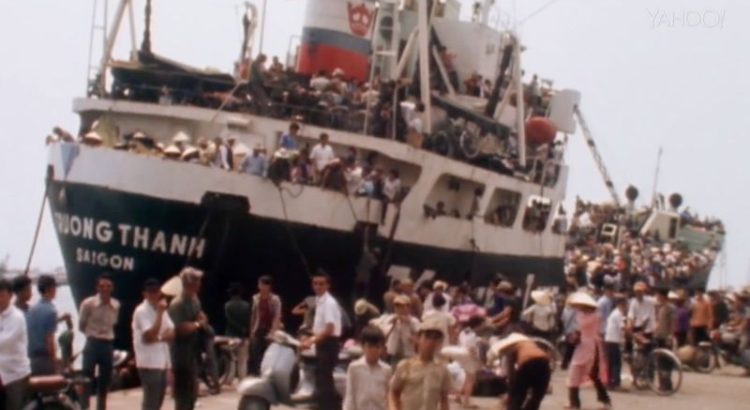
The Vietnam War continues to be fresh in Americans’ conscious as one of the last conflicts of the Cold War, and “Last Days in Vietnam” does a detailed job in preserving the war’s memory by featuring interviews with American and Vietnamese people who lived through it. The film brings history to life, but its lop-sided coverage of the war shows the dangers of documentaries engaging in political issues.

The conflict is a very sensitive matter, which the Vietnamese refer to as the American War since it was a brutal satellite war for America to forward its imperialist interest in maintaining superpower status. The documentary does not get the perspective of the opposition to American forces. All the interviewees have ties to the United States, either as members of the American armed forces or as Vietnamese refugees who escaped to our country.

This does not mean there was no value to the film. To hear the first-hand accounts of the American men who actually fought the war was gripping, especially their very human emotional struggles as they dealt with the impact the conflict had on civilians who lost their homes and lives. The archival film footage of bombings, evacuations, military exercises and the like made vivid the clear descriptions of the Vietnam War I read about in history class. The tragedy became much more comprehensible by showing the individual people and actions it takes to mount a war in the first place. But the lack of perspectives outside of the forces with America makes the documentary a simple and concise history of only the mainstream American narrative of the war. To not have this view counterbalanced with that of the Soviet-allied forces makes the loss American forces hard to understand. There is no focus on the achievements and developments on the Soviet side that led to their success. Only the work of the American forces is then appreciated.

The documentary is very good on a technical level. At the beginning, I was deceived into believing that the incredibly conventional editing of the documentary would contain an incredibly conventional story. Instead, the intricate and chaotic nature of war strategy plays out in the most visually literate manner possible. However, if the viewer does not have a nuanced education on the Vietnam War, this film could do them a disservice by only presenting one flawed view of the conflict, and even then not focusing on the Vietnamese people who were most impacted. While chronicling America’s involvement in the Vietnam War, at no point does the documentary dive into historical analysis, leaving me wanting more. I’m sure the interviewees have strong views on the war that could have been shown in a balanced way to the benefit of the viewer’s knowledge without getting mired in politics.

I don’t consider the limited scope of the documentary a fatal flaw. To include the Soviet side would be to extend the documentary far past its hour-and-a-half running time, and would expect a movie to be as authoritative as a vetted history textbook. However, the lack of self-awareness in its obvious bias is concerning. As the saying goes, history is written by the victors. Those who truly respect history must resist this vantage point.

getting through the semester

(Awashed by Nur Sarah)

In moments when it seems classes and assignments are starting to become overwhelming, I find this poem I wrote myself hidden in my notes. “It can’t be dark forever”, the phrase I need so much right now.

Often times, it can be tempting to think, “Why is university life centered around so much studying?” as if we have no other purpose. It can seem daunting, thinking about our assignments that await us, the gnawing feeling that we always need to study, to catch up with things. And all for a scroll of paper from the university.

Even during my internship, I found work genuinely more enjoyable than just studying. Sure, there were work performances due every year but besides that we were not graded every three weeks on how we were doing. I was learning a lot while trying to figure out how to do my work. I also did not find my degree to be particularly useful for my internship, leading me to question the usefulness of the degree altogether.

Maybe, just maybe I have yet to see the benefits of studying for my degree. Perhaps things will make sense later, as they always do. Time will tell but until then, don’t give up. Keep living, stay afloat amidst all the incoming work from classes. And take care of your mental health.

architecture… does it have limits?

credit: instagram @themichiganarchitect

Architecture, the most broad discipline by far… does it have limits?
I certainly believe so, despite my passion for the field.
Architecture is limited between the fight form has with function; architecture is the result of the compromise of these two components.
Architecture is limited by technology. Ever since there was software created, more wild shapes have been encouraged in design. Back in the day, without such powerful software available, past architects instead had to rely on their genius mind power and artistic talent to produce the blueprints for their designs, Whereas today, we have people who care just barely draw, who can turn to software drawing to save themselves from being fried at their next review, and it also allows them to turn the model round and round virtually to literally see how all the elements of their design go together.
The perception of architecture is also limited. As an architecture student, I am constantly assigned projects that question my design abilities, but also must fit to a certain narrative. Yes, we get our own options to interpret the prompts for ourselves, and create our own “solutions” to the presented objectives, however I always question the necessities of the narrative portion. In our projects, I believe the narrative (the story or point we want to demonstrate through our design) simply serves to spur our designing. We think up a storm, to convey a meaning behind our project designs; sometimes we are successful, other times not so much.
What I’ve always found interesting about that is, the narrative is often times the reason for headache and heartache for us and our projects… however, hypothetically speaking, if these projects were to be real proposals in the actual world, I doubt anyone would be able to i(or let alone have the interest to) interpret our narratives behind the design. It’s like, why spend so much time crafting a story, that audiences cannot even see, or do not even wish to see? Perhaps, the reality is that these narratives exist just to capture ourselves as designers to have a fascination and passion for the project, which would in turn power our hard work and determination to do our best in the project, and designing it too.