There and Back Again (A Hobbit’s Tale, by Bilbo Baggins)

I’ve just listened to the new soundtrack for The Hobbit and it is everything I’d hoped it’d be.
Howard Shore, who composed the music for Lord of the Rings, got things just right ten years ago and is doing just the same now. His iconic score, evocative and magnificent, opens up in the right places, stretches and builds, glides back down, is dark or brilliant or stately or hopeful or whatever it needs to be when it needs to be. There’s somehow almost always a sense of age, even in the lighter bits, of some underlying culture and knowledge or dignity. Sometimes, the music really does read like a wide-angle pan over the New Zealand landscape.
The score for The Hobbit loses none of the feeling, none of the nuanced technical skill. It retains nostalgically recognizable themes from the original trilogy, reminding the audience that they are still in the same world. There has to be continuity, naturally, for the characters belong to the same histories as the ones we know from the present-day Middle-Earth we know from the Lord of the Rings. Yet there is of course new music, for different characters and a different story altogether. Some of the tracks are very fresh, and surprisingly so in their ability to explore a different feel and sound. Even the new material, however, blends seamlessly.
Howard Shore masterfully incorporates elements of both old and new into a cohesive work that covers new ground without abandoning the familiar. The level of attention paid to every detail and nuance finds a natural fit with Peter Jackson’s cinematic translation and complements the fruits of Tolkien’s extensive world-building. There is approximately an hour and forty-five minutes of music for this first of three installments of the The Hobbit, and every minute of it, I think, is worth the listen.

A full preview for The Hobbit‘s new, yet to be released soundtrack was out recently- and  it is everything I’d hoped it’d be.

Howard Shore, who composed the music for Lord of the Rings, got things just right ten years ago and is doing just the same now. His iconic score, evocative and magnificent, opens up in the right places, stretches and builds, glides back down, is dark or brilliant or stately or hopeful or whatever it needs to be when it needs to be. There’s somehow almost always a sense of age, even in the lighter bits, of some underlying culture and knowledge or dignity. Sometimes, the music really does read like a wide-angle pan over the New Zealand landscape.

The score for The Hobbit loses none of the feeling, none of the nuanced technical skill. It retains nostalgically recognizable themes from the original trilogy, reminding the audience that they are still in the same world. There has to be continuity, naturally, for the characters belong to the same histories as the ones we know from the best soccer predictions present-day Middle-Earth we know from the Lord of the Rings. Yet there is of course new music, for different characters and a different story altogether. Some of the tracks are very fresh, and surprisingly so in their ability to explore a different feel and sound. Even the new material, however, blends seamlessly.

Howard Shore masterfully incorporates elements of both old and new into a cohesive work that covers new ground without abandoning the familiar. The level of attention paid to every detail and nuance finds a natural fit with Peter Jackson’s cinematic translation and complements the fruits of Tolkien’s extensive world-building. There is approximately an hour and forty-five minutes of music for this first of three installments of the The Hobbit, and every minute of it, I think, is worth the listen.

The Problem with Familiarity

This past weekend I was in San Francisco for Thanksgiving. Of course, there is never a city I will visit without paying special attention to its museums and current exhibits. Lucky for me, while I was there, a Jasper Johns exhibit was taking place at the San Francisco Museum of Art.

Now, when I think of Jasper Johns, as the amateur art historian that I am, the first thing that comes to mind are his flags. Actually, I wrote about his flag renderings on this blog just two weeks ago in context to the presidential elections. I think his flags are absolutely stunning, particularly for their ability for the American flag to be viewed in a far different fashion than most are generally accustomed to.

Yet, when I left the exhibit, I was shocked. The survey of Johns’ work, a semi-retrospective of his career, was not awe-inducing for the presentation of the flags that Johns is infamous for. Instead, it was the rest of his body of work that genuinely and wholeheartedly captivated me. After walking through the exhibit, not once but three times, I felt bored by his flags. I was instead amazed by his numbers and his representations of the seasons, winter, spring, fall and summer.

So, the problem then arises – as viewers of art, those who enjoy art but are not intense studiers of it, we become all to liable to the problem of associating an artist’s most famous work with the artist, solely. This, I believe, is detrimental to the understanding, appreciation, evaluation and study of art. As students of art, it is imperative to always have an open mind while viewing a work – without the freedom to think creatively, a student can never genuinely learn from a work, as they will instead be clouded with misconceptions. There must be countless well-educated people, those who may have taken an introductory art history course or visited museums while growing up, who, when asked about Jasper Johns, would say, “Oh, the one with the flags!” Well, yes, he is that, but he is also the creator of a deeply spiritual, highly intellectual, body of work.

I thereby challenge all readers, all viewers of art, to throw your preconceptions out the door when entering a museum, a gallery, an exhibit. Rather than allowing oneself to strictly see an artist’s work based on prior thoughts, instead, look at the individual work as its own entity, one that will allow you to get lost in its meaning and style. Art is far too unique and fluid to be caught up in the constraints of categorization and preconceived notions.

140 Characters or Less

As I am sitting around the table for Thanksgiving Dinner, my grandma is telling me about her time as a stenographer. She told me about shorthand—where one can write lines and dashes in regards to the sounds being emitted in conversation. It made for scarily fast documentation and was ideal for recording conversations. My grandma had been extremely gifted in this regard, as she could write in shorthand faster than people could talk. She told me stories of how her teachers in high school would speak as quickly as possible, switching the tone and pitch of their voices in attempts to throw her off. But my grandma would recite back to them exactly what was said. It was a phenomenal skill. She told me about Thanksgiving Dinners when she was kid. She would sit back with her steno pad and record her parents and relative speaking around the table. When they were done talking, she would recite the entire conversation back to them. I was engrossed. I had her write my name in shorthand. A six-character name—Justin—was reduced to two quick flicks of the wrist, resulting in something that looked like an italicized ‘h’. It was genius.
As I got to thinking about shorthand, I started to wonder why it had died. Quick recording was definitely a highly-regarded need in the modern age—probably more so than ever. We want minimalistic accuracy. Shorter. Sweeter. Simpler. Communication is key to any aspect of life, and when it is elegantly frugal, it is most effective and beautiful. Why, then, did shorthand largely disappear? Or, more accurately, why was it never adopted for public use?

In the rise of social media and the digital transfer of information, most communication is done through text. Whether it be emailing, messaging, texting, tweeting, or whatever, a reliance on characters has become nearly unavoidable. As a result, people are writing much more. Not with the hands, as cursory handwriting has been eliminated from most education systems and printing has declined in neat/careful+ness, but through typing. People can type as fast as my grandma could write shorthand. On the surface, the move to typing would be common sense, as the text could be CTRL+C & CTRL+V <copy and pasted> infinitely many times. It could be reformatted and edited—if need be—and is written in uniform characters which would be readable by anyone. Anyone, that is, who can read the language of documentation. As character typing seems more effective, I feel that it loses the universal abilities of shorthand. If this style of writing was truly subjected to sounds alone, it could, potentially, be used to document the speaking of any language in perfect detail. By reading back the sounds, one could potentially recite any tongue. This is something characters cannot represent. In the English language, characters do not fully reconstruct sounds. Rather, they can stand in place of ideas or meanings.

With so much text-based communication, we often inject emotions and symbols (like the ever famous UNICODE SNOWMAN! ☃) 8^B <<< this is a nerd-face emoticon.

In a sense, this new form of life documentation is more natural and fluid. Formal conversations no longer require a stenographer. Anyone can pull out a smart-phone and text his/her thoughts to Twitter or Facebook or the tumbleweed rampant Google+. While we may not be recording conversations in a potentially universal medium, we are keeping an ongoing log of our lives and thoughts in the most efficient form possible.

While my grandma reminisces on writing shorthand on her steno-pad, I pull out my phone and tweet about the table conversations in 140 characters or less.

Elegance in the art resides in selecting those ≤ 140 characters.

Fantasy Coffins

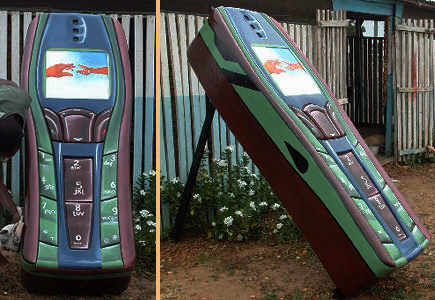
Beginning in the 1950s, the Ga people of Ghana began a new artistic tradition called “Fantasy Coffins.”  The creation of Fantasy Coffins is generally credited to Kane Kwei, a carpenter whose dying uncle had requested that his coffin resemble his fishing boat.  After this coffin was well received at the funeral the commissions started to pour in, with people generally requesting coffins that reflected their status and wealth during their lifetime.  Not everyone is allowed a Fantasy Coffin, however; you must be sufficiently successful and, of course, be able to afford one (they are expensive).  The coffin reserved for the most prestigious people is the Mercedes Benz, considered by many to be the most expensive and rare car in Africa.

Though most of the people able to afford these coffins are Christian, they are not allowed in Christian Churches (unless it is shaped like a Bible).  This is also due to the fact that many of the death ceremonies that take place incorporate

bet365 uk online casino bonus and promotions toponlinecasinobonus.co.uk bet365 uk online casino bonus code

animist traditions, including animal sacrifice.  Despite these traditional African spiritual practices, Kane Kwei very emphatically stated that Fantasy Coffins reside outside of the traditional African art cannon, with many of the coffins taking the shape of distinctly Western objects like cell phones, sneakers, and Coca Cola bottles.

How much music is left?

Before I ever wrote a single drop of music I thought that the job of a composer must be impossibly difficult. I knew enough about music to know that there were seven notes in a scale and that these scales built melodies which were music. I wondered why computers hadn’t started writing music and just combining all of those different notes into every possible melody. I mean, seven notes. There are a lot of different combinations of those seven notes. But there are only seven upon which to work! The periodic table gives us 118(+?) elements which make up the world and you are telling me that only seven elements make up the world that is music?
Admittedly that comparison is a bit crude. The elements which comprise the known world are very, very complicated and have an intense amount of complexity and variety within themselves. And the elements which comprise the known world of music are a bit simpler, relying on (sometimes very complex!) acoustic phenomenon and organizing them into a series of twelve discrete pitches.
Of course, that was my first mistake – thinking that the world was divided up into 7 notes. I know now that
1) Seven notes comprise a traditional scale, but we are definitely beyond that as a musical culture (in fact we never were really there at all) so the contemporary composer, in fact, has twelve notes at his disposal – a not insignificant increase in the number of useable pitches.
And 2) That our western way of tuning things is not the only way. The octave can be divided into any number of partitions and often is, not only by musicians across the world (see indian classical music) but also within our very own western culture (See Harry Partch’s 43-tone monster). To say that the traditional western system of music is the only way is not only completely euro-centric but also completely wrong (also considering that musicians often use alternate tuning within all kinds of music).

Anyway, this comes up because I watched this video on YouTube the other day.

It poses an interesting question and poses some interesting answers as well. I don’t know how much I agree with it, but it’s certainly something that is fun to think about. Some of their calculations seem to be a bit…wrong by basing their calculations on what a judge might deem as a different. The day that non-musicians get to decide what music is will be the day I quit music. Mahler 1 and Frere Jacques are very different things, guys.
But I do like the fact that the video ultimately begins to question if the question itself really even matters. Most of that music they are hypothesizing about is purely theoretical and probably is really bad at being music! And besides (as they point out) we like the familiar and we like our memes, so music tends to stay toward a certain area of tonality, rhythm, and affect. (But tastes change over time, so music will never be the same going forward!)

But here is my major problem with this idea of ‘running out of music’….

Music is much more than a series of pitches linked in time. Music, when it comes down to it, is a human response to auditory messages (See John Cage). So in order for music to *happen*, in order for music to really work and be music, it requires both of those things – an auditory message and a human response. Composer’s take care of that auditory message (at least in a traditional setting) but it up to YOU the listener to create the meaning and make the experience of hearing sounds a musical one. Music’s effectiveness as an artistic form is dependent upon attention, intent, and awareness. This is why your favorite song can make you cry one day, and totally fly by when you aren’t paying attention the next (or maybe that only happens to me…).
All this is to say that music is an incredible and exciting art form, but it’s much more than sound.  It feels like they are using such a small definition of music that it precludes the most important part of it! Music is about people. All art is. And we aren’t going to run out of people, or human experience. So I pose that music is infinite. Just as humanity is infinite. We can’t possibly explore all of the ways that music can go, but we can damn well try.

Lost Inspir(on)ation

Do you remember the first time you saw them, really saw them?
and then things

broke.   Failed.   Needed system repair.  Can’t reboot where’s the startup menu?

And after all the mess there’s that one time you stopped stopping the emotion and it Flowed,
articulated it so well into something proudrealfullofemotion which Never. Happens.

Ever.

This time in Words, and for the moment you were Eliot, Auden, or Cummings
when usually they’re disguised under the pseudonym of INeverCaredAnyway.doc
Words that showed validation of the storm, the reality of the water and the fog and all the elements that felt too real and had to be real, otherwise the voyage was never worth it in the first place, even if you never reached Neverland.

Thought the words would be something to look back on, timeless if not to most others then at least in the anthology of the Self’s Greatest Works, proving that you were capable of not being devoid of all passion or skill.

And then everything went blue.
All the words drowned within the vast abyss of unrecoverable wasteland
Tossing and turning within the waves
The diamond is lost in the sea, the old lady said. The shipwreck lost everything. Jack isn’t coming back and Rose is left wondering if the China plates really shook.

Ultimately the code was broken, the stone wall fell and more ships sailed. Never

rezultate liga 1 romania clasament liga 1 clasament liga 1 romania

one quite like the Original, but that boat is still just a memory anyway.

Years past and she grew older, bought a replacement necklace but was never able to replicate the exact cut, shape, color of the diamond.

But she will never forget the first time wore that necklace, wrote those words, or really saw him.