poco piano: chamber music

This week was very busy for me. I had chamber music performances this week (sorry I didn’t record them! I think I will get the professional recordings soon). I played the last movement of the Mendelssohn c min piano trio in a performance on Thursday night and today (Saturday morning) for a masterclass. It’s a passionate movement that begins with a tumbling cello line, out of breath and crazed.

I chose to work on this piece because I actually played the first two movements when I was in high school. So, I wanted to finish the piece and get this glorious ending. My high school piano professor was in a professional piano trio that toured for many years and I remember him telling me that the ending of this trio is just so much fun to play. The flying fingers and rush of accelerating to the end is just so exhilarating. Mendelssohn’s music is…. a bit notey to be honest. He was a virtuoso pianist and he really shows it in the piano part. It actually works out so well because the piano excels at playing a lot of notes in a short amount of time but has a natural disadvantage to sustained long notes. In contrast, the strings excel at playing long sustained long notes. So while the strings play a luscious long melody, the pianist gets to fly around the keyboard, filling out the harmonies and the empty beats with arpeggios. Often this frantic frazzled feeling is unwelcome but here, it is quite fitting- though only if you stay in control and have all the notes under their fingers.
 

Looking Forward: BlueNote Vocal Jazz Ensemble

Happy Friday, everyone!

It’s another sunny day here in Ann Arbor. I don’t know about you, but that automatically boosts my mood – plus it’s practically the weekend already!

This week I had the opportunity to chat with Cinderella Ksebati, Co-Founder and Music Director of BlueNote Vocal Jazz Ensemble. As another fairly new organization on campus, I was excited to learn more about how they have adapted this year and what their upcoming plans for performances were like. Let’s dive right in!
Founded in 2019, BlueNote Vocal Jazz Ensemble aimed to help fill the void of limited opportunities for students to participate in vocal jazz on campus. The group consists of both undergraduate and graduate students, including a mix of SMTD and other schools. They were able to perform on campus at the SMTD’s “Collage” event, as well as a few off-campus opportunities before campus shut down in early 2020 due to COVID-19. This hasn’t stopped Cinderella and her team, though. They are still working just as hard to “revitalize the attending-a-jazz-concert experience and in 2020-2021”.

“We are thinking, okay, how do we present this using technology, using what we have at our disposal, and continuing to make art, create jazz music, and start to get people engaged with this genre. And bring it back to the forefront of the arts as is such an American tradition, we want to bring it back and take bits and pieces of those traditions honoring and paying homage to all the vocal jazz greats. Of the groups like, for example, Take Six, New York Voices, so some of our program for the upcoming project that we’re working on, “Let’s Go to the Movies”, encompasses a couple of those things. We are mixing the media, we’re doing a 30-minute jazz film and we’re using all vocal jazz repertoire.”

To prepare for that project, BlueNote has been meeting via Zoom 2-3 times a week and using an online audio workstation that allows them to hear a little bit of the “blend” that vocal groups work so hard to achieve in performances. They have also incorporated a few individual, in-person rehearsals, following county and university guidelines. 

Though Cinderella does miss in-person performances, she notes that there have been some interesting developments in vocal jazz, at least in BlueNote, that she hopes will continue after COVID. Specifically, adding more storytelling into their performances is something she has really enjoyed. 

“It won’t necessarily be a film next year, who knows, but I certainly think that that is going to be changing some things and just in terms of our passions of the group members.”

Check out their most recent YouTube video above, performing “Walkin My Baby Back Home”.

BlueNote’s newest project, a short jazz film titled “Let’s Go to the Movies”, will premiere in April. You can stay up to date on their upcoming events by following their Instagram and subscribing to their YouTube channel. Lastly, keep in mind that the group holds auditions every semester, so definitely keep an eye out this Fall if you’re interested in singing!

That’s all from me this week! 


Stay safe,

Lucy

Weird and Wonderful: “The Hole”

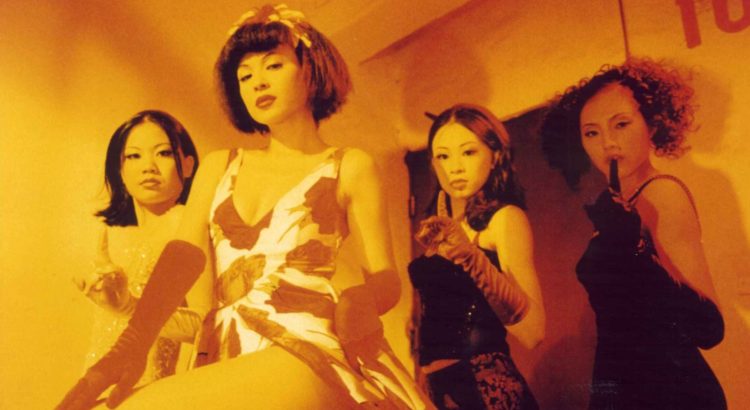
I watched a lot of great films when I took the Introduction to Film class at U of M, but nothing tops The Hole. Infamous Taiwanese director Tsai Ming-Liang’s wildly inventive film is especially relevant as the United States enters a full year of quarantine. The Hole exists in a genre all its own — it’s slow cinema, a jukebox musical, and a horror film. Above all, it’s a commentary on human connection. 

The Hole was part of the 1998 “2000, Seen By…” project — an international film challenge to produce a film depicting feelings toward the new millennium. Despite an evacuation ordered by the government at the onset of a global pandemic, the two characters Hsiao Kang (Lee Kang-sheng) and “the woman downstairs” (Yang Kuei-mei) decide to remain in their apartment building. As the disease progresses and their world becomes deserted, they begin communicating through an unpatched hole in the floor which connects their two apartments.

There are only six characters credited in the film, four of them having only a few minutes or mere seconds of screen-time. This — along with the constant rain — emphasizes the loneliness and vast emptiness of the world the main characters inhabit, and makes this world more intimate for the viewer. There is very little dialogue throughout the film, so it relies heavily on visual cues. The drained color, long stretches of near-silence, and minimal camera movement are the palette with which Ming-Liang paints the feelings of isolation with perfection.

However, not all hope is lost for Hsiao and the woman downstairs. Hsiao still attempts to run the small market he owns, but eventually he finds spying on the woman downstairs to be more fitting entertainment. Though they initially despise each other (and seek to anger each other purposefully), the woman downstairs develops feelings for Hsiao. These desires are articulated in the most daring way possible for the film —  through unannounced flashy dance numbers in which the woman downstairs lip syncs to the classic pop music of Grace Chang. 

In these musical numbers, the world becomes colorful again. While reality is dark and dreary, the woman downstairs’ dreams are bursting with life. Even at the very end, when her situation becomes desperate, she slow dances with Hsiao in her fantasy world. All of these scenes take place in the apartment building, as if that is all that’s left in the universe. 

The majority of the songs in the film are about romance. The woman downstairs’ desire for companionship in what appears to be a hopeless environment is the essence of human nature. Hsiao and the woman downstairs represent something that is truer than ever now: in the claustrophobic universes our homes have become, we all need the kindness of one another. As rain invades the woman’s apartment, causing all her wallpaper to fall off, and the hole invades Hsiao’s apartment, they find comfort in knowing that there is still someone on the other side of the floor.

The Hole was already incredible before the pandemic. However, I’ve learned to appreciate it even more now. My apartment is my world, too, and I’m sure yours is as well. If there is anything to learn from The Hole, it’s that amongst the fear, mundanity, and sluggishness of isolation, hope exists. All that’s left to do is dream it.

Artist Spotlight: Swissted

Swiss modern graphic design and punk rock music, what’s not to love? A project created by artist and designer Mike Joyce, Swissted is a collection of posters that utilize simplistic Swiss design to advertise historical rock shows. Although seemingly polar opposites of the arts field, Joyce makes punk and modern design blend together beautifully.

Graphic design originating in Switzerland in the 1940s-50s is also referred to as the International Typographic Style. You might recognize other works by designers such as Josef Muller-Brockman or their usage of simple shapes and Helvetica or Akzidenz Grotesk typefaces. During the development of graphic design in the 20th century, designers stressed the combination of typography, composition, and communication.

Mike Joyce’s surprisingly effective solutions cover renowned music artist and bands from Public Enemy, to The Velvet Underground, to David Bowie, to Radiohead, and many more. His posters are full of bright colors and alluring compositions of large shapes. For any graphic design fan or music lover, these posters are a must-have.

Available at museums all over the world, dozens of vibrant posters are also able to be purchased on the Swissted website. I can’t wait to get one for my apartment! Although which one is another question…

There are too many amazing posters to show, but here are a few!

The Magician’s Diaries: Golem Origins in Earth Elementals

Hello my children,

Hello all, welcome to another week’s programming. In preparation for the coming spring equinox, I would like to celebrate by examining the most ancient forms of magical mastery in recorded and recoverable history: golems and elementals.

It is important to first define what is different between these commonly interchangeable words. Golems are constructs formed out of the hands of human interaction and a desire to replicate what had been seen around them. Elementals, on the other hand, are naturally occurring creatures imbued with the raw energy of The Earthmother herself.

Golems are uniformly made out of physical materials by past and present folk: clay, wood, iron, steel, flesh, and rock are all common building blocks at which an elemental focus is surrounded. This is to say, golems are not and never have been composed of the same material as fire, wind, and water elementals because the common peoples of this land are capable only of working in terms of which they are naturally inclined. As the mighty angels above may spin silk out of clouds, and the humble imp below may tickle with glee as it animates fire to do its bidding, we are meant only to skip stones and arrange bark into our desired image. 

However, I of all should know better that a magician’s journey is to rise above the confines of our natural disposition in order to conquer what was, supposedly, never meant to be conquered. That is precisely what elevates us common folk, and that is what has led to our continued fascination with these four elements. What reason is there to study nature except to surpass and disallow ourselves from standing idly by as it consumes us all? We will not be the hunter, but instead the hunted.

That, in my humble opinion, is what first motivated the folk of this land to create golems. Such creatures are an early form of programmed magic with one intention only: to protect the creator and the creator’s property (be it innate or sentient). An easy principle to relate to, no? This is why golems have been found dating back thousands and thousands of years, and in the opinion of people smarter than myself, even to before The Court’s first ascension. Having performed some fieldwork under the guise of a ratcatcher, I can state with humble confidence that the prevalence of golem creation has predated every single empire, every city of high repute, and every magical stronghold on this continent. 

The interesting thing is that in one’s adventures, one can observe the evolving design philosophy of golem production. When first attempting to recreate their natural world, artisans had little artistic president as compared to modern, masterful proportions and sculptural technique. This is why that, when delving into tombs of forgotten horrors and riches, the easiest measure of age is the complexity of golem-like constructs within the tomb.

In order to create a golem one requires a magical focus of some kind– usually by crushing up and binding together refined magical residuum. I hope I need not explain to you the significance of residuum, but for the uninitiated, let me point to the green crystals found within these animated geodes. Pictured beside them are two examples of an object that constitutes a magical focus: one is a smaller unrefined geode found just 100 leagues from this university, and the other is a modern design of my own.

By pulverizing the crystal and suspending the dust in an arcane conductive medium, we are able to arrange our material bases in many more complex structures than any of our ancestors could have dreamed of.

I’m afraid I have run up time again with my ramblings. No matter, for I will have time to speak more about this subject as we inch closer and closer towards the spring equinox where we will find elemental power at its peak.

Until next time,


-The Magician


Leo the Mer-Guy! Chapter Four: Unmitigated Disaster

The Spice Girls looked up at Leo, their expressions unreadable beneath their butterfly hair clips and sparkly outfits.


“Hi?” Posh Spice said.


Leo shifted from foot to foot, feeling like bees had buzzed up into his costume. “I just moved in. Down the street,” he offered.


Sporty Spice perked up. “Oh! Where?”


Leo jerked a thumb behind him. His house sat on the spot where the coul-de-sac turned into a proper street. The yard was empty, but he knew his dad would work his green thumb soon.


All five of them glanced at the house. Something passed between them. Someone snickered.


At Leo’s confused look, Baby Spice took pity. “You live in the Parker house.”


“What’s the Parker house?”


“It’s where Genevieve Parker lived,” Ginger Spice gushed. “Now that was a crusty old bitch.”


They all laughed at Ginger Spice’s insult.


Leo didn’t know what to say. “Um. Cool.”


Silence again. Leo was drowning in it. Coming up for air, he spoke again. “Uh, my mom wanted me to introduce myself and hand out candy with you guys.”


None of them looked very enthusiastic about it, or at least, Leo thought so. “What’s your name?” Posh Spice asked.


Leo swallowed. Well. There that question was. “Leo,” he said.


“Oh. Cool,” Posh Spice said. “I’m Andy.”


“Bella.” Sporty Spice.


“Erin.” Ginger Spice.


“Opal.” Scary Spice. Her expression was particularly haughty.


“Sun Woo, but people just call me Sunny,” Baby Spice offered.


“Nice to meet you,” Leo said.


“Well, Leo, we don’t really have a sixth chair,” Posh Andy said. “So, like, sorry.”


“Yeah…” Ginger Erin said, trailing off into another awful silence. “Want some candy?”


“Sure.” Leo shuffled forward, then realized he didn’t have a pillowcase or plastic pumpkin to put it in. Lowering his eyes, he reached into the closest bowl and grabbed a handful of Reese’s Cups. He reached under his dress, putting them in his jeans pockets. They bulged ridiculously, crinkling as he moved around.


Leo was at a crossroads. The Spice Girls were all still staring at him. Should he stay? Should he go? What would his parents say if he came home just a few minutes later with his tail between his legs?


“So, I, uh–“


“Trick or treat!!”


A trio of particularly adorable elementary school-aged kids had approached the table while Leo was having his internal crisis. They were dressed up as the three blind mice.


“Oh my gosh!!” Ginger Erin exclaimed. “Aren’t you the cutest?”


All attention moved to the cute kids, and their pillowcases, which were immediately loaded with piles and piles of candy, much to their delight.


While the Spice Girls cooed and giggled at the Blind Mice, Leo shuffled away, slinking over to the next street corner and out of sight.