



Rainbow Road
the rain comes on suddenly,
too sudden.
they are unprepared, their hoods from their hoodies
are all they have, their
umbrellas are forgotten at home, they are
unfamiliar with michigan weather,
where the saying goes
“if you don’t like the weather,
wait ten minutes.”
they realize this soon but
not soon enough.
the water that the drain rejected has seeped
into their converse, their nike air force ones, their checkered vans,
cleaning the once-white soles but
leaving them damp,
uncomfortable.
their solution for this is coffee
like it is for many of their problems,
cold, iced tea, contrasting with the weather,
whisked in their hands, flurrying away.
the sidewalks get their dose of cleaning, from
shoes that walk miles upon it every day,
the leaves lose their crunch, and instead
shine brightly on the pavement,
like walking on rainbow road
from mario kart.
a topic of conversation,
rain is.
all day long,
coats are thrown off, umbrellas shaken at doorsteps,
they say “it’s pouring out there!”
and they have this same conversation every time it rains,
their shoes always get wet,
they always get coffee,
they always walk on rainbow road,
they go through this every time it rains,
and yet their love for it
never wavers.
The Poetry Snapshot: Instructions for Life

Manuals to assemble furniture.
Guides to care for pets.
Directions to wash your clothes.
Recipes to cook your food.
Unlike everything else,
your life does not come with instructions.
No singular timeline to follow,
or levels to unlock like a game.
Easy enough, your life is yours to live.
But it’s easy to get lost in freedom.
When you were younger,
the hardest choices were in Choose your Own Adventure books.
Now, every decision becomes a spiraling void,
and you become stuck at every fork in the road.
So you put your head down.
You forget about the sunrise in the horizon,
and just see the stone beneath your feet.
You take one step to a dead end,
and another to a cliff.
Oh, how I wish my life came with instructions.
In the Eyes of an Architecture Student: Projects and their Realities

Hi everyone!I’m back again this week to discuss the topic: Projects and their Realities!
No matter what your major is, or whatever your specific task is at your workplace, I’m sure you’ve asked yourself why you’ve been assigned to do such a task, and how it benefits your future in terms of employment or its effects on the world.
***
As an architecture student, I often find myself doing the same.
Actually, I often find it TOO difficult to detach myself from what’s assigned in my classes. This may sound normal, but for me, it’s been a bit of an issue sometimes because I’m human and tend to take things a little too seriously and personally sometimes. It’s mostly an issue during presentations and critiques. Projects are often given in prompts detailing certain parameters we can work in, and are often situated within real sites. Oftentimes, we visit these sites and document them, looking deep into the details of their location and questioning why certain buildings or clusters of buildings, are situated as they are, and interpreting why we think they look the way that they do. Projects must have some sort of root within their site, which makes them feel more real, as though my design in the end will be an actual constructed building. In other words, I suppose it is the nature of our work that inevitably makes it feel ultra-personal. I put a lot of thought and sometimes even pull from memories to detail design proposals, and that’s what makes it feel almost embarrassing (probably not the right term) to present my ideas in front of these award-accredited professors and critics, and when they critique my work in even a bit of a harsher tone, I find myself feeling the blow to my ego.
But, really, the issue was how I framed my mindset about the projects. The presentations are simply supposed to be discussions with guests so we can be provided with fresh, outside perspectives rather than just our own professors’ suggestions. The presentations often become tense experiences because of intimidation about our preconceptions about people and their status and our imagined view of their judgements on us, which then influences us to dress as best as we can (which isn’t always the most comfortable attire) and pull all-nighters so that the images we print out for the pin-up display will be our best representation of our ideas and, in turn, ourselves. The point is, whatever feedback the critics give, they’re all about improving the ideas we’ve presented to them- the feedback is not meant to be a personal attack on ourselves (usually), But yes, the feedback they give also makes the projects feel more real, because it is a discussion on hypothetical scenarios of our design, which is meant to prepare us for future projects that may actually be constructed live!
For the projects themselves, on the other hand, I think it’s safe and completely reasonable to think about them as a real-life setting so we can completely immerse ourselves in the design process and best discover what interests us most, and the logical design features behind those interests.
***
Unfortunately I gotta launch back into my assignments again, but I’m so excited to hear your comments and thoughts on this blog!
Ciao 🙂
The Lighthouse: A Master-Class in Immersion
Immersion – A state of being deeply engaged or involved mentally
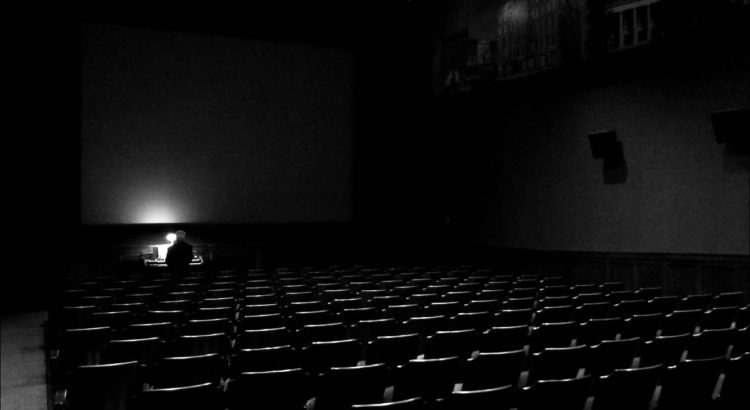
Last Friday I decided on a whim to go see The Lighthouse at the Michigan Theater; I’m a devoted fan of horror and thriller movies, and the trailer had peaked my interest a few months prior. I figured why not treat myself and go see a movie alone and get into the Halloween spirit. Based off of the trailer, I went into the movie expecting something terrifying and entirely unique; leaving the theater, I definitely felt like I had watched something unique, but I certainly wasn’t terrified. In fact, it’s hard for me to say whether or not The Lighthouse truly falls into the genre of horror; more likely it’s a psychological thriller. Hardly any scenes made me jump or frightened me, and in general there were more scenes where the entire audience was laughing, purely at the absurdity of certain situations. Needless to say, my feelings about the film were mixed, but after mulling it over for a while, I’ve started to understand that it had a much more profound impact than I first thought. Something was nagging at the back of my brain, something that made the film hard to forget, and the more I thought about it, the more I started to see why it’s so much greater than I first realized: because it creates this complete feeling of immersion that has you on the edge of your seat, holding your breath, and it achieves that incredible effect with so little flair.
 The Lighthouse is entirely black and white and is presented in a square aspect ratio, much like classic movies or shows like The Twilight Zone (a personal favorite of mine). This gives it an aesthetic that stands out from other horror movies today, and was largely what peaked my interest when I saw the trailer. It feels so gritty and stylized, like an old documentary that was never released, which pairs perfectly with the story of two grizzly men keeping watch over a lighthouse on a rock in the middle of the ocean, completely stranded and abandoned. That grit creeps into the characters, especially the older lighthouse keeper Tom, played by Willem Dafoe, who completely embodies the idea of a sea-worn sailor. This pairing of visual style and complementary characters makes the story feel so authentic: even though it seems so far removed from reality, it felt like I was sitting at the table with them, eating dinner and being dragged into their arguments. I didn’t realize the effect while I was watching it, which I think is further proof of just how convincing it truly was.
In the end, it was the power of the movie to draw me in that made it horrifying: it felt like I was a part of this eerie, stormy world, and every small element of horror was amplified by the immersion. The music and sound design throughout was incredible, being constantly oppressive and bearing down on the audience like a great storm. The few moments of shock and surprise hit much harder than in a typical thriller; they completely threw me off balance, either in disgust or confusion, and then kept me off guard, never knowing what to expect next. I can appreciate those qualities more now, having discovered how subtle they were in the moment, but how long lasting the effects were because I was so enthralled at the time. I think that makes The Lighthouse special in a way that most movies aren’t: it presents the audience with something subtle, uncanny, and disturbing, and immerses them completely until only afterwards they realize the crazy roller coaster they just went on. Not only does this style set the film apart, it makes me want to go back and watch it again.
Democracy by The Lumineers
A bonus track from the III album, the Lumineers presented this uplifting song reflecting what democracy had meant in the US in the past and how it possibly could be again in the coming years.
—
From the wars against disorder
From the sirens day and night
From the fires of the homeless
From the ashes of the gay
Democracy is coming to the USA
—
The Lumineers tell us democracy came because of “the wars against disorder, from the fires of the homeless”. That these pressing problems had made the people rise and consequentially, for leaders to act.
The Lumineers describe vividly, the source of frustration:
—
It’s coming from the sorrow in the street
The holy places where the races meet
—
And they implore us to go on, to never stop seeking democracy for everyone, despite facing major setbacks such as “reefs of greed” and “squalls of hate” in the chorus:
—
Sail on, sail on
O mighty ship of state
To the shores of need
Past the reefs of greed
Through the squalls of hate
Sail on, sail on, sail on
—
In the dramatic bridge with the violin playing in the background, they depict the gray picture they have of the country, the good. And the bad. Despite the USA being “the cradle of the best”, the band still thinks “that the heart has got to open in a fundamental way”.
—
The cradle of the best, of the worst
It’s here they’ve got the range
And the machinery for change
And it’s here they’ve got the spiritual thirst
It’s here the family’s broken
That the heart has got to open
In a fundamental way
—
The band also assert their feelings for this country without stating their political inclinations:
—
I’m sentimental, if you know what I mean
Oh, I love the country, but I can’t stand the scene
And I’m neither left or right, I’m staying home tonight
Getting lost in that hopeless little screen
—
Overall, the song is a great and pleasantly surprising touch to the album. It was an unexpected song nevertheless it drove the message home. That The Lumineers know that democracy is coming to the US, despite all the terrible things that have happened. The band also declare that they don’t favor a particular political inclination but instead hold to the stubborn hope that things will get better soon.
I hope you find this song eye opening, wistful, and that the song makes you hopeful for America again, too.
I hope you think of this song when the elections loom. And ask yourself, what is it you really want?
