New Season, New Experiences, New to College

It’s fall ya’ll.

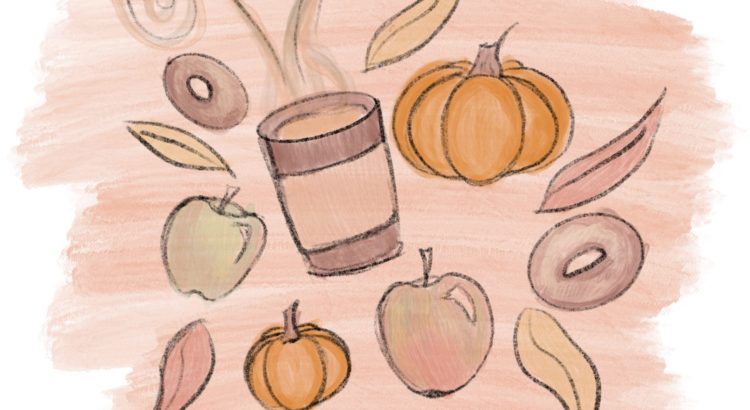
The season is finally here. The one filled with crisp air, changing leaves, everything pumpkin flavored, hot cider and doughnuts, apple picking, and spending time with friends or family. It’s my favorite season. But it feels so different here than it does back home 8 hours away in upstate New York.

Instead of eating homemade pumpkin ice cream at our local creamery, I’m eating the dining hall’s pumpkin flavored whoopie  pies. Instead of going to corn mazes and on haunted hayrides, I got stuck with a cider mill where you can’t even pick your own apples, and the pumpkins weren’t even grown on the site. Instead of spending my fall birthday with my twin brother, I spent it 439 miles away from him.

That’s not to say I haven’t enjoyed it here. I’ve gotten to decorate one of my classrooms for Halloween and explore the restaurants in Ann Arbor.  Plus being here provides new activities like venturing to the Big House for game days (I thought Michigan was supposed to be good at football?).

I guess the take away from this is just that college is different than home. I knew it would be, but trying to mentally prepare ahead of time doesn’t make it any less of an adjustment. I’ve been here for a month and half now and I’m figuring things out as I go. Whether you’re a freshman like I am, or an upperclassmen,  I’m sure many of you are still figuring stuff out too.

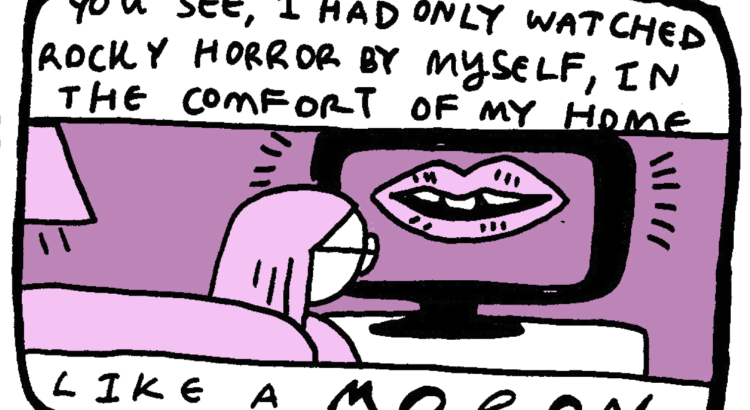
That’s my goal with my posts on this blog this year:  I’ll be creating some kind of doodle along with writing to keep track of events from my freshman year, big or small, that were important to me that week, or taught me something, or were just fun memories. Things that hopefully you can relate to as well. We’ll figure this college thing out together as we go through the year. Hopefully my sketches will improve with the practice too!
Discussing Race in Drama

When someone thinks about a drama class, their mind might go to thoughts of wacky warm-ups, diction exercises, or quoting Shakespeare. Regardless of whether or not these things are true, the realm of drama surpasses superficial presentations, often associated with real-world issues and events. One such topic I’ve had the opportunity to explore this year is the importance of race in dramatic works.

First off, what is race?  The word “race” is usually associated with physical characteristics, such as skin color or hair texture. It is often regarded as biological, even though it is actually not detectable in the human genome. The concept of race strongly ties in with how we as humans categorize ourselves and view others. Thus, race as a social construct strongly affects the social, economic, and political status of people around the world — but why does it matter in drama?

Exploring plays that directly pertain race and its impact on a character’s experiences can result in examining material that reflects a diversity of characters and stories. In a class setting, it’s interesting to hear what other students think of certain material and what specific topics impact them. As such, discussion is beneficial in understanding how others might interpret the same material differently. It is also important in gaining insight on how others’ identities contemporary subject matter — such as their race — can affect their views and experiences.

As students, reading plays featuring different identities can be beneficial not only for understanding others, but understanding themselves. The way people with similar identities are portrayed can impact how people view themselves and people with identities. If there is unequal on-stage action or prejudiced casting, then the resulting lack of representation can be damaging. How can an artist imagine being the lead or the hero if their identity is never represented? What does that mean for a person of color? This issue transcends personal feelings and looks at systematic issues. In English classes, drama classes, and drama productions, it’s common to work with material that leans towards predominantly white characters. There is progress, however, as over time artists have written and worked towards making plays more relatable or attainable to people of all identities (popular example: Hamilton). By creating or morphing material to feature characters with various identities (especially in more contemporary subject matter),  many artists aim to have a diverse range of stories represented.

Potential issues revolving casting in the theatre world contribute to the importance of acknowledging plays that feature people of color. In drama, it seems as though there is always the risk of whitewashing or race-bending. While this seems innocent, it contributes to racial exclusion. One way this can be addressed for students is by discussing it in rehearsal or class. A safe environment can lead to important discussions on why or why not certain things are effective or okay. Lack of judgment (though not necessarily opposition) allows for a beneficial experience for students in a way that allows for learning without fear of retribution.

The Art of Tyrrell Winston: Art or Appropriation?

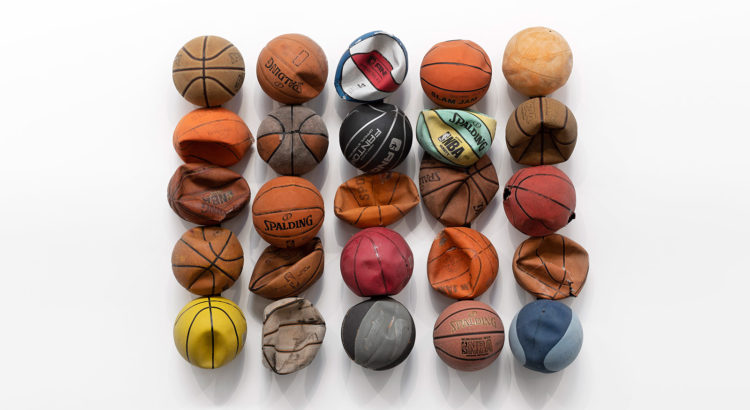
Tyrrell Winston is a contemporary artist known for his found-object artworks, which feature deflated basketballs, broken nets, and cigarette butt compositions. Living in New York, Winston walks around different neighborhoods and collects such “trash” to turn into sculptures, which are displayed in multiple galleries around the world.

Winston’s art is beautiful and thought-provoking–upon first viewing his work on social media, I was immediately captured by his deflated basketball sculptures, as their colorful vibrance has a unique beauty to it, and literally turns one man’s trash into another man’s treasure. I also enjoy viewing his cigarette “paintings” as well–their uniformity has pleasing aesthetic qualities and questions America’s obsession with smoking despite knowledge of its harmful dangers. Both basketballs and cigarettes have become unofficial symbols of “coolness” and Winston’s popularity certainly has capitalized on this. It’s intriguing and somewhat endearing how his works of art evoke questions about ephemerality and identity with showing simple objects.

On the other hand, I personally believe Winston walks a fine line between art and appropriation. Marcel Duchamp is considered the pioneer of “Readymade” art in which found objects are considered art by placing them into a different context. Duchamp’s work during the 20th century was astounding at the time, and some of his most famous works are Fountain, a literal urinal, and everyday objects such as a bicycle wheel or a shovel. Tyrrell Winston’s work utilizes these artistic ideas of recontextualization and makes them his own, yet there is a point when work becomes redundant. Some of his critics accuse him of being pretentious, unoriginal, and boring. I’m not sure whether his work is truly “different” enough to be so renowned and celebrated.

In any case, Winston is a distinctive artist. Take a look at some of the art below and let me know your thoughts on Winston’s work!

Overthinking as the Antithesis to Art

I am constantly overthinking things, whether it be focusing on irrelevant details, over complicating problems, psyching myself out, or getting overwhelmed by too many thoughts. It’s something I know a lot of people deal with, seemingly more in this generation than most, and it’s an interesting phenomenon. I can’t say exactly why I tend to overthink things (keep in mind I’m not a psychologist), but if I had to guess, I would say that it ties into the high expectations created by society and myself to be perfect, resulting in an unrealistic perfectionist attitude when approaching problems. I constantly have to remind myself that I’m focusing on the wrong parts of a problem and wasting time considering things that have little to no difference in my life in some futile search to be perfect. This problem of overthinking is most noticeable when I attempt to create art. Whether it be writing, drawing, making music, or even doodling, I always hit the brick wall of perfectionism. Those who know me might think I sound ridiculous; my work doesn’t usually speak of perfectionism, and it doesn’t seem like I always think things through. The truth is, that’s how I deal with my problem of overthinking: impulse and randomness.

An exercise in abstract art

When I sit down to write one of these posts, I start two or three different drafts on completely different concepts. I have a lot of great ideas and I can talk passionately about a lot of them, but as I start to write I often hit that wall, where suddenly it sounds ridiculous or unimportant and I psych myself out. Usually that’s when I delete the draft and start over with a new idea. This problem is often called writer’s block, but for me it’s a difference of being too critical of myself, not being unable to think of what to write. Similarly I also struggle to draw; although I’ve always had some talent at it, I never know what to draw. As a kid I would just copy the pictures from the how-to-draw books, not even the steps from beginning to end, just the final result. In the end I was great at drawing something realistically by looking at it, but when it came time to draw something new I always gave up. It wasn’t a lack of imagination, but the endless overthinking that frustrated me. As a result I don’t draw much anymore, and my doodles are just chaotic scribbles of frustration, but recently I discovered a way to get around perfectionism: by creating abstract art. It makes sense, especially considering how I often rely on impulse and randomness to get around overthinking. Abstract art practically embodies this approach, and I find that it’s a great way to create something; even if it’s not good, at least it’s better than creating nothing.

The moral of the story: if you struggle with creating things, especially art, just start with something easy or small. People often say that getting started is the hardest part, and even though I’m really tired of hearing it, I do think it’s inherently true. Aiming for perfection certainly doesn’t help either; if you always strive for something unattainable, you will never feel good about what you made, and likely you’ll be even less motivated to try again the next time.