break from AA

In the past summer, I traveled to two cities, New York city and Seattle. In Seattle, I was prompted to write this poem, finally understanding that I needed a break from being in Ann Arbor to appreciate it (I worked a part time job in Ann Arbor). Seattle was nothing short of great and the University of Washington provided that nice balance of living near a city and living near nature simultaneously. The mountains in the distance were beautiful and breathtaking.

I loved being in both cities. The experience was new, exciting and it always made me wonder in an alternate universe what would have happened had I gone to college near a city (I seriously think I’d be distracted by going out every weekend).

Regardless, at the end of every vacation I took, after exploring the nooks and crannies of each city, I pined for Ann Arbor and really missed it. And I realized all along, that I loved this town.

Fall Break is coming so go home. Spend time with friends and family. And let yourself miss Ann Arbor.

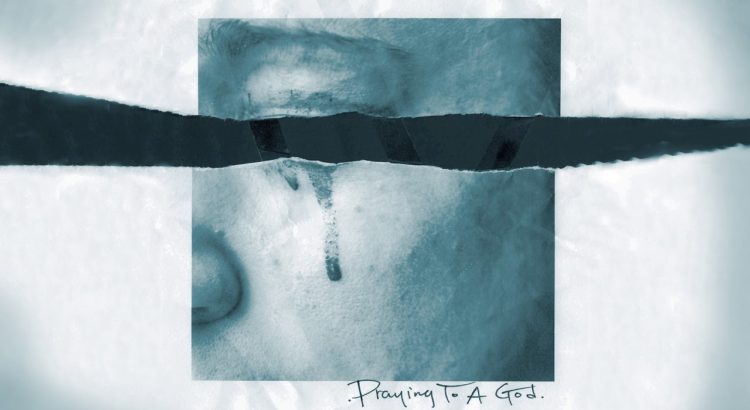
“Praying to a God” by Mr. Probz (LUKE remix)

I tuned in to my weekly discover on Spotify, absentmindedly listening to songs while I weeded through tangled thoughts. Midway through folding my laundry, the words from my stereo harnessed my focus into one single line of thought. I ran to my phone to check the name of the song “Praying to a God” by Mr. Probz (LUKE remix). I listened closely.

She’s praying to a god who won’t talk back
Her faith is dying to tears aside, she’s going off track
She’s praying to a god who won’t talk back, won’t talk back
Down on her knees said praying to a god who won’t talk back
Her momma believed that the devil had her dress on
So she’s out on the town tonight, she got her best on
Her daddy believed that the needle was a highway
So she powders her nose, she’s just looking for direction
It gets hard to feel the friction underwater
As she’s breaking down, she’s tearing out the borders
And too deep to save herself, she takes a pill that seems to help
Close her eyes, forget she standing at the alter

There was a story. The song writer uses euphemisms to gently describe a callous life, softened descriptions an intensely painful lifestyle surrounding drugs and hopelessness.

She’s praying to a god who won’t talk back
Her faith is dying to tears aside, she’s going off track
She’s praying to a god who won’t talk back, won’t talk back
Down on her knees said praying to a god who won’t talk back
– does she ever give up hope?
Her momma believed that the devil had her dress on
– Evil can come in disguise. Referring to a home wrecker?
So she’s out on the town tonight, she got her best on
Vengeance, put on her own dress…
Her daddy believed that the needle was a highway
– Her father is a heroin addict, so she looks for guidance from her heavenly Father, but He does not seem to guide her either…
So she powders her nose, she’s just looking for direction
– Powdering your nose sounds like a pampering gesture to get her back on her feet, like say cleaning up in preparation for a job interview. However, the reality of this story is the dangerous resort to cocaine as a means of feeling of elevation.
It gets hard to feel the friction underwater
 her coping strategy works for a moment, though she knows she’s drowning
As she’s breaking down, she’s tearing out the borders
– alas, the temporary high only leaves her feeling further submerged in her despair.
And too deep to save herself, she takes a pill that seems to help
– deeper in despair, she must find a stronger means of elevating herself, since she has more vertical distance to cover you could say
Close her eyes, forget she standing at the alter
– and life, through what could be the happiest moments, goes by in an apathetic blur

Then, I began pondering the meaning of the title. How curious it is that people have faith…and keep faith even when their god doesn’t respond to them or decide to let go. I dug up the novel song published in 2015 originally by the Norwegian duo Nico & Vinz. I’d heard of these guys! They did the radio hit “Am I Wrong?” that anyone with remote exposure to contemporary R&B music would know, but how come more people don’t hear this one? I always wonder what merits a radio hit. Praying to a God includes expressive language about the absence of peace and order, like what one would see without the presence of, for many people, God. Statistics show an obvious decline of organized religion. Why this is the first time in history that “no religion” dominates the results of surveys of Americans’ religious identity?

Throughout college, I’ve spoken with people who live with an absence of religion or are deeply grounded in one.

Disney Remakes and Representation

At the beginning of July, Disney revealed that the character of “Ariel” in the live action adaptation of The Little Mermaid would be played by Halle Bailey, half of the sister R&B duo Chloe x Halle. The casting of Bailey, an African-American actress, was met with a strong response. Fans were quick to take to Twitter, Facebook, and other social media platforms to vehemently express either criticism or praise for the casting. While many were pleased with the announcement, others argued Ariel should keep her distinctive look, which included wide blue eyes, bright red hair, and a pale skin tone. The hashtag #NotMyAriel generated response from both ends of the spectrum, with proponents of the casting suggesting that Ariel’s character is first and foremost a mermaid, therefore not exclusionary to any race or ethnicity. 

Just a few days after the casting announcement, the teaser trailer for Disney’s upcoming live action of Mulan was released. While people were genuinely pleased by the Asian cast, comments continued to stream in. Why would it be wrong to cast someone of a different identity for Mulan, but okay to cast someone that doesn’t look like the classic cartoon version of Ariel? Freeform, an American cable television channel owned by The Walt Disney Company, addressed this issue with an Instagram post. While discussing the Danish background of Hans Christian Andersen, the author of the original fairy tale version of “The Little Mermaid”, Freeform noted that “Danish mermaids can be black because Danish *people* can be black.” As such, Halle Barry’s talent, youth, and personality made her the exceptional choice for the part of Ariel, regardless of appearance.

The controversy over The Little Mermaid casting is an example of how attempts to diversify classic characters can be momentous. Ariel’s case is arguably different than that of characters such as Mulan, Tiana, or Moana, whose ethnicities and racial identities are integral to their characters and storylines. Along those lines, there is something to be said on the topic of representation.

In my childhood, Mulan was my favorite Disney princess. She was a strong, smart, beautiful female character that got the guy but also knew how to take care of herself (and save all of China). Growing up as a Disney and Mulan lover, I cherished the 1999 VHS of Mulan, dressed up as the title character for Halloween, and constantly sang “Reflection” in a squeaky, childlike high-pitched voice. There’s another reason I took a liking to Mulan, however. As someone who identities as an Asian-American, Mulan was the Disney princess that looked like me. The only Disney princess that looked like me.

For those that grew up watching Disney movies, it’s notable that diversity hasn’t always been a strong suit (as much as we adore all the princesses and other characters). Having a character you can identify with is important; the way that characters who resemble us are portrayed can affect how we think about ourselves. For a child watching a Disney movie, representation can enable them to see themselves in their heroes, which can be incredibly empowering. To some degree, I understand those who long for the cartoon version of Ariel – perhaps they have bright red hair just like their favorite princess.  But it’s also worth noting that casting Halle Bailey as Ariel could be incredibly empowering, especially since it wasn’t until 2009 that the first Black Disney princess, Tiana, debuted in The Princess and the Frog

What is your take on this topic? Comment below!


Link to more information on Freeform’s response

Vulnerability and Intimacy: Artist Grace Coudal

Multimedia artist Grace Coudal is an undergraduate student at the University of Michigan studying Art & Design and LGBTQ studies. In addition to her academics, she runs STAA COLLECTIVE, an activist artist group that explores themes such as identity, sexuality, and intimacy. Grace also co-founded Between Girls, a space for girls to have honest conversations about intimacy and identity. She also is an experienced designer, photographer, and fibers artist. I sat down with the 20 year old artist hailing from Chicago to talk about how she became an artist and her perspectives on art.

At a young age, Grace told me that she was into sports, and even rowed competitively for two years in high school. Ultimately it was a zine class in elementary school that sparked her need for creativity, opening her mind to making art that was personal, relatable, and could be sellable. Grace says the teacher of that zine class showed her that there was more to art than just crafts, and to be accepting of one’s gender and sexuality. Later on, Grace would be out on the water for crew practice and let her mind dwell on the artistic projects she could be doing–she then realized that she could be putting her time towards art instead. For the rest of high school and in college, Grace met other unique artists and realized that art was truly her passion.

Art has many meanings–to Grace, she believes it to be “a universal language that challenges and enhances and confuses your brain in a way that other fields don’t. It’s so much deeper than day-to-day stuff, and up to the person to define.” As an artist, Grace strives to be honest and vulnerable in order to make others feel seen and heard–art with social impact is her speciality. She says, “Conversations, books, podcasts inspire me to make art that talks about [sexuality and human connection]. I make art that’s seen as taboo and I love hearing other people’s stories.”

One inspiring project of Grace’s is a suit and lingerie set created last year promoting rights for sex workers. Grace explains that she is “so satisfied with it because it’s impactful and a wearable–it’s intriguing material and people interact with it, so it continues to have a life. I like to interact with art daily by wearing it.”

Clearly, Grace is on a path to do great things and influence others to be truly open and vulnerable. For now, she’s a junior in college, but sees herself as an entrepreneur of a sustainable business–“I never imagined working for someone else. I envision running a brand or art group and still pursuing my own work. I know it will happen.”

Sex Work is Real Work (Suit jacket)
Sex Work is Real Work (Lingerie set)


Alive with Pleasure by STAA.


Kiss by STAA.


Between Girls by Between Girls

The intersection of science and art via “Revival Field”

In my history of art class this week we talked about global artistic responses to climate change. From photography to mixed material paintings, we saw the range of experiences that can arise from a single issue. We also noticed how one macro issue can be broken down in infinite micro issues that are specific to geographic locations, communities within larger populations, unique natural resources, and more.

My interest peaked when we entered a conversation about Mel Chin’s “Revival Field.” Considered to be an outdoor installation, “Revival Field” is an artistic work that directly engages the environment. At face value, it appears to be a garden with interesting geometry built into the fencing, though it has a much deeper function. Placed near a notoriously hazardous landfill in Minnesota, the plant species within the garden were curated to extract heavy metals from the contaminated soil. This continuing project that began in 1991 exists in partnership with a senior research agronomist to find on-site, ecologically sound, and low-tech means for detoxification. In addition to sculpting the natural elements of the area, “Revival Field” involves real effort towards the natural area’s rehabilitation.

Is “Revival Field” art? A science experiment? Or both?

As a dual-degree student in the arts and sciences, I was floored to bring this part of my identity to the table as a talking point because the fight to legitimize the connection to my areas of study is one I am constantly in.

The arts and sciences share common ground as they’re similarly truthful, subjective, and educational. I agree that science has strong associations to “truth,” but transcendent art has its own form of fundamental truth having to do more with the human condition instead of biochemical mechanisms. Data may be considered finite, but the interpretation of data is almost always subjective. Framing is done around a hypothesis (and publication bureaucracy) just as art is quite literally framed. Lastly, art and science exist to teach. They explain phenomena, theories, and feelings in distinctive ways that people resonate with.

My answer to the classification of “Revival Field” is that it is both. It is both science and art. The coexistence of the academic and artistic is what makes this project’s initiative so unique, and I believe there needs to be more of it in the world so people can stop thinking of the two disciplines as mutually exclusive.


Below is a short video from the artist and scientist about “Revival Field.”