“what is art?” Post #3 – The Art of Passing the Time Away

Lectures are tough. Interesting? Indeed! But still, tough. 


All Stamps students are required to take two art history courses, Art and Design History and Art and Design in Context(which is basically Part II of the first one). Don’t worry, I can assure you they are as “bleh” as they sound. Occasionally there will be exciting topics in lecture and discussion but for the most part, the class is filled with information I will not retain even if I tried. Last semester many students decided not to show up because they believed they could make better use of their time by working in the studios instead. Since so many people skipped, my professor eventually made it extra credit if you attended. lol.


The small “rebellion” towards our required course led us to this semester for Part II of Art and Design History where my professor(same one:)) has implemented a new strategy to reel us in and trap us for an hour. Her secret weapon… iclickers. These $40 little remotes are the devil. They allow my professor to smirk at us and say, “Lecture is not mandatory but it is welcomed.” To put the cherry on top, this semester’s lecture is at 5pm. Although it is not tooo late, everyone is dead by the time lecture rolls around and most people fall asleep during it. Honestly, very good lecture entertainment if I do say so myself. 


To make these one hour lectures on Monday and Wednesday go quicker, students chat and doodle. I mean it’s art school. What do you expect? Doodling is a pastime and makes the clock move faster than one can imagine. My “note-taking” pages in my sketchbook are filled with a bunch of random thoughts, weird monsters, the occasional note, and drawings of my professor. The other day I noticed it was not just my sketchbook filled with these things but everyone else’s as well. This brings me to my “argument” for this week…drum roll please…du.du.du.du.dudududud…doodles are art! I started to ask all of my friends to see what consumed their notebooks and was happy to see their pages dancing with doodles. I mean, a whole gallery could be dedicated to ARTDES150’s lecture doodles! Okay. That’s dramatic. A wall could be dedicated to ARTDES150’s lecture doodles!*


My favorite characteristic of doodles is that you don’t have to try to make them. You kind of just do it, it’s there, and nothing really happens besides simply bringing the one who drew it joy. (Although I must mention too, sometimes doodles can start a career. There is literally an artist named Mr. Doodle, who creates patterns with doodles. Granted, they are pretty amazing, but still, there is proof of a doodle career!)


Furthermore, another quality of doodles I enjoy is that literally, EVERYONE creates them. Going to the University of Michigan I have met numerous people with a variety of majors and they all have lil doodles in their notebooks too. Whether or not people believe they create art for enjoyment, there is proof it is inside all of us. Doodles are the evidence that everyone has creative energy and although they are usually small they can lead to big ideas. 


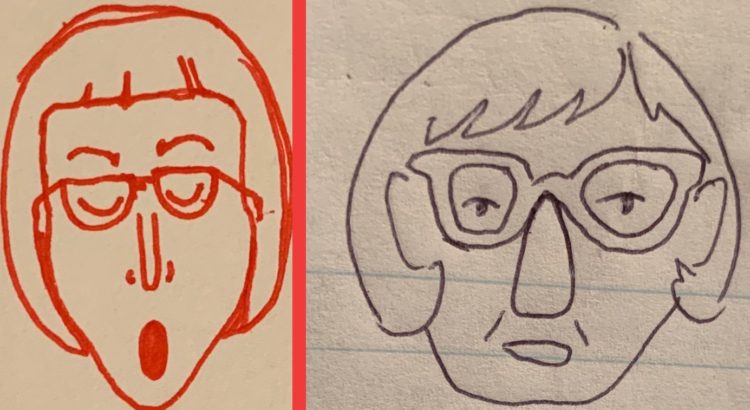
This week I encourage everyone to doodle there professor like the Stamps kids in ARTDES150. It is quite fun and again, passes the time. For inspiration and to end this post, here are a couple of snapshots of the doodles that fill the Stamps Lecture Hall. Enjoy!

 

The Art of Keeping Plants Alive in College

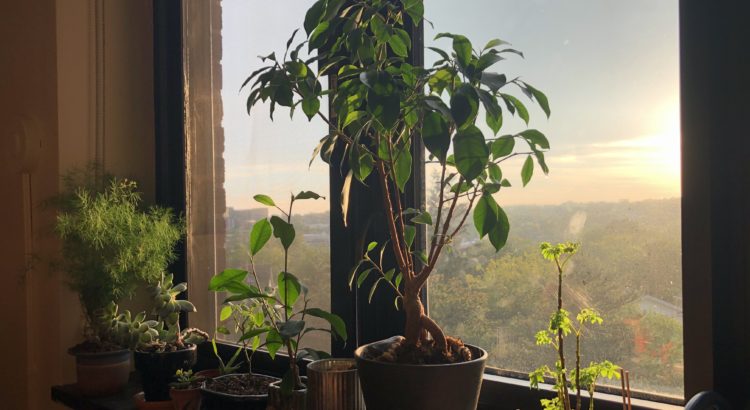
My windowsill is a small greenhouse, covered end to end in a variety of fascinating plants, each with their own personality. I grew up surrounded by trees and nature, which helps to explain why I have such a fondness and appreciation for plants of all varieties. Plants not only represent growth, life, and survival, but more importantly they each carry their own story, a unique tale that can offer knowledge of life on a smaller, pot size scale. A unique relationship is formed when you’re responsible for life, no matter how small, and the trials and errors that come along with this responsibility have more impact than they might seem. I specifically have 10 plants, comprised of succulents, bonsai, cacti, and a rose bush, the oldest one being a succulent that I’ve had for at least 4 years. I wasn’t always skilled at raising plants however, and I’ve accidentally killed more than I would care to admit (me and bamboo are particularly incompatible, although I’ve tried many times to make it work). Now that I’ve figured out a system that works for me and the plants, I’ve had the confidence to expand my little garden, the most recent addition being the small rose bush which blooms during the winter.

One of my most ambitious and difficult projects is pictured to the left, a square ceramic planter with a sand garden and spot of land just barely big enough for a bonsai tree and a monkey sitting underneath it. The concept was simple: a zen garden combined with a bonsai tree, representing a miniature place of solitude. Originally there were two trees, which I learned the hard way was overly ambitious, and it has also been a struggle to keep the sand separate from the soil, especially when watering the bonsai. Just recently the last tree suffered from the move back to college; a lot of it inexplicably turned brown and fell off, and I was prepared for the worst. But now it is teeming with new life, sprouts up and down, growing rapidly with renewed vigor. The personality of this plant is young, and its story shows that sometimes starting over is the best way to grow into something better.

Each one of my plants has their own story, each of them unique and equally interesting. Although it can be a challenge to take care of them during a busy college schedule, the reward is always worth it and I’m always glad I have them. They offer a reprieve from the city and remind me of the beauty of nature, something that I find is often forgotten about today.

In The Eyes of an Architecture Student: An Intro

As an architecture student, I often get questions on what that’s like, or people just looking at me differently because I am in such a different discipline than them.

Well, to answer that question, I’ve always felt that it is natural for me and my classmates to gravitate towards similar visual interests, and see the world in different perspectives than people of other disciplines.

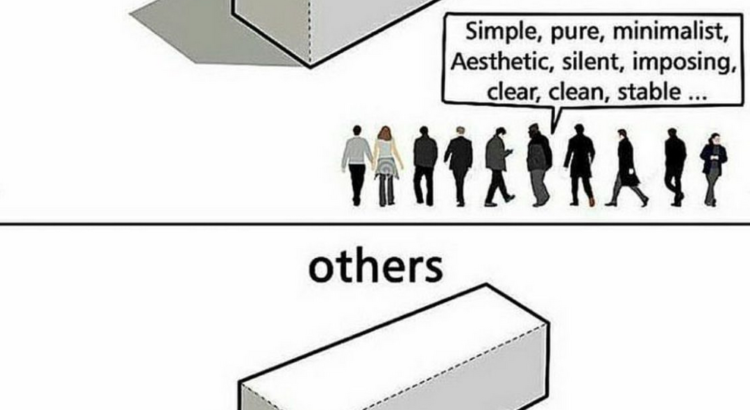
The image above is a meme I found online, that perfectly sums up what exactly this looks like, and what it feels like when I step back to see the big picture, when I amuse myself, thinking back to the feedback sessions during class and how it must look to outsiders with their first architecture school exposure, or a conversation with a non-architecture friend about my projects who are genuinely interested in understanding my ideas, but sometimes just need a bit more rephrasing or adjusting their thoughts so they are able to comprehend what exactly I am talking about.

Literally, the other day in class, we were discussing the significance of a picture of a glass of water resting on a clean, wooden table. I caught myself, making detailed observations or odd questions, like, the water depicted is so clean, further reinforcing the photographer’s purpose to demonstrate the cleanliness of the facility that produced that water. Or, the glass has only been filled with x amount of water, could it be a symbolic representation of the photographer’s ideological bias?

Others would likely see this as me being an over-thinker, or just some strange girl who has an interest in finding beauty or extra, made-up meaning in mundane objects, but I think this sort of logic of thinking is quite typical of architectural education, for instance, when instructors are having a conversation with us, about a designer’s intentions, or when we are asked to interpret someone else’s work, and we try to relate to their design, making it a valuable experience which is able to contribute to our own future design-work.

I definitely find myself more in-sync with my abstract interests whenever I photograph. I’d just visit a place, or an object, look at it from different points of view, then capture the images through my camera lenses, and it’s only afterwards, when I’m looking back at the images, that I realize these must look like such random shots to someone else, or sometimes even I question why I first found that view so intriguing, or how I even got the idea to shoot in such a perspective.

I have many other experiences to discuss, but I won’t write your eyes out, so I’ll discuss more in the following weeks, so stay tuned 🙂

And if you want to checkout my abstract photography, follow me on Instagram @themichiganarchitect !

House shows

Watching house shows, from Fixer Upper to Selling NYC, are always a great watch for me. I usually like to watch the process of buying a house rather than fixing up a house, since the couples/family usually have to prioritize what features of a home that they would like in their newest buy. You also get to compare houses and if you’re like me, you’re always hoping that they choose the house you like. 

After watching many of these shows, I start to notice more features that I wouldn’t normally notice in a house. Features such as popcorn ceiling, Jack-and-Jill bathrooms, baseboards and skylights are new terms I learnt whilst watching these shows. Even my youngest sister once pointed out whilst we were driving near the neighborhood that one of the houses had “character”.

Some of the shows feature tiny houses, such as the show Tiny House, Big Living. They typically showcase a house which is sort of like a trailer, it can be hooked up to a car and moved around. These houses would have a kitchen, bathroom and bed, all at an average size of 180 square feet. Some of these houses feature a composting toilet, a type of toilet I know exists in the Dana building but have yet to set foot in it. Besides that, I find it fascinating that people elect to live in a small space, acknowledging that most of their time will be spent outdoors anyway. Another perk of living in a tiny house is that you won’t be tied to a hefty mortgage in the years to come as they cost anywhere between $10,000-$180,000, a whole lot less than what typical houses cost.

In the future, I hope watching these house shows help me decide what kind of house I would want when buying one. A lesson I learnt from watching these shows is: location, location, location!

(Image credits: Google Images)

colored pencils as a token of friendship

I am a senior now, trying to resist the aching nostalgia as graduation approaches. Alas, it seeps into my thoughts and provokes introspection on my years in Ann Arbor. Though the reality of growing up might sting, what a gift it is to feel so deeply and to have matters to reminisce. I think about whether or not I have lived these years to the fullest…like Erik Erikson’s ego vs despair but at the end of a collegiate Wolverine lifespan.  I remember the pool of emotions that I had my first month at the University of Michigan: the thrill of being immersed in a the sea of maize at Michigan Stadium, the overwhelm from course syllabi stacking in my folder, the joy of making a new friend, and the humble pride to have been accepted to experience all of it. To those reading this and especially to you freshmen, embrace every feeling, crying alone because you’re homesick or sloshing in the wrong shoes as your feet prune when rain came unannounced on your walk home from central. You’ll blink and then you’ll be backpacking for senior year without a student advisor hovering over your shoulder, finally knowing how to do it on your own.

The story that follows felt apropos for the debut of my posts for senior year. One decision I made as a freshman gave definition to my entire college career.

With an orientation friend, I navigated (that’s a lie; my direction was aimless) through the crowds of unfamiliar people. I felt overstimulated by the innumerable extracurriculars, each of which seemed cool to me, but nothing really brought the color to my attention. What does it mean to bring color to my attention? I perceive emotion on a color spectrum. Something that evokes a high intensity feeling will illustrate a color scheme in my mind. E.g. Somber is a palette of grays and blues. Something “colorful” to me means that I feel passionate about it as passion encompasses an array of profound feelings.

Anyway, immersed the diag, I found one table unlike the others. Most tables presented free bic pens and those rubber pockets that stick to the back of your phone, but this table offered a neatly packed case of colored pencils…and a pocket-sized sketchbook! Though the colored pencils brought a visual color to my attention, colored emotions soared through my head. I redirected my interest in art to pursue a career in Biology and Spanish, but how I missed art already. I’d longed for an artistic outlet. Admiring the subtly awesome people, I thought: who are these people and how do join their club? This was the Arts at Michigan booth.

And so applied to be a student columnist, for which I wrote an article about the sonic and lyrical ingenuousness of Bon Iver’s 22, A Million album as my formal application, and thus began my 4-year journey with Arts at Michigan. Subsequently, I had my first meeting with Joe, my boss who endlessly encourages us inksters on our artistic endeavors and reinforces that our ideas matter with the mantra “share your genius.” This job has promoted my exploration of the endless opportunities to see and to share the arts on campus through my own creative lens and to find value in them.