2019 Oscars

The beginning of the year is known in Hollywood as the award season.  Where is seems like every week there is a new award show on TV. The most popular being the Emmys, Tony’s, Grammy’s, and the Oscars.  Each of these four popular award shows are based on a different category of entertainment: Television, Broadway, Music, and Movies. There is more than one award show for each category, these are just the most popular and seen as the most prestigious.

The Oscars seems to be the biggest award show out of the four, with movie stars coming from all over just to be at movies biggest night.  The Oscars gives awards for a large variety of categories from movie scores, to costumes, to the more common categories like best actress and actor.  Most people only seem to know about the “bigger” categories because those are the only ones broadcasted on television. Most of the other awards are done beforehand and are not shown.

The Oscars also has awards for different types of films.  There is the biggest award of the night, “Best Feature”, and there are also best animated film, best short, and best documentary just to name some examples.  

Generally the public has not seen the majority of the films nominated for Oscars, but it seems that this has changed a little in recent years.  For example “Black Panther” and “A Star is Born” are both nominated for best picture. “Black Panther” was one of the most successful movies of 2018.  Most people still have not seen the best documentaries or the best shorts nominations. However, the Michigan Theater in Ann Arbor is playing all of the Oscar nominated best shorts and best documentaries.  This can give people a chance to go and see them before the Oscars, and it gives the opportunity to see something that most people would not have the chance to see otherwise.

lost words instead of last words.

Have you ever come across a word that was lost to modern English? Or a word that can’t be translated from another language? Today I found a few that made me forget to breathe.

Of Welsh origin, hiraeth (n): a longing, or nostalgia, for a home that never was.

As unspecific as this feeling seems, the human condition dictates that it resides somewhere in everyone. It’s dark and pitted: something that we all feel but never talk about. Deeply hidden and elusive, a sort of emptiness that knows no remedy.

Of Olden English origin, uhtceare (v): lying awake before dawn and worrying.

All I can say about this one is: thank (God is a woman) I’m not the only one.

It’s been so discouraging to hear so many accounts of the calmness associated with dawn. I battle with the idea that the second you wake up is the easiest, when the fullness of reality hasn’t woken itself up yet to greet your opening eyes. What happens if there is no moment of peace? What if you start the day in suffocation?

Of French origin, sillage (n): a lingering wake of fragrance.

Smells are the some of the strongest triggers for memory and emotion, which is why this word speaks well past the notion of perfume. Different than every other sensory stimulus, smells are able to bypass thalamus integration and go straight to the olfactory bulb in your brain next to the amygdala and hippocampus, which house emotion and memory centers. This close proximity and strong association is no coincidence.

Smell is like a beautiful ghost. A benevolent reminder of what used to be.

Of Argentinian origin, mamihlapinatapai (n): two people looking at each other hoping the other will do what both desire but neither is willing to do.

Too familiar for you? Me too. Forethought and anticipation and desire hanging in the air. You entertain the thought of lust for a second, playing out chances that this is the moment it happens, knowing that they’re thinking it too. The seemingly unbreakable, yet fleeting eye contact is followed by the sickening realization that this might be all you ever have.

As a student in the performing arts, I’m a firm believer in the existence of meta-language. Some things just cannot be described by words alone which is why film, visual arts, dance, and music illicit such different reactions than the literary arts.

Today I was proven wrong.

a few needful poems

If you don’t read much poetry, I would highly recommend these poems– they’re beautiful and poignant, and impart a deep trove of wisdom on the subtleties of race relations in America in such a small amount of space. 

“Theme For English B” by Langston Hughes

https://www.poetryfoundation.org/poems/47880/theme-for-english-b

When his white instructor prompts their class to write something that comes out of them naturally, Hughes questions what it means to write something truthful or authentic about himself, especially when the world often shapes how he views himself. The poem gets to its central conflict of the definition of the self when Hughes questions, “So will my page be colored that I write?/ Being me, it will not be white./ But it will be/ a part of you, instructor./ You are white–/ yet a part of me, as I am a part of you./ That’s American.” Essentially, he is proposing that though he has a different background than his instructor, they are both part of each other and the larger American narrative, whether they like it or not. Though this is true, Hughes still acknowledges, at the end of the poem, that there are still power imbalances in place that make equal and open exchange of ideas difficult: “As I learn from you. I guess you learn from me–/ although you’re older– and white–/ and somewhat more free.”

“Meeting A Stranger” by Sharon Olds

https://muse.jhu.edu/article/505268

https://www.youtube.com/watch?v=3w_uaeYJi7c (this is her reading the poem– she’s spectacular at performing her poetry, so it’s worth a watch)

This poem is from the perspective of a white person painfully aware of the connotations of being served by a black woman in a restaurant in the contemporary world. She begins the poem by discussing how the two of them meeting– Olds, a white woman, and this stranger, a black woman– is unequivocally joined by their mothers and fathers and “what they might have/ thought of each other”, and by their people and how they must have historically interacted with one another. She says that these ghosts of their pasts are faint– “quivers of reflected/ light on a wall”, but their presence is palpable. This poem is not from the perspective of a minority black person reflecting on their messy slew of identities working with and against each other, like in “Theme For English B”; rather, this poem is from the perspective of a white woman who recognizes her privilege and the American history that has allowed her– nay, rewarded her– for her ignorance of the suffering of African American peoples. Whether or not the history is so obvious in the room is not truly the question here– rather it is that she is recognizing it and taking responsibility for it.

“Poem For the Young White Man Who Asked Me How I, an Intelligent Well-Read Person, Could Believe in the War Between Races” by Lorna Dee Cervantes

http://aspotlightoflornadeecervantes.blogspot.com/p/poem-for-young-white-man-who-asked-me.html

This poem is loosely addressed to a young white man, though the address is not as personal and intimate as it is in Olds’ “Meeting a Stranger”. There is something defiant, pained, and outraged about the tone of the poem, as though the whole thing is just an trembling, explosive tirade against the young white man’s ignorant comment. It does not carry the contemplative, semi-idealistic, ruminating tone that is prevalent in Hughes’ and Olds’ poems. In the last part of the poem, Cervantes describes herself as “a poet/ who yearns to dance on rooftops” and enjoy and understand life. However, she says she is constantly reminded that “this is not/ my land/ and this is my land.” The last few lines of the poem bring back its central question: Cervantes concludes that although there may not be a war on races specifically labelled in that way, there is certainly still unrest and dispute– “there is war”.


the mundane everyday

The alarm blares out into my pillow, muffling the sound just enough so my roommate doesn’t awaken to it. One, two, three, fifteen minutes and I’m up, toasting my imaginary bagel – actually I eat bread- and making coffee before my first 10am. It’s another day, just like it is for the rest. 

Nothing wildly interesting permeates through the diag air. It’s more like a fog of routine and looming exams descending upon everyone, slowly. It chokes for some, for others it compresses us of our oxygen, but we are ready. We’ve seen this coming

Inescapable. Inevitable. We all knew this was coming.

Maybe it is boring

Routine lectures

Routine checking our phones in class

Routine rushed hellos

Even the biting cold is routine. But I choose to observe these supposed mundane days, weeks, semester differently. For if we continue on this trajectory of only waiting for the weekend, spring break or summer to come, we won’t learn to be grateful for the small things.

At work today, he made my day. I’m pretty sure I was knackered by terrible weather and annoying obnoxious chatter before I came to work. All he did was say thank you and easily, easily I think “maybe not such a bad day after all”.

All I did was be polite and gave my best customer service by saying “You passed and you’re all set”.

Thank you stranger taking Gateway, for wearing your kindness with you into East Hall. For saying “thank you” as if I had a huge role in helping you attain that pass after 10 tries. I saw relief written on your forehead and you wore it like a winner.

These mundane days are extraordinary for its mundane-ness. The usual crowd that floods into the diag, hurriedly rushing to the next back-to-back. For regular squirrels that peek out here and there. For the condensation on my windows, sustaining my plants I’ve never watered since September.

Somehow they’re still alive.


(Rushed Hellos by Sarah Shu)

Free Improvisation

The concept of free improvisation has been on my mind a lot this year.

Free improvisation is basically music without rules. No rhythmic rules, no tonal rules. It can be anything you want, freely composed in the moment. Hence the “improvisation.”

The University of Michigan has an ensemble dedicated to this musical practice called the Creative Arts Orchestra. There are no restrictions on instrument type or degree level– the only requirement is a willingness to open your mind to a new way of creating music.

This semester we have a mix of all instrument families: strings, brass, woodwinds, and percussion. 21 people in total come together to create an improvisational ensemble to express creative ideas until the music naturally comes to an end. Every improvisation yields special moments of both togetherness and separateness. Because we are responding to eachother, everyone has the space to take a solo or simply accompany. We learn how to use our instruments to express our emotions. We learn to compose in the moment. We learn how to listen. We learn how not to play.


Free improvisation has greatly improved my skills as a musician. It’s given me more confidence in my abilities. Getting the chance to play with people I don’t often play with is a reminder that my world doesn’t have to be so small. I’ve started beginning my practice sessions with short improvisations so I can warm up my fingers, find the core of my sound, and wake my viola up a little bit before I start looking at repertoire. Sometimes I’ll pick different keys to challenge my brain and change up finger patterns. I’ll make up my own fiddle tune. I think there is so much value in being able to make music away from looking at a piece of paper. Improvising allows me to use my creative and artistic side, when so often in classical music I feel like I’m a robot reading notes off of a page. If you play an instrument, see what happens if you try to make up a song in the moment. Once you start doing it enough you’ll find yourself in a sort of meditative state, and if you feel ready to start playing with others, come join us in CAO.

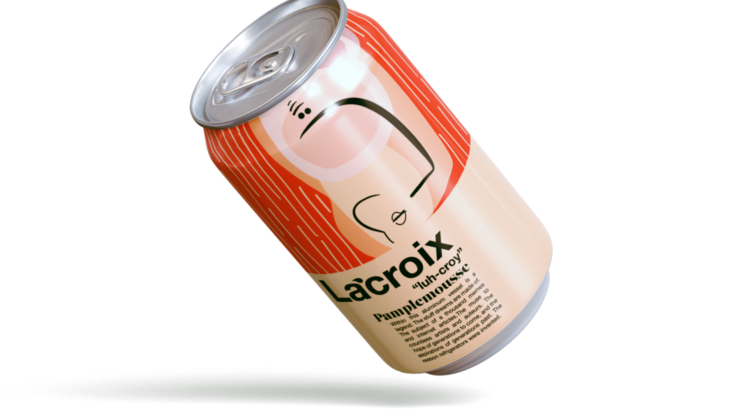
“Luh Croy”: The Unauthorized Rebrand

La Croix: we all know it as the sparkling water packaged in bright, multicolored cans. Whether you love it or hate it, you can’t deny La Croix’s revamped global presence and rising popularity. It seems like everybody is obsessed with the beverage.

Oust, an Atlanta creative agency took it upon themselves to refresh the brand’s image (unofficially). Sick of carrying around a nerdy, outdated-looking can, the designers set to create a new image. Throwing away the cans that “look like the set of a tv movie set shot in the 1980s,” the team delivered a modernized update, complete with humorous descriptions of different flavors. Perhaps your favorite is Pamplemousse, “the stuff dreams are made of,” or Pure, a can of “sparkling beauty.”

There’s even a petition you can sign to officially rebrand the La Croix branding: https://luhcroy.com/

What do you think of this potential new look?