
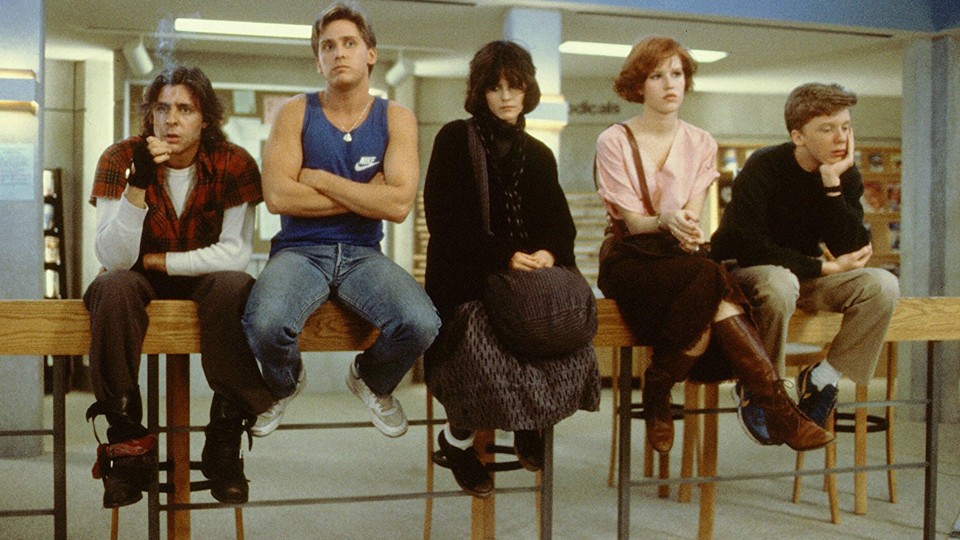
John Hughes Crystallized the Best of Being Kids in America

When I was still a film critic for The Michigan Daily, I went to a film festival at The Michigan Theater showing classic 1980’s films starring the Brat Pack as part of its “Kids in America: 80’s Teen Classics”. The theater didn’t publish why these films were being shown in the midst of Halloween (even after I sent them an email, the assholes), but their pervasive influence in pop culture from enduring quotes to merchandise is proof their legacy lives on.

Of course, a showcase of these movies would be incomplete without discussing the work of director-screenwriter and Michigan native John Hughes. He is said to be the pioneer of the teen film genre for good reason. His careful attention to organic dialogue is consistent throughout his repertoire. But what sets Hughes’ films apart is that he gives his teenage protagonists the respect they deserve. There is never a hint of condescending even in the midst of teenage problems one quickly outgrows after graduation.

Something I appreciate of his work is that he used vastly different protagonists to tap into different facets of American ideals in adolescence. “Ferris Bueller’s Day Off”. I have heard friends and celebrities alike call the film their favorite of all time due to the quintessentially American joie de vivre it conveys. If a baseball game, an art museum and fine dining is supposed to be the epitome of the good life in America, then I am underwhelmed. Lots of people have attained these ideals, as fortunate as they may be. But the way Ferris sticks it to The Man by refusing to take an exam on a subject he plans on never using is what keeps the film timeless. It kept the movie for me from being a purely hedonistic romp through Chicago to an escapist trip the “everyteen” protagonist deserves as they make their way through the awkward stage of not being a child yet not quite being an autonomous adult.

The grandeur of “Ferris Bueller’s Day Off”’s plot distracts from one of Hughes’s strengths that keep his legacy alive: having a keen eye for high school social hierarchy. “Sixteen Candles” and “Pretty in Pink”, both starring Molly Ringwald, feel a lot like the same film on the surface. The well-trodden tale of a girl pining for a boy who is unattainable due to age or socioeconomic status could have easily fallen flat as a cliche romance starring teenagers. But the world in these films are so lushly populated by opinionated friends and family that the societal pressures driving the heroines’ decisions recreates those faced by teenagers in real life.

In the same vein, the director-screenwriter had a keen appreciation for the stock characters that populate American narratives of high school. This is showcased best in his classic “The Breakfast Club”. Having essentially caricatures of the five kinds of people you meet in high school forced into interacting with one another might sound lacking in depth. But the honest backstories and sincere performances elevate it to a gripping look at detention as a microcosm of high school social ills that ring true today. Though a friend of mine recalls laughing hysterically at the scene where the club divulges why they were in detention in the first place (after smoking weed no less), I was moved deeply. Here was a screenplay that understood how teenagers present themselves. Moreover, here was a movie that knew that teenagers’ problems are as real as those of any adult drama.

YA author John Green seems to have carried on Hughes’s torch in contemporary times, not only in content but in commercial success as well. Green’s novels and indeed the YA genre in general transcend their target audience to assimilate into America’s mass culture, much like Hughes’s films did thirty years ago. So while there is no obvious reason why to screen teen films from the 1980’s in October, there is never a wrong time to do so. Adolescence is an exciting time. Capturing the period you have your whole life ahead of as you begin to gain independence lends irresistible optimism and romanticism to any story, regardless of who experiences it.
The Top 5 Best Things About Being In the Theater

This week, the Dance Department moves into the theater as tech rehearsals for our annual Power Center show begin. These next two weeks are a time of intense rehearsals, long days, and tons of homework. Moving into the theater, though, makes everything worth it. Here’s why:

  1. Feeling like a diva. It’s such a rewarding feeling when we first sit down in our assigned dressing rooms, one lightbulb lined vanity mirror per person. Seeing our names laminated and taped against the glass, switching the lights on so that they illuminate our faces. Even if it’s just for a couple weeks, getting to sit in front of those mirrors is so incredibly validating. Getting ready for the show is almost as fun as performing itself!
  2. Spending hours in the theater. Technical rehearsals and cue to cue can be long and tedious, but each moment spent in the theater on the stage is a blessing. Standing at the front of the stage, looking out into an empty house, imagining the performance nights ahead. There’s something magical about just standing onstage, something that is irreplaceable.
  3. Getting to hang out with your cast for hours. Because our department is so small, we are all pretty close. However, during Power tech week, we spend so much time together between technique class, rehearsal, warm-up class, getting ready for the show, and performing that it’s basically a two-week sleepover with your favorite people.
  4. What we work all semester for. Even if the dance is one that we’ve rehearsed countless times, doing it in front of a sold-out house makes every movement new again. The energy is higher, each gesture more precise, the intention more clear. The high that comes from audience applause and self-pride is one that cannot be reproduced.
  5. Knowing that you’ve improved. Each show comes with its own set of distinct challenges and responsibilities, and each show pushes every performer to discover something new within themselves. The knowledge that after you’ve closed a show, you’ve pushed yourself to a new place in your dancing is priceless.

Winter 2018 Olympics: Biathlon

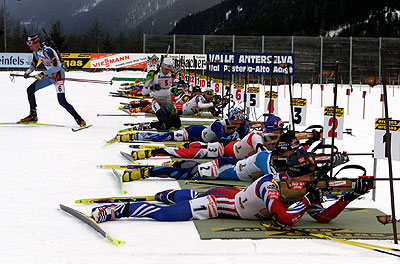
The Winter Olympics are two and a half weeks away in Pyeongchang, South Korea.  The Olympic qualifier competitions for most sports have ended and the athletes are preparing to travel to South Korea to compete in the highest level of competition in the world.  The Winter Olympics have less sports than the Summer Olympics, and most of them aren’t as well known to the public.  One of the sports of this nature is the biathlon.  The biathlon is a mixture of cross country skiing and marksmanship with a rifle.

A biathlon is is similar to a triathlon except, as one can probably tell by the name, there are only two events instead of three.  The athletes cross country ski through a trail/course and stop two or three times to shoot at targets in different positions. Depending on how many shots it takes to hit the targets time is added to the athletes score.  The person with the fastest total time wins the race.  The two positions that the athletes shoot in are standing up and laying down on their stomach, which is called prone position.

The athletes have to hit five targets at each stop.  If an athlete misses a target then they can choose between three different punishments to do that will add time to their total score.  They can either have one minute automatically added to their time, ski a lap which is usually about 150m (it takes the best athletes about thirty seconds to do this), or they can shoot three extra times and at the end they have to complete a loop for every target they did not hit.

These two sports separately don’t seem to go together at all, they are two very different skills.  One generally never needs a rifle whenever they go skiing, unless they are hunting.  This sport reminds one of what people in the cold climates would have to do for food in a time before industrialization.  These athletes have taken what used to be a necessary skill to survive in some parts of the world and have made a sport out of it.  A Biathlon requires the athletes to be equally good at both skills.  If one is great at skiing but a poor marksman they will have to ski much more for every shot they miss which would take much longer than if they had originally hit their target.  Similarly, if an athlete is a great marksman and not as good at cross country skiing then they will get to all of the target areas late and this will negatively affect their time.  This requires all of the athletes to be excellent at both seemingly unrelated skills.

Athletes who compete in the biathlon races at the Olympic level are outstanding in both sports and could probably medal in marksmanship and cross country skiing individually.  But instead they compete together, which shows an extra ability and skill.  The biathlon will be a sport to watch in the 2018 Winter Olympics that doesn’t get much attention at any other time or place.

Discovery in a Song

You ever hear a song, have heard it many times, and the words stream in one ear and out the other? Then one day, for the 100th listen, instead of passing through your head, you listen to the words. The words are gripped by emotions, and there’s newness in a sound you once thought you knew because suddenly the words register, and the song becomes of its power?
Months ago, my friend sent me a song to give a listen: “Maybe IDK” by Jon Bellion. She said “you’ll love it.” A different friend of mine wanted me to go the Jon Bellion concert with her this past fall specifically for this one song called “Maybe IDK”. She said “you’ll love it.” I’d listened to his music, but again it slipped through my mind. I wanted to like it, but it wasn’t resonating, and I would skip the song out of boredom. Perhaps I was too preoccupied with Sufjan Stevens with whom I was crazy about at the time to diverge my attention to another artist. It wasn’t until this morning during what was going to be another absent-minded listen of the Jon Bellion song that the words were validated not by my friends, but finally in my own mind. Sitting in Amer’s on Church Street in the back corner booth, I plugged in my headphones and put on a playlist of encouragement. Haha. I call it “world: 0; universe: 1”. It means a loss on a small scale might actually in turn be a benefit to your future in the grand scheme of things, like a win for the universe that you have yet to discover.

The verses capitalize on common insecurities, wondering why he behaves a certain way, wondering why certain things don’t work out. The chorus of the song says “Maybe I don’t know…and maybe that’s okay”.

There are two layers to this anecdote. Peeling the first layer, you reveal Jon’s Bellion’s purpose in writing the song. He explains that a lot will happen, and it’s okay not to understand why. There’s courage in accepting the things you can control and accepting the things you cannot control…and wisdom in knowing the difference. The second layer is the story surrounding my negligence of Jon Bellion’s music when two people who are close to me recommended it. Sometimes you aren’t ready to experience something yet just like I wasn’t in the place to hear the song yet because I couldn’t appreciate it to its fullest potential. No matter what your friends say, there are some values that you have to realize on your own. On a larger scale, there will be instances where you want something, but despite your will, you won’t achieve it to the fullest. (I say to the fullest because realistically you could do anything in the world you wanted, however, the destination you are aiming to reach may appear different up close. Some food for thought.)

Jon intended their to be a religious association with this song. He says that omniscient higher being is in control of what happens to us. Whether you believe that a divine figure writes out our fate, or if it’s the mysterious ways of the universe, or if it’s our own determination that dictates the way that life goes, it’s okay not to know and it’s also okay to search for answers…because though you might not find what you set out to find, you’ll be surprised by the encounters you have on the way ;).

BTS and the Resurgence of K-Pop in the American Mainstream

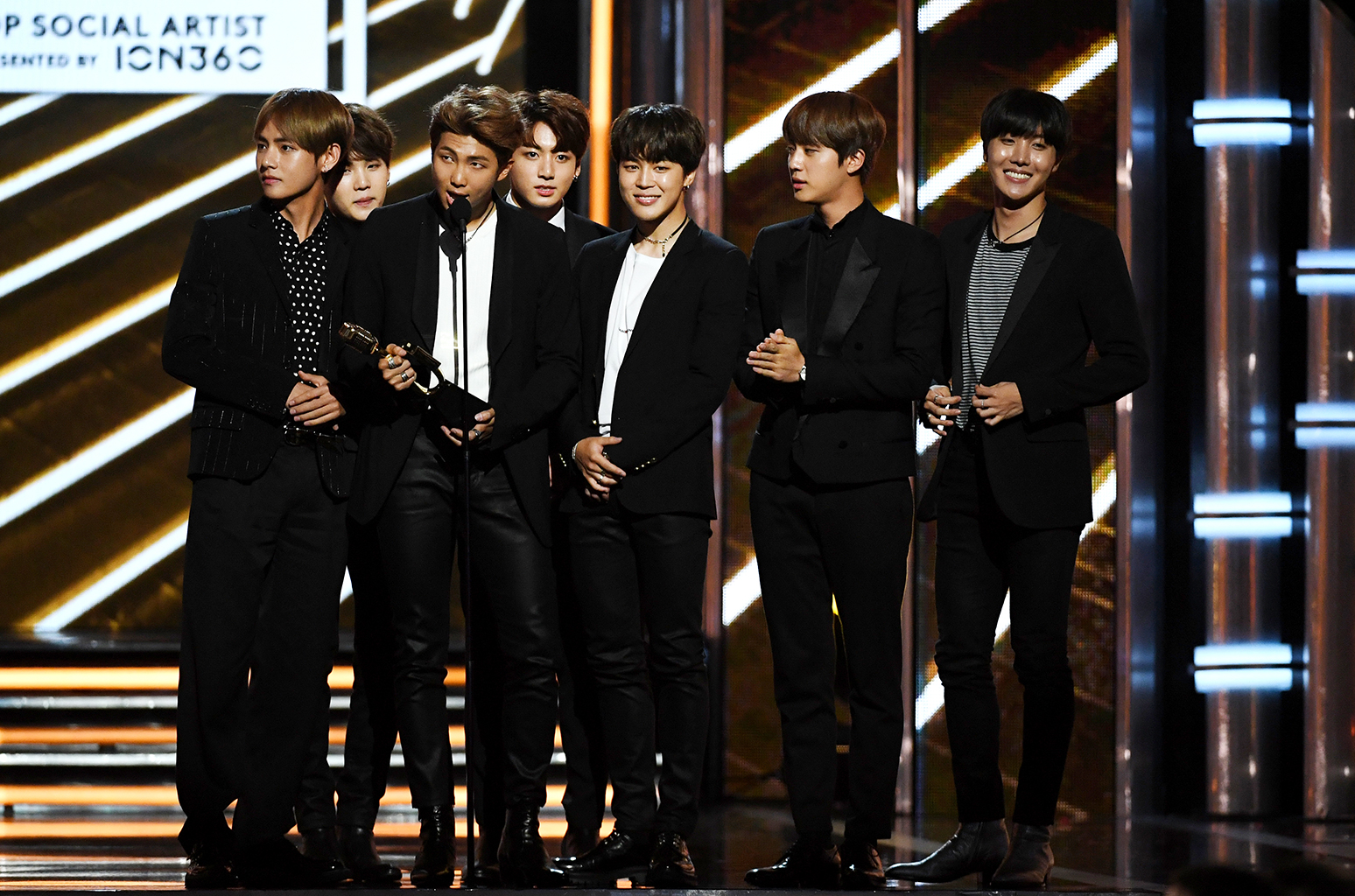
2017 was an incredible year for the K-pop group BTS, and as a fan who discovered them right as they broke through in America I must remind myself how much the boys accomplished in the first year of me knowing them. The seven-member boy band broke a slew of records for their genre, from having the highest-charting album on the Billboard 200 to being the first group to break the top 40 on the Billboard Hot 100 with the lead single “DNA”.

The cause of their dizzying ascent to success in America can be traced to the commercial and critical success of their previous LP “Wings”, which saw a surge in their fanbase that led to their win at the Billboard Music Awards for Top Social Artist. Though the prize was social media award, it fueled interest in the band that led to collaborations with the likes of the Chainsmokers, Steve Aoki and Fall Out Boy while becoming popular enough to be invited onto the Late Late Show with James Corden, Jimmy Kimmel Live and The Ellen DeGeneres Show.

As any seasoned K-pop stan can tell you, BTS is not the first K-pop group to achieve attention in America.  A case in point from the time before the global hit “Gangnam Style” is the tragedy of the Wondergirls’ career, who gave up a spot at the top of the charts in Korea in order to start a name for themselves in America. But despite heavy promotions on late-night talk shows and a TV movie starring the girl group that aired on Nickelodeon, the Wondergirls effectively flopped with the release of their pioneering English-language single “Nobody“. They then returned to Korea having made inroads in the States for the future of K-pop but with little compensation.

Think pieces have reached a consensus on what sets BTS apart: a down-to-earth public image, raw and sincere lyrics about the tribulations of youth, and a prolific use of social media. The effectiveness of their large social media presence can be evidenced by the fact they are the most-followed Korean Twitter account and were the most tweeted artist of the year. But what will the future bring them as they verge into territory no K-pop group has gone before?

I believe that BTS fans (called “ARMY”) will continue to support the boys as long as they continue to be true to themselves. It is the only thing that has stayed consistent in their music as their discography has morphed from hip-hop to electro-pop with experimentation in rock and R&B in-between. The way the members contribute to the songwriting of their sincere music has allowed an organic relationship to form between BTS and ARMY as both grow up, and there is no doubt seeing the work members have created on their own that they are full of more heartfelt reflections on life yet.

This band is one of the few musicians I personally follow because they inspire me to raise my voice in my own writing as a young person trying to follow my own path. Their uplifting message comes across as genuine from young men who had the odds against them when they debuted in a small company in 2013, to being on the brink of world domination as they conquer the Japanese music market (the second largest in the world after the US) as the year’s best-selling foreign artist. May their reign be long and prosperous.

On Being a Dance Major

At first glance, the University of Michigan’s Department of Dance seems to be nothing more than a nondescript building. Tucked away in a small, semi-residential cul-de-sac in a corner of campus, our building’s brick façade is marked only by a small bulletin board and an even smaller blue sign. Our department spans just one hallway, peppered by open doors and illuminated by florescent lights, leading the way to each of our four studios.

That hallway is home.

At any given time, there are students talking, snacking, napping, or working before class and between rehearsals. Faces that are more than familiar: they are family. Faces that have seen you at your very worst, covered in sweat and tears and occasionally blood.  Faces that have seen you under pounds of stage make up and none at all, faces that have seen you succeed and fall flat on your back. Faces that change the way you dance, the way you think, the way you live your life.

The way the carpet feels under your socked feet beings to feel familiar. The way the space between the walls fills to the bring and empties again like clock work. The way you feel when you leave for the summer, the way you feel when you walk back through the doors at the beginning of each year. Dancing in college means finding a home.

To say that I was unprepared to be a dance major when I arrived on campus freshman year is a gross understatement. At surface-level, a dance major dancers. I was expecting hours and hours spent in class and late night rehearsals. I knew my muscles were going to be so sore it was hard to climb up the stairs to my dorm room. I anticipated blisters and bruises and bleeding.

I was not prepared to fall in love with the community I was fortunate enough to find in my small 16 person class. I didn’t realize the extent to which I would be inspired each and every day by their work ethic, imagination, and virtuosity. I did not expect to find a family, one that was made just for me.

As with any family, we are incredibly dysfunctional. We laugh as well as cry, fight for each other just as we fight with one another. And yet, we are inextricably joined together by a single hallway, and a single passion.