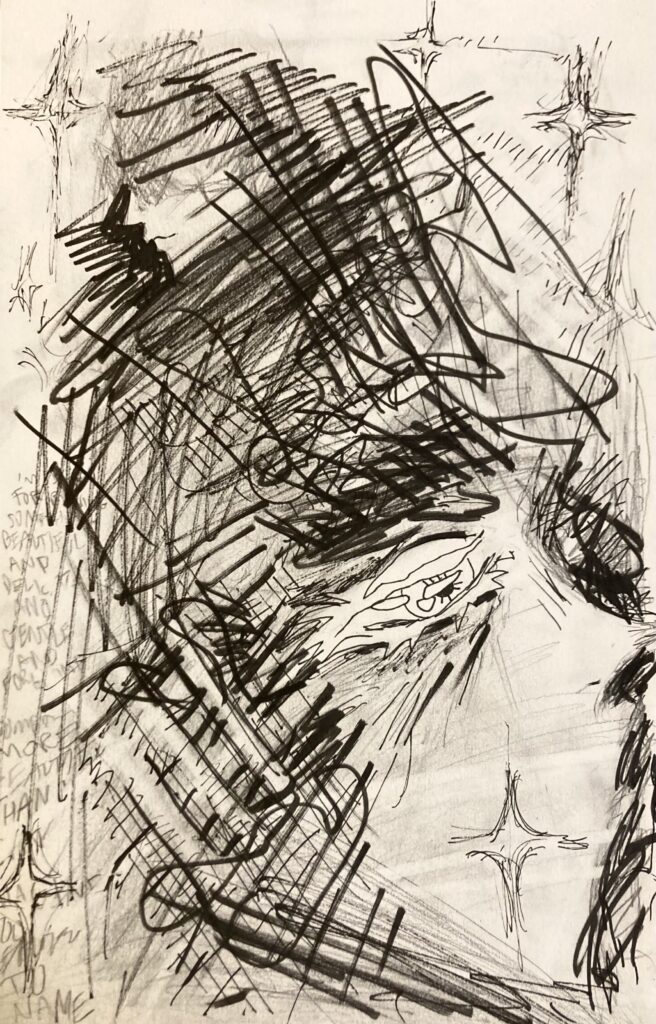
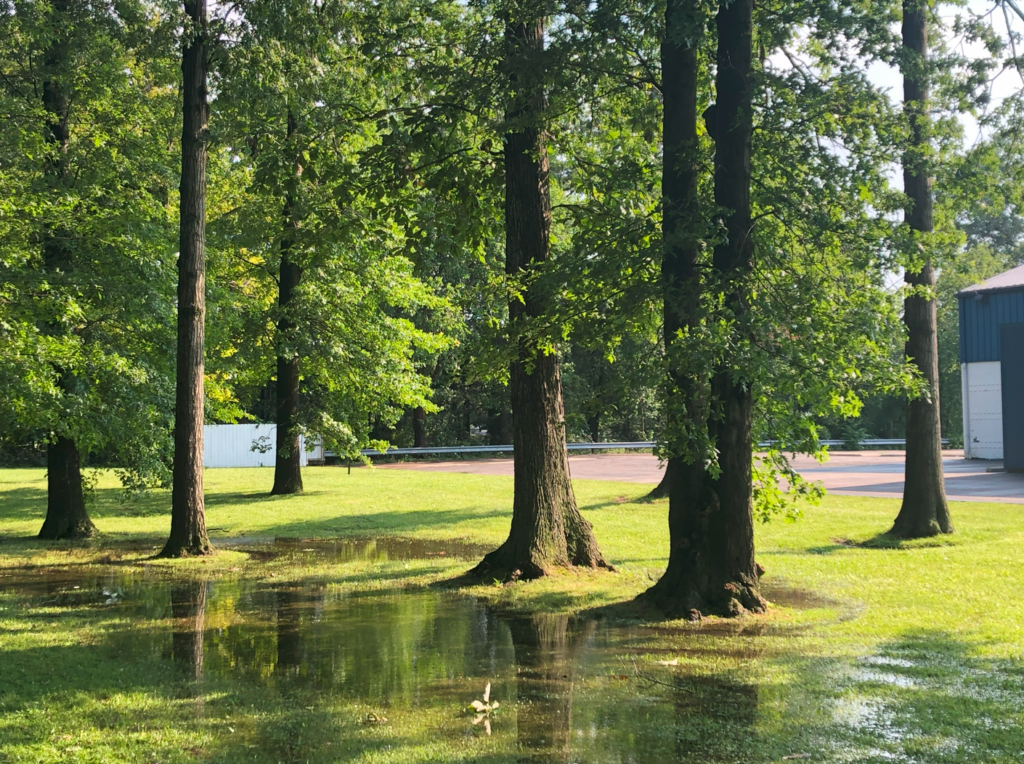
black girl diaries (2): line leader

i remember when i was nothing but Hope

i remember when i thought that my Hope was enough
to save the world.
when i felt that everything was to be done right.
when i had the answer to absolutely everything
and nothing could change it.

in elementary school i was always
running to be the line leader,
to tell my peers to buckle up
and wait their turns
and stand up straight
and quiet down
and then it’d all be fixed.

and i remember wanting to be president.
to solve world hunger and bring world peace,
to bring a better life.
the eyes of a child and the eyes of an idealist
are one in the same, and
both are so very needed.

my eyes grow dimmer,
my prescription weaker,
and i have cataracts on my soul, my spirit,
and i can barely see the light anymore.

the Hope, it persists nonetheless
like a echo.
it has lasted far longer than i ever thought it would.
i can even hear it now.

but it is dying, slowly and steadily, no matter how many times i resucitate it.

i now see those who i love and care for
who i worry and fear for
being told by others who will never care to know my loved ones
to buckle up
and wait their turns
and stand up straight
and quiet down

to listen up
and quickly move
and shut their mouths
and stay alert
and don’t speak up
and don’t resist
and don’t you dare.

and to refuse would be risking everything.
i fear for those risking everything.
i fear for them, and for those who will be told they’re risking everything
no matter what they do.

when do you cry for help?
when it is too late? when you’re there just in time?

where is our line leader. does such a person, such an entity, even exist.

will it ever.

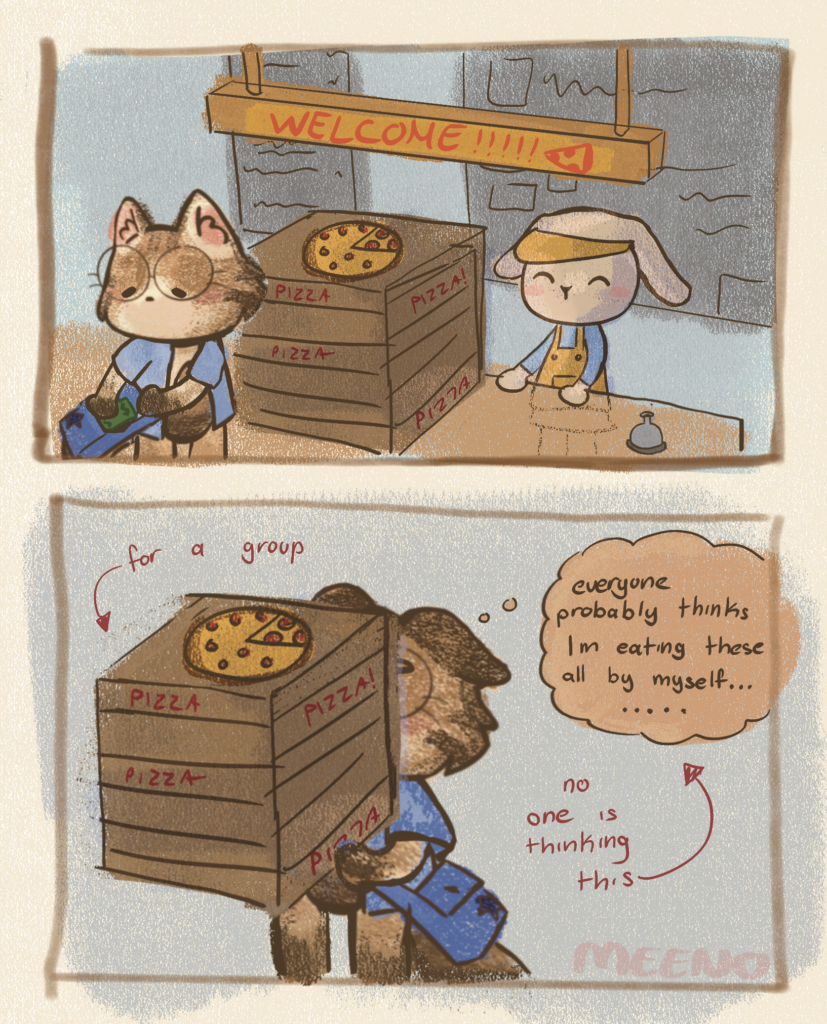
Critter Comix Week Sixteen!

Text: *For a group*
“Everyone probably thinks I’m eating these all by myself……”
*No one is thinking this*

This is what I personally end up thinking every time I dine out with friends. My brain does this with a lot of things though, for example I’ll wear a new hat or shoes or something and my brain will go “I bet everyone knows its their first time wearing that hat…” Definitely need to work on that. But have a good night everyone!

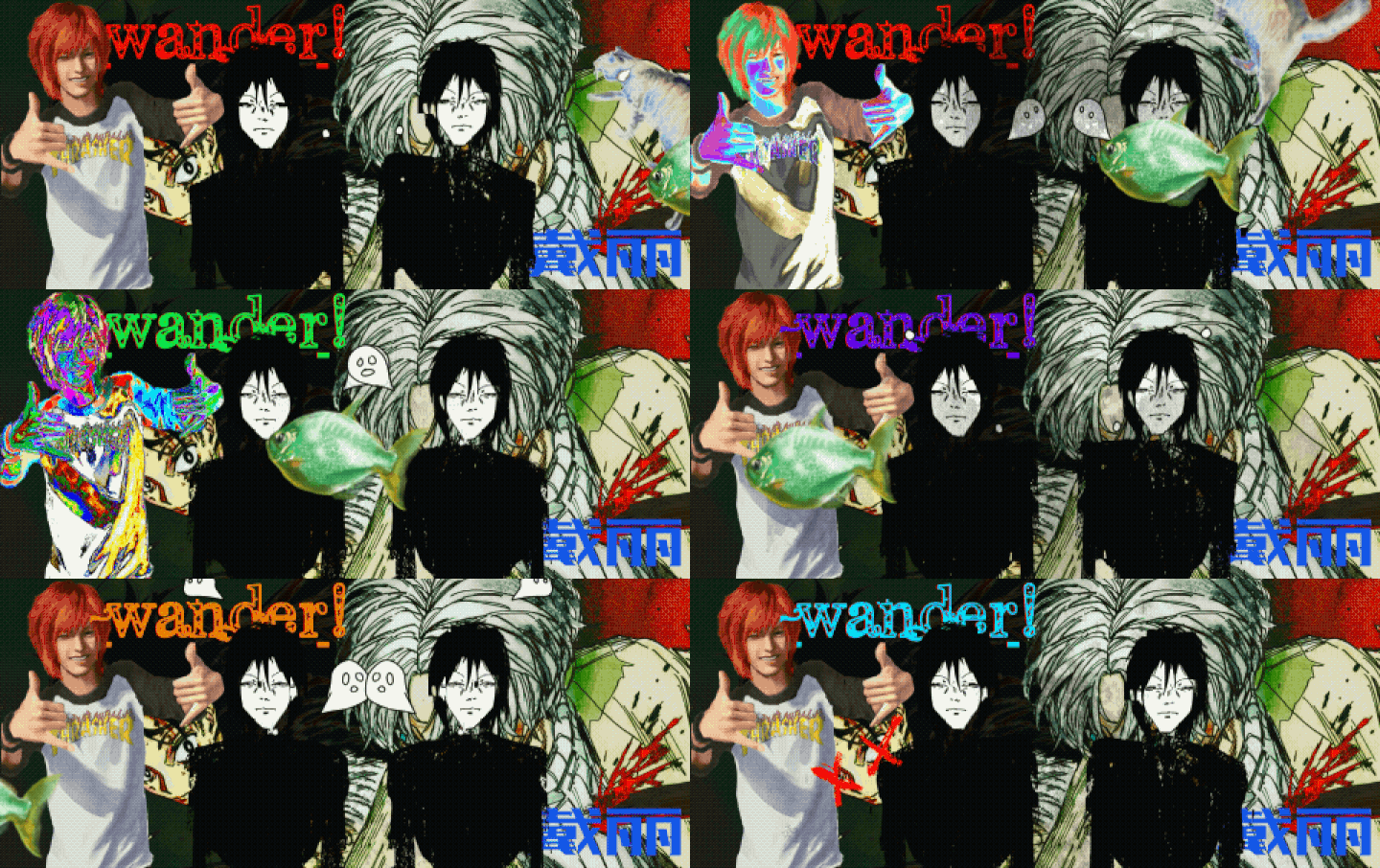
wander! the diary #4

i hope everyone’s been eating well recently, and staying hydrated. if you haven’t drank water yet today this is your sign to do so!

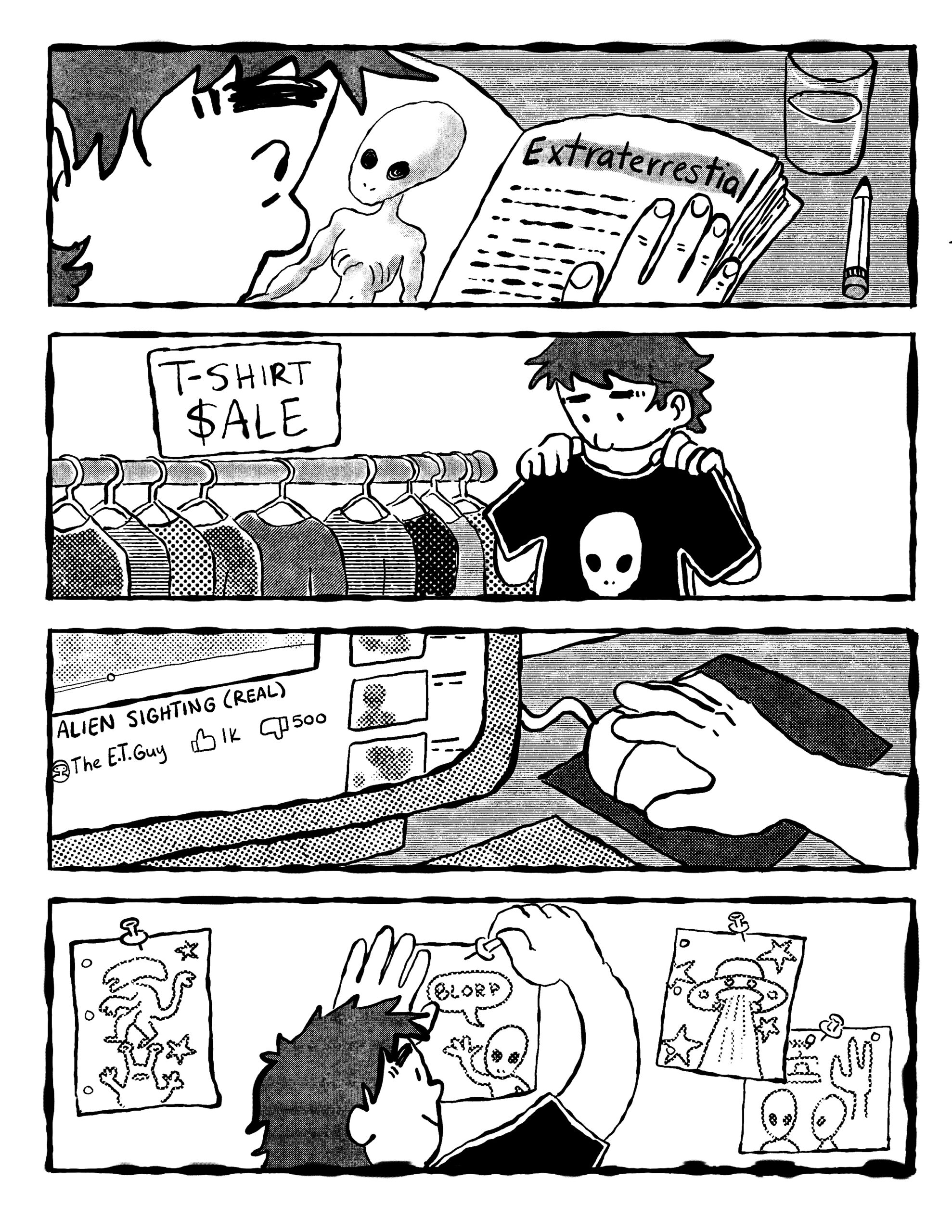
this week’s diary sketch (◡̈ ):

this week’s diary entry(˶′◡‵˶):

i’ve been on masculinizing HRT for over 3 months. during this process my body has already experienced numerous unfamiliar changes, but the one that’s been affecting me the most is also the one that i didn’t expect. outside of a (honestly much needed) breakdown on my birthday, i haven’t cried in the past 4 months. i knew beforehand that a change in my emotions was possible after starting HRT, but this was something that i hadn’t seen much about online.

pre-T, i usually cried at least once a month. while there were some longer “cry-less” periods, they were generally few and far in-between. now, while i feel like i have a clearer view of my emotions, i also feel like i’m unable to feel them as intensely. i can still laugh and feel joy, but everything else feels muted, like i’m emotionally blunted. i never thought i’d miss the feeling of being deeply upset, but now it almost feels suffocating without the cathartic release of crying.

i recently talked about this with a trans femme friend of mine. they shared that pre-E, they felt similarly to how i do now. but after being on estrogen for years, they’ve found that they can feel their emotions much more deeply than before. last friday, when we watched “Eternal Sunshine of the Spotless Mind” together, there were times when i felt that i should’ve been moved—like i should’ve felt something deep, maybe even teared up. a few months ago, i probably would’ve. but i could barely feel anything at all, and that was frustrating. i could only squirm on my couch, feeling only the tiniest bit of emotion, as something absolutely devastating happened on-screen.

it’s a shame that studies on trans and non-binary people who’ve medically transitioned in some way are relatively scarce. not only does it prevent genderqueer people from having information about gender-affirming care, i think it’s also just an incredibly interesting topic. hormones like T and E are the emotional regulators of the body, and switching from one to the other is known to cause changes, broadly speaking. but how much are the “sex-related behaviors” we typically associate with “men” and “women” a result of hormones, and how much is due to social conditioning and other external factors?

for example, there’s a stereotype that “more T = more anger/aggression,” but we can’t really know if that’s true. and if some pattern does exist, how much of that is a result of how cis men are socialized, versus the fact that T is known to tighten tear ducts, which might make crying less of an emotional outlet? it might mean that people with higher T find other ways to express their emotions, which could look more aggressive—like yelling or wanting to hit things. if i had to guess, it’s probably some combination of all of the above: culturally defined gendered behaviors, hormones, and other factors that we don’t often account for.

my friend once complained to me about a man she’d gone on a few dates with, who mentioned that he hadn’t cried since he was a young teenager. she had no ill will against him, but was genuinely taken aback how someone could be so “emotionally stunted”. it reminded me of what my mom once told me about my dad, how the only time she’s seen him cry in over 30 years of marriage was at his father’s funeral. while i value the emotional clarity i’ve gained these past months, i can’t help but commiserate with those unable to cry. finally being able to cry on my birthday (in what was a culmination of bad memories, overstimulation, lack of seclusion, and overwhelming emotions), was extremely refreshing. it had felt like a dam breaking open. i can’t imagine going years–even decades–without that release.

i’m not trying to speak for how men feel their emotions—this is all my experience. but i do feel like i can understand some of the people in my life a little better now. at the very least, this experience has made me consider their internal experiences more. i wonder how my father, who’s always felt like a closed book to me, feels everything. while i always understood on some level that others process and feel their emotions differently than i do, it wasn’t until this experience that i was able to truly feel it.

i’m not looking to fully transition, so i know i won’t be on T forever. but it’s something that i’m still glad i started, even with some of these unexpected changes. i also know that this is just my personal experience on T—again, i’m not speaking for how either trans or cis men feel their emotions. many trans-masc people don’t feel any emotional blunting at all. for all i know, this could be an unrelated issue, or something that completely changes once my hormones are more balanced. but i can say this experience has given me insight on my own gender expression, and made me reflect on gender in a broader societal context as well.

-dai

⊹ ₊ ⁺‧₊˚ ♡ ପ(๑•ᴗ•๑)ଓ ♡˚₊‧⁺ ₊ ⊹

weekly recommendations!!

  • book: Ma and Me by Putsata Reang
  • album: Souvlaki by Slowdive
  • show/movie: Eternal Sunshine of the Spotless Mind
  • food: Gobi Manchurian

Crooked Fool: The answer is not closing the door

When I  started physical theatre school a year after having basically my entire spine surgically relocated, one of my classmates was quick to say, “When we study Commedia Dell’arte, there will be certain things you can’t do. You probably couldn’t do Arlecchino.”

For context, Arlecchino is a stock character known for acrobatics and over the top physicality.

I did eventually play Arlecchino. I ultimately found a character I felt more at home with, but I still did it.

To be honest, that comment pissed me off. I put that Arlecchino mask on out of pure spite. It also pisses me off when I struggle to nail a dance skill because of my back and somebody says “just don’t do that one.” Or when I go to a yoga class and somebody finds out my spine is full of metal and held together with rope, and they automatically recommend an easier class.

I want to make this very clear: when somebody with a medical condition, disability, or any other need tries to do something, the answer should never be “just don’t do it.” They should never be sent out of the room. The choice to participate in an activity is theirs, not yours.

The answer to a theatre student healing from a back surgery is not to deny them the opportunity to learn the same things as everyone else. The answer to somebody who needs an accommodation to play a character is not that they shouldn’t play that character.

Creative spaces have evolved to be exclusive. Our culture has historically included Disabled folks from public life, including the arts, so industry norms have not evolved to meet diverse needs. When we send somebody away because their bodies or minds don’t meet our standards, we are perpetuating that exclusion. We become the oppressors.

When I push back against meeting access needs in performing arts spaces, I hear a lot of “we can’t compromise our creative vision” or “it has to be this way.” But…does it really? Or is that just what’s easiest for those who hold power in the space? Just because something is doesn’t mean it has to be.

Excluding someone does not preserve creativity. To paraphrase disability activists Terry Galloway and Donna Marie Nudd, what it actually does is demonstrate that you are not or do not want to be creative enough to come up with a solution. If we can make an entire show from scratch, we can problem solve.

I am a stubborn person and I show up in a lot of spaces where people aren’t expecting someone like me, and sometimes where they don’t want me. And I won’t leave to make things easier on those who don’t have to question whether they belong in the space.  I value creativity too much to throw it out like that.

Capturing Campus: Birthday Card

Birthday Card

It was your birthday like every year

colored pencils to paper 

(what knives are to skin)

you told me green was your favorite color

—you didn’t have one

I know that now

but I didn’t know that then

so I tore up the backyard

ripped leaves from maple trees

scooped moss in mighty handfuls 

fistfuls, pocketfuls

to give to you

you lied because colors don’t shine

for old shuttered eyes

closer to glaucoma than clarity 

bleeding monochrome 

the dull and dim

the world without harpsichord tones

on rolling hills born into richness

of flavor

of color worth witnessing

on the page and in your palms

you are running out of birthdays