Banksy’s Blessing

By now, everyone knows who Banksy is. Well, everyone knows that nobody knows, at least. We’re familiar with his playful and sometimes sharply poignant street art, ranging from simple stencils to elaborate installation; we’ve probably heard of his critically debated documentary Exit Through the Gift Shop. And if we keep up with the Times, we may be aware of his current stay in the Big Apple, described in his own words as “an artist’s residency on the streets of New York” (banksyny.com). It’s titled Better Out Than In, and he’s promised to procure one piece of street art for every day of the month this October. That leaves us 28 artworks in, having witnessed the true variety of Banksy’s creative language. We’ve seen his classic layered stencils, plain stencils, stencils that span across cars and walls, stencils for sale in Central Park; a garden growing in the back of a truck, sad stuffed animals trapped in the back of a different truck driving around the meatpacking district, and a 1/36th scale model of the great Sphinx of Giza made from smashed cinderblocks. He’s even published an article in the New York Times as a replacement for an op-ed column. In essence, the city has been Banksy’s for the past four weeks – as a temporary shelter, hideout, workspace, and playground all at once.

I could talk all day about Banksy. Everything he does challenges the very function of art in today’s society, as well as the role of the artist. He’s an outcast and likes it that way; he’s clearly not in it for the fame or money (neither of which are honest representations of creative success anyway), and he lets the work speak for itself. This is evident in the way he’s gone about “practicing” art in his own distinct, playfully intelligent manner, as well as how he’s acted upon and publicized this self-imposed exhibition. It’s the exact opposite of a traditional “residency”, wherein the artist applies for a position in a studio or university and is either accepted or rejected based on whatever criteria are set by the institution. In this case, the artist is in control of his own fate, avoiding every formality that has come to follow an academic approach to creative work. The only price he has to pay is that of the law, which is easy to forget when we’re talking about street art these days.

Amidst all of the creative bounds that Banksy has leapt throughout his career as a vandal, it seems as though he’s on the verge of a new transformation. While the majority of Better Out Than In has still been expressed in his native tongue, the weight of the exhibition rests on the sculptural and performance-based installations like the trucks and mock gallery spaces. In fact, more than one of his posted stencils had me wondering if they were really his work – they seemed as afterthoughts, sentences left hanging in bits across town. They feel like the filler for these larger “happenings”, in a sense, which one would assume require a larger amount of planning and preparation. What can we expect next from the most famous tagger to date? A spectacular finale on the 31st? The grand unveiling of his (or her, just so we’re clear) identity? One thing is for certain: the city will miss the attention when (s)he’s gone, if (s)he was ever really there in the first place…

A New York delivery truck converted into a mobile garden (includes rainbow, waterfall and butterflies).
"A New York delivery truck converted into a mobile garden (includes rainbow, waterfall and butterflies)."
"Yesterday I set up a stall in the park selling 100% authentic original signed Banksy canvases. For $60 each."
People ask why I want to have an exhibition in the streets, but have you been to an art gallery recently? Theyre full.
"People ask why I want to have an exhibition in the streets, but have you been to an art gallery recently? They're full."

The Art of Halloween Costumes

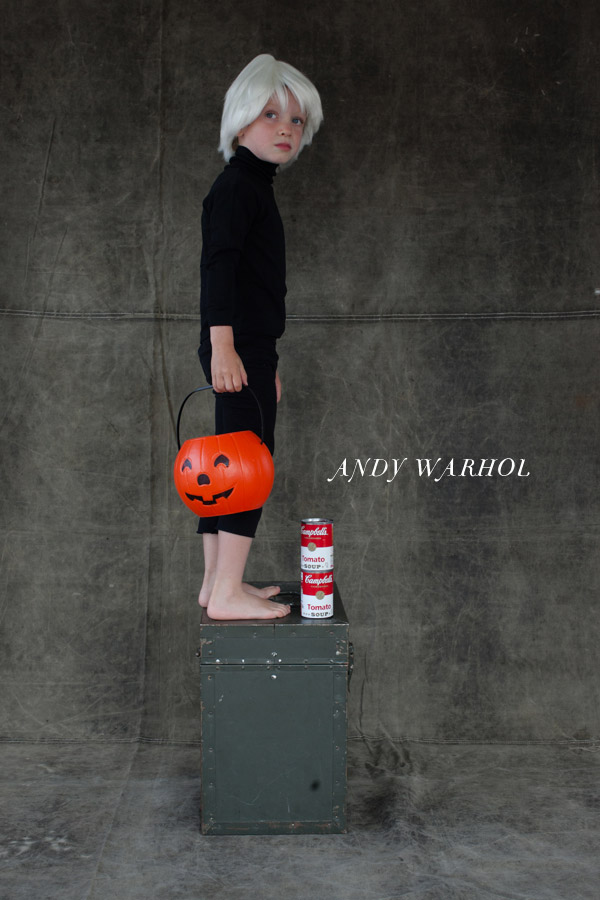
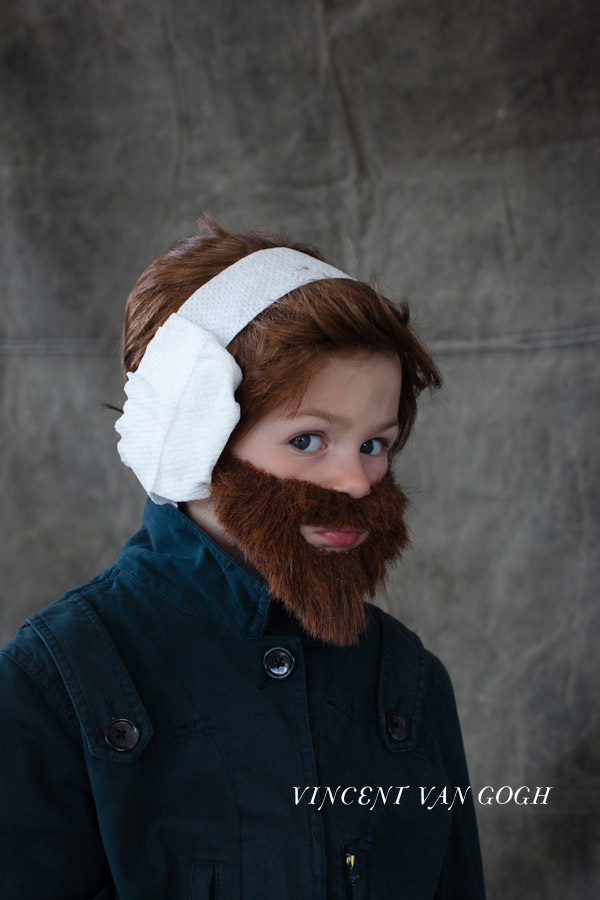
Halloween costumes can be classy, trashy, cartoony, or in the several cases below – artsy!  After perusing the interwebs for artsy costume ideas, I came across these cute kids… and some adults with some serious art cred.  I had planned on Cat Woman until I saw that I could not get a costume for less than $60 (major sad face).  I am now thinking of drawing a unibrow, sticking flowers in my hair, and finding a brooding Diego.

If you are looking for artsy costume ideas, look no further!

Love the soup cans.
Love the soup cans.

A cheap, yet chic costume for dudes

Bringing Mondrian Back!

I think this one would be great with a dudes face (preferably bearded).
I think this one would be great with a dude's face (preferably bearded).

I love it when high art meets popular culture!

Image credits: http://ohhappyday.com/2012/10/little-artists-costumes/
http://www.saltlakemagazine.com/blog/2010/10/12/top-five-tuesday-five-artsy-diy-costume-ideas/

Soulmates

Plopping onto his bed, she could feel the sting of the springs push into her back as she was on her plane.

He pushed his shoes off and flung them across the room, twisting her Old Navy flip-flops around her sturdy toes

He exhaled releasing the tight ball in his gut…it’s been there for days.

He flicked through his phone deleting every text, image, voicemail he could find with that damn red heart next to it.

Her hand became heavy, scabs drying over the waterfall of darkened bruises.

She cleared her throat and closed her eyes resting her head on the seat

Her thoughts becoming jumbled as a shot of pain rushes to her forehead…maybe it was the height of the plane.

“I hate her. I h-ay-tuh her.”

He lies in bed stewing in hate for her and for his eyes pooling in crystallized waves as he sucks in his body’s betrayal and

He searches for sleep.

She lies awake against her sleeping pill’s wishes, dry-eyed, empty, confused.

Do Tell

This past Thursday night, the Literati bookstore put together a Word of Mouth event. The basement of Literati was a pleasant place to be on a chilly fall night: softly lit, full to the brim of cheerful storytellers and spectators, and stocked with apple cider and a cheese plate (important).The theme of the night was ‘great expectations,’ and the format was randomized: people who wished to tell a story wrote their names on slips of paper and submitted them to an authoritative black hat, from which they were randomly drawn and announced by an animated master of ceremonies. The storytellers seemed to be nervous at first, but the audience generated a reassuring atmosphere of respectful engagement, and laughter or groans greeted stories of unfulfilled or confounded expectations. One performer told us how he was duped out of his money in a bizarre smuggling scheme in India; another engaged us in her high school game of ding-dong ditch gone wrong in the Upper Peninsula (in an adorable UP accent); and yet another explained how he managed to spill coffee on Justin Timberlake. In the warm glow of the dimmed lights, we absorbed these stories as confidence and performance, as entertainment and art.

I recognized a surprising number of people at the event, mostly from my experiences living in the Residential College and cooperative houses, but every story I heard was new to me. I thought about how stories gradually surface over the course of a relationship, about how we generally don’t hear the stories of an acquaintance all at once, but rather gradually, and in proportion to the building of trust and friendship. We’re often nervous to casually give up something so important to us – the turning point of a childhood, the insane coincidence, the hospital stay, the religious experience – because we’re afraid that we’ll fail to capture our audience’s attention, suffering rejection in a change of subject, or because we’re afraid of what comes afterwards: the change in perception, the return in confidence, the intimacy. These stories both require real attention, and carry subsequent baggage.

I love personal story-telling as a performance because it’s both high and low stakes. When we call what often happens casually, between two people, a ‘performance’ we expect both more and less. The story needs to be more interesting, engaging, and Worthy of Our Time when we don’t know the person telling it. But along with these raised expectations, there is no conversation, no expectation of a demonstrated response, no consequential familiarity or relationship-building. It’s less personal, but the one-sidedness of a storytelling performance really frees both the audience and the performer to get lost in a story – to just talk, to just listen.

Thursday night at Literati, a storyteller named Noah explained how disappointed he was by his childhood purchase of ‘sea monkeys,’ the novelty aquarium pets that are in actuality little more than squirming specks but which, he explained ruefully, he had expected to grow up into sentient, playful beings. I’ve heard people complain about their sea monkey experiences before, but as he told his story, Noah did much more than complain about a crappy product. He explained how he had thought of himself as a scientist like Jane Goodall, how he kept a journal of his pets’ nonexistant activities, how he tore off bits of an eraser and threw them in the tank, hoping the unresponsive crustaceans would play with them. As I listened to Noah’s story, I remembered how ridiculous and weird existence could sometimes seem to the serious child with serious expectations, learning about the world’s chaos. As it turns out, almost all stories about ‘great expectations’ sooner or later introduce chaos – even the storyteller whose expectations had been fulfilled by a great night in Ithaca emphasized how crazy, how chaotic it was that his plans had been successful. What are the chances?

The show was over sooner than I wanted it to be, my sister wanted to go home, and I had to do homework. Still I lingered outside, saying friendly goodbyes to familiar faces, thinking about expectations.

Little Boy Done Grown Up, Little Voice Done Blown Up

Last week I began my endeavor to report on the young Chicago Hip Hop scene that has every music blogger salivating. I apologize for thinking that I could undertake this effort with only one post about Chance The Rapper (the group’s forerunner) and so I reviewed his latest production Acid Rap thinking that would be enough. But, I’d be remiss if I didn’t also shed light onto Chance’s first ever collection of tracks: 10 Day, which he birthed during a ten day suspension from high school. As these fourteen tracks are more creative, musical and substantive than most contemporary mainstream professional rappers’ albums, I’m going to repeat that Chance made it on a suspension from High School. As in he was barely the legal age to vote. As in barely an adult. As in the same age when my biggest accomplishment to date was getting runner-up in a state Mock Trial competition.

10 Day is more musical than Acid Rap— more influenced by jazz trumpets and keyboard melodies– and channels “A Tribe Called Quest” vibe more so than the College Dropout-esque sound of Chance’s more recent releases. Granted, there are obvious signs that this is an artists’ debut work; there are plenty of awkward lyrics, ill-timed flows and amateur features. That happens the first time anyone makes music. However, we must set 10 Day apart from most other mixtapes for a number of reasons, beginning with its production. I am so enchanted by Chance’s music, and his cohort of Save Money members, because they are all such talented musicians. It is so overwhelmingly clear that his production artists (including Chuck Inglish, Cam and the Blended Babies) are all trained and educated musicians. Kids These Days– the first combination of young Chi-town musical geniuses that led to much of the solo work today– matched live jazz and soul instrumentation with Vic Mensa and Chance’s raps, and created a sound dependent on musical composition. Not to say that mainstream Hip Hop producers are not musically educated, but it makes a clear difference that the sound Chance, Vic and co. create is indicative of a dedication to and reverence for a certain style of music. Thus, almost every single one of Chance’s songs is unbelievably aesthetically pleasing. There are no abrasive beats, harsh voice-over bombs or overly artificial instrumentals. In 10 Day, Chance also includes samples from Dead Prez and Notorious BIG, (intimidating acts to borrow from) but does so effortlessly and simply. The effect is a mixtape that establishes Chance’s expertise in production and pretty raps.

Amazingly, he does not disappoint lyrically either. To create such complex and imaginative lyrics at such a young age is no small feat, and further proves that this is an artist with some training. While he treats a few of these tracks as a (sometimes jokingly) middle finger to the school that suspended him, he also makes a number of perceptive and astute comments about his school’s disciplinary measures and his neighborhood. Furthermore, he interweaves a steady stream of social commentary, primarily about issues facing him and his peers, throughout the tracks. To do this, he displays his impressive ability to alternate between singing and rapping; for instance, on the track “Missing You” (which samples Dead Prez’s famous “Hip Hop”) Chance begins with a continuous verse rapped in a low, soft and aggressive voice I’ve only heard on this track. He goes in and only stops for quick breaths, with lines like “But these young gunners ain’t nothing but young stunners” and ends the verse with a captivating four lines,

“Brown boys are dying and none of ‘em were for business

And all of ‘em love they mommas and all of they mommas miss ‘em

And this shit is stupid this shit is fucking senseless

The news shouldn’t support it this shit is getting expensive.”

Chance wrote this song to cope with the loss of his friend who was killed in Chicago. What a high level of thinking for a teenager coping with the enormous problems and challenges of youth violence; he is able to look introspectively at the situation in a rational and mature way, and express his thoughts through artwork. In my opinion, that is beyond impressive. To top it all off, as soon as he pulls out of this intense rap, he transitions straight into singing his own bridge. Not too many artists (let alone 18 year olds) can do that.

To be sure, 10 Day is no Acid Rap. It is not on the same level of cohesion, featuring artists and lyrical mastery. It is however, a powerful and impactful collection of songs that is essential in understanding Chance’s background and musical origins. It is as enjoyable to listen to, and is an inspiring indication of where Chance will go in the future.

Chance\’s Hey Ma

Ups and Downs: Long-distance relationships depicted through performance art

“I miss you,” says the woman. “I think we missed our floor,” the man responds. They both speak in frustrated tones. Blinking on the tops of their closed eyelids is a projected video recording of their open eyes. Although their audience comes and goes, they remain — standing in their restricted space, close enough to touch, yet as far apart as two people can be.

An elevator may be the last place one would expect to find art, but this is the setting in which University of Michigan MFA student, Ann Bartges, has chosen to stage her piece, Remote Connection: Performance for Elevator. She and her husband, Jesse Potts, are the performers. They face each other, both wearing a projection instrument on their heads and repeating their script, which is composed of extracts from their long-distance relationship, for three hours as they are carried from floor to floor.

“Distance has invited technology into my closest relationships,” Bartges begins when explaining her inspiration in creating this piece. “From my home in Ann Arbor, I live my friendships and marriage from my computer, relying on video chat, email, and social media to keep these loved ones present in my life,” she says, “Through my artwork, I examine the human presence of mediated connection.”

This human presence may be difficult for a viewer to understand at first glance. After all, it is more than a little shocking when one’s expectations of an uneventful elevator ride are interrupted by two people with machines attached to their heads. But after some time observing the performance, it becomes clear that they are still people, no matter what projected masks haunt their faces. When one listens to their words and the often exasperated tones by which they are spoken and sees the revelatory pained muscle ticks which accompany them, s/he is able to understand the significance of this work.

“Because the piece takes place in an elevator, there are times when we have an audience and times when we do not,” she says. “We continue the performance regardless. I can’t see people when they enter or leave, but I can hear them and because the space of the elevator is so small, I can feel the body heat of a larger crowd. However, I cannot perceive their interest or response. Whether or not we have an audience, I try to maintain my focus on the potential for a connection with Jesse.” They are connecting through their shared frustration — both holding the desire to communicate intimately, regardless of the distance between them. It is a beautifully created, yet disturbing depiction of the trials that any relationship faces when challenged by distance and the inadequacy of technological communication.

“I am very interested in the significance of a fleeting moment,” Bartges says, “lasting perhaps seconds, but living on in memory for years. Live performance suits that fascination, itself an event that the viewer only has physical access to in the present moments of the piece.” She echos this idea in her work, because although three hours may seem like forever for the performers; for them and primarily for the viewers, the experience is very much temporary. It is a fleeting moment in life — it may reflect a reality, people my gawk, their projected masks may illuminate deeper truths, but after these hours, months, years, etc., it will come to an end. They will exit the elevator and reenter their lives. Eventually, instead of traveling up and down, trapped in the limbo of time and distance, they will power off their head apparatuses and travel forward.

1 Bartges_Remote Connection

Ann Bartges (right) and her husband, Jesse Potts, perform Remote Connection: Performance for Elevator. Photo credit: Juliet Hinely.