New York, I Love You

“New York, I love You” is a collection of eleven short films created in 2009, about love stories in New York City. Each short film is directed by a different director who places their own perspective about love in the form of lust, companionship, loss, deceit, and playfulness.

At face value, the theory of this film is no better than the 2010 film “Valentine’s Day” or the 2011 film “New Years Eve,” both of which rest of the laurels of their celebrity-packed casts and cheesily connected plot lines. These films lack true ingenuity exhibit exactly what I would expect from a cash cow blockbuster film – recognizable faces, an addictive love plot, and shallow character development. “New York, I Love You” follows this same path by casting the popular faces of Orlando Bloom, Rachel Bilson, Natalie Portman and Bradley Cooper. Yes, the first film with Bilson is awkward and amateur in both acting and writing to a painful extent. However, if you can move past this scene, the creativity, wit, character development, and ambiguity create a viewing experience that is both refreshing and engaging without losing integrity.

What “New York, I Love You” does is create room for dialogue post film, when you wonder more about the characters, their motivations, what was believable and what wasn’t. This kind of conversation is lacking in most blockbuster films with similar casts to these. They leave room for conversation with only regard the quality of graphics, suspense, gore, or crude humor. This is not to say that there isn’t a time and place for each of these in the predictability of most movies, but like a good book, it’s the post experience curiosity that truly makes a work so engaging. Dialogue enables analysis and the ability to truly appreciate a work for the intricacies and thought the writer places into the story line and the characters that live in them.

In the short directed by Shekhar Kapur, Shia LaBeouf plays a severely crippled hotel bellhop that has an ambiguously intimate emotional relationship with Julie Christie. He could perhaps be a simple memory of her once lover, a manifestation of her imagination, or perhaps he is in the present and he is haunted by an obsession with an older woman. In another film directed by Mira Nair, starring Natalie Portland, Nair touches on the arab-jewish relationship, the taboo that exists between these cultures and the ultimate draw of love and curiosity that can also bring them together. These simple unsure yet addictingly fun analyses are what make this movie experience worth watching, as well as the intricacy of the tie between narratives.

The film provides a refreshing audience perspective and thought requirement that is usually not asked of the viewer to participate in. It’s a love affair between us, “New York, I Love You.”

\”New York, I Love You\” Trailer

Moving Life Painting

We’ve all seen still life painting.  Often involving fruit or oysters that look like this….

Or this…

But unlike real fruit on real tables that you can pick up and squeeze with your hands and taste with your tongue, still life rarely has any life to it.  At least, this was what I thought about still life until I came across artist Scott Gardner.

Using a new technology called ‘Unity 3D’ Gardner has mounted television screens that bring movement to still life.  The screen of his art is highly sensitive to movement and the objects inside it move around according to how the frame moves.  Spectators are encouraged to interact with his art.  Touch it, tilt it, move it around to their heart’s content.  And also to watch with wonder as the life inside the frame moves along with the viewer.

The video on Gardner’s website shows how the pieces in his art move around.  Admittedly, it’s not completely true to life.  No matter how many times you spin the frame, the vase never breaks and the fruit never explode.  But until everyone gets their Hogwart’s acceptance letter and can be enrolled in a school where the paintings not only have life to them, but opinions as well, I think Gardner’s art is the closest thing we’ve got.

And as technology develops, maybe in time artistic innovators like Gardner will bring ‘life’ to more than just still life.  Ever wondered what the Mona Lisa was so smirky about?  What if you were able to poke one of those cubby cherubs and see it react? I don’t know what classicists or modernists would say, but I think an exhibition of reactive art would be an exhibition the whole family would enjoy.  And might be a popular gateway into earlier traditions of high art.

Le Dénouement

This was my first semester at U of M, and I got the amazing opportunity to write for Arts Ink. Going back to my first post I talked of my inexperience in the artistic world (basically I was a wannabe who adored the arts, yet I didn’t know the right way to convey how I felt). I think I’ve grown a little from my experience writing, and I am grateful for that little leap of knowledge that I’ve gained. My idea of art wasn’t fully molded when I started out, but I have begun to understand its mission of enacting thought and change, something that I truly appreciate.

I learned of influential artists that I wouldn’t have otherwise researched if it wasn’t for Arts Ink.

From Left: Nikkey Finney, Christophe Jacrot Photography, Validation/Short Film by Kurt Kuenne

I developed concepts that I wouldn’t have otherwise contemplated on a regular day.

Fashion’s Evolution/ Now & Then/WTF happened

Some weeks I was completely sucked dry of where I could take the readers of Arts Ink that Sunday. I asked myself what would you like read about? What would I feel passionate writing about? And some weeks I felt like a complete flop inspiration-wise, and others I was overcome with intrigue at what I came up with in discussion of the artistic world. It was never easy, not one week of writing; however, it’s a learning experience on both sides.

To end this semester with a challenge (let’s shake it up a bit), I challenge you readers out there to do something positive for the enduring arts movement every single day this summer. Take a class, support a band, create a collection of poems, develop a completely biased and opinionated blog about your thoughts of the intricacy of abandoned buildings, and rant about it to your uncle Larry at the next family function. I’ll do the same, and we’ll reconvene in the fall. Good luck!

An Evening With David Sedaris

Today I had the distinct pleasure of sitting in Hill Auditorium with a thousand or so other people for a 2pm book reading, fittingly titled “An Evening with David Sedaris.” This quirky error aptly represents the type of borderline uncomfortable humor that filled the immense halls of Hill for two hours. Although Sedaris was technically reading excerpts from his new and previous publications, it felt as though he were merely delivering an intellectual stand up comedy routine. His writing, strictly creative non-fiction, is littered with his crass and dry humor, and he can hardly get through more than a few sentences without allowing the audience time to laugh. Joke topics ranged from his wacky sisters to oral sex to conservative Republicans, and each one maintained his seemingly innocent charm.

His personality is the reason Sedaris can get away with all of the jokes. His Woody Allen type mannerisms, coupled with his bubbling and genuine kindness gives off a very personable and genial air. Due to a slow seating process, the event started twenty minutes late; but instead of having the audience members twiddle their thumbs and assume the delay was due to Sedaris’ apathy, he came out on stage before being introduced for an impromptu question and answer segment to entertain us. This set the tone for his uncanny ability to give off the impression of being everyone’s best friend, even to those of us on the Balcony, about a hundred feet above him. Which of course only increased the audience’s tendency to laugh openly at his jokes, even the ones that also made us cringe, and there were plenty of those. Twice Sedaris made a joke about having cancer, one focused primarily on performing oral sex on Willie Nelson and another attempted to analyze the components of uterus lining. To reiterate, all of this material came from his published work.

Sedaris’ portfolio is not all inappropriate, however. The bulk of his material stems from stories about his family: his parents and three sisters, as well as his partner Hugh, are mentioned frequently. The art of his craft is so brilliant because he is able to blend candid stories about these people with his tasteless humor in the most hilarious and polished way possible. At some points I had trouble noticing the extent to which how insensitive his jokes were because of how elegantly he writes them. Furthermore his delivery does not change according to the humor; he told a joke about having an intellectual conversation with a college student and one about his penis’ inability to cease urinating in the same breath. I walked out of the auditorium wrangling with this very conundrum, simultaneously chuckling at his last crack and shaking my head at just how tactless it really was. Still, once you learn to overlook the distasteful details, he is an absolute delight to see in person.

David Sedaris

Death of the Meme

On Thursday night at the Michigan Difference Leadership Event there was a portion of the show dedicated to “dying memes and other cultural phenomena.”

What does this even mean?

It was a montage of Honey Boo Boo–who I luckily avoided on my recent hiatus from tv/internet, the Harlem Shake–aka appropriative white people convulsing to a bastardized song, someone driving a car–sadly not Glozell, Taylor Swift–singing without goats (because that gem will never die), and others. Put to sad music we “mourned” this YouTube video while staring at a screen, in the union, in Ann Arbor: far away from anyone who is connected to these glimpses of “culture.” I felt like I was cheering for a cement wall so I decided to eat more cheese.

But these “cultural” phenomena won’t pass away. There will always be someone getting their own TV show for being “different,” white people will always be awkward and offensive, people will always drive (not me!), Taylor Swift will continue to age but sing for adolescent girls while she simultaneously shames their existence.

Even then, these “2012-2013” memes and videos will live on. Bon Qui Qui and Nyan Cat are still out there, Afrocircus? Still out there. As long as we have Internet we will always have our entertaining distractions.

That’s what fascinates me. Do things ever disappear from the Internet or get destroyed? Or do they stay on the web forever? Will we be able to access these things in years to come? Decades? Centuries?

New forms of art have a lifetime that is infinite and preservable. That awkward vlog you made will outlast you. That offensive tweet I tweeted will stay on twitter till it tweets its dying tweet. My rage toward the world on Facebook will be eternal rage. That’s badass.

So as I write my final papers, study for my last exams, drink pots of coffee, check the weather for NYC (and not Ann Arbor), dress inappropriately for the rain, accidentally leaves bits of clothing everywhere I visit, and eat carrots—that man’s abs I reblog that are “artsy” or that video I favorite will never leave the world. They may leave my vision, or my mind, but they are only a click away.

Mapping the Imaginary

The childhood pursuit of creating fictional worlds never really goes away. The control one has over the geography, and then possibly peopling the landscape, is so very satisfying, so very full of potential. There are few enough constraints (the medium, the mind) to provide opportunities instead of options, but just enough to prevent creating something from scratch from being impossibly daunting. For a period of time when I was younger, drawing maps of imaginary lands could entertain me better than anything else. But free-range map-making does more than entertain; it’s creating, designing, building.

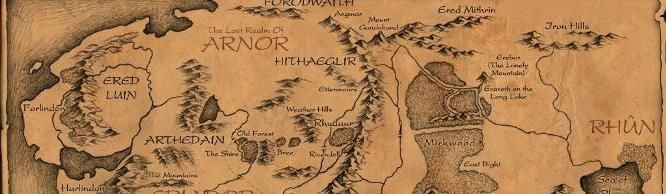
Author David Mitchell speaks to inventing maps as a child: “Those maps, I think, were my protonovels. I was reading Tolkien, and it was the maps as much as the text that floated my boat. What was happening behind these mountains where Frodo and company never went? What about the town along the edge of the sea? What kind of people lived there? The empty spaces required me to turn anthropologist-creator.”

The idea of cartography as a sort of anthropology is an intriguing one. Miscellaneous land-forms sprung out of a blank page are all well and good, but they’re no good just sitting there. Characters are needed to traverse the lands, sail the seas. Worlds are experiential, but everyone experiences differently. So now, in addition to simple geography, you can fill in entire socio-political structures, civilizations and societies and peoples with their various dispositions and various histories. It’s one of the reasons works of fiction and fantasy often have the insides of their covers adorned with maps, I suspect— people and plotlines are tied to geography.

World-building also occurs in other formats, albeit more constrained ones, as in computer-based games with oddslot open formats. While there might be set goals as in any other game (completing tasks, finding objects, defeating enemies), the best part of the game is often building things, constructing your building or town or country. In fact, it might even that it is because of the restrictions the game’s parameters place on the player that makes being able to creatively and effectively build and create things so fulfilling.