Indoor Home Garden

Winter in the midwest is the time for everyone to stay inside and wait until April before venturing outside, it’s too cold to go outside and play.  In the southern hemisphere winter is the time for people to be outside and enjoy the nice weather. Over winter break I was lucky enough to take a 10 day trip to Ecuador and learn all about food sustainability.  The winter season for them is when they start to plant their crops so that they will grow nice and large for picking season in the late summer.

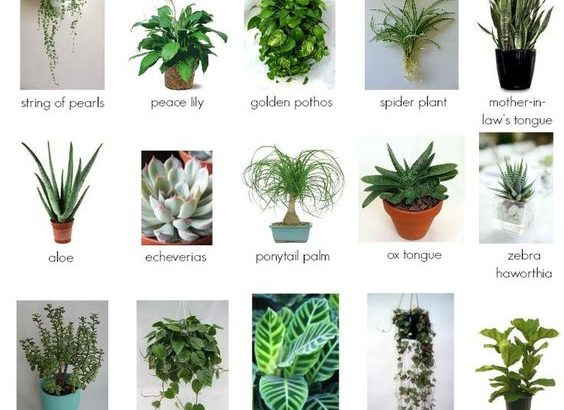
This got me thinking about planting in the midwest in the winter.  It is too cold to go outside and enjoy gardening, but it is the perfect time to start a small indoor garden of your own.  Some very good indoor plants that are hard to kill are string of pearls, succulents, and prayer plant. Succulents are already very popular and famous for not needing much attention, but these other plants are also easy to keep alive and they will add some color to your room/house.

Other plants are nice to have in your home because they have a purpose.  Some purify the air, some can calm you down. The Peace Lily and Snake plant are great for purifying the air, and they  only need minimum light to keep alive, which is great for winter months when there isn’t much sunlight. Other plants like aloe and lavender are great to have to calm down and help you sleep.

The last type of plants that are great to have indoors all year round are edible plants.  Some herbs that are easy to grow, and can be useful very often are basil, thyme, and parsley.  These plants are easy to grow, and will be very useful when cooking. Another good plant to grow is mint, but that is a little harder to grow inside.

While winter is a time to stay inside, it doesn’t have to be the time to stop gardening.  These are just some of the easiest indoor plants to grow, but there are almost unlimited options to start growing an indoor home garden.

Dark Days in the Music School

*Content Warning: Sexual assault, abuse by an authority figure*

On December 10th, 2018, the Michigan Daily published an article about a violin professor at U-M who had been accused of sexual abuse and misconduct by many of his former violin students. Stephen Shipps had been employed by the University of Michigan since 1989, served as the dean for academic affairs from 2002-2007, and was the chair of the string department at until December 7th, 2018. I won’t go into the details of the abuse allegations– you can read everything in the Daily article here. What I want to talk about today is the effect of this situation on current students at SMTD, as well as the state of sexual abuse in the world of classical music.

As soon as I woke up on that Monday morning, I opened my phone up to Facebook and the first thing on my newsfeed was the article titled “Former students bring 40 years of misconduct allegations by SMTD professor.” I opened the article immediately, unsure of what to expect. As far as I knew, there were no rumors going around school about Shipps. I had no personal contact with him because I am a viola student, and he was a private violin teacher. I went to a summer camp two years ago and he was teaching there, so occasionally I would see him teach a master class or a quartet coaching, but we never spoke to eachother. After reading the article, I shared it on my own Facebook, and more people shared it from my post. Soon, it was all over my newsfeed, along with words of anger, sadness, and confusion from my fellow classmates at SMTD.

All day, thoughts of helplessness and anger swirled around in my head. In the past year, many famous male musicians have been fired from their jobs over sexual abuse allegations. If a person is talented, while their artistic achievements are celebrated, their personal actions are swept under the rug. There’s this idea that what they do in their personal life does not matter because what actually matters to the institutions which employ them is their musical ability. It’s their own artistic talent that allows abusers to disguise their actions with some higher artistic purpose. To some young music students or professionals, the extra “attention” they might be receiving from their private teacher makes them feel special or chosen. They might believe that by doing something inappropriate for their teacher, they could get ahead in the industry. Succeeding in music is devastatingly challenging. As a young person, you look to your private teacher for guidance on everything, from how to play the instrument to where to pursue a job. At the very least, you spend an hour alone with them once a week in a private lesson. It’s a vulnerable space where students must feel the freedom to both fail and succeed. For abusers, it is an ideal situation: alone time with an impressionable person behind a closed door.

The night after the article was published, I walked into my orchestra rehearsal and saw one of Shipps’ students sobbing into my conductor’s arms. I don’t know her story, but immediately I started to think about all of his students, my colleagues, seeing that article about their teacher on their Facebook feeds. This week at school, they will be walking into a new studio with a new violin teacher. I can’t even begin to understand the complexity of the situation for them. In the past year I have seen so many #MeToo stories online, as we all have, and my first instinct is always to support the survivor and condemn the abuser. It is still my first instinct. But when this happened in my own community, I could also see all the complicated dimensions to the story. While he deserves to be punished for his crimes, the public nature of the article and widespread sharing on social media hurts the people who cared for him. It hurts his students, my colleagues. But on the other hand, publicizing these tragic stories is necessary if we want to create a real change in the music industry. It doesn’t matter how talented someone is if they’re a creep. Abuse should not be tolerated under any circumstances. It seems that the only way to bust these men who benefit from the patriarchal, oppressive chaos of classical music is through good journalism and social media. Thank you, Michigan Daily, for telling us the truth. 

Click here if you want to read more about the #MeToo movement in classical music. 

Embracing the Sentimental During Difficult Times

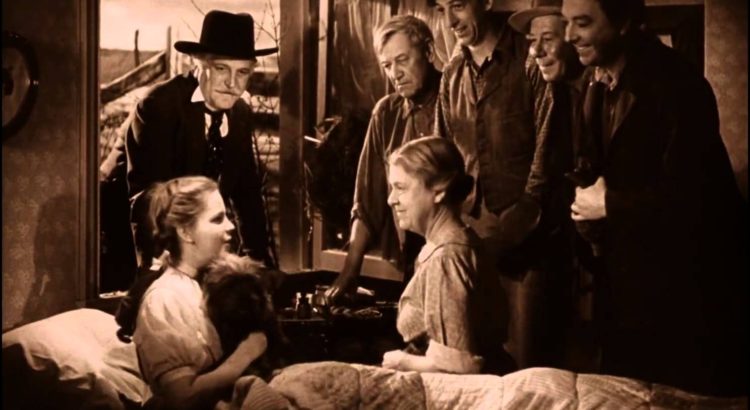
I love “The Wizard of Oz” and think it deserves to be considered a classic of American cinema. This week, one of my professors showed the ending of the film to my class to make a relevant point during lecture. Tears formed in the corners of my eyes, and I remembered how I actually did cry the first time I saw it. I’m not a big fan of fantasy, but the message that nothing can replace the ones you love is very moving. The way the lecture hall had people audibly sniffing after the clip ended let me know I wasn’t the only one that found the movie powerful.

After the video ended, my professor addressed the class by saying that although the scene is “cheesy” it was still insightful for the purposes of studying witches. My mood soured when I heard her say that. “Cheesy”? The fact that the movie came out in 1939 at the end of the Great Depression and the beginnings of World War II makes it unsurprising that it was a box office hit. In my English classes, I learn about how history provides relevant context to literature that allows the reader to understand texts more deeply. In therapy, I have learned that a useful coping mechanism when emotionally distraught is to pretend that you are somewhere far away physically from your problems so that you do not become so emotionally attached that you are incapable of working towards solving them. What better way for the people living through such brutal times to be given a glimmer of hope, than to be transported to a magical wonderland that shows there’s no better place to be than home, with their loved ones who make struggling in life worthwhile?

I wonder if my professor didn’t like The Wizard of Oz or just was self-conscious about including the G-rated movie in lecture. The way she talked about it made the film sound more out there than it really is, in my opinion. Compare Oz with the song “Pon Pon Pon” by Japanese singer Kyary Pamyu Pamyu. She has said what drove her to become a singer is to make other people happy. This can be seen by how her first performance was a charity event called “One Snap to Love” in 2011 to raise funds for victims of the 2011 Great East Japan Earthquake. On the English-language Internet, I’ve heard people speculate that she made such an over-the-top music video for her debut single in order to cheer up the people of Japan as the nation started to repair and mourn after the massive devastation of the earthquake. The lyrics are really sweet, full of optimism and vitality as it calls people to become vulnerable by exploring where they live and joining hands as one in order to take life by the horns. The music video, however…

is full of surreal imagery as Kyary dances around a psychedelic room fulled to the brim with cute junk and faceless backup dancers. It’s wacky and colorful and way over-the-top. If my professor was weirded out somehow by the ending of The Wizard of Oz, then I’m sure she would have a cow watching this. But I for one almost teared up when I realized the context that this wild music video was released in because at the end of the day it tried to inject life into desperate times full of death. Let the people struggling decide what’s too weird to appreciate.

Multitudes in Minutes

Have you ever listen to songs and think “this song has really great lyrics” or better yet, “this song contains multitudes in 3 minutes”. So much is meant within a matter of minutes. Every stanza, every phrase of it can be savored in moments you hear it. Literally music for your ears.

Yet songs too resemble poems, a little too much that it is unclear as to which came first and which copied from another.  Song lyrics are strikingly similar to poems because of the same structure they use. Take for example a chorus from the song Jupiter by Sleeping At Last:

Make my messes matter

Make this chaos count

Let every little fracture in me

Shatter out loud

The chorus conveys so much using very little.  The lyrics are presented in a similar way poems are.  Maybe lyrics are poems written down, woven into the fabrics of melody. I’m unsure if this revelation is new but this parallel between song lyrics and poems is a recent fresh realization for me.

Take another song, Clean by Taylor Swift:

Ten months sober, I must admit

Just because you’re clean don’t mean you don’t miss it

Ten months older I won’t give in

Now that I’m clean I’m never gonna risk it

Rain came pouring down when I was drowning

That’s when I could finally breathe

And by morning, gone was any trace of you, I think I am finally clean

This song holds a double meaning, one for her fans and one for Taylor Swift. Taylor writes this song in light of her journey to move on from her past relationship. She realizes that she has been in the same city as her former boyfriend and has not thought about him once. When she does think about him, she genuinely hopes he is doing okay, a sign that she has moved on to a certain extent. She also writes this song sort of about trying to move on from a struggle in life.

Meanwhile, some of her fans take this song as literally being ‘clean’ from mental illness, addiction and abuse. Although Taylor Swift did not intend the song to reflect that, she accepted the fandom-wide meaning once she heard about it.

So much is said within a song. So much can be said in so little. The cliché saying “less is more” rings true here. We don’t really need to convey a lot using more words, more pictures. More often that not, a simple representation, a simple symbol is enough, concise to say so much of what we mean.


Book Paralysis

Once, I was the kid with the book. In high school, everyone needs a label whether it be preppy cheerleader, overly-enthusiastic MUN club member, or seasonal athlete. Unable yet to define our true selves, we embraced stand-in, simplified personalities. And with these personalities came easy communities, defined along cafeteria-table lines. I always sat with my friend, Periodic Table kid, and her friends, the Anime fanatics. Sometimes before lunch, I would set my book down, carefully avoiding any apple sauce stains, and work my way towards the serving station. Mostly though, the book would follow me and sustain me as I waited in line. Staring down, barely paying attention to the shuffling feet, my only contribution to the chatter was a few rustling pages. But no, this is not the triumphant story of how a shy, woebegone nerd became the cool, charming center-of-attention. In fact, I was pretty proud of being the nerd. And I am pretty ashamed that I have abandoned that persona, ever since high school.

The problem seemed to be that in college, everyone wanted to do anything, but read. People spent so much time in their various lecture halls scribbling, that they had to conserve any remaining energy for a desperate attempt to translate that scribbling into homework. And no matter how much I ached to pick up a book again, I was just like everyone else. Well, most everyone else. There are still those that add a little extra weight to their backpacks, those that stick a novel between the laptop and all those notebooks. They finish pages during passing periods and chapters before bed. I just go to sleep.

I have often reflected on why I stopped reading. Why does it feel like such an overwhelming burden to start a book when it takes an equal amount of time to watch an episode of television? Even during winter break, I was much more inclined to start an entirely new show than to pick up one of the multitude of books that lay around the house. Perhaps keeping up with reading is simply a more difficult task than other forms of media. For often, when I come back to a book after even a week, I have forgotten the tone, the scattered symbolisms, the motifs. Books, after all, do not come with easy recaps at the beginning of every episode. A book is an old format and thus, does not submit easily to the frenetic pace of modern life. Reading is a consistent exercise and must be sustained, like any good exercise, over some period before it once again becomes an easy habit again.
Right now, a library book languishes on the highest shelf of my room, far harder to access to than my cellphone with all its easy distractions. Still, I sense its pull, its call to adventure.

Reading is an intimate experience at its heart. Phrases that speak only to you, pages that envelope you from the rest of the world. Like any relationship, its hard to commit at first. But slowly, surely, you’re in love.

Here’s Why Rupi Kaur’s Poetry Sucks

Rupi Kaur is an Indian-Canadian poet who rose to fame for short enjambed poems, usually with themes about sexual abuse and self-love, posted on instagram accompanied by an original illustration. She is the frontrunner of a new culture of “insta-poets”, taking her success on the internet to ground-breaking commercial success in bookstores all around the world. For her readers, Kaur is a brave young woman speaking fearlessly and simply about extremely difficult themes. And I can see the appeal as someone who, too, has scoured social media like Pinterest and Tumblr for some light poetry reading, but to think that Kaur’s poetry is good poetry– that its writing is actually adding merit to the literary canon– is a gross overration of Kaur’s talent as a poet. If anything, her poems are visually stunning, give the illusion of depth, and she’s willing to give voice to the suffering of young women– but they are not actually good. Here are some of her poems:

Image result for rupi kaur poetryImage result for rupi kaur poetry

Kaur has mastered the art of making her poems seem profound, especially by capitalizing on the lazy technique of lines breaks. She writes moderately interesting sentences– usually about something taboo and difficult, like rape or confidence or being a woman of color to give an extra sense of thematic intensity– breaks them apart, strips them of punctuation, and adds an appealing image to compliment it to give the sense of a verse form. I can do it here:

a flower

grows sprouts bursts

in my heart

every time i

contemplate the

garden of

our love.

The original sentence: A flower grows, sprouts, bursts, in my heart every time I contemplate the garden of our love.

Kaur’s lazy use of line breaks has been ridiculed by many Twitter users:

Image result for rupi kaur meme

Kaur’s poetry states obvious, mildly interesting stream-of-consciousness shower thoughts in visually appealing ways. For a young audience who wants to read something about their problems about love or being a woman, Kaur is a championing figure who doesn’t shy away from these intense themes. Her poetry is extremely accessible and readable. You don’t have to read it multiple times in order to understand it, don’t have to crack open a dictionary in order to know what the words mean, don’t need an english degree to unknot the mess of allusions and symbolism and critical theory– it just means what it means. Doesn’t this make it good?

Well, no. Poetry isn’t good because it’s simple, and it’s also not good because it’s complex. Poetry is good because it says something interesting in an interesting way, that it is rich in meaning, and that it contributes to something about a larger poetic narrative. Consider William Carlos Williams’ poem “This is Just To Say”, which follows much of the structure and line-break pattern that Kaur does, but is wildly different in its quality:


I have eaten
the plums
that were in
the icebox

and which
you were probably
saving
for breakfast

Forgive me
they were delicious
so sweet
and so cold


There is a chaotic energy in this poem, a powerful subtext that needs to be unpacked, something playful and intriguing between the tension of its conversational tone and the almost murderous delight of stealing someone’s plums. This interest and interaction with form is utterly lost in Kaur’s work. Her poems are expected, obvious, and vacuous, painting an illusion of depth where there is none.

And perhaps you didn’t like William Carlos Williams’ poem about the plums. Maybe you’re someone who prefers Rupi Kaur’s poetry, and maybe you think it’s pretentious of me to decide that it’s actually quite bad. Perhaps you’re thinking that this whole poetry thing is extremely subjective– who gets to decide what poetry is good and bad, anyway?

If all literature was subjective, then, there would be no point to literary criticism and an entire discipline dedicated to the study of good literature. Poetry is not subjective. There is good literature and there is bad literature. Your experience of either can be subjective— as in, you can like bad literature and hate good literature, but your preferences don’t change the fact that it’s bad or good. There are certain measures for what it means for poetry to be good, and rupi kaur’s poetry simply doesn’t cut it. Of course, it’s great that a whole new wave of people are enjoying poetry and it’s been made accessible to them. It’s just really bad poetry, vacuous, full of lackluster language and the illusion of profundity, all set on the background of simple type font and a cute line drawing. That’s all.

(Images from Google Images)