Leo the Mer-Guy! Chapter Ten: Magic

“Why don’t we go around the circle and introduce ourselves,” the rainbow-haired person suggested. “I’m Ash. They/them pronouns.”


The backpack kid was next. “Ruby. She/her.”


There was a very tall person with long, straight, black hair and makeup like they were a member of the band KISS. “Onyx. They/them.”


Next, there was a kid who didn’t look so different from Leo. They offered him a lopsided smile. “Juan. He/him.”


Leo also met Tinashe, Yasmin, and Ji-fu.


It was a lot of names and a lot of people all at once, but Leo was really hoping to get to know them all much better.


Much, much, better.


He wasn’t alone here after all.


He wasn’t the only gay kid, wasn’t the only trans kid. Here he was, huddled in the woods with a group of people that understood him. Not all of them looked just like parents and society thought a boy or a girl should look.


It was awesome.


Oh, and they were all clearly super weird. Like the actual weirdest.


Leo had never felt more at home.


Ash explained that they were a secret order of kids who all lived in the neighborhood. They went through the agenda, including discussing whose house would host the next meeting. Juan said his parents hadn’t finished cleaning the basement, but that it would probably work for next week. Tinashe offered to bring snacks since her mom worked at CostCo.


Ash also explained to Leo that they were all queer, they were all witches, and that they practiced magic. That this field and this pond was where the magic was strongest.


That was something new.


Leo had never really had a goth or an emo phase. He’d never worn crystals to school and chanted spells at home. He’d seen plenty of theater kids at his last school who did, though, and he wasn’t one to judge, he just didn’t know if it was for him.


But he liked them all enough and was lonely enough to start embracing his inner witch. It couldn’t be hard, right?


He hoped he didn’t have to wear black all the time, though. It wasn’t really his color.


“So, Leo,” Ji-fu said, twirling her braids around her finger, “you interested in joining us?”


“Oh, yeah!” Leo exclaimed. “I mean, if it’s cool with you guys.”


Ruby offered a thumbs up. Ash nodded. “You need to go through initiation, then,” Ash said. “If you’re serious.”


Leo nodded emphatically enough for his bangs to fall in his face. “Yes. I am. Super serious.”


“Okay, then,” Ash said, the gleeful smile on their face illuminated eerily by the orange flames. “Let us begin the ceremony.”
Art Biz with Liz: Shaping Creative Lineage

This past Wednesday, I had the pleasure of attending an event called “Shaping Creative Lineage: A Poetry Reading + Writing Workshop with Carlina Duan.” The event, presented by Multi Ethnic Student Affairs (MESA), featured Asian-American poet and educator Carlina Duan. While I hadn’t read one of Ms. Duan’s poems until this past year, it was wonderful to hear her read from her collections I Wore My Blackest Hair (Little A, 2017) and Alien Miss (Univ. of Wisconsin Press, 2021). The event was a great opportunity to learn more about what inspired her poems and have a conversation on writing about our own experiences.

In I Wore My Blackest Hair, Duan’s poems tackle topics related to ancestry, identities, and belonging. They also reflect on themes of racial consciousness and growing up. Duan’s second collection of poems, Alien Miss, reflects on the experience of growing up as a diasporic, bilingual daughter of immigrants, introducing tales of both love and survival. It was exciting to hear from both of these collections, especially since Alien Miss came out just this year.

I promise this blog post isn’t just an advertisement, though my excitement may come off as such. The event made me consider what it means to write about our identities. It also encouraged me to reflect on the power our creative action holds. For artists like Duan, the question of responsibility is raised. What pressures and influences do we have in creating art when existing representation may be limited? For art so language-based, how can we create care and active thinking in the language we use within our communities? These questions raise more questions regarding what we owe to ourselves and our own vulnerability.

While I still enjoy it, early literature of Asian Americans is often wrapped around imagery of chopsticks and white rice. These concepts alone don’t capture the complexity that is the human experience, and people like Duan are disrupting some of these images through their art. I was impressed with how she uses poetry as an expansion of historical archives, infusing her words with other texts and lineages. When it came to “creative lineage,” however, I was a little confused by what she meant. I assumed it must refer to our ancestral line, the history that gave way to who we are today. I learned that creative lineage is not just our ancestors, but the people who inspire you. These individuals could be people who came before you, but it can also be your friends.

To generate discussion on the topic during the event, Duan raised several questions: Who are you accountable to? Who lives in your creative lineage? Who are the thinkers, makers, and people who you carry with you each time you enter a room for solace, support, community? When I sit down to write, I often consider myself alone with my thoughts. But that’s not necessarily true. When I write, there are often a chorus of people in the room with me, hundreds of memories and experiences impacting who I am and what I create. Creative lineage is talking about these people as well as the spaces I live in and am descended from.

I’ve discussed my unfamiliarity with poetry before on Arts, Ink. I generally consider myself a beginner when it comes to interpreting and writing poetry; however, I still hold an appreciation for the medium it provides in exploring the complexities of identity, emotions, and experiences we hold. I also believe the lessons and questions raised in Duan’s workshop—including the concept of creative lineage—can be applied to all kinds of art, not just poetry. Moving forward, I’d like to consider this idea of creative lineage in my own work. Perhaps you will, too.

Leo the Mer-Guy! Chapter Nine: The Order of the Night

The group murmured in shock, glancing left and right, capes billowing as anxious bodies moved beneath them.


The rainbow-haired person pointed the flashlight directly at Leo. “We have been followed.”


All eyes turned toward him, glinting brightly against the flames in darkness.


Well. Leo did not wake up today expecting to get murdered. He’d braced himself for a crappy day, but this was just about as crap as crap could get.


Mouth dry, knees wobbly, Leo stepped forward and into the light. “Uh.. uh…” His thoughts were completely empty. He offered a trembling wave. “Hi?”


“Name yourself and your intent,” The rainbow-haired person demanded, voice echoing powerfully.


“I’m L-Leo. Leo Castellan. I just moved here and I thought–“


“Why did you follow us?” they interjected, the edge to their tone growing ever sharper.


Leo swallowed. “Because you seemed cool?”


“Excuse me?”


Leo cleared his throat. “Because you seemed cool, and my parents wanted me to make some friends,” he tried again, his voice a little louder.


The rainbow-haired person blinked. “Oh.”


The group of kids glanced at each other, some spooky nonverbal communication passing between them.


“I can, uh, just go, or–“


“No, hold on,” the rainbow-haired person said. Their voice was normal now, instead of the Gandalf-y tone and power from before. “Did anyone bring an extra robe?”


There was some shuffling, some silence, some footsteps, until a voice piped up: “I did, but it’s kinda small.”


Leo looked to the speaker, who he’d previously assumed was some kind of hunchback toddler. They threw back their cloak, revealing the truth: they were just really short with a really huge backpack. They set the backpack down, pulling out a cloak from under some potato chip snack-sized bags. They held it out toward Leo. “Here.”


“Oh. Thanks.” Leo stepped into the circle, feeling like he was breaking some unspoken rule. He took the robe from the kid, the flames making his eyes water.


He put the cloak on. It ended just below his waist. He looked over to the rainbow-haired person, who seemed to be the leader.


They shrugged and nodded. “Alright, everybody, make room.”


The circle widened by just enough to let one more person join its ranks.


Heart still going crazy, but no longer out of fear of his imminent death, Leo stepped between the backpack child and the rainbow-haired person.


“Welcome,” the rainbow-haired person said to Leo, “to the Order of the Night.”

The Poetry Corner – 7 April 2021

[To read an introduction to this column, please see the first paragraph of the initial post here]


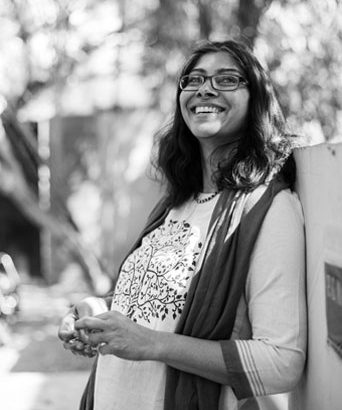
This week I am featuring the poet Swidala Swami from India. She is a varied writer, also working in fiction and children’s literature. Her work ranges in themes, but seems to have particular focus on love and loss. The two poems I selected to show today use these themes well, and perhaps in unexpected ways. 


  Read More

The Artist’s Panel: rEVOLUTION

Today, I wanted to highlight a current UofM exhibition that speaks on issues that are close  to my heart. The 16th Annual rEVOLUTION: Transformation exhibition, which is curated by the Sexual Assault Prevention and Awareness Center (SAPAC) here on campus, showcases work created by UofM student  allies and survivors of sexual violence. I was deeply moved by the powerful work on display. For the above illustration, I drew from my own experience as a sexual assault survivor as well as references to some of the pieces on display. To see the virtual exhibition in its entirety, click here! I strongly encourage everyone to spend time with this empowering body of work.