poco piano: touchy toccata

A tad different from the usually me playing. I think it would be nice to listen to someone other than me play and I was choosing repertoire anyway. I’m not familiar with the Toccatas and was curious about them since I am playing the toccata from the e minor partita. I listened to the recording by Laurent Cabasso of all seven Bach toccatas. Listening to them I was struck by how the variety of textures and modulations. I think my favorite one was the Toccata in c minor, BWV 911. It opens with such a grand improvisatory gesture that sweeps through the listener. The figure in the first line has a telephone ring vibe to it (I think due to the repeated figures). It is also seen in the main fugue subject due to the repeating nature of the head of the subject. I think I was most drawn by this type of figuration that this toccata employs throughout. There seems to be two fugues in this toccata; a short adagio fugue followed by the real (expansive) real fugue. There are recits interspersed throughout the fugue with intricate runs and grand cadences.

The entrance of the first adagio fugue really seems to have no connection to the previous material. I think the idea of the toccata is really exemplified in this piece. Toccata means “to touch or to play” and it stems from this Italian tradition of virtuoso playing. This is obvious in the virtuosic improvisatory runs yet not quite so obvious in the fugal writing. The more I listen to it though, the more driven it seems. The writing is so antithetical to the singing style with the extremely large ambitus and the continuousness of the fugue. It seems to go on forever; there are cadences yet there isn’t time to breathe, it is merely used to denote sections. Perhaps the toccata is also used to exemplify the nature of the instrument as a machine, something clearly and fascinatingly inhuman.
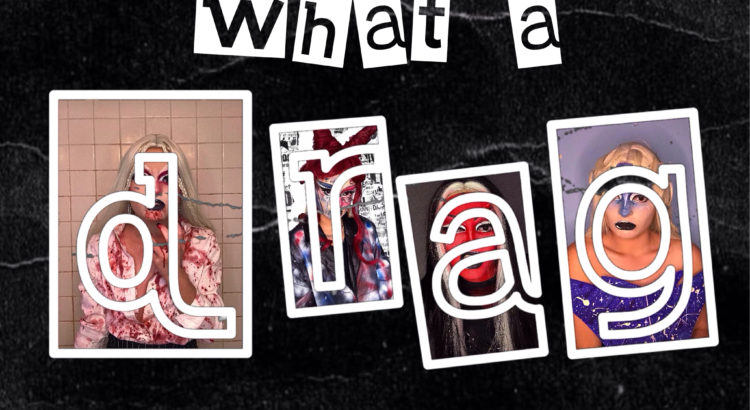
Femme and Fantasy


Queer people love fantasy. That blanket statement may not be entirely true, but I, as a queer person, love fantasy. There’s something so enticing about magic and inhuman creatures, the aesthetics of elves and dragons and sword fighting. There’s certainly something about escapism into fantasy worlds, for certain. Fantasy hasn’t always been the most queer-friendly genre, especially considering a lot of the classic, aggressively heterosexual examples that populated many of our childhoods. However, queerness in fantasy (and science fiction) dates back to Virginia Woolf’s “Orlando” from 1928, which featured a queer relationship and a transgender character. But what really introduced queerness into the fantasy genre were Tolkien and “Lord of the Rings”. While not overtly queer, there’s certainly a lot of queer subtext in a lot of the books, particularly noticeable in Frodo and Sam’s relationship. 

Today, thankfully, the fantasy genre has become a lot more welcoming for queer stories and characters. The past decade has seen authors such as NK Jemisin, Nisi Shawl, Rebecca Roanhorse, Rivers Solomon, and many more who have stories including and centering on queer characters and relationships, and arguably more important, on non-white queer characters particularly.

For myself, my love of fantasy comes more from tabletop RPGs such as Dungeons & Dragons and the shows surrounding it, such as Critical Role. While these were my reintroduction to the fantasy genre as a young adult, my interest has certainly grown from there. For a lot of my more fantastical or magical-inspired drag looks, I play into the fantasy elements that come with creatures from worlds like Tolkein’s or Gygax’s (the original creator of D&D). I draw a lot of inspiration from fantasy for a lot of what I create.


The look featured in this post is what I wore to the Michigan Renaissance Festival a few weeks back. My inspiration for it came from D&D, specifically the tiefling creatures who are half-demon spawns. There’s a certain safety I find in painting myself to look a ridiculous color or simply not even look human, because even if I play into being a more femme version of myself, I don’t have to be under the constraints of being something cis or “normal”. Walking around the Renaissance Festival, where many people were dressed up in similar, bizarre costumes like mine, my drag felt like it fit right in with the scene. 

TOLAROIDS: The Spooky Contest Results!

Last week you voted for the spookiest photo of the spooky season, and as promised I will go over the winning photograph, the context, editing, general information, etc.


#1 A spooky encounter

As of today, 36.36% voted for this photo as the spookiest!

Background

I was walking through the Arb for the first time, trying to get fall-themed photos. It was probably around mid-October and I just walked into what I believed is called the Praire part of the Arboretum. That’s when I saw this guy right here!

Settings

Camera: Nikon D750, lens 18-200mm

  • Exposure time: 1/100s
  • ISO 800,
  • f/5.6

Editing

I decided to go quite simple with editing, I really like the colors so I pretty much didn’t touch them except for some slight color saturation for green. For the “spooky” touch I added vignetting and higher contrast

  • Exposure: +0.80
  • Contrast: +40
  • Highlights: -30
  • Shadows: +9
  • Post-crop vignetting: -18
  • Temperature: 5,447
  • Texture: +5
  • Clarity: +5
  • Green Saturation: +8

And here you can see the before & after:

tool: Juxtapose by NU Night Lab

If you have any questions or comments you can catch me here or at @akilian.jpg on Instagram! See you next week!

Weird and Wonderful: A Trilogy of Camp

Hello everyone! My name is Harper, and I’m glad to be back writing “Weird and Wonderful” after a long break. This year, I want to continue sharing films, music, shows, and more that are outside the mainstream. For my first post this semester, here are three out-of-the-box films I watched over summer and fall that I highly recommend.


The Stuff (1985) directed by Larry Cohen

Are you eating it…or is it eating you?

Within the first five minutes of The Stuff, a wandering man finds mysterious white goop on the ground, leans down, and eats it. This campy, satirical horror film asks the questions that’s on everyone’s mind: what if ice cream was evil? Over the course of its tight 87 minute runtime, we follow Jason (Scott Bloom), a young boy whose family has fallen prey to an addicting dessert that crawls in the night. Joining forces with former FBI agent Mo Rutherford (Michael Moriarty) and ad executive Nicole (Andrea Marcovicci), the three set out to stop The Stuff at its source with the help of some wacky sidekicks. I can only describe this film as “David Cronenberg meets The Blob — if the titular blob was a delicious, national sensation”. At its core, The Stuff is a brilliant satire of American consumerism that will leave you absolutely dumbfounded.


The Wizard (1989) directed by Todd Holland

I love the Power Glove, it’s so bad.

The first half of The Wizard‘s plot sounds like a drama: Jimmy Woods (Luke Edwards) suffers from PTSD after a family death, so he and his brother Corey (Fred Savage) journey cross-country to California. On the way, they pick up young drifter Haley (Jenny Lewis), who witnesses Jimmy’s gaming prowess and encourages him to enter a Nintendo tournament. That’s right, this film is actually one big, cheesy Nintendo ad, specifically for Super Mario Bros. 3. Hilariously overt product placement and a bizarre series of events for a gaggle of children will fill you with a sense of wonder at how this movie was ever popular, but its charm will win you over at its heartwarming conclusion. This film also has an insane easter egg for those with a keen eye: near the end, an uncredited young Toby Maguire can be seen in the background — and I think that’s all the motivation you need.


Possibly in Michigan (1983) directed by Cecelia Condit

Love shouldn’t cost an arm and a leg.

This musical horror story is only 12 minutes long, but it’s borderline indescribable. A story about two women, Sharon and Janice, who face the threat of a stalker, this is a surreal experience not for the faint of heart. The editing is unlike anything I’ve ever seen, and the musical motifs are creepier than some actual horror movies I’ve watched. The ending twist will leave you with your mouth on the floor, begging for an explanation. Possibly in Michigan is a delightfully devilish work that challenges representations of women and violence. Bonus points: the entire thing is free to watch on YouTube!


The Rise of the Band Geeks, Episode 4: War Chant

The football players smashed into one another with the force of semi trucks, the sounds of their collisions drowned out by the pervasive screaming of fans.  Hal’s own throaty screech was lost in the chaos.  He wasn’t particularly loud, and his voice had gotten stuck at some point during puberty in the odd limbo between the voice of a boy and the sonorous, crisp boom of an adult male, subjecting him to frequent voice cracks.  His scream crackled now, and he could have been mistaken for fourteen or fifteen were he not a member of the marching band.


His right arm burned from the motion accompanying the excerpt from Temptation, commonly referred to as “Stands T” by the band.  Although he hardly felt it, the faint sensation was enough to distract him in the game.  He wasn’t much invested in it anyway, caring more about the stand tunes and watching halftime than anything else.


Why don’t we play a short version of W?


War Chant, the second half of the Michigan traditional duo that begins with Temptation, was just as musically robust and hype.  For the cymbals, it was a near-constant motion of pumping the arms up and down, interspersed with deep knee bends, 180-degree jumps (and one 270-degree jump), the infamous back bend, and, at the very end, a complex pattern of partner crashes that could literally kill you if you forgot to duck.  It was the perfect complement to the knee torture of Temptation, though W (or “Dubs,” as many people called it) contained knee torture, as well.


It is a universal truth that, when it comes to T + W, you can’t have one without the other…yet, in the stands, there was one without the other.  Hal had always been deeply saddened by this, as he loved both T and W, although they were grueling, especially when you were forced to do it inside the band hall with a mask on.


He always imagined a stands version of W drawing from the first part of the song, which involved a relatively complicated crash rhythm for the cymbals that alternated with eight-count drum features.  He’d never said anything about this to the band director or the drum instructor, seeing as he was a freshie reserve fresh out of a yearlong hiatus (though it might as well have been a punishment for something Hal didn’t do).


He swallowed as the play ended with the opposing team gaining three yards and prayed Stands W would become a real occurrence.