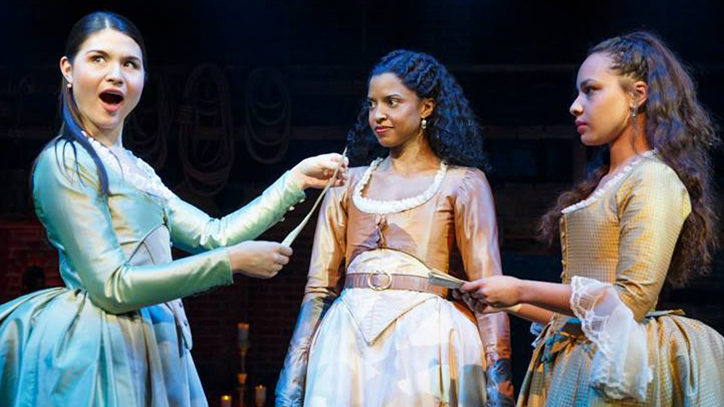
It’s hard to ignore that so much has changed in the time between my last blog post and this one. If someone had told me three weeks ago that I would have all the time in the world to sit at home and read in the very near future, I wouldn’t have believed them. Admittedly though, I would have been pretty excited by the prospect of it. Therefore, I’m trying to take an opportunistic outlook on having to hunker down. One of those opportunities was finishing a book I’ve been reading titled Rise Up!: Broadway and American Society from Angels in America to Hamilton.
Something immediately striking to me while I was reading was how many musicals are adaptations of something else. The obvious ones are Disney musicals (which, if we look even closer, are adaptations of other stories themselves) and Disney-adjacent musicals like SpongeBob SquarePants: The Broadway Musical and Shrek The Musical. Further, this phenomenon spans from the silly to the critically-acclaimed to the classic musical. For example, it’s well-known that Hamilton was developed based off of Ron Chernow’s biography Alexander Hamilton and Wicked is a prequel to The Wizard of Oz.
Maybe this discussion would feel pretty basic to a theatre major, but as a casual musical fan I find it fascinating. Mash-ups of semi-original and semi-adaptive content feel less common in other realms of art. Still, it makes sense. One of the goals of a musical, as far as I can tell, is to combine lots of different things seamlessly. Musical haters will joke that breaking out into song isn’t realistic, but I think that’s what makes everything click together. Besides, if you’re going to base a show off of something as wacky as Monty Python and the Holy Grail (Spamalot) or turn something dear like Sesame Street into something vulgar (Avenue Q), you might as well add some singing in too, why not?
After reading Rise Up!, I was inspired to branch out from my typical musical soundtrack rotation. So far, I’ve listened to Six, a pop concert put on by King Henry XIII’s six wives, and American Idiot, a show based on the Green Day concept album of the same name. It’s fun to think about why certain choices in either show were made and even more inspiring to think about all of the potential for other musicals in the same vein. It gets you thinking — because practically anything can be set to music, practically anything can be a musical.
Which means that right now while we’re all social distancing, who knows what musicals are in the works? Maybe in a few years, Quarantine The Musical will be the next big thing. That being said, the pressure to be productive with all this free time should never outweigh the need to take care of your mental health. With all of this uncertainty, surviving is enough.
(Image Source: Broadway Direct)
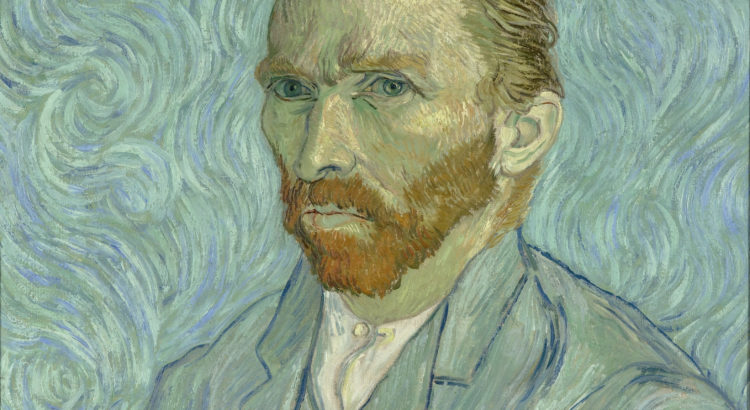
 1. His most famous painting, the Starry Night was completed when he was residing in an asylum. He admitted himself in there and was recuperating from a nervous breakdown. He never thought the painting was any good.
 6. His life is docume=nted through the many letters he wrote. He wrote to his brother, his friend, Paul Gaugin. Some interesting quotes from his letters are ” if one were to say but few words, though ones with meanings, one would do better than to say many that were only empty sounds, and just as easy to utter as they were of little use” and “Well, then, what can I say; does what goes on inside show on the outside? Someone has a great fire in his soul and nobody ever comes to warm themselves at it, and passer-by see nothing but a little smoke at the top of the chimney and then go on their way. So now what are we to do, keep this fire alive inside, have salt in ourselves, wait patiently, but with how much patience, await the hour, I say, when whoever wants to, will come and sit down there, will stay there, for all I know?” .