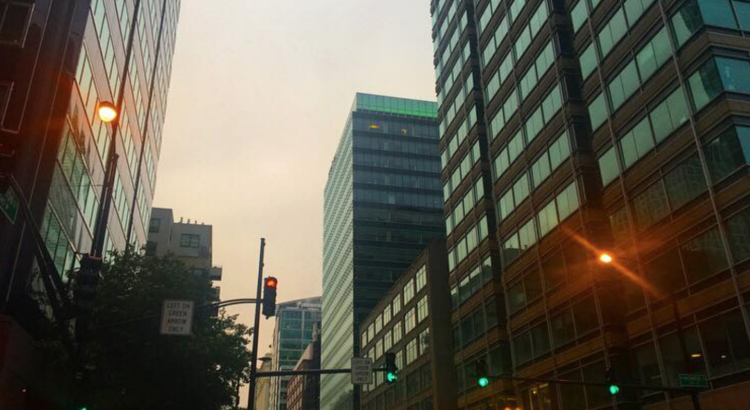
In the Eyes of an Architecture Student: The Importance of Photography

Hi Everyone!

I’m back again this week to discuss this week’s topic: the importance of photography!

Yes, photography, as in the term corresponding to the Webster definition: “the art or practice of taking and processing photographs.”

In architecture, as you may have inferred from all of my previous posts, representation is VERY important. Representation makes or breaks our works’ proposal, and that is kind of a very big deal, even within the stages of education before a job in “the real world.” In architecture school, representation refers to everything (all types of media) you use to “sell” your work to your professor(s), and this includes the exact words you use to talk about the project, how perfectly orthogonally pinned up your work, how nice and stable your constructed models(s) are, and how sharp or effective your photographs are.

Even outside of classes, powerful photographs serve arguably more importance than how well you preserved your hand-drafted drawing(s) or even your original model(s). I say arguably because, when we apply to jobs and internships, the employers are likely to only have access to your work virtually- which makes photographs EXTRA important because that is their ONLY window into your skills and personality as a designer! Yes, employers want to see perfection and thoughtfulness in your work in the portfolio, but they also appreciate the honesty of sharpness of quality of photos- it’s a sort of stunning thing to see, even if you did Photoshop some blemishes or glue-globs out!

Photographs not only serve to simply document you work to show to employers, but also function as a very effective way to remember your work and (potentially) locate your improvements within your work. Of course, the sharper and better your image, the larger the file, but I cannot stress what pain it is to have to go back to old files only to realize I did not document the stuff well enough, and now it’s too late because my models may or may not be rotting in my basement now, very obviously not photo-worthy quality. So, in other words, after you make a model or ANYTHING (if you don’t think it’s worth remembering right now in this moment) it is safest to just check out a nice camera (Nikon, Canon, etc) and deal with a million AMAZING photos now, than to just use your phone (even that cannot compare to a really good camera) and take a few subpar images, only to realize the quality degrades each time you uploaded it to different platforms. The ideal process is as follows: make the model(s), get a good camera, yes spend time and get all angles of the stuff you’re documenting, and upload it straight to google drive for initial storage. But, I’d recommend you go through and eliminate to the images you’re going to keep, Photoshop them to the best of your abilities (or satisfaction, I guess), and save as a Tiff or PNG (or PDF if that’s an option). Fair warning though, Tiff files can get pretty big and jam up your memory, so I recommend saving as a Tiff without layers, or PNG to save memory.

Good luck to you all, happy documenting!

If you have any questions or further insight, comment! I love hearing from you all šŸ™‚

Have a fun and safe Thanksgiving holiday break, everyone!

Ciao for now šŸ™‚

Art in Nature: EEB 401

A functional ecology class coupled with my microbiology class has opened my eyes to see nature as an art form. Through detailed instruction, I’ve grown to appreciate the beauty of nature, paying close attention to the remarkable order and efficiency of an ecosystem. In the upper level ecology course, we analyze how features of different organisms maximize the species fitness. In the microbiology class, we analyze how microbes enhance or inhibit them from doing so. Organisms operate with impressive strategy. Virtually every component of an organism has an critical purpose to enhance its survival of the whole.

When one organism is removed from its habitat, its effect ripples through the entire community. For example, in 1995, wolves were reintroduced to Yellowstone National Park. Since their arrival, the ecology of the park changed immensely. Deer populations began to occupy only in selected areas of the park. Because there were fewer deer in some areas, there was less herbivory, permitting growth of plant life. With blooming plant life, different species of birds arose in the areas as they feed on these new plant species. Various carnivores and scavengers increased in numbers as wolves left the carcasses of prey on which these creatures could feed. In conclusion, the effect of one animal is incredible. Together, all organisms have a critical role in order to create a seamlessly functional ecosystem.

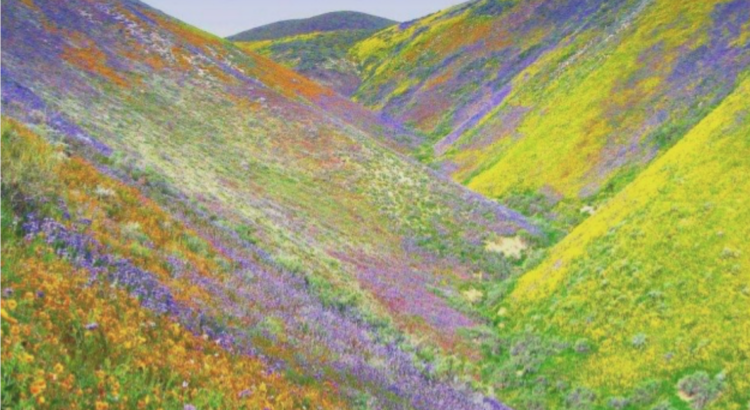
The featured photo was extracted from one of my lecture slides. It looks like an art palette!

Basil + Gideon #5: Hamlet

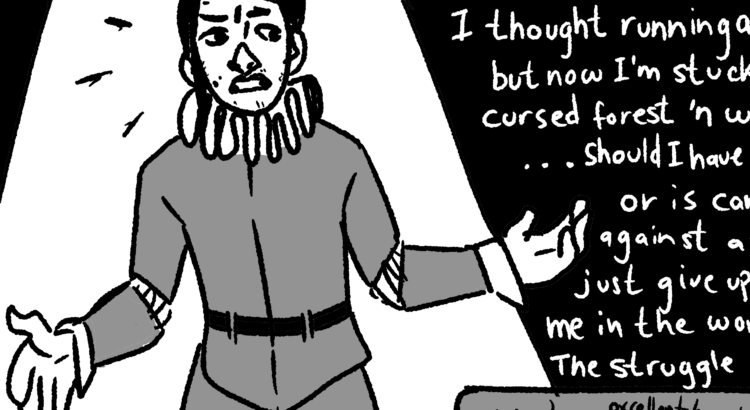
The funny thing about the “To be or not to be” speech (which is the one Basil is supposed to be giving here) is that it’s too iconic. In my Shakespeare class we discussed how it can be difficult to understand this speech as both an actor and as a reader/viewer because it’s so famous, it’s lost its meaning. In a way “to be” has come to stand as an icon for the entire play. However, Oscar Wilde once said that “there are as many Hamlet’s as there are melancholies”. Which I take to mean that you have to take your own experience with melancholy to your reading of Hamlet and then Hamlet becomes more legible because he is part of you.

Basil + Gideon is an ongoing narrative comic, if this is your first time reading check out the first installmentĀ here!

Directions

subways plunder into the stations

I’m hanging on to my phone

directions to here, there, everywhere

I assure you I am not lost

far from it


this alone makes it feel a little lonely

and yet filled with company

chats with Chris are long and fulfilling

see you at Main St, we are headed the same way

returning the same way

so no goodbyes are said

a stranger no more


you don’t have an accent

but I do, its an American one i think

Are you sure you didn’t go to International School?

I laughed internally, so deeply

for I cannot answer their questions, for I

myself am puzzled, even back at home they say

the same, however i am glad i amused you

I’m glad.Ā 


The Backstage Experience Part 2

This past week was the tech week of the fourth show I’ve done crew for this semester. That means that for four weeks I spent basically everyday from 6pm-12:30am in rehearsals backstage during a performance.

What was different about this one was the energy. I was on costume crew for Musket’s production of the show BARE. BARE is a show I already knew and loved, compared to the other three shows I’ve worked on this semester. Plus all the people involved were so dedicated an excited that it made me extremely happy to be there. BARE was the first show I’ve worked on in college that I’ve felt 100% invested in.

With the other three I just made sure everything with costumes happened correctly, and answered questions/ fixed things if they broke. While I still did that for BARE, there was the added fact that I really cared about the show itself. It made me more invested in the changes and overall process because I knew the story and the the importance of telling it. It was the first time I actually felt the opening night energy and closing show sadness when working on a show here, and that really showed me a lot.

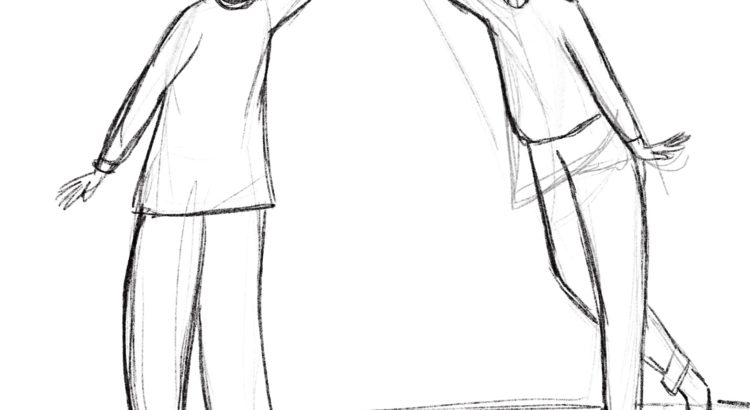
Some of my favorite moments from working on this show were when a quick change (There were many in this show!) would go right and all of us on costume crew would be so excited and proud giving high fives and cheering silently!

If you didn’t get to see BARE you really missed out on some incredible performances by both cast and backstage crew in making the show come together!

“what is art?” Post #9 – Helicon Student Art Exhibition

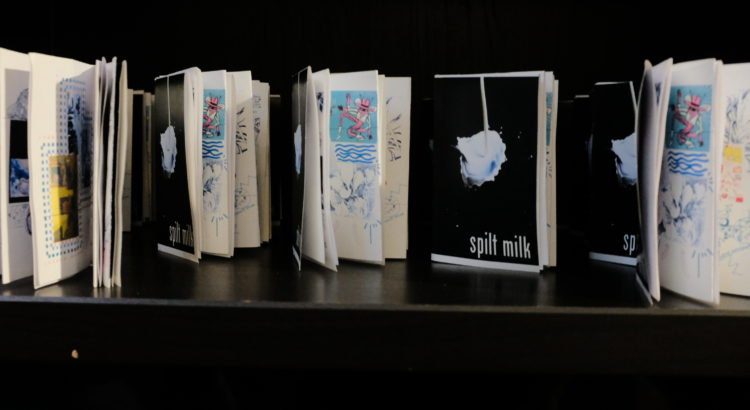
Last night at 101 W. Liberty St. the one-night student art exhibition, Spilt Milk, was showcased by the student art org. Helicon. Supported by the Art History department at the U of M, Helicon thrives by connecting people with art-related events and social platforms. Helicon hosts two student art exhibitions and prints two publications during the school year.Ā 

This past semester I joined Helicon because my friend who is an art history major encouraged me to. When I joined I understood what the club’s message was and what they do during the year, however, I didn’t realize how many opportunities there would be for me to help and contribute towards. I grew from being a new member in September to being actively involved with the club now. I helped with the publication release in October and these past couple of weeks I have provided efforts for the exhibition and displayed four of my own pieces in the show.Ā 

Ā  Ā  Ā  Ā  Ā  Ā  Ā 

Being apart of Helicon has taught me logistical skills like how to get people to submit work for the publication and/or exhibition and how to put together an art show. However, Helicon’s most rewarding benefit is the community it invites you into. Helicon somehow has built a community of students from all different majors and an interest in art. They all want to share the beauty in the variety of what art can be and create outreach for students to come and learn about it. The club enables like-minded people to come together and share their love for their arts as well as growing their community.Ā 

Ā  Ā  Ā  Ā  Ā  Ā  Ā 

Yesterday night’s show was a success and perfect example of how Helicon draws in a crowd with its diverse artwork. Held in a loft, the exhibition included small prints to large installation pieces about the agriculture food industry. Helicon included two projected pieces and had a dj and musician. People were able to walk through two different rooms and dance in the main room while observing the artwork. The lively energy filled the room with excitement. The exhibition also included zines that the audience could take with them on their way out.Ā 

Although Helicon just had our show that does not mean we are at rest. We are constantly figuring out ways to further connect students on campus and thinking of ideas for our next publication and exhibition. Look out for us on Facebook and Instagram in the upcoming months to see how you can join the community and/or contribute as well as for pictures of last night’s show.Ā 


P.S. We meet every Monday at 8pm in Tappan Hall so come and join!