A Rainy Halloween

For some students, Halloween presented a choice between responsibility and fun. With a test the next day, I had to prioritize academics. Not going to lie, it was rough having to study while hearing others chatting excitedly outside my dorm room. I did relish in the fact, however, that I wouldn’t have to venture out into the cold and rainy weather.

But what about everyone that did go outside? Were their costumes ruined, made soggy by the rain? Not everyone had a car or took an Uber. There were plenty of college-aged party goers holding onto their coats —if they wore them, that is—trying their best to ignore the brisk and biting winds. After all, it was so cold that the rain was followed by snow.

And what about the kids back home? I imagined make-up that was turned runny from raindrops and costumes that were shielded with rain jackets and winter coats. There were inevitably families that decided to stay in for the evening, choosing to stay warm and host a Halloween extravaganza within their own homes. With the weather hindering trick-or-treaters, they would have the candy they had bought anyways.

Other families most likely journeyed out into the cold for even just a little bit; this way, they wouldn’t have to feel so conflicted between the less-than-stellar weather and the temptation of sugary treaties. Trick-or-treating for a short time would mean gathering enough candy to feel weight in a pumpkin bucket without truly get soaked from the rain. Happy parents and happy kids⁠—well, as happy as possible with the weather conditions.

And then there were the candy victors that thrived on the rainy night. These little (or not so little⁠—I’m looking at you, high schoolers) monsters had worked hard on their costumes and wanted their candy. What difference did a little rain or wet hair make? These kids ambled up and down driveways with quick steps and pride. When it was time to head home, you bet there was rejoicing. Boots sloshed with each step and costumes were damp and cold, but it was all worth it to see the piles of sugar poured onto the ground. Stomach aches and sugar rushes were the culmination of a rainy, Halloween night.

The Mesmerizing Work of Yayoi Kusama

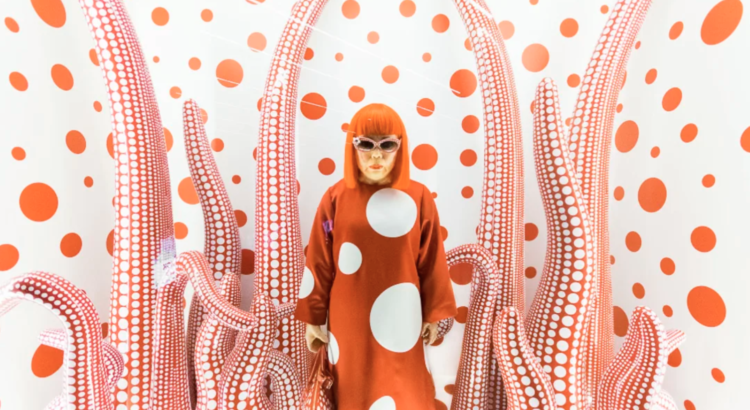
Japanese contemporary artist Yayoi Kusama, at 90 years old, has captured the curiosity of the art world for decades. Her bright wigs and polka dot patterns are a staple of her style, which is influenced by feminism, minimalism, and pop art among other modern art movements. An artist working with sculpture, installation, performance, film, fashion, and other arts, Kusama’s versatility showcases her true creative abilities.

Kusama’s famous patterns stem from a childhood hallucinations of endless dots, which provided solace from her traumatic childhood. Her obsession with dots encourages viewers to absorb themselves in the environment, revelling in the overwhelming infiniteness of life.

Yayoi Kusama’s life experiences were not exactly pleasant. Born into an affluent family in Japan, her mother was unsupportive of her art and was physically abusive. Kusama’s father was involved in extramarital affairs, which led to her lifelong contempt for sexuality. During World War II, she was sent to a military factory producing parachutes as a teenager “in closed darkness.” After living in Tokyo and France for a period, then moved to the United States at 27 years old.

The artist’s mental illness is simultaneously a source of inspiration and frustration–Kusama was hospitalized many times and even attempted suicide in the 1960s-70s. Later, she returned to Japan and voluntarily checked herself into Seiwa Hospital for the Mentally Ill. She permanently resides there, and makes her work in a nearby studio. For her, art has become a creative escape.

Kusama continues to be a prolific artist, creating fantastical pumpkin sculptures, fashion collaborations with prominent designers, and Infinity Room museum installations, novels, among other endeavors.

All the Eternal Love I Have for the Pumpkins (Cathy Carver/Hirshhorn Museum)
Infinity Mirror Room (Tate Modern)
Portrait of Yayoi Kusama (Victoria Miro)

“what is art?” Post #6 – What You Wear

Oh, fashion. How could we do without?


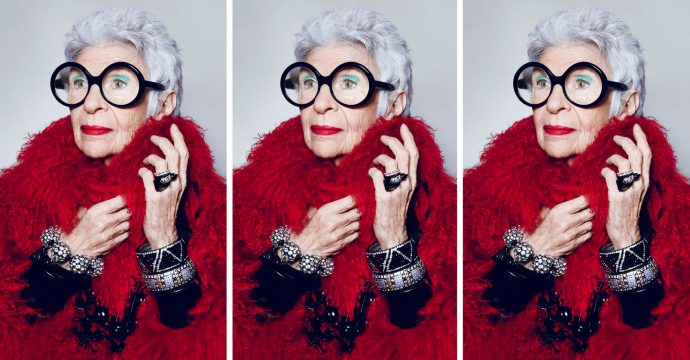
Last Spring, I came across a documentary about a wonderful woman named Iris Apfel. Interior and textile designer by day and accessorizer by night, Apfel is known to have the largest couture wardrobe collection in the United States. Starting at a young age, she began collecting accessories and clothes as she traveled the globe with her husband, leading to the infamous wardrobe she has today. In 2005, an exhibition was hosted by none other than the Costume Institute at the MET(!!!), showcasing her style. She was the first non-designer individual to have a show dedicated to her clothes and accessories at the Met. This exhibition was so successful it went on a little tour, and currently, a museum in Florida is designing a building that will have a dedicated gallery of Iris’ clothes, accessories, and other collectibles representing her artistic style. At the age of 98, she continues to wear show-stopping outfits and share her hobby and love for a variety of unique fashion. 

Reflecting on Iris, one can consider how someone’s creative expression as a hobby can be culturally seen as art and was art before anyone brought attention to it. The art side of fashion is frequently seen as exclusive or elite so it is fascinating when we get to see people come into the fashion art world although they were not designers themselves. 


We constantly consume information and express our feelings through what we do and I believe in what we wear as well. It is not just the clothes or accessories we put on and how they look but it is more about how they make the person who is wearing them feel. My clothes have a wide array of styles but that is because this reflects my many different moods and creative ideas/outlets. My favorite way to style my outfit is to layer. This allows me to wear a multitude of colors, patterns, graphics, etc. which allows me to show off my personality even more than my extroverted self already does. Additionally, I have personal items in my wardrobe that have sentimental value to me and I wear them for security, strength, and confidence. 

Comparatively looking at Iris’ and me I can see why her vibrant and culturally dense wardrobe got an exhibition at the Met and mine didn’t but that doesn’t mean mine is of any less value. Although my collection is not valuable expense wise, it is representative (so far) of my identity and what I make of it. Who knows, if I live until I’m 90 maybe someone will come to take a look at all the weird goodies I have and put it on display. I imagine in the future they will have a large exhibition about 21st Century style so maybe I as well as other “ordinary” folk could be in apart of that. The possibilities are endless in what the future has in store for all of us. 


Last year, Iris released a book with the symbolic title, Iris Apfel: Accidental Icon. The title represents how she has never intended to showcase her style but rather collected these treasures for herself. Considering Iris, I want people to consider how there are many different types of fashion and how all can be considered art if you look at it from the right perspective. On-campus if one were to look around they could see that everyone may look like they dress the same but if you take a deeper look no one is identically dressed alike and this revolves back to their identity. Iris showed the world what can become of wearing who you are and without realizing, we do this every day too. Art consumes our lives and we often forget that we can be the art ourselves. Fashion doesn’t have to be a restrictive category but rather something everyone embraces with displaying who they are.


And with that, I would like to close with three arguments to contemplate. 

#1 How you wear something is art. 

#2 Why you wear something is art. 

#3 What YOU wear is ART.