
AAFF through a B&W lens

This past week, the Ann Arbor Film Festival(AAFF), “the oldest avant-garde and experimental film festival in North America”(just to point out), was held at The Michigan Theater. I am currently taking a first year seminar on the Ann Arbor Film Festival, so it was only right if I volunteered. I signed up for normal shifts where I had to hand out audience ballots, check tickets, count how many people attended a competition, etc. In addition, I also signed up to be a photographer not out of having experience, but rather just my enjoyment of taking pictures.

In my film seminar, we just finished up a project on the archives of the festival–held at the Bentley Historical Library on North Campus–where I found numerous film strips of black and white candid pictures. These images reflected the joy and energy of the festivals community and it was my goal to try and capture shots just like them.

On Tuesday, I was nervous, excited, and felt like I was going to vurp(a term I learned from the magical movie Wreck It Ralph! hehe). Just bringing myself and my fujifilm x100f I was scared I was not going to get the right pictures, however my motivation triumphed my fear. Furthermore, the energy of the room was immaculate that there was no way not to capture unique shots. The lobby of the theater was filled with filmmakers, professors, cinema buffs, and AAFF super fans. Everyone was talking to someone and the whole place was filled with laughter and interesting discussions of what was to come.

After putting on my badge(my lanyard that said photographer), I felt invisible to the community, which was PERFECT. I got to dip into the AAFF lifestyle while not actually having to be in it but rather observe it. Behind the lense, I felt pretty powerful and also like I was watching history happen. This experience was extremely special to me and I hope to work further with the festival and maybe eventually be apart of the community in addition to observing it.

Please look at my pictures on my website and like them so I feel accomplished and so this blog can be inspirational 🙂
https://breeandruzzi.myportfolio.com/photographs

Love Chapter 2 by L-E-V

Hello arts, ink readers! Writing to you from across the Atlantic where I am enrolled in a University of Michigan study abroad program in southern Spain. I’m thrilled to share some of the cool experiences I have had in the borderless world of creativity. No matter where in the world you are or what language you speak, there is art. Art is language that we can all understand.

One event that I had to pleasure of seeing was the choreography of Love Chapter 2 by L-E-V Company at the Teatro Alhambra in Granada where hundreds of people gather on Calle Molinos to watch international phenomenons. L-E-V Company is an Israeli dance and spectacle ensemble created by dancer Sharon Eyal and designer of multimedia events Gai Behar.

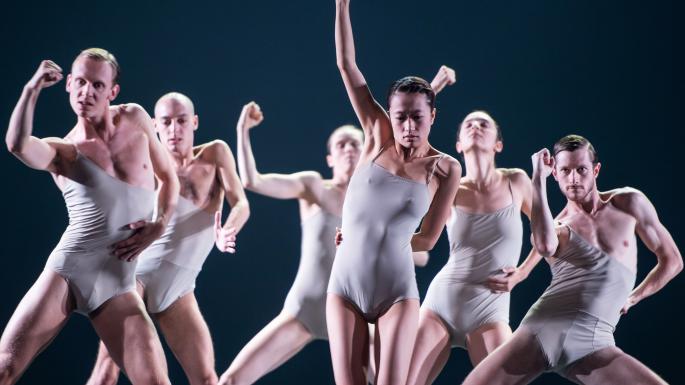
So, the lights dim, the curtain opens, silence falls over the audience, and a steady, isolated beat commences. Six dancers appear, both men and women dressed in fitted leotards colored by a muted greenish-gray tone, and they use this steady beat as a pulse to their every movement. Their solid figures remind me of dynamic sculptures because of their evidently large mass and capacity to stay perfectly balanced no matter how their bodies moved. Their godlilke muscles are traced by the subtle overhead lights. There is a only small, selective emphasis by light techniques since the dance itself is quite elaborate and any extra effects would distract from the pure intensity of the dancers.

The single rhythm as well as the movements slowly evolve to demonstrate the feelings of love. The music has an important role in the message of Love Chapter 2. It begins simply yet mysteriously with only a drum, like when you first encounter someone or something intriguing. From that point, new sounds are layered one-by-one until the music becomes an organized web of sounds. The increasing complexity of the music mimics the increasing complexity of the dance to represent when love changes into something more intricate and more exciting as you come to know someone. Then, we see passion. This style of dance is unlike anything I have seen before. The dancers move in ways that challenge what I had imagined possible while they somehow maintain elegance in a wholistic manner, every feeling is written clearly across the dancer’s faces and throughout their entire disposition. Though they all perform the same routine, each dancer expresses his or her own slightly unique interpretation. That’s to say while there is synchrony, it is not the robotic synchrony that seems mechanical, but rather shows character and humanness…an attribute to the nature of love itself. During the show of consistently awe-striking dance, one of the six dancers would break apart from the group’s synchrony and perform his or her own unique movements. That is how the director emphasizes new, strange feelings and also the beauty of love and how each person feels love in their own way.

Above all, my favorite part is the moment that the director / choreographer comes to the stage and I see a person behind the magician of the theater.

For more information on L-E-V, check out their website: https://www.sharoneyaldance.com/en/home

Performance Anxiety

Recital weekend is HERE. Oh my god.

If I think about it too hard my body starts to feel like a live wire.

For the past month I have been playing for roughly 4-6 hours a day in order to prepare for a 40-minute solo recital. One piece I have been working on for 6 months, another for 2 months, and another for just 10 days!

I don’t really know how many people are going to show up– I’m not expecting too many. My divorced parents are coming to Michigan from two different states. My 7-year-old private student and her mom are coming. My girlfriend is coming. Maybe my housemates, too? Although, can’t be too sure about that at the moment.

Not gonna lie, I have really high expectations for myself. The recital is short and the music isn’t very challenging. I specifically chose pieces that I thought would reflect me as a person and musician. I have a very specific idea of what this recital is going to look like in my head, and I’m afraid that the end result will not reach my expectations. I am constantly reminding myself that this is supposed to be fun and not stressful.

Well, it certainly has been stressful. Consistently stressful, actually! Sometimes I am honestly in disbelief that I chose a performance career path, because performing can be a freakin’ nightmare sometimes. Anxious thoughts take over my brain whenever I think about performing, and sometimes they have a debilitating effect on my physical and emotional endurance while I’m playing. It sucks.

But lately I have had some affirming moments in the practice room and in lessons with my teacher because I have been practicing so hard. I can see my hard work pay off on a day-to-day basis and it’s really fun. I find that the more I practice, the more I feel connected to my instrument and confident about myself. I have to hold on to these thoughts as I perform on Sunday night. I have to practice hard for the next three days to make sure I am prepared.

And after this is all over? For all of April I’m gonna dedicate my time to learning Irish fiddle tunes because I’m heading to Ireland in May. I can’t explain how ready I am to relax. March has been an exhausting month. But I can’t think about that yet! Recital first! Wish me luck– I’ll report back next week.

Opinion: Bansky Sucks

Banksy is known worldwide for being an elusive, thought-provoking graffiti artist whose work is “anti-establishment” and critiques the ails of modern society. His work has sold for hundreds of thousands of dollars since the early 2000s, and can be recognized by nearly everyone. Personally, I don’t believe he should be hailed as a creative genius; I think his work skirts past deeper analysis of important political and social issues by touching on them with edgy, quirky, and superficial images that appropriate pop culture and add nothing of significance. Brutally put, I think his work is mediocre and he’s a sellout.

The artist, whose real persona has never been quite identified, claims to be counter culture and rail against capitalism, consumerism, and the downfall of society. I won’t talk about how his artwork visually isn’t that impressive, but that the nature of his popularity contradicts his whole ideology. A Reddit user in Auckland detailed their underwhelming experience at a Bansky exhibition, saying that besides the rather repetitive work, the exhibition was sponsored by a number of large corporations, entailed a $35 entrance fee, and ended through the gift shop, essentially going against every anti-capitalist, satirical theme that Banksy’s work is supposed to address.

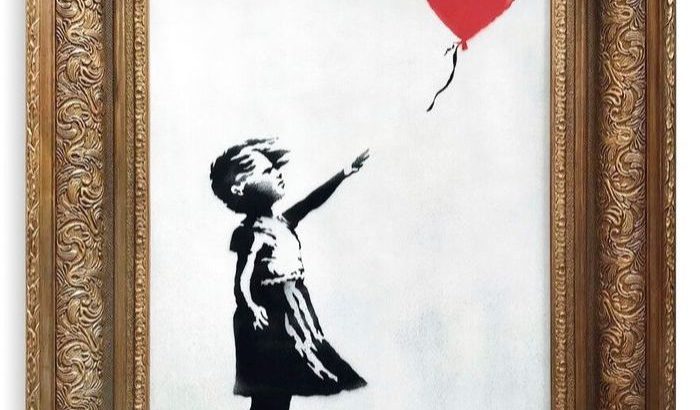
For example, his 2015 project Dismaland is supposed to be a decrepit, depressing version of Disneyland, featuring distorted sculptures and grimy floors. Instead, it’s just sad in general, and doesn’t say anything new. He also sold some of the pieces in an auction, where the BBC reports that the collection garnered almost $15,000. Moreover, he broke headlines when his Girl With Balloon painting shredded itself after being sold, but could now be worth even more to art collectors. Sure it was amusing for a second, but is it really significant?

Clearly the fame has gotten to Banksy’s head, and his work is outdated. That’s not to say that none of his work has value, as some of it is actually interesting and thoughtful. But I’m not sure how long he’ll stay relevant…

Caryl Churchill’s Love and Information

About one month ago, my acting/directing class performed Caryl Churchill’s Love and Information. The production was produced through the Residential College’s drama department, one week before SMTD’s production of the same play. Both productions were done in accordance with the Caryl Churchill festival happening around Ann Arbor, which featured a weekend of free staged readings and lectures to celebrate the ingenious playwright.

To give some background, Love and Information is a jam-packed play consisting of a multitude of short vignettes. The scenes give a glimpse into the different lives of lovers, family members, and friends, evoking laughter, sadness, and more. The script for the play, as well as several others by Churchill, is unique in that it is structured in a way that encourages creativity. There are little to no stage directions, no scene numbers, and no named characters.

When rehearsing the show, the lack of information was a blank canvas that—while incredibly intimidating—forced the director and actors to think for themselves about the direction each scene went when rehearsing it. With limited punctuation and lines interrupting each other, it was initially daunting to successfully define the messages we wanted to send. Besides understanding the text, we were challenged to present a story within a short scene. Additionally, as artists, we weren’t the only ones being intellectually and emotionally challenged; audience members were often left to draw their own conclusions for the stories on stage.

By being both an artist and audience member for this show, I had the opportunity to view the stories through different lenses. To see different renditions was thought-provoking and entertaining. The build up and collapse of relationships between the scenarios varied greatly upon interpretation. For my performance, I played a high schooler, sister (revealed to be a mother), lover, friend, and girl in love with artificial intelligence. It was interesting to see these same roles executed by the SMTD cast. Some scenes were taken in a different direction, whether more comedic or serious than my drama class’s.

Apart from the structure of the play, the stories themselves spoke volumes. The play questioned the balance between knowledge and love, particularly with modern technology. Can one exist without the other? What happens if a person ignores one to rationalize the other? The short scenarios brought life to different characters, situations, and storylines that sparked these questions. Additionally, the use of technology by characters in the scenes acted as either a boundary or a tool in their attempts to communicate with one another. This use of modern technology added an extra layer that contributed to the play’s thought-provoking manner. Overall, through performing scenes, watching other students’ work, and seeing SMTD’s production, I gained an immense appreciation for Churchill’s play, Love and Information.