Wish Fulfillment

“What would you wish for?” It is a question that I have asked of others and of myself countless times. Sometimes, it is all finished within a laugh. We blurt out fantastical inventions with barely a thought spent. Sometimes, we treat the question as if a fast-talking genie was awaiting our orders. It is a game that is endlessly fascinating because the answers tend to change every time we ask the question. It is also an endlessly useless game because the things that we wish for are seemingly unattainable. After all, if we believed that we could achieve this wish through hard work, we would have chosen something different. The game doesn’t just reveal what we desire; it reveals what we believe is impossible. So, we wish for piles of cash to rain down upon us or for carefree voyages around the world.

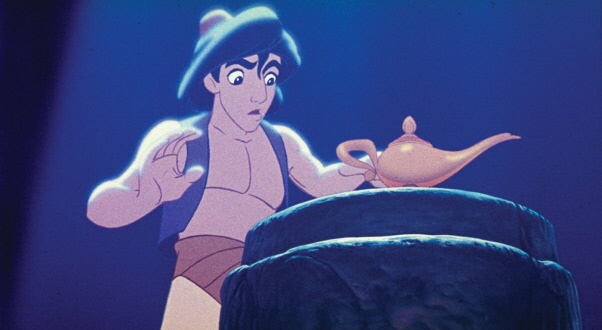
Aladdin, for the most well-known example, wishes to become a prince so he may gain Princess Jasmin’s hand. But even as a child, I knew that Aladdin simply had to present himself as he was to gain the acceptance he desired so desperately. Aladdin knows what he wants. He simply doesn’t know how to gain it. Perhaps he should have wished instead to have infinite knowledge. Yet, the movie posits this, too, as the wrong approach. Infinite cosmic power, after all, comes with an itty-bitty living space. The movie ends with Aladdin relinquishing this power to face the future on his own. I think this speaks to our desire to be challenged even as we want things to be easy. We want to triumph, but only after we feel like we deserve it.

It seems so often, though, that no one gets what they deserve. I look at the world around me and see injustices everywhere. I look at the world around me and want to wish it away. But when I close my eyes to imagine this as a better place, I realize that I would be a cruel and unjust god. For my wishes are arbitrary, subjective, and worst of all, vague. I recognize, like Aladdin, that I am not omniscient, and thus, my wishes will likely cause many unintended consequences. But perhaps, this is the inherent value of wishes. I can pretend at omnipotence, if only for a moment. A wish is not simply an expression of desire. A wish is something deeper, a dream of infinite possibilities that we can use flippantly.

Yet for all my endless speculations and formulations, I have not answered the most important question of all. “What would YOU wish for, Corrina?”. I could wish for world peace. But peace can be achieved easily under a dictatorship. I could wish for personal happiness. But one happiness can come at the cost of many others. Perhaps I will wish for something simpler: a beautiful, turbulent life and some good people to enjoy it with.

A Travesty Against Intellect

“Philosophy is the childhood of the intellect, and a culture that tries to skip it will never grow up.”

–Thomas Nagel


Perhaps this quote does not lend itself to the interpretation that I will now transpose upon it, but it is the invocation upon which these musings are built, so I will include it nonetheless. Being in college as and English and Philosophy major is such a strange thing. It is freeing and exhilarating to be immersed in subjects which I was told, or at least systematically conditioned to believe, were useless. But somehow studying them more has not made them more “useful” to me. I do not think they would even be “useful” if I were to go on and become the world’s greatest contemporary philosopher or the next bestselling author or the most sought-out keynote speaker. The thing with these subjects is that they are by their very nature inconclusive and therefore hold no real “usefulness”. Useful things have an end goal, they have a purpose which can be perfectly traced like the mechanical parts in an IKEA instruction manual. But english and philosophy will only allow you to bask in the glorious and magnificent enquiry of human existence. That is practically useless.

They both seem to be two wildly selfish disciplines. They aim to satisfy insatiable and snowballing curiosity. To want to understand the world for yourself holds no innate goodness unless you intend to act upon that knowledge. There is no moral worth in knowledge unless it is applied. And so philosophy and english, for me, as Nagel said, are both the “childhood of my intellect”. They are my selfish vices to inconclusive understandings and problems I will always flirt with but never love.

But Mr. Nagel, you are wrong about one thing– if we want to “grow up”, we cannot altogether rid ourselves of the childhoods of our philosophy. We must live both as adults and as children, as vice and virtue, in order to be complete. To be either only adult or only child is a travesty against intellect.

The Umich Bucket List

Image result for bucket list

Almost everyone has some sort of bucket list–a list of goals to accomplish, places to see, or things to do within your lifetime. In my second year at Michigan, I’ve begun to think of all the wonderful things I’ve done or have yet to do before I leave. There’s so much to explore on campus. Here’s my (wholesome) Umich bucket list; maybe you can add a few items to yours!

  • Cheer in the student section at a game in the Big House
  • Attend a performance at Hill Auditorium
  • Watch a movie at the State Theatre
  • See a famous person speak
  • Explore the artwork at the UMMA
  • Feed a squirrel
  • Ride a Boober
  • Paint the Rock
  • Float down the Huron River
  • Stroll through the Botanical Garden
  • Ring the carillon bells at Burton Tower
  • Enjoy a meal at Zingerman’s
  • Experience dinner at a plethora of Ann Arbor restaurants
  • Have a picnic at the Arb

Image: SeeJH

Maps as Art

If you handed me a printed map from a rest stop, I’m not sure I would be confident in telling you which direction to go. To me, physical maps are geographical puzzles you shove into the back of your car’s glove compartment. In the past, I never thought of a map as beautiful, let alone as an example of art; however, this perspective was challenged after a field trip to the Hatcher Graduate Library.

Instead of the normal lecture, my digital research class was treated to a brief tour of the Shapiro Undergraduate Library and Hatcher Graduate Library. Out of the numerous books, resources, and study spots, what caught my attention the most was something I would have never expected: maps. I was mesmerized by the Unique Perspectives: Maps from Tokugawa & Meiji Japan exhibit, which was on display until October 30th. While slightly faded, an array of swirling colors and intricate details captured my attention, and I found myself wandering back to the exhibit after class.

For a moment, I forgot about the stresses of essays or homework and was whisked away to another time and another place. Triangular mountains and waving rivers somehow made me feel at peace. While granting me historical facts, these displays stretched my imagination. All the lines and jagged squiggles weren’t meaningless marks on paper, but places, history, and art. I daresay the mere size and grandeur of some of the maps resembled priceless paintings. As someone studying Japanese through LSA’s Residential College program, I was also drawn to the uniqueness and artistry of the symbols. I imagined shiny black ink caressing the paper in gentle strokes, forming different characters with something important to say.

In moments I saw maps – and art – in a new light. I found myself no longer cringing at the series of puzzling lines, but captivated by the complexity and splendor the maps held. Now, I’m not educated on traditional map making rules, nor am I an analytic art critic; it’s possible my perspective of the display simply reveals my ignorance about maps. However, I viewed even the most simple of maps as anything but stereotypical or boring. This is my first blog post, and if a small trip to the library prompted me to see maps in a new light, I can’t wait to explore what other artistic treasures are in store during my journey here at the University of Michigan.


Fall Decorations

Happy Halloween!  It is a little late to decorate your dorm room/apartment/house for Halloween, but don’t start putting out your Christmas decorations yet.  You can still decorate for the fall season. Here are some fall decoration ideas that will help you celebrate the season.

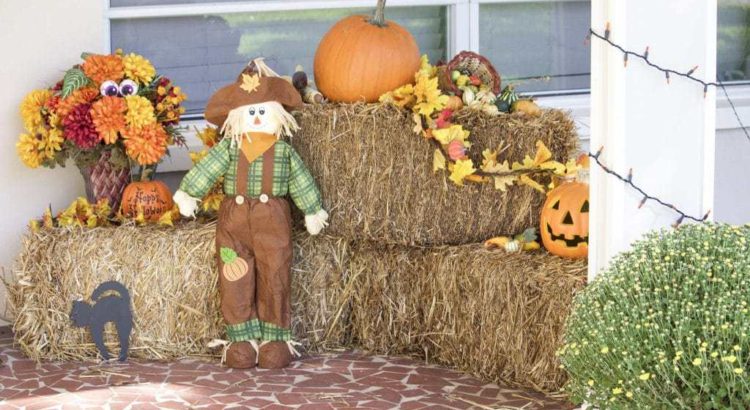
My house is always decorated with hay bales and corn stalks on our front porch.  This is generally decorated with our Halloween decorations of spider webs and ghosts in the front yard, but after Halloween we take down the Halloween decorations but keep up the corn stalks and hay bales.

An easy decoration for the fall season is to put fake orange, yellow, and red leaves around your house.  You can put them around the coffee table, in bowls, and on ledges. This will give your apartment color and make it brighter so that your apartment is not so dark as the sun sets earlier in the fall.

Another way to make your apartment or house brighter is to buy and light fall scented candles.  This will not only light up your home but it will also make your home smell like fall. This is not a good idea for a dorm room because you are not allowed to have candles in the dorms.  Having a couple different scented candles will mix things up with your house always smelling wonderful.

An alternative to candles if you do not have a lighter or are not allowed to have them, like in dorm rooms, is a scent that you plug into the wall that will dispense a specific scent throughout the day.  This is also more discrete and does not take up much room in your home.

Other ways to decorate for fall that are not Halloween related are to have pumpkins on the inside or the outside of your house.  Pumpkins are not just for Halloween, jack-o-lanterns are for Halloween. If you have pumpkins that are not carved then you can use them for decorations until Thanksgiving.  You can potentially have painted pumpkins to decorate for fall, but the paint has to be a neutral pattern and cannot be too loud. A silver or white painted pumpkin with polka dots or chevron pattern is good for decorations, but a teenage mutant ninja turtle pumpkin is not a fall decoration.

The last way that you can decorate for fall is to have fall hand towels, kitchen towels, and bathroom towels throughout your home.  These decorations are great because they are also useful. Towels are bold enough for people to notice and so you do not have to have many other decorations because towels are in almost every room in a house.  The towels are also useful and have a purpose so they serve two purposes.

Navigating Burnout

 Photo by Julia Rose Lawson. 

I started playing violin when I was eight years old, and the Suzuki method of teaching guided my studies for about four years until I started playing the viola. I never saw myself becoming a musician; I was more interested in becoming a famous actress or singer, and viola was just a hobby. But the more I practiced, the better playing viola felt. Eventually I went to a summer camp and experienced playing in an orchestra for the first time, and I realized what passion felt like. I became a music nerd by the time I was a sophomore in high school, but more specifically, a classical music nerd. Classical music felt so special to me. I started listening to it all the time and dedicated hours upon hours of my week to practicing and various musical commitments. It became everything to me. And my experience at a classical music camp gave me a glimpse of what my life could be like if I pursued music full time. I loved it: the feeling of success from becoming a better player, the adrenaline that flooded my limbs during performances, and the friends that I made who inspired me artistically and showed me what real love in a friendship felt like. When I left camp, I wanted to commit to being a classical musician because it showed me how perfect my life could be. For the next three years, I put everything I had into becoming a good enough viola player to get into my top choice college: the University of Michigan School of Music, Theatre, and Dance. (Surprise, surprise, I got in… hence my writing a blog post for Arts at Michigan.)

I am a junior now, still pursuing viola performance. Sometimes, I feel so immersed in music, that it doesn’t feel like music to me anymore. It’s analyzed, fragmented, repetitive, robotic. It’s causing me anxiety when I work on anything else. I have spent almost eight years with this viola on my shoulder– my longest relationship. I love it because it has taken me everywhere that I have needed to go in my life. Without it I would not have met my closest friends and because of that, I would not be myself. I wouldn’t be here, in Michigan. And maybe it’s cheesy to say, but I feel connected to it. In my heart. How could I not? Eight years and thousands of hours. It is my part of my body and it is my voice. But I have done so much. It is so integral to my identity that I don’t know who I am without it, and that’s not necessarily a good thing. Lately, practicing has become more mundane and I constantly question myself about what I really want.

I know classical music isn’t my path anymore. I have to stick with this degree because the training is good and I care about being a good violist, but I also have to start challenging myself again. It’s dangerous to pursue an art if you don’t love it. And I know that deep down I love it, but it’s been a really long time since I’ve felt genuinely passionate about something.

The truth is that my ideas about what music is are changing. Since I’ve gotten to college, I have been more exposed to jazz, world music, roots music, and improvisation. Musical improvisation has been this big concept looming over my head as I question what it really means to be a musician. Improvisation requires you to make music in the moment, like a real-time composer. To be a good improviser is to have a musical mind, but what if I can’t improvise? If I can only play what’s printed on a piece of sheet music, do I have a musical mind? No, but I know I want to. Every musician wants to know music like that. If you know music like that, and you have the technical abilities to play whatever you want, your creative expression will be endless. And that’s what I really want: to be able to fully, freely, creatively express myself in a musical way.