
When My Religion Censors My Art

There has never been a part of my life in which my religion has not held some central role. It is the governing feature of my existence: It owns a pulpit throne in the very middle of my consciousness, the King of my decisions, the Queen of my temptations and desires, the angel and the devil of all my human actions. With the swiftness of an iron-heavy gavel, it crushes those fleeting impulses of my heart and tells me: No, or sometimes, Yes, or sometimes reminds me, You are human, you are human, you are so, so, so human.

And so when I make art and write my carefully crafted stories, I am censored by this King within my brain, telling that there are some things that I cannot say… some things are ugly to be exposed in literature, some things are blasphemous and immodest. Like when you see rape scenes in movies, or the murders of black men, or the abuse of children– yes, of course, these are realities for many people, but you must tread gently, for you have given these sentiments power. So if the scenes of rape that are not honest enough, you have reduced reality to entertainment rather than elevating to the level of art.

The moment a story is crafted, I believe there is some process of glorification happening. The moment something in captured in words, you have given a level of attention that nothing else has earned, and in that way, you have given it power. And so that King in my brain, that overawing dominant religious force inside of me tells me that I must be careful what I give power to… that there are things not worth saying. There are stories that are too dangerous and too ugly to be glorified in a form of art.

As someone with a particularly Muslim background and upbringing, most of my characters tend to reflect me in that way. And recently I’ve written short story where the main Muslim makes a quite blasphemous decision and it’s been torturing me for while now. The King in my brain has been pulling all sorts of levers and pushing buttons madly to make it all stop, but something inside of me has broken loose, and I have looked at thing that I’ve created, this art that I’ve made and given power to– And there is one conclusion that keeps thrumming in that painfully vigilant heart of mine: I believe that we must not always indulge that King. Sometimes art is not moral– sometimes it is only true. And perhaps the only good thing is not always goodness itself, but the world told in truth, fully and beautifully. That is enough.

Springfest

The University of Michigan has a lot to offer.  From academics to sports to arts and culture. The University and the city of Ann Arbor have several big events throughout the year to highlight the art and creative side of Ann Arbor.  The Ann Arbor Art Festival is the most popular of these events. The University puts on an all day event each year in the beginning of spring called Springfest. Springfest is a way to bring the community together and to highlight the arts at Michigan.  This year Springfest takes place tomorrow (4/4).

The highlight of Springfest each year is the musical guest that comes to perform at Hill auditorium.  This year the performers are Louis the Child, and the Lost Kings. This musical event is what makes Springfest popular because students get a chance to see some pretty popular artists.  In 2016, Migos performed during Springfest.

Music isn’t the only thing happening during Springfest.  During the day there are also events going on on the Diag.  Clubs and organizations set up booths for people to attend and play a game or do a fun activity in between or on their way to class.  There are also food trucks set up for students to buy food and walk around the Diag.

Springfest is an event to help students to relax and have fun in the middle of the day.  It showcases fun events and activities for people to try, and ends the night with a big concert.  It is a wonderful event to remind people what Michigan has to offer.

Virtuosity

There’s a sort of air in the music realm surrounding technique and virtuosity, that the harder something is to play and the more technical skill it takes, the better it is. Not the better it sounds, necessarily, but the higher quality the piece is—and the better the player you are. There’s a certain feeling that if you want to be considered a good musician, you have to play longer pieces, to memorize them all, to play in harder key signatures, to play with wildly advanced techniques.
When you’ve been playing for a decade or so, this starts to weigh on you. When I was in high school, sending out my college applications, I took a look at the audition parameters to study piano at Juilliard. I’d been playing for about eight years at the time, so I thought it wouldn’t be anything unimaginably out of my skill level. I was wrong—they requested videos of the applicants playing three pieces or so, all memorized, all at least ten pages, and so on. It seemed reasonable on paper, but when I looked up the sheet music to the requested pieces, I balked. There were no symbols I didn’t recognize, but the complexity and sheer amount of music was enough to back me down from applying. I’d been playing for half my life, and it seemed as though even if I had started when I was eight, seven, six years old, I wouldn’t be able to reach that level of skill at that age. That was incredibly discouraging.

But you know what? If you keep playing, you can leave all that nonsense behind you, and play for yourself. Who cares if you’re no good at memorizing pieces, or if key signatures with more than four accidentals mess with your mind, or if you can’t hit those seventeen-notes-per-beat runs in Romantic pieces? It’s okay to take longer on harder pieces to get them good enough, and it’s okay if good enough for you is the standard of your “good enough.” While it’s very rewarding to learn how to do all the advanced techniques, you can’t let yourself get wrapped up in getting it perfect, at least not so much that you back off of playing at all. Give yourself time. Allow yourself to make mistakes. Tight performances only come from hours of practice, and sometimes practice has to be loose, free, and fun. We wouldn’t still be playing if we weren’t having fun…so let go of the need for virtuosity; it’s overrated anyway.


Isle of Dogs

Of any movie set to come out this year, I am the most excited for Wes Anderson’s upcoming stop motion film, “Isle of Dogs”.  Like many, I have always been a big fan of Anderson’s very specific and unique style.  He is one of the few popular directors these days that have a truly recognizable look and feel to their films.  He styles movies in unique ways, most notably his use of the same group of actors in the majority of his films.  If you are watching a movie that is unrealistically color coordinated, extremely symmetrical, and features Bill Murray, you know you are watching a Wes Anderson picture.  I have always been a big fan of his first film, “Bottle Rocket”.  While it may be one of his least popular films, its amazing to see how he began forming his style, and while it is not and intensely stylized, you can see sprinklings of what is to come in his future work.

I feel that Anderson particularly shines in stop motion animation, as seen in “Fantastic Mr. Fox”, and for this reason, I am particularly excited for “Isle of Dogs”.  Stop motion animation is a perfect platform for his style; he can manipulate the visuals as much as he wants, making each aspect look perfect (in live action this is more difficult).  Wes Anderson often has a lot of humor in his films, and the youthful and childlike qualities of this animation style defiantly benefits from this comedic aspects.  As a huge fan of animation, I am always excited to see a animated film that is targeted more towards adults, since I think it is such a fun juxtaposition when you have mature themes in the story line being depicted in a traditionally child centric medium.

The story of “Isle of Dogs” is that of a dystopian future, where all dogs are exiled from Japan and sent to a garbage island.  A little boy named Atari goes to the island to look for his lost dog.  There, he meets a rag tag group of dogs that help him on his journey to find his pup.  These dogs are such a joy to watch, because of how extremely human like they speak and how matter of fact they are.  As always, Anderson’s visuals are insanely beautiful.  There’s a huge cast of top notch actors, including, but not limited to Bryan Cranston, Bill Murray, Scarlett Johansson, Ed Norton, Yoko Ono, and my personal favorite Greta Gerwig.  While Anderson’s movies can have a lot of darkness and cynicism at times, theres no denying that all of his films have a lot of heart and sweetness.  If you are still not convinced on this film, I would highly suggest checking out the films official website, where the voice actors talk about their characters as their animated characters, its a real gem.

http://www.isleofdogsmovie.com/

Still from “Isle of Dogs”, via Fox Searchlight/20th Century Fox

For Nostalgia’s Sake

Don Draper, in one of the defining scenes of Mad Men, described nostalgia as ‘the pain from an old wound’. An ad-man to his core, Don, of course, misrepresents the truth. Nostalgia truly means ‘the affliction of homecoming’. However, I think both interpretations contain a similar significance. Nostalgia is something that nags at us. It is that prickle of feeling whenever we reference our childhood. It may not be painful, but it is certainly uncomfortable and a little sad. If it is an affliction, it wounds us all. There is certainly a place for nostalgia in art. To write, for me, is to return to a familiar place. It is there, that a piece of me travels to every time I seek to translate a crisis of emotion into words. The place is not a defined location, but it has a definite origin. Writing began at home. The urge to retreat there is inevitable, every time I begin another piece because nostalgia is my tool, as important to me as a computer or a pencil. I use it to access another time and give those moments a truer meaning, one that couldn’t have existed before. When I look back at the past, I never recreate it in exact proportions. I give the past some part of the present by interpreting and evaluating it. All art must come from some part within us before it can take on meaning for someone else.

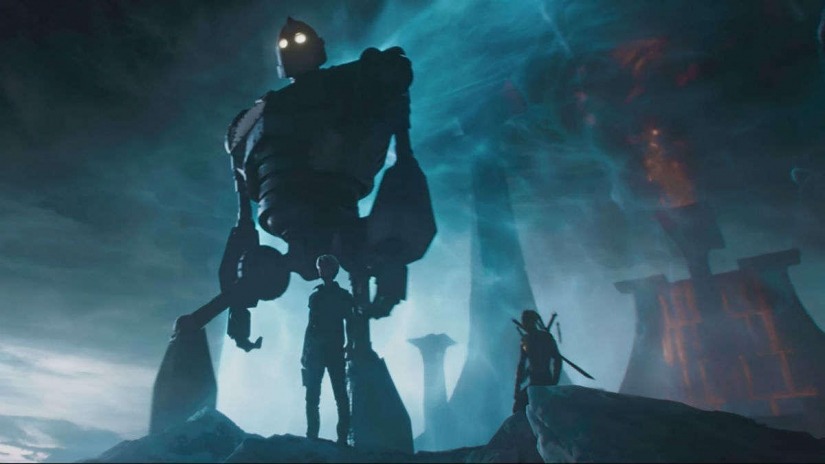
However, recent forays into nostalgia-focused art, also demonstrates its limits. To look at the past in total reverence, without critique results in bland worship. The surge of reboots and remakes of classic films and television shows demonstrate that people are hungrier for the past than ever. Even original movies, such as Steven Spielberg’s Ready Player One, are trapped, reliant on references for audience appreciation. The popularity, though, does not seem to stem from any ‘wound’ or ‘affliction’.  Instead, it is a hyperactive appreciation that urges us to embrace what we already know. It has transformed from nostalgia into simply an exact recreation of the past. As exciting it is to watch the Iron Giant stride into theaters alongside the DeLorean, I am not sure this is the type of entertainment we should be craving.


Kara Walker and the Complexities of Race

Kara Walker, an African American artist, is well known throughout the art world mainly for her detailed cutout paper silhouettes, which adorn the walls of exhibition rooms. They focus on race, gender, and sexuality, but have also caused controversy among other artists for their depictions of stereotypes of black people. Yet her personal style comments upon complicated race relations and the struggle of acknowledging America’s dark history of slavery. She first came into the spotlight in 1994 with Gone, An Historical Romance of a Civil War as It Occurred Between the Dusky Thighs of One Young Negress and Her Heart. Currently, she serves as a Visual Arts chair at Rutgers University and resides in Brooklyn.

This week, for my LHSP Race and Ethnicity class, I had the privilege of seeing two of the five pieces from her The Means to an End: A Shadow Drama in Five Acts series at the UMMA. Looking at it up close, we examined the intricate details that added to the characterization of the subjects, who were all depicted in silhouette profile. I had no idea that the UMMA housed these works, but was delighted to find that there is an abundance of famous and unique art. It was a great experience to actually witness Walker’s work in real life, as well as analyze it in a modern context–I had just learned about her other work in my Art and Design history class. I hope to return to the UMMA soon and continue learning about these amazing contemporary artists.

(Allentown Art Museum)