
Discovering Dickinson

Recently, I have been reading a lot of Dickinson poetry for a class I’m in. It was like stumbling upon something I never knew I needed– this sharp intake of intense and almost painful breath, but which somehow expanded my chest and helped me feel with more clarity. I am so incredibly taken by Emily Dickinson’s poetry. I like poetry– I knew that coming into this class– though I didn’t do it for simple pleasure. I liked it the way one likes a nice sunset with no one to share it, a starry sky without a map of the constellations, a lovely glass of wine amidst chatter– the slight recognition of something one cannot know, the offering of a few intrepid interpretations, and a pleasurable indifference to the God-given beauties of the world. Isn’t that such a horrible way to go about living? To feel only the things that affects one’s life and ignore everything else… or to brush aside those deep, dark, unexplored but richly felt emotions… to pursue just that flighty, ugly happiness that comes and goes… to be half-human…

Emily Dickinson is not half-human. She is so human that it hurts. She is so human that it makes those sunset-star- watching, wine-drinking detached fools say things like “I am glad to not live near her”, or that her poems did not rhyme or flow well enough, or that she wrote small garden poems… she felt things so deeply and purely and her poetry is nothing but emotion manifested in language, arguments given form, death breathed to life.

Needless to say, she has inspired me so. It is fascinated to find myself in her poetry. She agonizes over her lack of faith, over death, over fame, over God– and these things torment her, I think. I think they kind of torment me, too. And it is beautiful– I would argue maybe sacred– to realize this in words. It has been the greatest pleasure to read her work.
Netherlands Dans Theater

Over the weekend, I had the opportunity to watch Netherlands Dans Theater perform. Based at The Hague in the Netherlands, Netherlands Dans Theater (NDT) is known for being one of the best contemporary dance companies in the world. This concert lived up to that reputation and more.
Originally, the company was founded in 1959 by Benjamin Harkavvy with the intention of breaking from the Dutch National Ballet, which is more focused on classical dance. This new company wanted to focus more on using classical ballet as a foundation for exploration and development of new ways of moving. Since their founding, NDT has grown into a powerhouse company in the dance world, featuring a main company, a second company, and various training programs for pre-professional dance students.
Today, NDT performs extensively in their home country as well as internationally. Their focus today, in the words of current artistic director Paul Lightfoot, is still “artistic creation, not just choreography.” Their main company is made up of twenty-four dances from around the world, and the world’s best choreographers strive to set work on the company. On Friday and Saturday night, Ann Arbor audiences had the opportunity to see the company perform a triple bill, with two works by NDT’s resident choreographers Paul Lightfoot and Sol Leon, and a third by Crystal Pite.
Performing to a sold out Power Center audience, NDT amazed, inspired, and transcended. They were both accessible to audiences that normally watch dance and also challenging to those who are accustomed to being audience members. They embraced physical beauty and virtuosic performance qualities while telling complex narratives and portraying difficult emotions. This performance was intensely important because it showed how necessary dance is in storytelling. These artists are from all over the world, and yet they were able to convey a message to everyone in the audience—everyone speaks body. Everyone moves; therefore, everyone dances, at least a little bit. NDT’s movement was otherworldly, but their storytelling was intensely human.

Scores

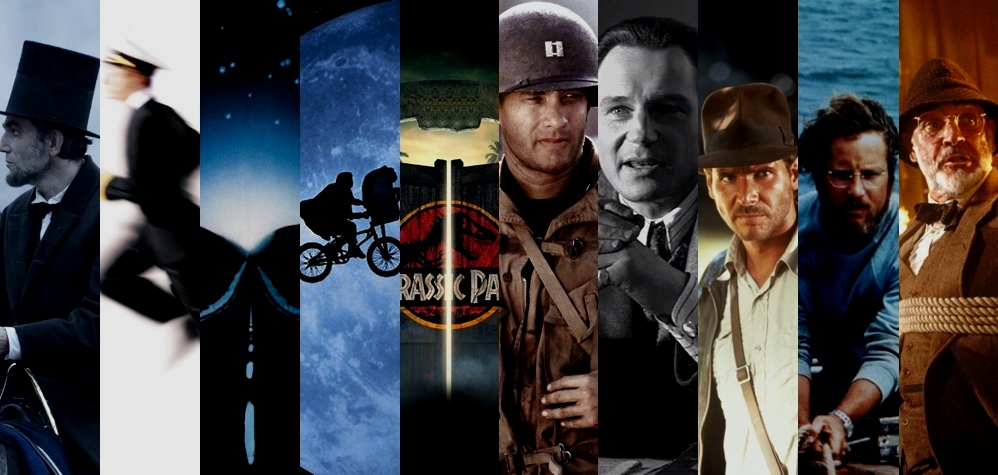
Some of the most famous songs across the world are not pop songs, or classics from the 80’s, but the film scores to some of the most popular movies around the world.  Film scores help to create a feeling for the movie and they add another level of emotion for the audience. One of the most successful film scorist is John Williams. Some of William’s most famous work is the scoring for Superman, ET, Jurassic Park, Jaws, and Star Wars.  These tunes are things that most people can recognize and hum along to after hearing just 3 or 4 seconds from the songs.

John Williams has been writing film scores for many years and in many different genres.  He knows how to evoke audience emotion with only music. Most, if not all, of his scores do not have words.  An example of the emotion that the audience can gather about a character from the scores is the Imperial March from Star Wars.  The Imperial March is what plays every time Darth Vader steps on to the screen, or is about to appear on screen. This composition is very deep, letting the audience know that the character that they are about to see is intimidating and powerful.  It also gives the audience a clue that he is a villain because the music is very dark.

Scores of movies are not only used to add another dimension to a character, but to address the overall feeling of the movie.  The scores for fun and action packed movies like to Star Wars, Superman, or Jurassic Park were designed to make the audience have fun.  The opening composition in Star Wars is an upbeat and exciting song that make the audience giddy to watch the movie and see what is in store.

John Williams also worked on the scores for very serious films like the Schindler’s List, Saving Private Ryan, and the Book Thief.  These movies the goal of the music was to show the seriousness and intensity of the film. In the Schindler’s List, and the Book Thief, the goal is also to show the fear of the people who went through the experiences shown in the movies.  These movies were not to have a fun and light atmosphere to gear audiences for a fun couple of hours.

Lastly, the scores of movies can be used to emphasize a situation that the characters are in.  Even in a fun movie, a specific composition can be lower and darker if the situation that the characters face is intimidating.  On the other side, if the situation is fun, then the composition is bright and exciting. An example of this is the action scenes in the Indiana Jones movies.  These scenes are a little intense, but are more so fun for the audience to watch, and the composition reflects that with exciting music playing in the background to tell the audience not to worry too much about the character.

Scores of movies help to tell the story and the feeling of the movie itself.  They help the audience to know what to feel and can help to enhance their original feelings toward the movie, character, or scene.  One of the most famous and successful score writer is John Williams. Williams has done all of these things throughout his long and diverse career with films like Harry Potter, Home Alone, the BFG, and Catch Me if You Can.

The Ann Arbor Film Festival

Last night, I went to the Out Night screening of the Ann Arbor Film Festival, and it was such a unique experience. It was also endearing to see members of the Ann Arbor community come together to watch and participate in the film festival. I had never gone to the AAFF before, nor had I known that it is the oldest avant garde and experimental film festival in North America. This year marks its 56th anniversary.

Out Night featured a collection of experimental short films with LGBTQ themes. For instance, the first film used stop motion and data collected from floppy disks to assemble a dizzying piece of AOL chat exchanges and homoerotic nude photos, presenting the online persona of a man named “jim.” Another film was shot as a music video and had two elderly women escape together from their boring “sitcersize” class. Overall, the films each had truly indescribable qualities, from using hand-drawn animation, to old footage from the 80’s, to a documentary approach, in order to create an individual piece of art. At the conclusion of the screening, audience members could vote on their favorites (or least favorites).

I walked away a little confused, but inspired. As an art student, I appreciated the hours of hard work that went into each film and the creativity it took to conceptualize that creative work. I realized that there were dozens of people involved in the making of the films, and countless people who helped put together the entire festival. If you haven’t been to the AAFF before, I strongly suggest you check out what’s happening and bring a friend! There are also afterparties and other events this week. Let yourself be inspired! https://www.aafilmfest.org/

Reasons to Love Black Panther

Recently, I had the opportunity to watch the movie Black Panther. I am an avid fan of all superhero movies, so I was especially excited to watch this one. I had already heard great reviews from my family and friends, and it truly did not disappoint. Here’s why:

1.) There’s a believable villain: in many superhero movies, the bad guy’s character is simply that: bad. There’s so backstory, no reason, he (or she) is just a bad person. However, in Black Panther, the antagonist gets a backstory that is fleshed out, believable, and humanizing. It was refreshing to see a villain portrayed as a human.

2.) The women. T’Challa might be king, but the women that surround him are equally as strong and powerful. From his sister and mom to his all-female squad of warriors, the women in Black Panther are not afraid to be confident. They are unapologetically excellent at what they do, and while they do fall in love and have lives, they are individual beings all on their own.

3.) The diversity. Seeing a movie with a cast made up of primarily people of color was so needed and so amazing. It’s said over and over again that it’s important to see more diversity on the silver screen, and its true. To see a superhero and his team as a group of people of color was very empowering.

Books to Movies

In the past ten years a trend in Hollywood has taken over blockbuster movies.  Studios love to make movie adaptations from popular books or comic books. The bigest and most popular has been superhero movies, both Marvel and DC, with adapting comic books into record breaking movies.  The audience for people who are going to see these movie adaptations are broken into two groups: people who have read the book/comic and people who haven’t.

The people who have previously read the book come into the theater with high expectations.  They have already pictured every aspect of the story and its world in their heads and are anxious to see how the big screen adapts it.  These people are more likely to be let down than the other group because unless you personally made the movie, it won’t be 100% like what you pictured in your head.  If fans of the book don’t like the movie than it could impact its sales as the movies reputation spreads by word of mouth. But no matter if the fans of the book like to movie or not, the movie is almost guaranteed to have a big opening weekend if the book has a big fan base.  People haven’t seen it yet to form their opinion, and generally people try to go into the movie with an open mind because they know that the movie won’t look exactly like what they are picturing in their head.

People who go to the movie but haven’t read the book are often less critical because they have nothing to compare it to.  The movie could generate positive word of mouth reviews from these fans if the movie was good but maybe didn’t follow along well to the book.  The problem that these viewers face is if they can fully follow the plot through the entire movie. Some movies assume that the audience at least has a small understanding of the plot or characters before walking into the theater leaving people who didn’t previously read the book with questions.

An example of movie adaptations that did well in the theaters with fans that read and didn’t read the books are the Marvel movies.  Now the movies have a three types of viewers: fans who have read the comics and seen all of the movies, fans who have not read the comics but have seen all the movies, and fans who only sporadically watch some of the movies.  An example of an adapted movie series that went poorly was the Divergent series. The fan base that read the books were disappointed in the movies portrayals, and it didn’t gain any new fans that did not read the books. The movies did so poorly that the third movie had only a tv release.

Movies that are adapted from books are almost guaranteed to have a big opening weekend and then the feeling that the first couple audiences have will determine the success of the movies.  The popularity of the movie also depends on how much it relies on its audience knowing the plot of the book beforehand, the more the audience needs to know about the movie before it starts, generally the worse the movie will do.