
This is an article that I didn’t want to write. Perhaps it was some lingering sense of shame. Probably because it felt all too natural to me and abhorrent to everyone else. But most of all, I didn’t want to write something about myself. To explain oneself, after all, is an impossibility. Getting even half of my meaning across without nervousness or embarrassment trapping the words in my throat is a miracle. It’s a good thing that I am writing this, then. Now I have approximately five hundred words to get my point across. Which after a meandering one hundred words is that, I like to be alone. That is not the world-consuming revelation that you came here for. It is not even the mildly-interesting tidbit that you may have glanced for. But it is what you are going to get (if you stay, of course). The best part of being alone is that you have the chance to get away from the endless hubbub, the meaningless chitchat. Not that I don’t appreciate the more-than-occasional bout of jibber jabber. I can certainly jabber on with the best of them, especially if it concerns my current obsession on television. Sometimes though, after a day, or a week, of being talked at by professors or buzzing around with friends, it is nice to simply be in a room without anyone else. To sit, unobserved and unneeded. To move, unencumbered by the personal needs of someone else. To have the environment around you, the sights, the sounds, be entirely your own. Maybe it’s selfish. But it’s a ‘mine’ that I need to have. To be alone, at least to me, is also resisting the allure of the GroupMe notification, the newest Facebook update. These are unnecessary connections to the outside world, at least temporarily. They are the nagging voices, urging me to return to the loud place, but given digital shape as birthday reminders and life updates. They are distractions posing as something meaningful. I know that. But they are also act as admonitions. The smiling friends and memes show me lives where being alone does not exist. Instead, there appears to be constant social entanglements happening all around me, even as I sit in a room, alone. The pressure permeates through every aspect of the college experience. This expectation of having the best years of your life, right here, on campus drives students to late-night parties and dinner with friends. One feels the need to spend every second of those four, short years in the company of others. Others that may soon be lost to new jobs in new places. But lost in the deafening, striving progress is the need to not be needed. I am free to pursue my own creativity only when I no longer have to fulfill any outside demands. In these moments, completely alone, I don’t need to answer to anyone or anything else other than that strange, instinctive hunger to write. I can explain myself without having to get the words out in time or even express the words semi-cleverly. Perhaps that is why I found this article so difficult to write. Perhaps that is why I needed to write it.
Category: Uncategorized
When Product Placement Aspires to Be Art
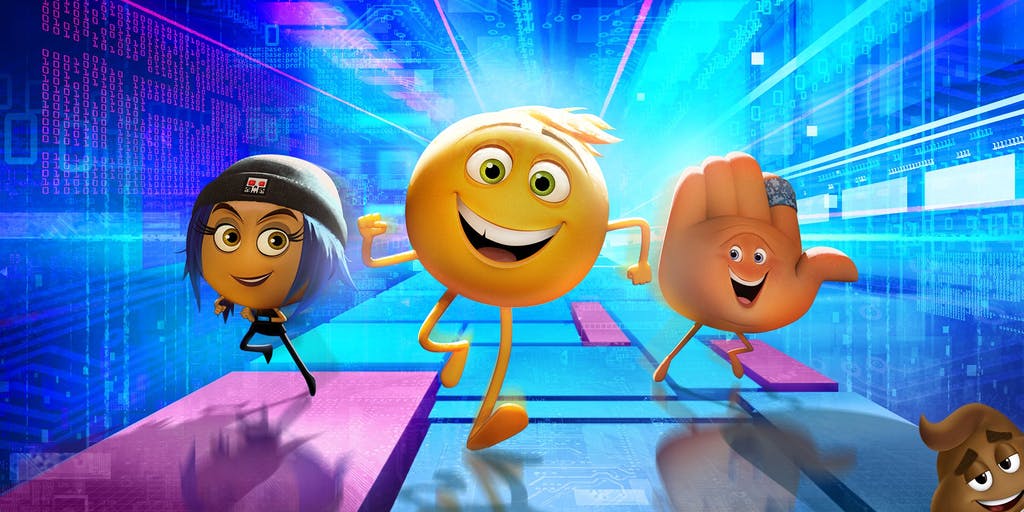
The Emoji Movie sucks in a depressing way I’ve never seen before. It has all the trappings of children’s animated movies, like bright colors, an annoying comedic sidekick, and a quest filled with challenges along the way, but the weight of all the product placement broke its spirit. It’s sad to see Hollywood care so little about the average moviegoer that they would put together such an original corporate cash grab.
I’ve heard people compare the Emoji Movie to Inside Out because both look at the inner workings of a teenager’s mind, the former through his cellphone and the latter through her psyche. I was reminded of Wreck-it Ralph as well because of how familiar characters from video games were an easy way to make a connection with a young audience, who may not care enough to learn about your movie but will definitely have their eye drawn if they already know and love the characters in it. Those video game characters have star power in their own right. Phone apps, on the other hand, do not.
That’s why the Emoji Movie looked so eerily similar to a Disney animated feature on the outside while not having any emotionally intelligent writing on the inside. It was all a farce to stuff as many apps into the movie’s plot as possible, and most of it was just plain boring. I don’t appreciate the fact that this movie still got made with an A-list cast and everything despite all the laughter it received when production was announced. Hollywood executives believed in it when nobody else did, and the idea that youth today are so addicted to their phones that this movie speaks to a cultural zeitgeist or something makes me sick. I learned in a class that adults were concerned by teenagers in the 1950s for using landlines 24/7 to talk to their friends, so I’m convinced that putting down young people for using technology to deepen their relationships is an age-old sign of fear of change. That doesn’t make the Emoji Movie more timely, though, or universal; just cheap. Unfortunately, I can think of other examples of entertainment that were just vehicles for advertising.

The notorious animated move “Foodfight!” ripped off the Toy Story franchise in 2002 with the plot of food logos coming to life at night in a supermarket. Charlie Sheen starred as a dog detective who has to save the day when a femme fatale voiced by Eva Longoria from a generic brand takes over the store with the help of fellow Nazis(!) from the same company and tries to replace brand-name food products and their logos, i.e. nearly all of the other characters. It’s gross that a movie for little kids is teaching them that cost-effective products that are just as good as the national brands are evil and killing big brands, or big business for the owners of those brands, anyway. Thankfully, the film’s animation was stolen and apparently never re-done, so what looks like its first draft went straight-to-DVD in 2012. This is a decade after the celebrities in it were in their prime, but due to the stupid plot and abundance of sexual innuendo between the canine and the evil woman I doubt many people will hear about it.

Another example of this genre I can think of is the anime Sanrio Danshi, literally Sanrio Boys in Japanese. This show is about a group of high school boys who all love Sanrio products, like Hello Kitty and friends. The main character, Kota Hasagawa, is embarrassed to have other people know he’s a guy who likes cute stuffed animals until by happy coincidence he meets other boys who are huge fans of Sanrio, too. The show was created by Sanrio itself (who would have guessed?) and I’m bitter that a positive message like men can like delicate things, too, is being used just to market their products. I felt completely pandered to with such a cute concept, and find it interesting that this show has a different view on economics than Foodfight! by showing buying as a positive way to express what you’re like on the inside.
The Emoji Movie is more realistic in that buying only really comes up at the end when the boy who owns the phone tries to get it fixed. Still, it was a waste of my time to watch. I hope the movie industry tries to think more about originality and creativity soon, but seeing how many box-office hits are sequels in franchises, I won’t hold my breath.
John Hughes Crystallized the Best of Being Kids in America
When I was still a film critic for The Michigan Daily, I went to a film festival at The Michigan Theater showing classic 1980’s films starring the Brat Pack as part of its “Kids in America: 80’s Teen Classics”. The theater didn’t publish why these films were being shown in the midst of Halloween (even after I sent them an email, the assholes), but their pervasive influence in pop culture from enduring quotes to merchandise is proof their legacy lives on.
Of course, a showcase of these movies would be incomplete without discussing the work of director-screenwriter and Michigan native John Hughes. He is said to be the pioneer of the teen film genre for good reason. His careful attention to organic dialogue is consistent throughout his repertoire. But what sets Hughes’ films apart is that he gives his teenage protagonists the respect they deserve. There is never a hint of condescending even in the midst of teenage problems one quickly outgrows after graduation.
Something I appreciate of his work is that he used vastly different protagonists to tap into different facets of American ideals in adolescence. “Ferris Bueller’s Day Off”. I have heard friends and celebrities alike call the film their favorite of all time due to the quintessentially American joie de vivre it conveys. If a baseball game, an art museum and fine dining is supposed to be the epitome of the good life in America, then I am underwhelmed. Lots of people have attained these ideals, as fortunate as they may be. But the way Ferris sticks it to The Man by refusing to take an exam on a subject he plans on never using is what keeps the film timeless. It kept the movie for me from being a purely hedonistic romp through Chicago to an escapist trip the “everyteen” protagonist deserves as they make their way through the awkward stage of not being a child yet not quite being an autonomous adult.
The grandeur of “Ferris Bueller’s Day Off”’s plot distracts from one of Hughes’s strengths that keep his legacy alive: having a keen eye for high school social hierarchy. “Sixteen Candles” and “Pretty in Pink”, both starring Molly Ringwald, feel a lot like the same film on the surface. The well-trodden tale of a girl pining for a boy who is unattainable due to age or socioeconomic status could have easily fallen flat as a cliche romance starring teenagers. But the world in these films are so lushly populated by opinionated friends and family that the societal pressures driving the heroines’ decisions recreates those faced by teenagers in real life.
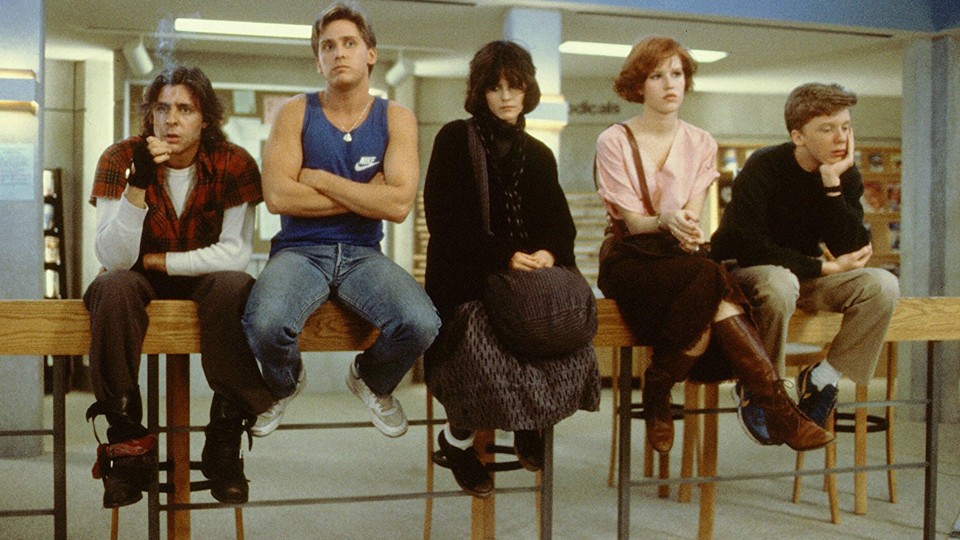
In the same vein, the director-screenwriter had a keen appreciation for the stock characters that populate American narratives of high school. This is showcased best in his classic “The Breakfast Club”. Having essentially caricatures of the five kinds of people you meet in high school forced into interacting with one another might sound lacking in depth. But the honest backstories and sincere performances elevate it to a gripping look at detention as a microcosm of high school social ills that ring true today. Though a friend of mine recalls laughing hysterically at the scene where the club divulges why they were in detention in the first place (after smoking weed no less), I was moved deeply. Here was a screenplay that understood how teenagers present themselves. Moreover, here was a movie that knew that teenagers’ problems are as real as those of any adult drama.
YA author John Green seems to have carried on Hughes’s torch in contemporary times, not only in content but in commercial success as well. Green’s novels and indeed the YA genre in general transcend their target audience to assimilate into America’s mass culture, much like Hughes’s films did thirty years ago. So while there is no obvious reason why to screen teen films from the 1980’s in October, there is never a wrong time to do so. Adolescence is an exciting time. Capturing the period you have your whole life ahead of as you begin to gain independence lends irresistible optimism and romanticism to any story, regardless of who experiences it.
The Top 5 Best Things About Being In the Theater
This week, the Dance Department moves into the theater as tech rehearsals for our annual Power Center show begin. These next two weeks are a time of intense rehearsals, long days, and tons of homework. Moving into the theater, though, makes everything worth it. Here’s why:
- Feeling like a diva. It’s such a rewarding feeling when we first sit down in our assigned dressing rooms, one lightbulb lined vanity mirror per person. Seeing our names laminated and taped against the glass, switching the lights on so that they illuminate our faces. Even if it’s just for a couple weeks, getting to sit in front of those mirrors is so incredibly validating. Getting ready for the show is almost as fun as performing itself!
- Spending hours in the theater. Technical rehearsals and cue to cue can be long and tedious, but each moment spent in the theater on the stage is a blessing. Standing at the front of the stage, looking out into an empty house, imagining the performance nights ahead. There’s something magical about just standing onstage, something that is irreplaceable.
- Getting to hang out with your cast for hours. Because our department is so small, we are all pretty close. However, during Power tech week, we spend so much time together between technique class, rehearsal, warm-up class, getting ready for the show, and performing that it’s basically a two-week sleepover with your favorite people.
- What we work all semester for. Even if the dance is one that we’ve rehearsed countless times, doing it in front of a sold-out house makes every movement new again. The energy is higher, each gesture more precise, the intention more clear. The high that comes from audience applause and self-pride is one that cannot be reproduced.
- Knowing that you’ve improved. Each show comes with its own set of distinct challenges and responsibilities, and each show pushes every performer to discover something new within themselves. The knowledge that after you’ve closed a show, you’ve pushed yourself to a new place in your dancing is priceless.
Winter 2018 Olympics: Biathlon
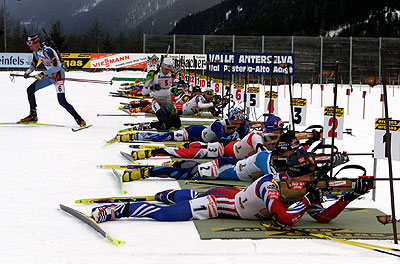
The Winter Olympics are two and a half weeks away in Pyeongchang, South Korea. The Olympic qualifier competitions for most sports have ended and the athletes are preparing to travel to South Korea to compete in the highest level of competition in the world. The Winter Olympics have less sports than the Summer Olympics, and most of them aren’t as well known to the public. One of the sports of this nature is the biathlon. The biathlon is a mixture of cross country skiing and marksmanship with a rifle.
A biathlon is is similar to a triathlon except, as one can probably tell by the name, there are only two events instead of three. The athletes cross country ski through a trail/course and stop two or three times to shoot at targets in different positions. Depending on how many shots it takes to hit the targets time is added to the athletes score. The person with the fastest total time wins the race. The two positions that the athletes shoot in are standing up and laying down on their stomach, which is called prone position.
The athletes have to hit five targets at each stop. If an athlete misses a target then they can choose between three different punishments to do that will add time to their total score. They can either have one minute automatically added to their time, ski a lap which is usually about 150m (it takes the best athletes about thirty seconds to do this), or they can shoot three extra times and at the end they have to complete a loop for every target they did not hit.
These two sports separately don’t seem to go together at all, they are two very different skills. One generally never needs a rifle whenever they go skiing, unless they are hunting. This sport reminds one of what people in the cold climates would have to do for food in a time before industrialization. These athletes have taken what used to be a necessary skill to survive in some parts of the world and have made a sport out of it. A Biathlon requires the athletes to be equally good at both skills. If one is great at skiing but a poor marksman they will have to ski much more for every shot they miss which would take much longer than if they had originally hit their target. Similarly, if an athlete is a great marksman and not as good at cross country skiing then they will get to all of the target areas late and this will negatively affect their time. This requires all of the athletes to be excellent at both seemingly unrelated skills.
Athletes who compete in the biathlon races at the Olympic level are outstanding in both sports and could probably medal in marksmanship and cross country skiing individually. But instead they compete together, which shows an extra ability and skill. The biathlon will be a sport to watch in the 2018 Winter Olympics that doesn’t get much attention at any other time or place.
Discovery in a Song
You ever hear a song, have heard it many times, and the words stream in one ear and out the other? Then one day, for the 100th listen, instead of passing through your head, you listen to the words. The words are gripped by emotions, and there’s newness in a sound you once thought you knew because suddenly the words register, and the song becomes of its power?
Months ago, my friend sent me a song to give a listen: “Maybe IDK” by Jon Bellion. She said “you’ll love it.” A different friend of mine wanted me to go the Jon Bellion concert with her this past fall specifically for this one song called “Maybe IDK”. She said “you’ll love it.” I’d listened to his music, but again it slipped through my mind. I wanted to like it, but it wasn’t resonating, and I would skip the song out of boredom. Perhaps I was too preoccupied with Sufjan Stevens with whom I was crazy about at the time to diverge my attention to another artist. It wasn’t until this morning during what was going to be another absent-minded listen of the Jon Bellion song that the words were validated not by my friends, but finally in my own mind. Sitting in Amer’s on Church Street in the back corner booth, I plugged in my headphones and put on a playlist of encouragement. Haha. I call it “world: 0; universe: 1”. It means a loss on a small scale might actually in turn be a benefit to your future in the grand scheme of things, like a win for the universe that you have yet to discover.
The verses capitalize on common insecurities, wondering why he behaves a certain way, wondering why certain things don’t work out. The chorus of the song says “Maybe I don’t know…and maybe that’s okay”.
There are two layers to this anecdote. Peeling the first layer, you reveal Jon’s Bellion’s purpose in writing the song. He explains that a lot will happen, and it’s okay not to understand why. There’s courage in accepting the things you can control and accepting the things you cannot control…and wisdom in knowing the difference. The second layer is the story surrounding my negligence of Jon Bellion’s music when two people who are close to me recommended it. Sometimes you aren’t ready to experience something yet just like I wasn’t in the place to hear the song yet because I couldn’t appreciate it to its fullest potential. No matter what your friends say, there are some values that you have to realize on your own. On a larger scale, there will be instances where you want something, but despite your will, you won’t achieve it to the fullest. (I say to the fullest because realistically you could do anything in the world you wanted, however, the destination you are aiming to reach may appear different up close. Some food for thought.)
Jon intended their to be a religious association with this song. He says that omniscient higher being is in control of what happens to us. Whether you believe that a divine figure writes out our fate, or if it’s the mysterious ways of the universe, or if it’s our own determination that dictates the way that life goes, it’s okay not to know and it’s also okay to search for answers…because though you might not find what you set out to find, you’ll be surprised by the encounters you have on the way ;).
