Friday night at the Palace

The Palace of Auburn Hills was filled with energy and excitement on Friday night as the Lumineers brought their Cleopatra world tour to Michigan. Openers Andrew Bird and Margaret Glaspy took the stage first, playing to a somewhat distracted crowd that was still busy getting settled and making trips to the merchandise tables and concession stands. But when Glaspy began to play her electric guitar under the glow of a blue spotlight, the crowd was captivated.

Margaret Glaspy opens for The Lumineers

Andrew Bird played next, his style and sound more closely resembling the Lumineers, fueling the crowd’s anticipation. He swayed at the microphone while playing his violin, alternating between plucking it with his fingers or dragging the fraying bow across the strings.

Andrew Bird opens for The Lumineers

The arena had changed dramatically during the two hours since the doors were open- every seat was filled, the general admission pit was congested with people and the anticipatory energy was palpable. It all culmintated in a powerful roar from the crowd when the large black curtain that had been hiding the stage fell to the ground in a dramatic reveal.The Lumineers were spread across the stage, each with a microphone and instrument in front of them, immediately commanding the attention and adoration of the crowd.

Lumineers percussionist Jeremiah Fraites

But it wasn’t until the first few note of “Ho, Hey!” began to play that the true intensity of the crowd was felt, obviously pleasing the performers. Lead singer Wesley Schultz invited the crowd to sing along, which they enthusiastically accepted. The united voice of the audience soon overpowered Schultz, who continued to play his guitar as he walked out to the edge of the stage. Cellist Neyla Pekarek and percussionist Jeremiah Fraites smiled to each other across the stage as Schultz returned to his spot in the center at the conclusion of the song, the crowd cheering fiercely.

Multiple Choice

I like apples and oranges. They are delicious, colorful, and above all, fruity. One is crunchy and good in pies. The other is juicy and good in popsicles, as well as being considered by many (read: me) as the best candy flavor. I’ll let you guess which is which. I have room to love both in my heart (and stomach), but I still can’t help but compare them. It seems to be a constant refrain in my life. What do I like? And what do I like better? Everything becomes a choice between one thing or another, especially when it comes to how to spend my time. Every minute is precious as I rush from class to class, but I find that can spare more than a few when I curl up to procrastinate on my homework. My economics professor would call this concept, opportunity cost. Every time we choose, we are giving up the value of the next best alternative. Unfortunately, this mindset only sends me down a wormhole of absolute despair. Every situation becomes a loss. Every situation becomes a terrifying game of “what if….”. All this flashes through my head, as I stand in front of the baskets of fruit in the dining hall. The hustle and bustle of my fellow students mock my unmoving indecisiveness as I switch my gaze from apple to orange and back. I sense the impatience building up behind me, and grab a banana instead.

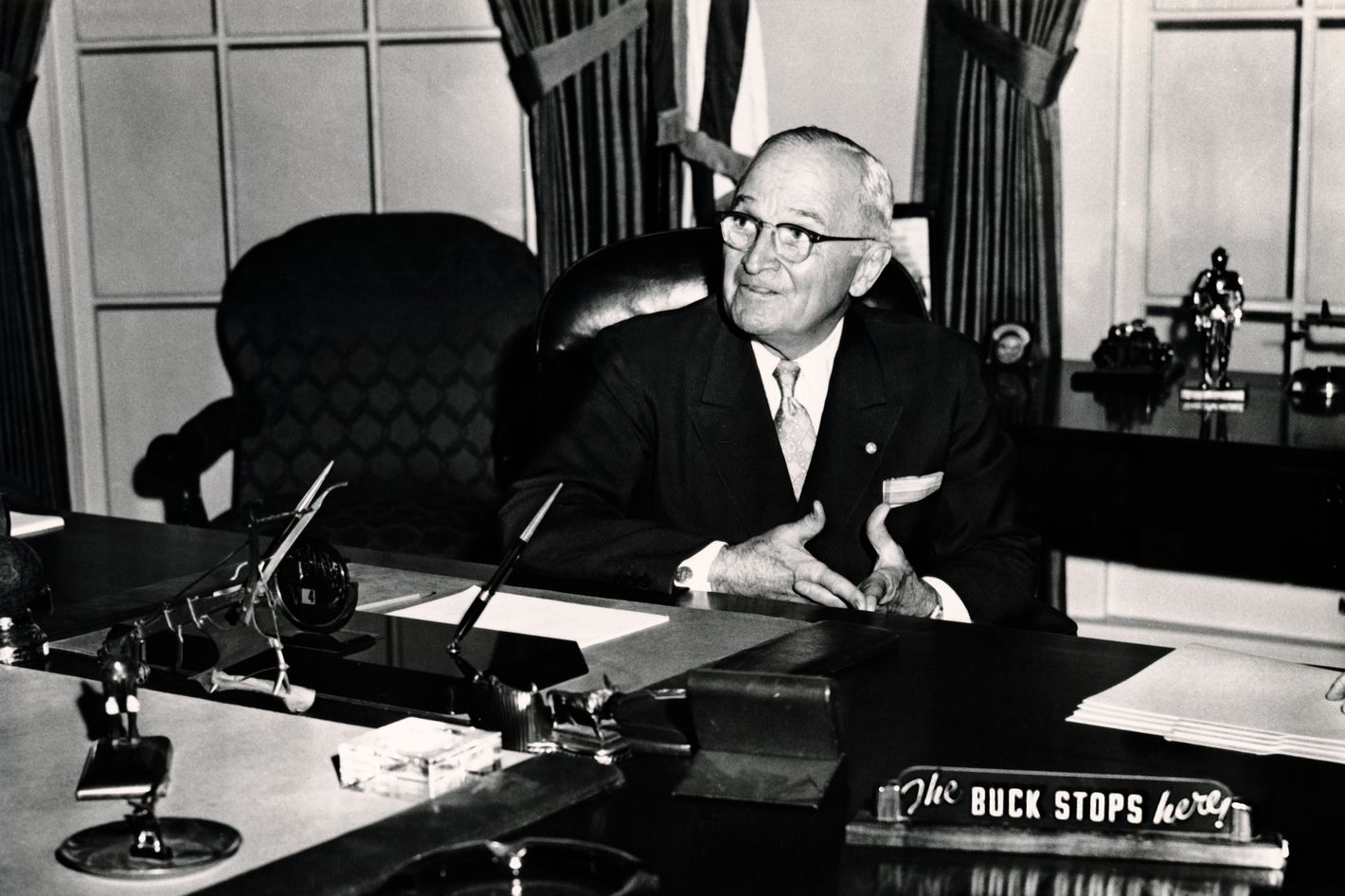
After several unsatisfying bites of banana, I am at another crossroads. Now, I want to go back and grab another fruit. The unknown is the most terrifying effect of choice. Perhaps that is why there has been so many periods of time where people have given up on choice all together. When everything seems bleak, there is an instinct to gift the responsibility and the regret that comes along with it to someone else. Personality driven governments rise because the people believe that a charismatic leader has all the right answers. However, there are times where you cannot shift the blame. President Truman famously had a plaque declaring “The Buck Stops Here” placed on the Resolute Desk. A mere seven months after he took office, he was faced with the most impossible choice of all, whether to drop atomic bombs on Japan. In deciding to go forward with the plan, he set off an unknowable chain of events that would lead to decades of Cold War between the United States and the Soviet Union. Perhaps Japan would have surrendered anyway. Perhaps millions of American soldiers and Japanese civilians would have died during the inevitable land invasion. There is no way to know for sure. That ignorance is haunting.

I think that is why I find time travel so fascinating. It is a device that was made for indecisiveness. If only life could be as easy as picking up a remote control and flipping through the options. But there remains a choice. Even if I knew every possible future, I would still need to make a value judgement on which one was the most worthwhile. I think the critical mistake is thinking that a choice as a definition instead of a fluid thing. Life is a result of continues choices. I can’t just let one stop me in my tracks.

Vulgaris

If you tell me all about the spotting deer: its sexual aqueduct, caudal mucus pit, and depressive tendencies, just to name a few; then you so lead me on to say that all is all. But my own skepticism of your own taxonomical work on the spotting dear, rests not in the dead skin cells on the creatures back, or in the polyps that feed on it, rather it stems from your own bibliography – that of a book inside a comic inside a book. Who are you to suggest that this is all about the spotting dear? Who are you to suggest, Mr. Author of the author, overseer of the all abouts. Oh Kay Figgle, Levan Rumble, and Buffalo Luck; you made it in black, cardboard, and ink. You brought me meat that can change to whatever it is I want to eat. Flankpalin alongside my prosthetic antler, so hand in hand I stand with you, as I forge this response to a comic so true. Spotting deer, it sniffs the book it lives within, because the spotting deer is you and I, walking bits of necrotic tissue, leaving ink spots wherever we choose to meet. (Capreolus Vulgaris), so oily black – you say it is that youohme, the terrestrial slugs, twist and form together. To you Deforge.

Things That Stick

On the 10th of January, the Hatcher Graduate Library housed a gallery called Boundaries and Belonging at the University of Michigan.
img_3945-1

Of all the pieces in the room, this one spoke the loudest. You couldn’t see it until you trekked all the way to the back of the display.img_3951

On a blank slab lies hundreds of different stickers, different colors, different sizes, different feelings, different messages. People decorate their belongings with these stickers to express themselves. Each sticker could represent an experience they had, awareness, or perhaps be a simple little memento. It takes an ordinary object and adds a dollop of what makes you, you. They are like two dimensional capsules for a memory. Whether or not there is a climatic story attached, it marks an encounter that perhaps you share with people or sets you apart.

The stickers could be like the people we meet throughout our lives. We start with a blank slate. As we begin to make connections with people, they stick. When we lose touch with people, their stickers slowly peel off. When we find one we like, we preserve it. Over time, some are basically inscribed on the slate.

One sticker may be your mom, the first one on the board who you can’t always see underneath all the chaos of new people, but you know she’s there.

Others could be those best friends who may not be the biggest stickers, but they are the brightest and most visible in the larger scheme of things, the waiter that made you laugh so hard you couldn’t breathe, that cute boy with the New York accent who you finally got a chance to know.

We learn a thing or two from these people. Together, they create a collection of memories and a mural of your past. It’s the entire collection that tells your story, not just a single sticker. Do these “stickers” define you? Think of it as a foundation. Your past may not define who you are; your past may prepare you for who you are to become.

Reaffirming your Passion – On English Classes vs. Film Classes

There’s something I remember hearing throughout high school English classes. Whenever we’d read some classic work—Animal Farm and Of Mice and Men in ninth grade, Jane Eyre and Hamlet in twelfth—I’d hear people complaining that they couldn’t enjoy the books because we were being forced to read them. Something about the simple fact that we had to read To Kill a Mockingbird made it unenjoyable to some students, who might’ve enjoyed it a lot more if they’d chosen to read it on their own.

I can sympathize with this view, but I don’t share it when it comes to books. Reading books for school and having the opportunity to talk about them in class has always been something I loved; I don’t think I would’ve liked Animal Farm as much, for example, if I hadn’t discussed it in class with Mrs. Robinson. Same goes for The Giver, which I read in seventh grade. That class, with Ms. Fifield, was maybe my favorite English class that I ever took before college; I distinctly remember the feeling of actually loving going to class, because it meant we could uncover the mysteries of The Giver’s strange society together.

When I got to the University of Michigan, and as I got more into TV and movies—even spending my spare time watching TV more than reading—I was attracted to the idea of a Screen Arts and Cultures department. There were no film classes in high school, and suddenly I was able to replicate the experience I’ve always had with English classes, except we’d get to talk about movies instead.

Oddly enough, though, my experience with film classes has always been different than English classes. While English classes have always enhanced the experience of reading, SAC classes inexplicably seem to make the experience of watching movies…maybe not worse, but not better. The same way students wouldn’t want to read The Great Gatsby for the simple reason that they were being forced to, I’ve resented being forced to watch movies like Citizen Kane or Chinatown. It’s weird, because I think I’d genuinely enjoy these movies if I watched them on my own. But sometimes having to go to screenings at set times (often when I’m either really hungry for dinner or tired after just eating) makes me resent the movies we have to watch.

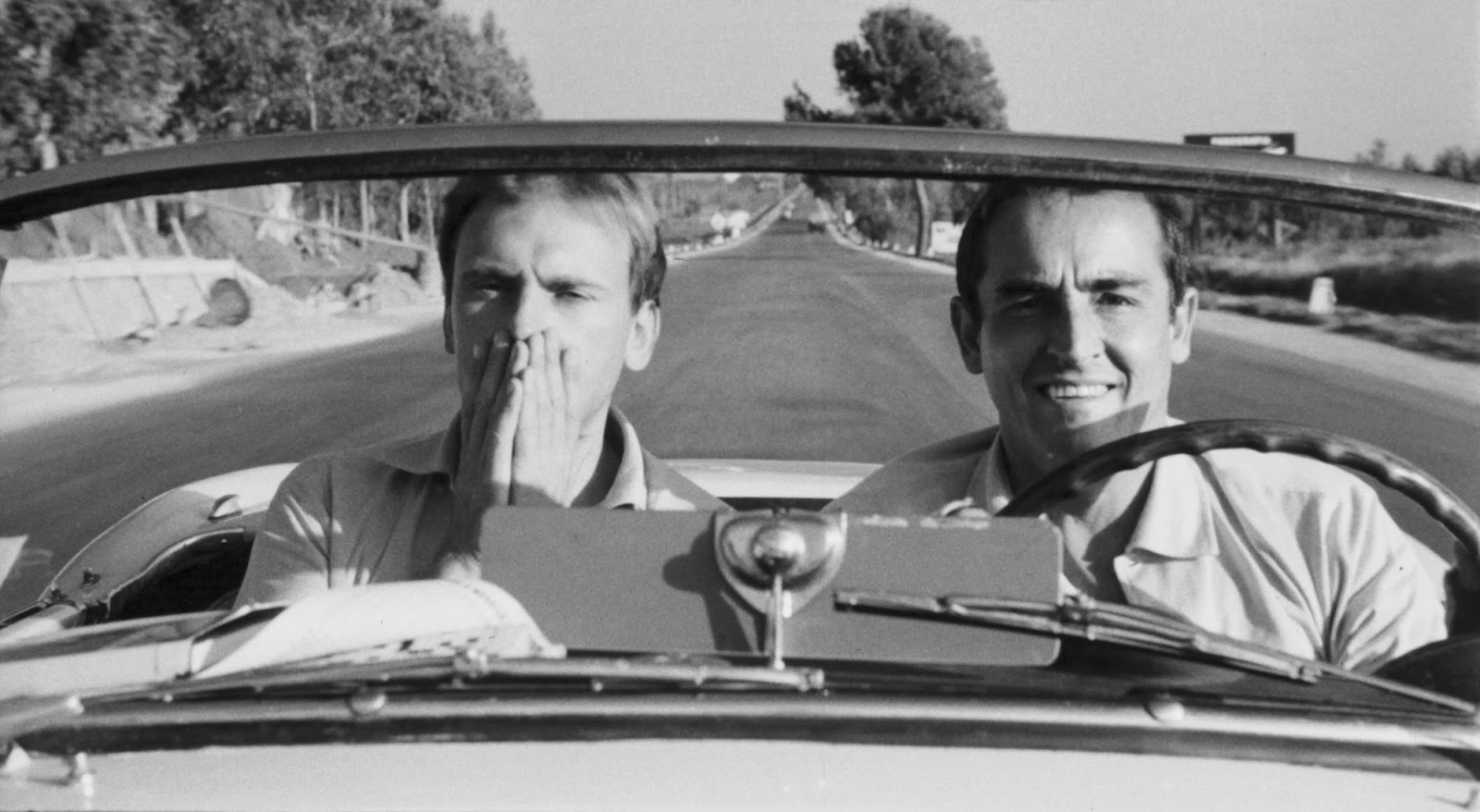
I’m not sure why this is; maybe Michigan’s film department is just crappy, but I don’t think it is. I’ve enjoyed most of my professors here, and I know theoretically that talking about movies in class should be just as stimulating as talking about books in English classes. And to be fair, I’m learning to enjoy the movies themselves more; this semester I’ve watched The Rain People, The President’s Analyst, and Il Sorpasso, and all of them I’ve either loved or just enjoyed watching. I haven’t come close to falling asleep during the screenings like I have in previous classes. It’s just that talking about them during lecture and discussion isn’t enlightening for me like it is talking about the books I read for English classes.

Maybe, in the end, the answer is just that I prefer books to movies. There was a time earlier in college when I was a little worried that I’d been wrong all along about my great passion in life; maybe I was supposed to move out to L.A. and work in the film industry instead of the publishing industry. But over the past couple years, taking both English and SAC classes has reassured me that, despite any new interests, my original passion is still the one I’m meant to pursue. Sometimes it’s nice to remember how much you love the thing you’ve chosen to study.

Literati

The first time I went to Literati Bookstore was in November with some of my friends. It was a Saturday evening and we had decided to explore downtown Ann Arbor, but started to regret it when the cold temperature almost became unbearable. We started to walk back towards State Street, abandoning our exploration for a warmer day, when we saw literati on the corner of Washington street. It was busy- people were coming in and out and though the windows we saw the small space crowded with people. In a different situation the crowd would have kept my out, but we were all so intrigued (and freezing) by the little book store that we had to go in.
The sea of people surrounded the small islands of books. We made our way to the “Holiday Favorites,” but couldn’t stay long as it was a popular spot for early holiday shoppers.
We walked along the perimeter, the walls lined with shelves filled with books and illuminated from spotlights above. Handwritten index cards were placed beneath some displayed books. The cards were handwritten and had personal reviews from the employees who wanted to share their favorite reads from that month.
We headed to the basement, passing by the window display featuring a tree made of stacked books and decorated with twinkly lights. The basement was less crowded, but still tightly packed. Sections of books lining the walls were distinguished by chalkboard signs. The “Travel,” section lured me to the corner of the room in the far right. I sat on a stool, overwhelmed by the selection. My friends were making the rounds, stopping every once and a while to pick up something that seemed interesting or read an employee recommendation.
I finally tore myself away from the travel section to meet my friends at a type writer by the stairs. It was placed on an antique table with an invitation sit down and leave a message. It had already been used several times that night- the paper was almost full. My only experience with type writers has been in antique shops that were always displayed with a harsh “Do Not Touch,” sign. So, we seized the opportunity to leave a message to commemorate our inaugural visit to Literati.
We left the warm and cozy atmosphere of the bookstore and returned to the harsh bitterness of a November night in Michigan. We cross the street and looked back to the corner store, the crowd still visible through the window but silent from a distance. With the glow of the store behind us, we walked back to campus, already planning a return trip.