
The Threat From Afar

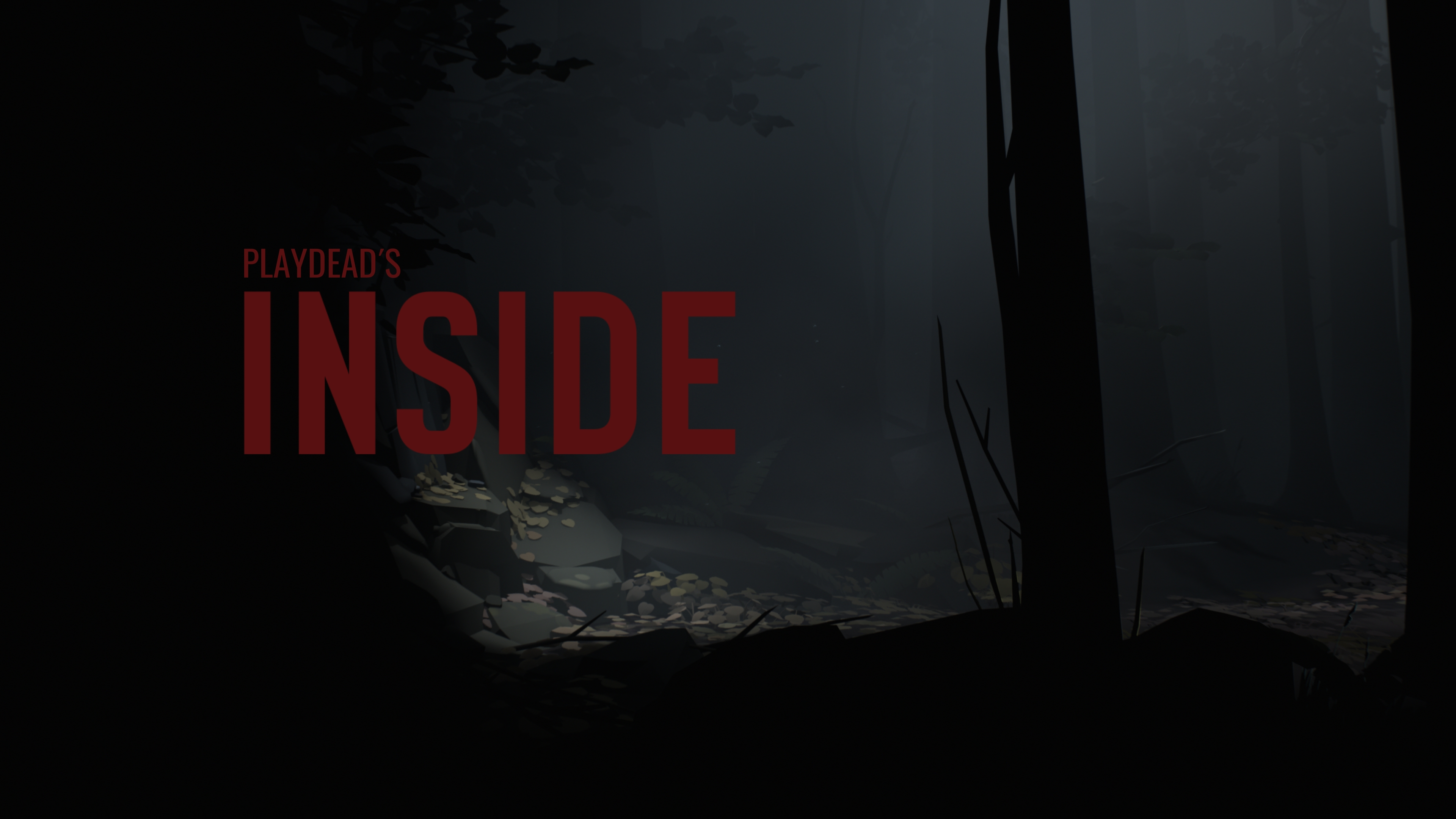
So I want to talk about a game I recently played called Inside, and specifically how Playdead has shown, for their last two games, how visual depth can be utilized narratively and as a means of evoking emotion from the player.

So for Inside, and Playdead’s previous game, Limbo, the gameplay has been fairly straightforward. The player controls a boy who traverses along a set horizontal axis although the game is rendered to suggest a three dimensional space. Hence, there is a clear distinction of foreground, middleground, and background in nearly every scene of the game.

With this aesthetic setup, the developer is able to tell stories in their own distinctive fields of depth, allowing for storytelling that is incredibly subtle. For instance, while the player is traversing across the rooftops in the foreground, in the background, there is a steady stream of zombie-like people marching to and from some unknown location. What is going on with those people? Who knows?

There is a distinct separation of stories, however, they are by no means unrelated, and instead they run parallel to one another and inevitably converge. For instance, in the beginning of the game, virtually every enemy is introduced in the background: a pair of headlights, a patrol car, or dogs chasing after you. However, it is when these enemies enter, or rather, run into, the player’s depth of field, that they actually become threats. These threats may emerge from the background, but they invade the main character’s space so quickly that it creates a primal sense of fear. However, as you play the game, the player recognizes that these “events” are timed perfectly, so that if you know what to do, you will escape just in time every time. But that doesn’t mean the player isn’t jamming the analog stick or saying, “Come on come on, open the door!” as they frantically try to escape danger.

Another moment of narrative convergence happens when, after seeing the people marching in the background, the boy falls through a patch of old floorboards. Where does he fall to? Of course he falls directly in the middle of a line of marching people. Suddenly, a robot comes over and flashes a light at you, but it isn’t taking you away or anything yet. Then the line moves, and the player realizes, that in order to survive, they have to copy the line. One false move out of rhythm and the robot shoots a Taser at the boy and drags him way. It is amazing how the game is able to compress depth not through horizontal movement, but laterally instead, and in an instant.

There isn’t a steady stream of angry mushrooms or turtles walking towards you from screen right. Instead, threats emerge from the fog, from the dark, from the depths. Inside (and Limbo) builds a steady stream of dread. Perhaps it has something to do with the lateral camera movement, making the player feel eerily distant yet inevitably involved due to the nature of the video game medium. But what is evident is that the world is out to get you in Inside and it most certainly doesn’t care about your space in the foreground.

My words won’t ever really be able to describe the feeling of the game completely, so check out the trailer below.


Let’s Marple It Up!

It was a day like any other. I was just about to have my morning tea, as my new friend Nico approached me:

“Hey man.”
“Well hello, what can I do for you, my dear?” I replied.
“I told you about the person who always steals my ham, right?”
“Yes, you certainly did!”
“This morning it happened again.”

And then he went on and on about this ham theft which, to be quite honest with you, I found rather samey. As the day went on and the sun slowly set over the nicely trimmed rose bushes of our hostel’s neighbour, Mrs. Haberdasher – her son apparently just quit his job, because it was too hard on his pitiable, little hands, so he can help out in the garden – the events picked up. Some music played and people started tippling. Our room housed the consumption of further recreational drugs, which won’t be discussed any further here. Nothing illegal, of course!

“Haha, let me have another drag.” I said.
“Ok, but we only have another two.” Nico replied.
“Two will get you good and baked. And besides, we’ve had four today, already.”

Shortly after indulging in the joys of our newfound favourite substance, two further mates had moved into our room. They weren’t too talkative:

“What do you think about this, Alfred?” I asked one of them. “You haven’t said a single word since you got here. That’s why I had to give you this name… Alfred… because I don’t know your real name.”
“You’re not going to get a reply from Alfred, right James?” James didn’t answer either.
“Well, I would call you impolite, if you weren’t so jaunty, guys.”

As the night progressed, smoke filled our room, beer cans were emptied and things got a little… out of hand:

“Yeees, Alfred, I’m on to you…” Nico babbled, dangerously waggling around with the knife he had pulled out from under his bed upon arrival a couple of days ago. “… you stole my ham, didn’t you? Admit it!  Admit it and I’ll let you go unharmed.”
“He isn’t going to answer” I said and tried to slowly take away Nico’s knife.
“NO! That is my knife and I am going to keep it. I am allowed to do anything I want with this. If I wanted to throw it at Alfred, I could. Like this.”

And he threw the knife at James. It sunk deep into Jame’s chest, he slid off his bed and didn’t get back up again.

“That wasn’t Alfred, that was James, you pillock!” I screamed, absolutely stunned by what had just happened.
“Oh bloody hell, what have I done?” Nico asked incredulously grabbing his head. “I killed the wrong person.”
“You killed a person!!”
“Holy moly!” Nico exclaimed. “How am I going to get a job, if I killed a person in my first week here?”
“Wha.. What are you talking about? Come down and help me resuscitate Frank!” I yelled and jumped over to Frank to turn him on his back. There was blood everywhere.
“James… His name is James!” Nico corrected me.
“Whatever! Call an ambulance!”

For a while I gave James a cardiac massage, with the knife still burried deep inside his chest. I could only hear myself breathing. James didn’t move and more and more blood poured over my hands. Desperately, I turned around to see what Nico was up to. I couldn’t believe my bloody eyes: He had fallen asleep on the bed, with a cell phone in his hand. With Alfred’s cell phone. Just as I was about to get up and wake up Nico in an unpleasant manner, I felt very giddy and darkness surrounded me before I hit the ground.

An immense pain in the back of my head woke me up. The sun was shining through the closed window on the wooden floor, which was soaked in red liquid. I moved my head about an inch to the side and smelled it. It smelled like sugar and alcohol. I heard someone move behind me. That was probably Nico. That turnip had fallen asleep last night, when he actually was supposed to call an ambulance… But why an ambulance?

“Oh, Jesus Christ!” Nico and I said in unison and Ipushed myself off the ground, which helped the pain in my head intensify. I looked around. There was noone else beside Nico and me in the room. Just a huge pillow on the empty bed at the far end of the room and a huge pillow with a knife stuck in it and the red alcoholic liquid smeared all over it, on the ground in the middle of the room.

“Bud, weren’t there two guys here last night? One of which was sort of… dead, I believe.” Nico asked.
“I think we have to cut down on the drugs, mate.” I answered and pointed at the banana Nico was still pressing to the side of his face, as if he was calling somebody on it.
“Yeah, unemployment is not healthy for me…”


Next week we learn about how Nico and I got our first job and actually there is a lot to learn about the entire field of work and markets in New Zealand, so be sure to stop by when I Bryson it up.

See you next week and remember to be the weirdest you can possibly be.

A Language We All Understand

bichini-bia-congo-dance-image

Every Monday, the Trotter Multicultural Center offers a Bichini Bia Congo Dance Class taught by the University’s own Professor Biza Sompa. He started his dance‐choreography career in 1970 with the Ballet Damar and the Congolese National Dance Company in Brazzaville, Congo and toured across Europe. In 1979, he founded the Bichini Bia Congo Dance Theater Company based here in Ann Arbor.

My friend and I decided to broaden our dancing abilities and try a new style of movement. Once we arrived in the studio, Biza Sompa greeted us with an enthusiastic welcome. Also in the studio were three other beginners, one regular Congo-class attendee, and a drummer. To begin, we loosened up to a few energetic Congolese songs. I braced myself for the actual instruction because the warmup by itself required ample stamina. Next, we learned a routine. Though it was not easy, it was so fun! Not only did we learn a Congolese dance, but we also heightened our understanding of the African culture through dance, music, song, and drum. Instead of dancing to the sound of a stereo, we found our rhythm with the beat of two “mother” drums that gave birth to music and helped “embody the value concepts and social philosophies of the Congolese people: man’s harmony with God and nature, group unity, and the celebration of life.” The pounding of the drums facilitated creative fluidity while the clapping of the hands maintained an inspiring energy. To conclude the session, we came together in a circle to thank everyone and everything that enabled us to share this dancing experience.

It’s amazing how dance and body language can often speak with greater power than spoken or written language. Through one common aspect of culture, we are unified. Though we might not all speak the same language, as Stevie Wonder once said,

“Music is a world within itself with a language we all understand.”

No matter who you are or from where you come, people have “an equal opportunity for all to sing, dance, and clap their hands.”

A Turning Point.

It’s 10:10 P.M. on November 8th, 2016. For the past two hours, I’ve been trying to think of what I could write about for this blog post. The clear Event of the Day has been the U.S. presidential election, but I was determined not to write about Hillary Clinton or Donald Trump, partly because I don’t know that much about politics, partly because politics aren’t that artistic, and partly because there isn’t really much more that can be said at this point.

But it’s 10:15 now and I can’t think of anything else, because it’s increasingly looking like Trump is going to win the presidential election.

I’ve always been very confident that I’m on the right side of history. I still think that. When I imagine our ideal society, maybe a couple centuries from now, I imagine widespread tolerance for LGBT people, no discrimination against people of other races, no sexism. I imagine a humble leader. This whole thing isn’t making me question my political opinions; I’ve never once wondered if maybe I was wrong. I mean, what would that even mean? ‘Maybe Mexicans really are rapists’? ‘Maybe the best possible choice is someone who’s never had any experience in politics, who pulls everything out of his ass’? No, obviously seeing these results aren’t making me believe in Trump.

But even as this is happening, I do feel my perspective changing about things. This whole time, I had this core belief that when it came down to it, everything would work out in our favor. Hillary would pull through. That seemed obvious from the beginning, but it felt really sealed back when the “grab ‘em by the pussy” comment happened. I didn’t even have a doubt! Even when the race inexplicably got closer in the past couple weeks, I still didn’t worry much. I woke up this morning knowing this would be a historic day, but I thought that it’d be historic for the right reasons.

I am a fundamentally optimistic person, who believes that people are fundamentally good. But I feel my beliefs slowly…not disintegrating, but eroding a little, maybe.

This is like a sports game. We’re watching this live like it’s SportsCenter. Except the outcome will actually shape our lives. Maybe that’s the thread that ties this to art—I still find myself viewing this all as a narrative, just one that’s existing in real time, in real life.

It continually stuns me to even imagine how actual oppressed peoples must feel right now. I’m terrified, and I am the apotheosis of privilege: white, heterosexual, male, upper-middle class.

It’s 11:40, and watching this live is so torturous. Part of me wishes I just waited until I got the actual results and had time to process it all at once. Seeing this all happening so slowly is so horrifying. CNN’s “new projection” screen triggers a Pavlovian response in me; my heart just starts racing.

I’m oscillating between feeling dead inside—not talking at all, zoning out a little, feeling drained—and feeling overwhelmed. Overwhelmed with too many things: sadness, disappointment, mostly incredulity. And once I start to think about any of the little particulars of this election—people voting third-party instead of voting for Hillary, or the FBI looking into Hillary’s emails with a week left before the election, or any of the stupid fucking people excusing anything that Trump has done—I get so, so enraged. I imagine Barack Obama’s face and I want to cry, because he was the epitome of grace, because for any faults he may have had, he was a real president. I imagine Hillary’s face and I want to cry, because it’s so absurdly unfair that she has to lose, so unjust that I couldn’t even imagine it happening, that I still can’t imagine her not being president, even as increasingly ridiculous things happened to ensure this was the outcome.

It’s 12:05 A.M., and overall I have the feeling that this is a turning point. I don’t know what that means, exactly. I’m not sure how much a Trump presidency will affect my own life. Maybe it will; like I said, I don’t know much about politics. But I’m scared imagining how it could affect others’ lives. People around the world, but even people in my little personal bubble, my LGBT friends, my friends of color, my female friends.

Tomorrow, there is going to be a shared understanding that things are different. My friends will be quiet. My professors will have to acknowledge what happened, if only because it’ll be all that’s on anyone’s minds.

I know, intellectually, that this isn’t the end of everything. As a critic I follow on Twitter said a moment ago, hope and humor aren’t dead; they’re just rare. I know that we can make things right, and I still believe history will work out in our favor. To be honest, I’ve never really had to be a politically active person before. I’ve voted, but I’ve never really protested, never gotten as involved as I should’ve. I regret that now. I will really, really try to change that.

Here is the picture of this historic moment: I sit on my living room couch. My roommate Kimmie and our friend Sean sit on the couch with me. My roommate Kyle sits on the armchair to our left, and our friend Emily on the floor near him. My roommate Erica went to her room, maybe to sleep or maybe just to have some time alone. The rest of us are all watching the computer screen live-streaming on the table in front of us, but we aren’t huddled with anticipation like we were before. Our comments—“oh, it’s tied in Michigan again”—are said in a halfhearted way, like it’s all incidental. It’s 12:23, and we know the outcome.

“If anyone says their vote doesn’t count again, I swear to god…” I say.

“I’ll kill them,” my friend says. “I’ll kill them, and their vote would’ve counted, but now it definitely won’t, because they’re dead.”

We all laugh more than we have in at least an hour, probably two.

I am a lucky person, because of my racial and gender privilege, but also because of my friends, and my family. I am lucky that I’ve been given enough that my optimism hasn’t been completely squashed. I am lucky that I live in a country where so many people did go out and vote, did go out and volunteer and be selfless and try to make the right thing happen.

I still believe in us. But it’s 12:56 A.M., and I am shaken.

More Motown!

Last weekend I took a trip to Hitsville USA, also known as the Motown Music Museum, in Detroit. Easily recognizable by its bright white and blue color scheme, the house, that once belonged to Berry Gordy and housed the famous Studio A, sits on Grand Boulevard just as it did 50 years ago.
Inside the museum it is clear that this was, and definitely still is, a house. It’s cramped and crowded as the 11 a.m. tour group waited for our guide, but when she arrived she immediately got everyone arranged comfortably – it was clear that she had done this hundreds of times.
The tour guide was the best part of my visit to the museum. Her passion and knowledge for Motown was clear as she easily gave us general information and shared stories about the singers and the house like she was there herself. Every once in a while she would start singing a Motown classic, her braided hair swaying back and forth as she moved. I was impressed with the natural ease and confidence in which she performed. At one point, she had the entire tour group join her. Tourists, both young and old, who had come from as far away as England or as close as Dearborn, began to clap and sing with her to hits like “Ain’t No Mountain High Enough” and “I heard it through the Grapevine.” Group singing, especially in public with a bunch of strangers, is definitely not my thing. But when everyone started to sing along and clap together, I couldn’t help but join. The moment, a bunch of strangers singing together in the house that made icons like Stevie Wonder and Michael Jackson, was a true reflection of the influence of Motown music.
The tour guide described what the atmosphere was like when Motown began to spread across the country. “People were singing in the streets. They were really singing in the streets!” she said. I can picture everyone sitting on their porches, singing along to whatever hit was playing on the radio. She described the process of making the music as well. Berry believed that creativity had no hours, so artists were able to walk into the house whenever inspiration struck. As we stood inside of Studio A, our tour guide described the musical history that had occurred there. Marvin Gaye, Stevie Wonder, and so many others had recorded there, and the entire studio was preserved exactly how it was 50 years ago. As she described the recording process, it was clear that it was a very authentic experience. Today, many artists will record their voice while listening to the prerecorded drums, guitar, and other instruments. But in Studio A, the band would play right alongside the singer as they recorded.
I wish that I could have been around to experience the excitement and passion of Motown music. My visit to the Motown museum made me want to sing in the streets with my neighbors and friends or listen to a song and visualize the recording room full of music. The movement of Motown was critical to modern music, and the Motown Museum is a great place to learn more and get inspired by Motown.

Sitting in a Library

It’s quiet in the Hatcher Library Reference Rooms today. But it’s never silent. Not even the strictest rules could prevent the variety of sounds that echo throughout the library. The door clicks as a new acolyte enters the sacred temple of books and laptops. Of all the students sitting in neat rows down the length of room, few even look up. The soaring white ceiling and murals are sadly ignored, as much as the shelves of books that line the walls. The amazed stares and slight gasps have been abandoned long ago in favor of resigned yawns. Most have their headphones plugged in. We may be sitting together but we are all in our own separate worlds, lost in swirls of half understood equations and tedious texts. Today, mine revolves around writing this blog post and the math homework I’m postponing. I’m sitting next to a girl with a knitted grey sweater and blonde hair braided neatly. Her feet move relentlessly under the table. I wonder if she has somewhere else to be.

There’s always somewhere else to be at the University of Michigan. Besides the uncompromising schedule of class after class, students often have many other obligations. Responsibilities to clubs, a can’t miss fraternity party, sports practices. That is why there is always a sense of urgency sitting here in the library. Homework must get done, so that we may all rush off to our next responsibility. The Hatcher Library even removes any social distractions. No need to spare any time on a few wasteful words. Concentration is forced upon us, silence envelopes us. The library allows me an opportunity to gain a singleness of mind that is rarely achievable in any other environment. Even walking outside, my mind rushes faster than my steps. What do I have to do next? Am I forgetting something? Of course, I’m forgetting something. But here in the library, I can savor the feeling of usefulness. The feeling that I am being productive, I have achieved something here today.

I wish sometimes that I did not need the library to force me to work. I wish that I could create quiet spaces anywhere just for me, myself, and I. I wish I could stand still in this moment. But my mind can’t and won’t. Often, it feels like being a helpless passenger on a runaway train or constantly dodging never ending obstacles in some sadistic video game. You are never in control. Most of the time, I ignore this reality. It is simply too emotionally exhausting to consider every singular stress in my life. So usually I put on my headphones and my favorite Spotify playlist. Yet, the library offers me a place of quieter reflection, a place beyond the everyday problems to look at the big picture. It seems to me, that as students, we spend too much time worrying about the homework, the classes, and the parties without considering exactly why we do things. Life is greater than a couple of assignments. That is why as I sink into the only open armchair and close my eyes, I can relax if only for a few fleeting moments.

When I open my eyes again, the world hasn’t changed. It is still only a room. I’m still only a student. But the library is a special place for me, always has been. When I was a kid, it was my wonderland. When I was a high schooler, it was a refuge from the drama within and without. Now, in college, it has become a study hall. But always, it is where I go to be alone but not lonely.