

Bonding through Bad Movies

Watching TV and movies is a good way to bond with friends. Many of my friendships originally began because we shared an enthusiasm for a particular show—I still have go-to friends to text when I watch a new show that I love. But let’s be honest: when it comes to being close friends with someone, you need to have more than just a couple shows you watch in common. To take that final step to becoming close friends, you have to talk about something other than the newest episode of Jane the Virgin. (That said, the season premiere of Jane the Virgin, which aired yesterday, was emotional and hilarious, and I’ll love anyone who watches that show.)

I went on a ‘retreat’ this past weekend with a few of my friends for fall break. We stayed a night at my friend Christian’s parents’ cabin on Sage Lake. There may have been some drinking going on—not that I partook, obviously, since I won’t be of legal drinking age for another two months. But in terms of actual activities, we played some card games, played a game of sardines, and mostly just hung around by the lake or in the cabin. It was definitely a fun way to spend a day, with lots of good company.

Toward the end of the night, we settled down to watch a movie. The movie was largely fun—it was Avalanche Sharks, one of the terrible Syfy schlocky movies about poorly rendered sharks terrorizing civilization. (One of my chief complaints was that there weren’t enough sharks! There should’ve been more gore! At least we got to hear the phrase “it’s spring break” uttered 30 times.) I’m of the firm opinion that if you’re aiming to bond with friends, it’s much more fun to watch a shitty movie than to watch a good one. A couple people wanted to watch Blue Velvet, which I’ve been meaning to see, but on a night when we’re supposed to be having a bunch of fun, is watching a quality neo-noir drama really what we want?

Some of my best experiences with watching movies have been watching dumb shit. My brother and I regularly quote Birdemic, the famously terrible amateur movie about a bird attack. I still smile remembering the night in high school when I got together with some friends and watched Mega Shark Versus Crocasaurus. (We also watched Paranormal Activity 3 that night, but high-quality horror movies might be the exception to the ‘good quality = bad for fun’ rule.) The thing is, most good movies you can watch anytime. You don’t need to be with friends to do it. In fact, I’d probably prefer to watch Blue Velvet alone; it’d probably be more impactful that way. When I’m with friends, on a night kind of meant for bonding, I don’t just want to check off something on my movie list. I want to do something fun.

Maybe that’s why I started to get bored after Avalanche Sharks, when we decided to just watch some TV on Netflix. I get it. It’s a comforting default to put on an episode of Parks & Rec or 30 Rock, especially when everyone is tired. But one of my few disappointments of the retreat was that we started to fall back on TV when we could’ve made more of an effort to connect. Then again, maybe a trip where the explicit purpose is to ‘bond’ is a little forced from the beginning.

I’ve just learned more and more recently that most good TV and good movies I prefer to watch alone. There are no variables—I don’t have to deal with possible spoiler sources, or the slight self-consciousness that prevents me from really physically reacting the same way I might alone. (For example, I actually said ‘what the fuck’ many times when I was alone watching Dogtooth. If I’d watched that with a friend, I probably would’ve said the same thing, but more for their benefit, for the social aspect, than as a genuine reaction.) I don’t have to have my opinion influenced by someone else and what they might be thinking. I don’t have to get pulled out of the experience by some annoying theatergoer who’s laughing a little too hard, or a crying baby, or a guy who’s pointing out the logistical issues in the third act of Finding Dory. I can react the way I want to.

So yeah, there are a lot of reasons I don’t usually like watching high-quality movies and TV with friends. It’s usually better to just pop in something stupid. Sure, it’s sometimes fun to watch It’s Always Sunny in Philadelphia when I hang out with friends from home. But every time I’ve watched Caillou, I’ve had a much more memorable time.
The Art of Intoxication

Being drunk around one’s family is always a sensitive subject to approach. For most people. their family has not seen them drunk until well after their first time drinking. This is true for me as well, but there is the extra layer of uncomfortableness regarding my drunken self with the rest of my family.  I am gay, and the drunker I get, the gayer I become. Most of my family knows that I’m gay, but how comfortable are they with my expression of my gayness?

I have freely gotten drunk with my family, but there has always been a barrier to protect me. The drunkest I have ever gotten has been at my cousin’s graduation party, but that gave me liberal cousins as a barrier to the rest of my family. I could act as effeminate or “gay” around them and it wouldn’t lead to drama with the rest of family. It was freeing to be able to have this much fun with the rest of may extended family around me. But that is not always the case…

This is something that every queer person has to come to terms with in their life. How queer can I be around my family? They want to be their true selves, everybody wants to be their true selves, but rejection is not something that everyone wants to face. It becomes a very difficult terrain to navigate as one must find their own path to openness with their family. How much is too much for our family to handle?Being completely open is incredibly freeing, but runs the risk of disownment. Where can an individual draw the line?

Even with a completely supportive immediate family, it is hard for me to draw the line. Today was a celebration and I did  not want to get too drunk be cause I did not know if my immediate family could handle how I actually present as a gay man. I had to limit myself in order to not be ostracized at this family event. In the company of extended family it becomes even worse. My extended family disagrees with me on so many political areas, that I’m honestly not sure if they would ever accept me as truly gay. It’s damaging to think that your family would never accept you.

It is hard to navigate openness with the people around you, and it becomes even more difficult when alcohol is involved. I want to drink to forget how my family might not accept me, but the more I drink, the more I reveal myself to my family. This is a part of the gay experience that is so difficult, but cannot be understand by our straight allies. I love my family, but I do not want to love them if they disapprove of me. How do I navigate this and how do I navigate being my true self around them?

The First Part of Many: A Look at Illustration

This is going to be a multi-part blog post as I rummage through my thoughts on several illustrators. They will not be posted in sequence.

Upon returning to campus I visited the Dawn Treader Book Shop on Liberty in order to find some cheap copies of novels I required for the semester. I’d figured, at least, that the novels for my Fantasy class would be on the shelves given how widely read they were, for instance, novels from the Harry Potter series or Alice in Wonderland. I did find Alice on the shelves, but they weren’t complete versions of the texts, missing the ever-important Through the Looking-Glass. Also, I’m not proud enough to admit that the cover was not particularly appealing. However, as I was about to leave the shop with nothing, my eyes were drawn to a book that had an interesting illustration on it. It was a bird (perhaps a crow?) with a top hat and cane, walking briskly, eyes shut, towards some location beyond the silhouette of the cover. The title? You Can’t Get There From Here. Ogden Nash wrote the book but what truly piqued my interest was that Maurice Sendak illustrated it.

My only encounter with Sendak is, of course, Where the Wild Things Are. I can never quite remember how many times I read it, but I don’t think I read it as much as other children claim. But quite recently, I’d found a new interest in several illustrators from Sendak’s era, or perhaps those who preceded him. I’d become affixed to the elegant line drawings and incredible draughtsmanship of E.H. Shephard, Saul Steinberg, Jean-Jacques Sempe, Ronald Searle, and Tomi Ungerer just to name a few. So it was only natural for me to pick this book up.

The entire book is composed of several poems, most of which are comedic, while some are sublime, but all of them are whimsical. One particular poem I find quite coincidental is titled, No Woe is Gossamer to Mr. Bessemer. The poem describes, not a pessimist, but a man who always expects the worst, and one of the lines is, “He is certain that the train he must catch will leave early, / and that, once caught, it will arrive late, / And, as a Michigan alumnus, that the Big Ten title will / go to Ohio State.” The illustration accompanying this poem features a man in a raincoat, holding an umbrella, sun hanging high, walking past a group of puzzled children, one sticking out his hand waiting for a drop of rain that is not coming anytime soon. Ha Ha. chuckle chuckle. Turn the page.

Now, as I write this article, I wonder, should I not be reading “children’s books”? I’m not too sure if such a thing even exists actually. Or at least, the books that I remember reading as a child and still loving are those that are timeless. Even now, I pick up books I never read as a child and find them fascinating. So it sort of comes back to that word (doesn’t it?) – timeless. Does that just mean a book is re-readable? Not quite. Or maybe it suggests something like what Calvin and Hobbes does so well, each time you revisit a strip by Bill Watterson, you appreciate it in a different way.

Then, naturally, I guess the proceeding question might be, how do these illustrators/writers create something that is timeless? Perhaps I can explain it this way, by introducing a bit of unrelated yet related information, Ungerer used to draw illustrations for a children’s book on his desk while nearby, he had his stove on, with a pan filled with Barbie dolls that he was melting in the heat. And of course, he wrote incredibly famous children’s books while also creating art books like The Underground Sketchbook of Tomi Ungerer – a book that features a naked woman on the cover, with no head, and in the cave like entrance of her bleeding neck, sits, huddled, a man with a bloody knife.

I’m not suggesting that this is the only answer, but it may be a answer. Yes, it is a far cry from the pairing of pessimistic poetry and whimsical illustration, if anything, a lot of wild illustrations seem restrained compared to what Ungerer did. How does a man, who drew the adorable, Moon Man draw a man using a woman as a vacuum at the same time. Honestly, although it may seem ludicrous to the public eye, upon consider what Ungerer went through, his history, his context, and a variety of other “character building elements” it doesn’t seem all that crazy. I’d like to suggest that perhaps his inclination towards drawing images of manipulated bodies, both man and woman, isn’t all that unique. Perhaps he is just more honest than the average individual. Is that what it takes? Honesty?

There is Too Much Art to Consume

There is too much art to consume.

More than ever, I’m overwhelmed. I have a movie list that has to be over a thousand—there’s 150 from 2014 up to now alone. I keep up with 16 new TV shows that premiered just this fall, in addition to all the shows I regularly watch, and that’s leaving aside all the classic TV I’ve been meaning to watch to broaden my TV knowledge. Listening to my Spotify Discover Weekly playlist each week means I have a constantly growing list of music to listen to. I have a list of books to read that expands at a rate of at least one book per day. I do not read a book a day, and doubt I ever will, so this is clearly not a sustainable habit.

Even aside from my own intrinsic desire to be caught up on all the latest art, there’s the pressure to have things to talk about with your friends. There’s Jackie shaming me for not having watched Gilmore Girls, and all the people inexplicably disgusted that I haven’t seen Forrest Gump. (I don’t think I’d even like that one.) In fact, as I’m writing this, my friend Avery just suggested a new band for me to listen to, and god dammit, I really liked the first song I listened to by them, so there’s another band to add to the list.

Too Much Art is ruining my life. Okay, no, it’s not, but it does aggravate my stress, which is already high due to homework, my job at the Law Library, my job as a Senior Arts Editor, my job as a blogger, that job at Barnes and Noble that I should really just quit already, and the impending doom of graduation, lurking only a few months down the road. In the spare time I have, I should be able to chill out and watch an episode of something without worrying about what art I need to consume to be an ideally well-rounded artist-writer-person.

TMA means that I can’t even begin to think about the other art forms I would ideally have time to explore, like podcasts and video games and visual art. I’ll have to content myself with Writing Excuses (a 20-minute weekly podcast), my summer play-through of The Last of Us, and an occasional trip to a museum.

I’ve managed to cope with some of this by realizing that it’s okay if I drop a show from my rotation every once in a while—sure, I’m saying that I plan to catch up on Once Upon A Time and Teen Wolf one day, but I doubt I’ll ever get to them. But it’s still an issue, and I don’t ever really think itwon’t be an issue. There’s simply not enough time to do all the stuff I want to do. I want to continue to try, though, even though it’s ill-advised and delusional.

So what it comes down to is prioritizing. And that’s something that I’m still working on. Currently, I’ve picked two areas to really focus on: TV and music. I really like keeping up on TV on a weekly basis, so that’s currently one of the few things I’m semi-succeeding at. It’s hard to keep up with all the interesting TV out there, especially in this period of what TV critics call ‘Peak TV,’ but I’ve managed to watch most of the things on the air that I care about.

Music might be my biggest success right now. I have three music lists, all stored on one iPhone note. The top one is mostly indie and pop music that I’ve been meaning to listen to, compiled mostly from friend suggestions and Discover Weekly suggestions. The second is mostly rap and hip-hop artists; as white as this is going to sound, I didn’t really have any interest in rap or hip hop until I watchedStraight Outta Compton last March, and since then I’ve gradually expanded my knowledge about it. The third list is older music, mostly from the 70’s and 80’s, that I’ve been meaning to listen to more (The Clash, The Cure). This was mostly triggered by recently watching Stranger Things, Sing Street, and Halt and Catch Fire.

Music is nice because I can cross artists off my list while I’m doing other things: walking to class, making dinner, even brushing my teeth. You don’t realize how much time is spent doing miscellaneous things like that until you listen to music the whole time and blow through a couple albums a day. Being able to get stuff done while you’re walking is very efficient, and I feel noticeably more music-literate now than I was a year ago. (Most recent additions to my Spotify library include Jukebox the Ghost, TV Girl, and Danny Brown.)

But being generally content with my music and TV competency means forgoing movies and books, which is pretty bad. I love movies, sometimes more than TV, and books…well, books are supposed to be my grand passion in this world. I’m an English major, I want to write books professionally, I want to go into publishing, etc. And it’s not just that I’m finding I’m not as passionate about reading as I used to be—I still count books as my favorite medium of storytelling. But books are undeniably time-consuming, especially since I’m kind of a slow reader, and I read so much for class that I rarely want to read just for fun in my downtime. Besides, though I theoretically want to be more well-versed in contemporary literature, the literary conversation is less immediately pressing than the what’s-on-tonight TV conversation.

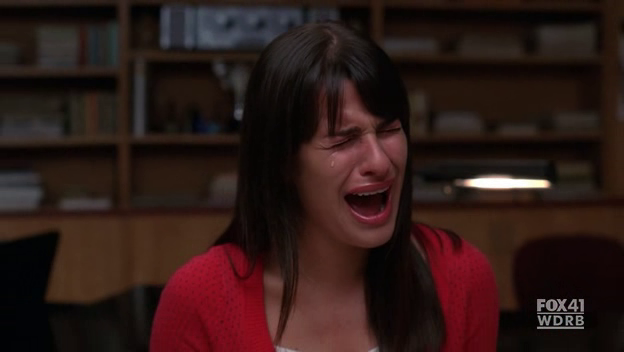
I read a bit over the summer, but now that school has started back up again, I find that I’ve made basically no progress, and that saddens me. Reading and writing remain my focus, career-wise, and I know that I need to refocus on that. I need to probably drop a couple of my new shows, like Designated Survivor and Quarry, and save some to binge when I have more time over winter break. (I will never forgive myself for watching ALL SIX SEASONS OF GLEE. NO ONE WATCHED ALL SIX SEASONS OF GLEE. IF YOU WERE NORMAL, YOU QUIT HALFWAY THROUGH THE SECOND SEASON AND NEVER LOOKED BACK.) I need to set aside time to read and write. It’s just hard when there’s so much art.

Intro/Extra

The terms introversion and extraversion are tools that Carl Jung popularized to explain the different types of gratification that individuals try to obtain. They were a shorthand to help explain complex issues. To explain these complex topics simply, introversion in being primarily interested in one’s own psyche, whereas extraversion is motivation stemming from outside gratification. This allowed psychologists to more easily analyze patients and theorize about the machinations of the mind. These concepts, however, have been bastardized by pop culture to segregate people into two groups whether it’s actually applicable or not.

There are two ways that professionals actually view these concepts: as a continuum to explain a person’s general motivations, or as an explanation of the motivations behind a single action. This is important to realize as a professional would not label someone as an “extravert” or an “introvert”. Either they generally act in an extraverted/introverted way (but is not solely extraverted/introverted) or that a particular action was motivated by introversion/extraversion. This dichotomy that pop culture subscribes to, like most dichotomies, is a false one. Actions and people exist on a gradient.

Extraversion and introversion have had positive effects, though. It has allowed people to better understand themselves and their motivations. In addition, they enable people to easily discuss what they are mentally experiencing, thereby facilitating understanding among people. This can lead to higher sympathy and less taxing demand for conformity to other people’s attitudes. However, they have become labels that divide people and create animosity between the groups.

According to pop culture extravert and introvert are opposite and opposing labels. You are either one or the other. With this comes ingroup and outgroup dynamics. You highly favor those that share the same label and act derogatorily towards those of the other label. Introverts see themselves as intellectuals and extraverts as vapid. Meanwhile, extraverts see themselves as sociable and introverts as awkward. This especially prevalent among people that hold the label extremely personally as if that label is everything that they are. These group dynamics are obviously harmful as they perpetuate stereotypes and ignore issues that could be resolved.

Like almost everything else, introversion and extraversion exist on a scale. We act extraverted in some instances and introverted in others. Labelling oneself as one or the other only serves to diminish the complexity of human experience. One learns to ignore the individuality of experience, rather than embracing it. Through this, we actually come to learn less about ourselves, rather than more. Introversion and extraversion can be helpful to explain specific instance and analyze them, but labelling an entire personality as just one or the other is ineffective.

The terms extraversion and introversion can be extremely useful when used correctly. They can establish connection, elicit sympathy, and enable discussion. Unfortunately, these terms have been co-opted by pop culture to take advantage of ingroup and outgroup dynamics. This labeling, when used in this way is ultimately harmful and should be reconsidered. In the future, do not label yourself as an extravert or introvert, instead, you are a person with complex motivations.

Follow your Passions and Never Work Again

In anticipation for my final Arts Ink posting, my mom asked me what I was planning on writing about. I confessed that I hadn’t thought about it (and frankly had too many other things on my mind that took priority over this post). She went on to reflect on what a great opportunity it has been for me to have this job for my last two years of college. And she’s right and she’s wrong.

Writing for Arts Seen and then Arts Ink has certainly given me the incredible chance to attend brilliant performances, readings, and concerts, and turn them into written reflections. Each Sunday this year, I’ve been able to sit down with my thoughts and soak my brain in all kinds of art curiosities, musings, and explorations. And hopefully, my writings have not only affected me for the positive, but also I hope it has inspired others to imagine, meditate, create, and engage with the beautiful world around them.

But my mom was wrong – this isn’t a job. Never has it ever felt like a job to me. And I think that’s the greatest thing I could hope for. Sure, there may be deadlines. I might have to say, “Sorry, no bar trivia tonight. I have a blog post to write.” But I don’t ever feel like I’m missing out on fun or working at all. And as a graduating senior, I can only hope to discover more opportunities to be productive and creative, and “not work.”

I just watched the 2011 documentary, “Jirō Dreams of Sushi” last week and within the first five minutes of the film, the eponymous protagonist tells the audience:

“Choose your occupation carefully. You must dedicate yourself to the work. Fall in love with it. Never complain. Dedicate your life to mastering the skill.”

For Jirō, that comes in the form of sushi. He dreams about it. He works from 5 am until after his restaurant closing time, living and breathing his sushi creations. And he’s 85 years old.

I find tremendous admiration in the spirit of Jirō and his constant drive and passion to always improve his own craft as well as the experience for his staff and customers. You can tell that when he is in his restaurant, behind the sushi bar, with the starchy granules of rice and the slippery smoothness of fatty tuna belly on his fingers – he is in his happy place. That is where he wants to be.

So friends, whether you’re graduating this week, next year, or graduated fifty years ago, become your own Jirō. Follow your own sushi dreams, commit yourself to your craft, become your own life’s artisan and chip away at it with love and authenticity. Turn your work into a work: of art, of service, of community outreach, of technology, of inspiration. I wish you all the best at whatever your dreams behold <3

Thank you for the wild ride,

Cammie F.