Lexicon

The English language is full of idiosyncrasies. Why the there, their, and they’re? Why do c and s sometime have the same sound and sometimes not? How do poop, shit, and feces all mean the same thing, but have three entirely different connotations? The answer may never be entirely clear, but in a way that’s the beauty of English. I’ve always loved language and its power. The power it has to move, to shock, to express, to relay, to convey, to make change. How cursive, print, and American Sign Language can all have the same alphabet, but look entirely different. English is an art. My Spanish professor once told our class that he loves English because it is one of the most creative languages he has ever encountered. I thought he was crazy at the time, knowing how ridiculous and unclear the rules of the English language can be, but looking back on my career in English, I think he may be right.

As a lot of kids do, I used to dumb myself down in school to interact with the other kids. It’s apparently cool not to care. Senior year, however, something changed in me and I decided to start using the pile of vocabulary that had been gathering dust in the back corner of my mind. I began incorporating scholarly vocabulary into my every day life and you know what? It felt good. I finally understood what my father had been getting at when he encouraged me to use “50 cent words,” which turned into a little game where he would score my integration of more uncommon and intellectual words into every day sentences. I now use 50 cent words as often as I get the chance.

I think the most powerful thing about language, the reason I dedicated my college career to studying the English language, is its profound ability to impart some of the most breathtaking beauty. Language has an amazing ability to engage all of the human senses with a mere syntactical feat or an elliptical that can say all at once, “this sentence is over, but this is not all.” Phrases can induce tears, words can build characters and worlds that we can explore from nothing just by putting words on a page. Words are an endless realm of possibilities and I want to continue to explore them, learn them, play with them, exhaust them, exasperate them until they can do nothing else for me (though I doubt this will ever be the case). This is why I am an English major, this is my art, this is all of our arts. This is Harry Potter and The Great Gatsby and Othello. This is all of the poems I wrote in middle school and the complete works of William Wordsworth. This is nature and culture, history and the future, reality and fiction. Wherever my future holds, I’m ready because I know the power of language.

Ferguson, the NFL and Audra McDonald

Before August 9th, few people outside of Missouri knew about the suburb of St. Louis called Ferguson. Yet with the shooting of Michael Brown Jr. by police officer Darren Wilson, this suburb of 21,000 was thrust into the international spotlight reinvigorating the national conversation on race. As mostly peaceful protests take place in Ferguson, Chicago, New York, Seattle and the Bay area, people have taken the streets, internet, and national television to share their thoughts on the grand jury’s decision not to indict Darren Wilson.

One such peaceful protest occurred on Sunday when NFL players Cook, Austin, Bailey, Britt, and Givens came out during pregame introductions with their arms raised in the “Hands Up, Don’t Shoot” gesture. That evening the St. Louis Police Officer’s Association requested the NFL to discipline the Ram players who participated in that protest. While the NFL has declined the request, questions of the appropriateness of this very public protest have been raised.

ram

In the context of modern society, the players are both athletes and entertainers. While their venue is a football stadium broadcast directly to millions of TVs every Sunday, they perform the same basic function of traditional entertainers: to hold the attention of their audience with something amusing or diverting. Many entertainers have come out in support of various causes, bringing attention to their causes at their performance venue before or even during a performance without detracting from the experience. At a performance at Hill Auditorium in 2011 Audra McDonald interrupted the performance to speak about marriage equality and anti-bullying. Was there any outcry about this brief tangent? Not that I heard.

As an entertainer on a national scale the athletes are expected to be role models, knowing that people around the country are watching their every move and many strive to emulate their behavior. The backlash that the players received from their peaceful protest stems from disagreement with their stance and the unfamiliarity of football being used to make a political statement or show support for a cause. Regardless of the intense physical requirements of football at the end of the day it is simply one form of entertainment, and for me, the best kind of entertainment always has something to say.

A List of Writing Mediums

Some scientific research concluded that writing in cursive better encodes information into your brain. This is due to the number of neurons that are fired with pen-strokes, as a wide variety of hand movements are required. Cursory writing accomplishes this goal more effectively than other forms of writing. Printing by hand is the next most optimal means to encoding thoughts. Typing fires the least neurons, so this is the least effective for memory. It is, however, the fastest, and also rather unavoidable in today’s world. After spending so much time in front of a screen, we get caught in a rut of typing and information cascades.

In the age of information overload, reductionism is a coping mechanism. Lists are a means of reductionism. So to combat the bulk of information you are overloaded with on daily basis, I’m going to present a list. This list will be a compilation of different writing mediums you could explore–both on and off the screen. Experimenting with new mediums may change the way we remember and relate information. And that’s important. We could generate new thoughts, just be placing them on a different surface.

So here are 35 new mediums to try:

1. Plastic milk jugs

2. Dried leaves

3. Whiteboards

4. Blackboards

5. Corkboards

6. Rocks of varying shapes and sizes

7. Wax paper

8. Your body

9. Somebody else’s body, with verbal consent

10. Napkins

11. Money, but you didn’t get the idea from me

12. Apples

13. Cardboard

14. Glass panels

15. Rubber erasers, for the irony

16. Paper plates

17. Tin foil

18. Candy wrappers

19. Bricks

20. Brick walls

21. Drywall

22. Tabletops

23. Table bottoms; watch out for gum

24. Table legs

25. Seashells

26. Turtle shells

27. On computer screens

28. On the sides of pencils

29. Watermelons

30. 2×4 boards

31. Dead skin

32. Chicken bones

33. Jeans

34. Toilet paper

35. Your bed sheets

This list is not conclusive. Feel free to add more for yourself. The process of writing on different mediums, even if the words/ideas do not change, may make you think about the writing in a different way. This divergent thinking may help you overcome mental road blocks. It is a worthwhile activity, I think. So explore. Let your pen roam wild. Bleed ink on inappropriate places. You’ll never know what you may find.

Headphones Rant, aka I Can’t Stand Earbuds

When I was little-er (like 10 or so), I got a Walkman Portable CD player, either as a gift for Christmas or just as something my parents got me, and I got these really, super comfortable headphones to go with it (not really). I actually still have that Walkman, in the little nook area under my nightstand drawer at home, along with my embarrassingly small CD collection.

When I first got that thing, I was in heaven. My mom often played me her CDs in the car, and we had a decent if not nice stereo system (for the time), along with a turntable for her to play her records. I guess I was 12 or so when I was allowed to use the stereo, and I still remember how, when I opened the cabinet in our entertainment center that held all her CDs, my mind was blown with how many she had. Now that I’m older and taller, the collection doesn’t look as big, but it still makes me smile how those were the CDs she listened to when she was in high school.

In short, my mom loved music, and thus, so do I. There is a deep tradition of car singing and dancing between the two of us, and even though my mom tries to tell me that she’s my mom and not my friend, I know that when it comes to music, she’s happy we both love it the same way, even if our taste in artists now differ.

But back to the Walkman. As someone who grew up with music, and my mom fostering that love by buying me my own CDs (early additions to the collection? Hilary Duff’s CD and the Jonas Brothers’ second ((and best)) album). One clear memory I have with that Walkman was the time my aunt pulled me and my cousin away from Houston and the impending Hurricane Rita, taking us to “safety” (and A/C) in College Station in the middle of the night with everyone else trying to get the heck out of town. What is normally an hour and half, maybe two hour drive quickly turned into a 4 hour trek, and so all I had to lull me to sleep was my trusty Walkman. What makes this memory so vivid, however, is not the long ride or even the music I was listening to, but the headphones.

I absolutely hated those headphones. They drove me insane, especially since they were the kind with the fake cushy things that slide over the hard plastic, and one had fallen off and I had lost it. After my experience with those headphones, and the introduction of the earbud, all the rage and of course all my friends had a pair, I told myself I’d swear off over the ear headphones for good, and besides, they weren’t cool anymore anyways.

So, headphones. All this now leads me to the most random (and ironic) thing ever, which is that I love over the ear headphones now. Frankly, the topic of headphones has been on my mind recently because mine broke right before thanksgiving, and while I now have replacements, they are the dreaded earbuds. What I loved in my childhood has now become what I hate.

And what’s strangest is the fact that there’s a part of me that really really needs over the ear headphones. Like, my inner soul is yearning for it. Which is how this relates to arts, because, well, headphones and music, but also because I’ve never really recognized how crucial my headphones were to my creative process.

I’ve always liked listening to music while I write (case and point: I’m currently listening to “I Got A Boy” by Girl’s Generation), and I’ve always known that music has been a big inspiration for me. My last short story was named after a Phoenix song, and I have not one, not two, but three playlists on Spotify called “writing” (I, II, and III respectively).

But now, even though I have in ears, I feel like I’m missing something, like I’m open and exposed to the world without my over the ear headphones. It’s the strangest feeling, but yet so telling about me and what I value.

Plus, my ear isn’t properly shaped for in ears and it’s annoying as heck to push them back in when it’s 20 degrees outside and I’m walking to class.

So I guess my point is don’t disrespect headphones. I mean really, they’re invaluable, if you love music as much as I do.

Oh, and if you’re curious, I’m saving up money to buy nice headphones instead of the cheap ones I usually get, like Bose or Beats or something. If you have any suggestions, let me know in the comments.

The Art of the Outline

I’ve been writing a lot for classes lately – one TV script (final draft due tomorrow!), one movie screenplay, an essay, and also this weekly gig. I got pretty sick of staring at my old-school style of outlining:

  1. Thesis – this outline’s goal is to show how I used to outline
  • I used a hierarchy of bullet points
  • relating back to my main theme
  • each sub-point adds another intricacy to my core argument
  • And finally, I tie it all back together in a:
  1. New direction – this may be another
  • topic paragraph for a blog post
  • scene for my screenplay
  • Section of my essay
  • And finally, I reach

****THE CONCLUSION – That this gets really boring to do for hours.

So, I came up with a new style of outlining. Something refreshing, colorful, exciting – something that I could do for 5 hours in a row without wanting to kill myself and cure the overwhelming boredom.

I created: The Board.

photo 2

The board uses color-coded post-it notes and color-coded ink on them to divide up my themes, plot twists, character arcs, by color so I can keep track of them visually. Post-it Notes also let me feel my story out, literally moving scenes by hand to visualize the order and progression of arc, theme, or plot.

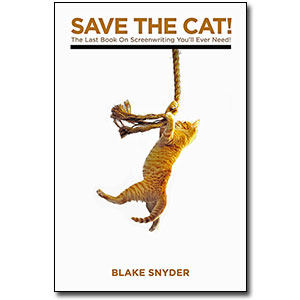
I got this idea from Blake Snyder, a screenwriter who wrote an awesome book on screenwriting advice called Save the Cat.


I created a second board for this screenplay (a super-hero stoner comedy, that’s why I have green post-it notes for the main plot and green ink for the super-hero’s dialogue-lulz) using one of Blake’s ideas from his sequel book Save the Cat Strikes Back, in which Blake notes the value of using different organizational logics in order to stimulate the creative process.


photo 1

(This board’s structural logic is inspired from Snyder’s Chart Called the Conversion Machine)


Moreover, the board’s physical presence really helps me feel connected to my writing. My writing isn’t just an electronic file on my computer anymore, it’s a physical object I spent time and energy creating. And it looks so PRETTY!!! Every part of the writing process becomes a work of art in its own right, filling me with a fresh creative energy to push through writer’s block. So I guess what I’m saying is, don’t underestimate the value of outlining – and also, don’t underestimate your ability to invent creative, artistic ways to innovate on the very nature of the outline – an outline says a lot about your creative sensbilities.