Bear Hands at The Blind Pig

I was very fortunate to make it out to see Bear Hands playing at the Blind Pig last night and I thought they deserved some major credit for the show they put on. I’ve known a couple of their songs for the past three years and I’m really excited to see that they’re beginning to get the recognition they deserve. Their fame was big enough to procure a crowd with a handful of fans singing along, but small enough to leave them packing up their own equipment as they finished their set. I love this about them, the combination of pure talent, but also a really real sense of humility. The only thing better than a band that makes great music is a band that makes great live music. I only knew one song from their set, but I was fully engaged throughout the entirety of their show. They have a noticably unique sound, which mixes traditional guitar/bass/drums with less common instruments such as maracas and what looked like a synthesizer. The band clearly has a great concept of sound because they incorporated backup vocals and instrumentals into the songs in ways that were simultaneously surprising and immensely pleasing. I came away from the night with a vast appreciation for this band and the many up and coming indie bands like them. I also came away with a new favorite song that really pulled it all together for me. The song is called Agora and it gives an excellent glimpse into their talent, down to earth demeanor, and ability to produce engaging and catchy music.

Definitely check out their albums, my personal favorites are linked below:

Agora

What A Drag

Bad Blood

The Multi-Valenced Ann Arbor

I really had no other reason to be at this concert besides who I was sitting next to. He asked and I said yes. Luckily.

I glimpsed (more like studied; the room was silent and there was little else to do besides read since my voice tends to fill most spaces even at their largest) at the program and read, “Schumann: Dichterliebe.” Or I at least read Schumann and had a flashback to curly hair, beautiful professor, Deleuze event, and something about “the Refrain.” Lately, I’ve often forgot how amazing it is to be at the University of Michigan, not because it is amazing

(the Central Student Government silences and oppresses the very students it claims to represent)

but rather because there are a lot of opportunities for class and life and interests to have a real conversation. Namely, there are chances to take what I study and apply it to situations OR I can see what I study “in the real world,” which, as an English and Philosophy student, is sometimes difficult. Tucked behind/beside/near the Aut Bar (some could say a gay bar, family restaurant, or gay studies lab), the Kerrytown Concert Hall is one of the cutest venues I’ve been in and I absolutely love the cozy atmosphere. There is a facade of escape at such concerts, and for me the escape is heightened when the music performed isn’t from this century–it is my form of time travel.

(Since, as I’ve said, campus life is beyond unbearable, and this is coming from a person with almost all agent social identities, i.e., I identify as a white, cis-man, middle class, temporarily able-bodied person . . . . And to see not only the student government act atrociously but also other students stand behind such actions makes me (on the tame side of my emotions) want to never look at this campus again. And then when you pile on my queerness, I’m ready to evacuate immediately and call this campus, more or less, a war zone where a majority of my friends and my community remain unsafe on a daily basis. I would like to travel by any means necessary: time, space.)

As the Schumann started, I realized that I had analyzed (or been in the presence of an analysis of) this very piece’s first movement. For a Deleuze Interest Group event. How did a friend taking me to a concert send me spiralling into the philosophico-musical feels? I don’t know, but it happened.

The song melted away, much like when I oil pull in the morning–it starts of granular? or at least in some conglomeration of solid until it melts into a liquid and congeals in some sort of liquid mass of “detoxification and whitening”–and only solidified, perhaps, when I left the venue, walked away, into my night (a drag show). Chords unfinished continued to haunt me as a queen flashed the audience and I was left agasp not at perfectly sculpted breasts but at Schumann, lurking just behind me, never to be fully seen or taken in.

After a few more songs that helped to fill out the theme of “A Lovers’ Discourse” started, happened, and ended, the pianist/composer/friend-of-my-friend-on-the-left-of-me’s compositions began.

The first. Three Frank O’Hara poems. The second. One Sylvia Plath poem.

Now it is dangerous, as someone who “studies literature,” to attend such events. I have been trained to be a snob, although the training has been undertaken, more often than not, by myself. SO. I obviously have a lot of feels about these two songs.

I think what matters most to me, and to this blog, is not how I felt about the composition itself (which I loved by itself, however, I disliked the tenor singing the lyrics of the poetry since I felt there was a HUGE disconnect between form and content, which could be the point even though I doubt) but how I felt inside of someone’s interpretation of the poetry. Live music is not just something I listen to, but I become the music. It fills my nostrils, it enters my body, and fills, yes, “my soul.”

(My soul aches. I am aching because the Ann Arbor campus, a place I was taught and eventually learned to love in some real way, is parasitic to its most important inhabitants. It is a sad thing for an institution to remain passive when individual, one-off microaggressions happen. It is an unspeakable offense for an institution committed to “social justice and diversity” to enact the very crimes it condemns. The rampant racism, transphobia, ableism, homophobia, sexism is abhorrent. I can only hope the University and its various governing bodies take responses like this one to heart and take responsibility, acknowledge their accountability, and do things (not just say things) to rectify what they’ve done.)

And I hated the interpretation. Though it was refreshing to be in a conversation about poetry without using any words. It was like listening to the most beautiful one-sided debate, and I was the other team refusing to speak.

What is beautiful about this campus may be purely aesthetic. I can study, I can read, I can feel, and then I can go and see things enacted, performed, experimented with by those in or near my community.

Days like today I cling to the aesthetic, sit in my corner, and count the minutes I have left before I can take flight.

I Live For The Applause

Last week I missed my blog post. It was opening night for one of the shows that I am in this semester and all my engineering homework was due, so I used one of my allotted skips for the semester and neglected to post the blog I had begun to write. As I prepared to write this week’s blog I thought that I should acknowledge the fact that I had missed last weeks but couldn’t help but wonder: Did anyone notice? And does anyone care?

Our culture is that of continuous performance. As we sit staring at our screens, we perform for each other debating if a conversational quip is clever enough to merit a Facebook status or a picture is sufficiently filtered to hide imperfection before posting. Breaking 20 “likes” results in repeated behavior while less than five results in hiding the miscalculated post from your timeline. The immediate show of approval or disapproval from a removed audience via technology such as Facebook has brought new meaning to the saying “All the world is a stage”. Previously, only actors could stand up in front of a large group, separated only by the 4th wall, and perform receiving immediate feedback through boisterous applause or deafening silence. Now the internet allows us to present ourselves to the world and receive our applause in the forms of comments, shares and likes.

Being an artist within the performing arts I live for the applause. There is nothing more disheartening than performing to a dead house which never laughs, cries, coughs or claps because you begin to wonder if there is anyone out there who understands what you are trying to say or if you are alone amongst the masses.

Working as a blogger has been like performing to a dead house. There is little to no response to what I write and at first it was depressing because I spend a lot of time and energy attempting to craft meaningful posts. Yet, as I have continued to write I have come to appreciate the difference between performance and physical art. Performance art is about saying something to someone and developing a relationship with them while physical art is about putting something into the world simply because you have something to say. So even if no one is reading my blog the fact that I’m doing it – putting my thoughts out there for the world to see – is enough for me and I can learn to live without the applause.

Honest Beauty at McMurdo Station

Traveling is an experience many people claim to enjoy. Seeing new places, but not through a picture. Tasting new foods, but not through unauthentic imitations. Conversing with new people, but not over the web. These are the fruits of travel, and so many of us desire to indulge in them. Most of these desires are rooted in honest beliefs, for we often think we wish to travel and encounter something new, but to what extent can we really travel? If traveling is moving, then of course we can participate. But if travel is something more than the physical, our minds must be exposed to something foreign, something diverse. But is that what we want?

Diversity is a tenet that the contemporary liberal holds dear. Diversity is the silver-lining to globalization–the homogenization of the world. Rather than preserve culture and embrace the differences among them–as our world claims to do via globalization–we are meshing them into a muddled soup. The individual spices that we once enjoyed collide and form a tasteless muck. When traveling in the modern world, it is becoming increasingly more difficult to taste these individuals spices. But there is comfort in a bland stew, and maybe that’s what we like?

To take America, the world’s melting pot, and search for diversity, it often difficult for us to taste something we have not experienced before. The culmination of cultures in the United States boils away the “impurities”–the unrelated features of the various communities from which it is derived. The once pure land, dotted with unique family-owned motels, has been raped by the corporate sameness of Day’s Inn. It would be an impressive accomplishment to find a motel untouched by the Gideons. But that is not what we seek. For many, the Day’s Inn is warming. We can move great distances but find the same Bible in our bedside table at the end of the day. If we hunger, there will be golden arches before the next horizon. Try as we might, it is difficult to taste a different spice.

What is the traveller to do? Staying within the confines of one’s community does little to suffice the wandering mind. For those wishing to sweat off the spiciness of a new region and have no water to quench the burn, there are few places open for raw exposure–for those places are off the beaten path devoid of the luxurious sameness where we find solace.

There is, however, something honest about these places. Their humility and simplicity. They are stark, unfamiliar. The feelings one can encounter upon visiting places such as this rare. Traveling to Antarctica, for instance, is a wholesome goal for the wanderlust. Within the mountains of snow and ice, isolated in a polar land, lies an uncapitalized beauty. McMurdo Station is buried on the Southern corner of the continent–a utilitarian town. Frigid, disconnected from other civilizations, a flavor of its own. The sharp and unfamiliar cold has no comfort, but this feeling is unique to the region. When there is no quick release from the cold–the spice–we can begin to experience something new. That is traveling.

Shipping out to McMurdo Station

Shipping out to McMurdo Station.

Styles of Certain Filmmakers


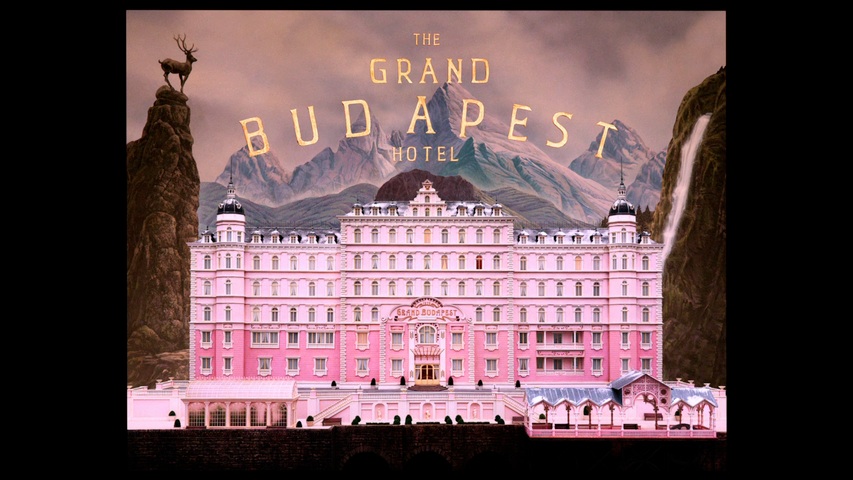
Recently, after having found out that the State Theatre would be playing Wes Anderson’s latest creation, The Grand Budapest Hotel, I have drifted into a train of thought where I almost exclusively, when thinking about film, ponder about the various quirks of a typical Wes Anderson film.

He is certainly a director who has quite successfully developed his own niche in terms of style, very similar to how Woody Allen has created his own stylistic foundation. However, within Wes Anderson’s originality there is of course an amalgam of influences, yet, his ability to shape these influences into his very own creation is by in large where his individuality in the film world lies.

While browsing through www.thisiscolossal.com, a website that I recommend when you want to burn some time while looking at very interesting art, I found a post featuring various supercuts of certain visual styles of certain directors, including Wes Anderson. I found this very interesting so I wanted to share it.

Here are the rest of the videos made by the same person.

http://kogonada.com/

Papier Glacé

Just wanna share with you guys some gorgeous fashion shoots from the exhibition, Papier Glacé (Coming into Fashion: a Century of Photography), at Palais Galliera in Paris.

Papier Glacé, literally means “glossy paper.” The exhibit features fashion photography in Condé Nast magazines over the past century taken by famous photographers of different decades like Henry Clarke, George Platt Lynes, Norman Pakinson, Deborah Turbeville, and Ellen von Urwerth. The exhibit is still on view until May 25th. 

norman parkinson_VoguecoverAug57

Norman Parkinson, Vogue Anglais (Aug. 1957), Cover

george-platt-lynes-vogue-ott-1946-o

George Platt Lynes, Vogue Americain (Oct. 1946), La Danseuse Tamara Toumanova

Henry clarke vogue americain 09:15:1955 anne-st-marie-in-faths-wool-suit-with-collar-scarf-and-cuffs-trimmed-in-beaver-wide-brimmed-hat-also-beaver-photo-by-henry-clarke-vogue-september-1955

Henry Clarke, Vogue Americain (Sep. 1955), Anne Saint Marie

Irving penn vogue americain 10:15:1949 jean patchett

Irving penn, Vogue Americain (1949), Jean Patchett

Betsy Pickering on Wall Street

Jerry Schatzberg, Vogue Americain (Dec. 1958), Betsy Pickering on Wall Street