
Yuriy Norshteyn’s Tale of Tales, 1979

Tale of Tales (Part I)

Like a visual representation of literary nonsense, or Alice in Wonderland tripping on psychedelic mushrooms, Norshteyn’s film appears as purely aesthetic display of randomness. As the reels roll, viewers fall into the transit of a lullaby through time and LP vinyl of a memory skipping through sequences. These 29 minutes are often acclaimed as the ‘greatest animated film of all time,’ despite the numerous modern masterworks created by Pixar and other animators across the globe. This film originates from the Soviet Union and is technically written in Russian, yet, as it bears no visible plot and is stripped of any real dialogue, the potential language barrier is debunked, as it can still be viewed and appreciated by a speaker of any language. Norshteyn’s Tale of Tales offers an insightful glance into the true nature of memory. It is stubbed and fragmented, with splits in logic and sensible thought. It is a series of vignettes, a handful of sounds and images pieced in ways often unknown to us. In this sense, the narration of the story cannot be told chronologically. The events that occur are linked through a shared idea or feeling. Like the little grey wolf bent over a small fire, the film is the painting of patience, waiting out the winter of history.

It can be seen as a visualization of emotions on high during the World War II era on the Eastern Front. Pleasure can be discovered and embraced in mundane tasks of living, as a way of coping with the sadness and overarching gloom of reality that hovered over one’s life during the time of war. Powerful images, such as the male dancers individually evaporating from their women to convey the loss of companionship via war, reach their way into this short animation, taking on the nature of sheer minimalism. The film itself adheres to this simplicity, drawing its strength from the lack of density and higher order. The animations appear to be sketched fluidly and easily, free from a domineering refiner. This stark frugalness gives the film strength, which embodies the essence of the content—drawing strength from the act of living to keep on living. This basic sense capitulates a paramount position in the human condition. It captures a realness that many animations gloss over. It abandons the flashing lights and popping colors of cinema, as they paint over the rough surface of the content, hiding the very flaws and nature of what we are. Modern pictures revolve significantly more around production, which steals attention from the wholesome nature of what truly makes a work—the story. In lieu of a good tale, artfully crafted animation must also follow, as a proper container is necessary to enclose proper insides, but should not enable the container to overpower the content.

Akin to the holiday season, in celebrating Christmas, one may exchange gifts. Beautiful wrappings may surround the gift, but when those are torn off, they are forgotten. The thing that is kept and remembered is the contents of those wrappings. The true beauty of a tale lies in the tale itself. That is the tale of tales, and Norshteyn could not have captured it more beautifully.

Painting the Numbers

In a conversation had earlier this week about the separation of art and business as analogous to that of church and state, I would like to prove my extremely business purist ounterpart wrong. The integration of art and business, and the ability to generate new, creative ideas from the minds of the most avant-garde is not outlandish or even novel. I’m sure that this isn’t even the oldest example, but to pull the focus away from the hipster days of late that emphasize the degradation of large corporations and capitalism, I would like to turn the year back to 1966, during the Experiments in Art and Technology convention (E.A.T.).  EAT “encouraged the collaboration of artists and engineers across the country in interdisciplinary technology-based art projects.”  The project linked two entirely separate spheres of studio art and scientific engineering to meet on common ground and participate in new product innovation. One of the most iconic results of the collaboration was the “Pepsi-Cola Pavillion,” an experimental multimedia theatrical space and interactive environment in Osaka, Japan. Although most notable as a historical form of media art, it clearly exemplifies the possibility for collaboration between the artistic and business world.

Fast forward to 2012 and the evidence of artistic presence integrated into marketing campaigns remains relevant. It’s no doubt that the creative virtues of advertisers are present in every magazine flipped open or cinematography in commercials that make you cry. But even more overtly, Warhol’s iconic Campbell’s soup print was celebrated on the soup cans themselves this fall, with bright colors and a clear homage to the late artist. Warhol was also celebrated in a recent NARS cosmetics campaign, released during Spring 2013 Fashion Week.   Louis Vuitton collaborated with Japanese artist Yayoi Kusama, which inspired the line’s luxury handbag for this season. Kenny Sscharf, a Brooklyn based street artist comparable to the works of Basquiat, collaborated with Kiehl’s to create a line “Crème De Corps” that donates 100% of net profits to children’s charity with a focus on authentic art in children’s medical facilities. While I realize that the majority of the most recent examples come from fashion based companies which inherently have the tenacity to be more accepting of artistic perspectives and integration, I also hope that this is the step toward a greater trend that is to be incorporated into the natural business world. Too often do we disregard the completely valid perspective of those that think with a different set of neurons, and deem them to be either corrupt or an anarchist. Can we find common ground? Long live the banker artist!

The Power of Sound

After reading an interesting article from the BBC on listening vs. hearing, I thought about the supremacy of sound over the power of sight.  In the article, the scientists brought up an amazing point.  It was that we give such a power to visuals, even though when we sleep, our eyes take a break beneath the fleshy shutter of our eyelids.  Meanwhile our ears remain in tune to any iminent sounds of danger of the voices of our loved ones.

And in terms of memory and recall, there is a reason why many romantic couples have ‘a special song’ that immediately sends them to a different place and time, where they vividly remember times past.  There is also a  reason why the two dissonant chords of the Jaws theme produce the a frightening image of a shark, whereas a mere picture of a shark produces an nonplussed exclamation of, “Cool, a shark,”

And when you think about it, sound is so much more subtle and nuanced than vision.  In real life, trees and flowers, cannot crescendo or decrescendo.  They cannot get louder.  You can move closer to a daffodil, but it cannot impose itself on you.

As a writer, to get myself into a certain mood, I will often set my Pandora station according to what mood I would like to evoke.  When writing urban fiction, I find tango fusion to be an excellent, sultry and stealthy set of vibes to get me going.  When writing about Byzantine icons, I find Greek motets to be the right compositions for the job.  And when I’m writing literary theory essays, I find simple solo piano pieces to be the right pace and timbre to get my own fingers steadily going on my keyboard.  Music definitely helps me write.  As it keeps going, I keep going.

But I could never put up a slideshow of images to watch while typing.  Although I love perusing Pinterest for travel inspiration or just to gawk at beautifully composed photographs taken by other travelers, I cannot simultaneously view pictures and write.  Although I draw inspiration from great images, my adoration and inspiration of images must be separate in time from my inspiration in writing.

I guess there is just something so disjointed about images.  Something stuck in time.  Something that stops the second you look away.  But music continues.  It commands your attention and curbs your thoughts to its emotional beck and call.  It builds scenes in your mind that don’t stop, but go on until the final decrescendo.

This post may have arisen because I am currently studying for Art History exams, and my gouge my eyes out if I have to stare at yet another Medieval or Romanesque cathedral tympanum….

Classic vs. Modern: Fairy Tales

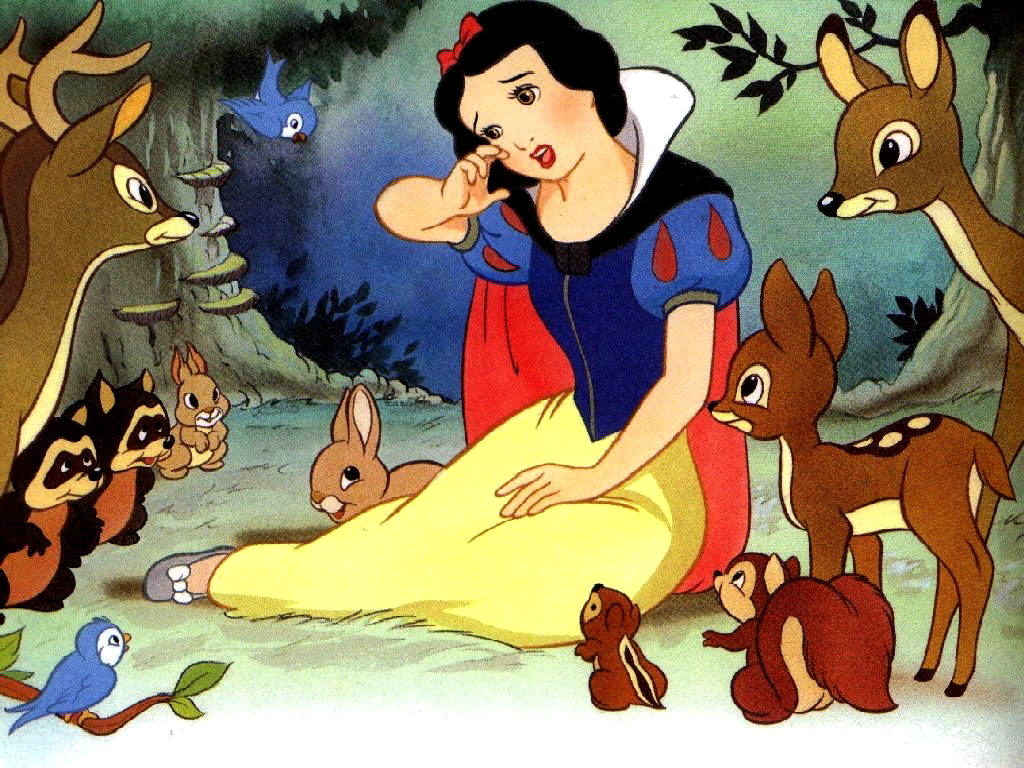
I know my fair share of fairy tale stories thanks to Disney and the countless classics that grace my shelf at home. Cinderella meets her prince charming and lives happily ever after, or Snow White battles the evil queen with her seven dwarfs, ultimately falling in love and living happily ever after. Fairy tales have been around even before Disney took the world by storm with animation and musical classics. Like many folklore origins, fairy tales have been passed down through oral diffusion and reworked to appeal to certain audiences.

The classics that we know so well, Cinderella, Snow White and the Seven Dwarfs, The Little Mermaid, have created a belief in society that what happens in these stories, a beautiful girl going through turmoil and eventually finding love and happiness, is something that we all hope to be true in our lives. The classic films gave a hope for those who wanted something special to believe in, yet they also gave a falsification of reality that modern adaptations have felt compelled to expose.

Once Upon a Time, Shrek, Snow White and the Huntsman, all have reconstructed fairy tales and made the stories we’ve all held dear into modernist takes.

Once Upon a Time follows the story lines of almost every fairy tale character from the classics, and how they are connected to the curse that has fallen upon the main characters. The television show’s take on classic fairy tale stories is inventive and dramatic. The story may twist what exactly happened to each character, but it does so in hopes of finding a greater happiness for all characters.

Movies like Shrek and Snow White and the Huntsman can be considered nods to the classic stories as well. By reinventing the main characters and creating new ones, the stories give the genre something more than just magic and good to believe in. The movies give the fictional characters power, physically and mentally, that helps them fight the evil that will inevitably cross their paths.

These fairy tale adaptations have brought the power that the modern-age has developed when it comes to cinema. No longer is the sweet and innocent story line what captures audiences’ attentions, it has become about the mystery, the intrigue, and the idea of complete failure in order to reach that happily ever after. These adaptations don’t solely rule out the happy ending, but the turmoil that the fictional characters go through is more complex and more hard to overcome.

When you compare the classic tales of magic to the modernist tales of vengeance, you can see the difference decades have made on the idea of the good vs. evil. Movies and television are not wrong in giving such well loved stories new ideas and depth, but there is a clear understanding in what has changed about the beloved fairy tale story. Time. Times have changed and so have the ideologies of what makes a fictional story believable.

From Print to Screen

Stephen Chbosky’s novel The Perks of Being A Wallflower is one of my all time favorite books. Ever since I heard the rumors (circa 2010) that Emma Watson would be taking on the role of Sam, I was tremendously excited to see the film adaptation of the book. A few weeks ago I ventured to the second floor of the State theater (which, in my opinion, is the most suitable movie theater on the planet for this film) and was mesmerized by gorgeous cinematography, attractive people and a familiar storyline. However, despite these stellar qualities, the film does not barely compare to the book. As an epistolary, the novel’s strongest feature is the insight the reader gains into Charlie’s mind and soul. The narrator’s voice is of paramount importance, and although there is a narrator in the movie, it is much less present and has thus has far less of an effect. I remember reading it for the first time and empathizing with Charlie more so than I have with any other character in a book I’ve ever read. His simplicity- his brilliance- lies in his unique cognition. The language of his thoughts characterizes his genuinely warm heart and his profound struggles to make sense of his world. Without this technique, the film loses a considerable amount of impact.

The film did, however, have a few redeeming qualities the book lacks. The cinematography was impeccable; everything from the lighting to the costumes to the scene transitions was the perfect representation of the book. The pacing also frequently changed, allowing us to identify with Charlie’s scattered mindset. There is an amazing scene in which Charlie’s family is at Church on Christmas, and the scene switches from an up close shot of someone putting a communion cracker on his tongue, to an up close shot of two teenagers putting strips of LSD on their tongues. Visual effects such as this are (obviously) impossible to convey in a book, and thus brought the story to new dimensions. I was surprised to see how the setting changed from print to screen. The book never mentions in which city Charlie lives, but in the movie it is abundantly clear the setting is placed in Pittsburgh. Furthermore, the characters are all in the upper-middle class, as evidenced by their large, lavish homes and expensive parties. This fact is not presented in the book. I was also surprised at the way Patrick’s character evolved in the medium switch. In the movie, he is much more flamboyant, hilarious and charismatic than his character in the book.

There were many other smaller details that make me think the book is far superior to the movie. A quintessential characteristic of Charlie’s is how often he cries- it defines his emotional range and adds a unique element to his personality. However, in the movie Charlie only cries once, and it happens to be in one of the most important scenes of the movie. And the list continues. Too much time is spent on Mary Elizabeth. Charlie’s sister never gets pregnant or has an abortion. Charlie does not have his breakdown during his intimate night with Sam. The relationship between Charlie and his aunt is far too underdeveloped. Even more so, Bill is a minor character in the movie while he is a major, major presence in the book. The scene where Bill invites Charlie to his house at the end of the story is one of my favorites, and it does not exist in the film. Overall, while the movie is incredibly pleasing to watch, and is aesthetically wonderful, it lacks the emotional depth and profundity of the original.

Ads

Alright. Hold up. Can we talk about ads for a minute?

As someone who paints, draws, is in the business school, is kind of a socialist, is definitely a feminist, and calls herself a fashionista, advertising provokes contradictory feelings. I want to go into marketing and advertising (maybe) because of the strategy aspect; using imagery and visuals to provoke feelings that will then make you do something (spend yo money) sounds like an intellectual challenge I’m up for. But… is wanting to make people want to buy something moral? It is a form of manipulation and propaganda… right?

Je ne sais pas.

Mais, I have respect for people responsible for the images you see in the media today. Yes, most of them are fucked up for perpetuating stereotypes and causing insecurities but to me, they are still a form of art and extremely beautiful and, sometimes, even genius.

Like Tom Ford. Tom Ford is a goddamn visionary. He is one of the most talented designers ever but due to his lack of connections, he lied, cheated, and clawed his way to the top of the fashion industry. Known for a classic and minimalistic aesthetic, his ads are amongst the most controversial ever. Yet, there is something about them…

Yes, ladies and gentlemen. This is an actual ad. There is a raw beauty to it; somehow, Tom Ford managed to make a woman with a bottle of perfume covering her vagina classy, not vulgar. Yet, it objectifies women and portrays the stereotypical thin, white woman we see all too often in the media. So, what is it about that image that I (and other people) find beautiful? Is it the angle? Is the audacity that went into the conception and creation of this ad? Je ne sais pas.

And Apple. Oh my goodness, Apple. If there ever was a company that epitomized marketing genius, it is Apple. I remember taking a basic marketing class and reading Purple Cow by Seth Godin, the modern bible of marketing. Apple popped up more times than any company and was used as an example for… well, every good marketing strategy. Remember the ad below? And all those just like it? How could anyone forget?

Goodness gracious, the glorious minimalism of it. The sheer genius of not having that much text on a poster. <3

And Coca-Cola invented Santa Claus. Let that sink in. A company created the phenomenon modern Christmas is centered around through a marketing strategy and compelling and artistic visuals.

The art used in advertising… I’m not sure if I’m impressed or repulsed. It’s beautiful. But what purpose does it serve?