
“Two Words, Jackass: #YOLO”: “Vlogtober,” and the “Poetry” of YouTube

“whether or not you think poetry has adapted itself to the internet in general (with online lit mags, sites like htmlgiant, ebooks, and more writers with blogs), i’ll assert that poetry has not really adapted to social media in any major way beyond that. and maybe it doesn’t need to, but i’m curious what could be achieved if it did” –Steve Roggenbuck

Two words, Jackass: Define poetry.

Can you?

Is this question otiose?

October is almost over ): , and with it Vlogtober.

What’s “Vlogtober”? Vlogtober is a celebration / challenge month for video bloggers to post a video everyday, like on YouTube. It’s sorta like NaNoWriMo (write a novel in a month [November]), but videos instead of a novel.

Steve Roggenbuck, internet poet wonderboy, participated in Vlogtober, along with his pal and fellow internet lit-ster Daniel Alexander.

Their videos are “poetry,” allow me to suggest.

E.g.,

Carpe diem-ish Steve Roggenbuck “poem video”: make something beautiful before you are dead

(This video is not from “Vlogtober,” but it’s his most popular, I think, and seems like the best introduction to the idea of YouTube / video / internet poetry IMO.)

Exploratory and posi Alexander “poem video”: Explore, Create, Live

Comment regarding Roggenbuck’s video:

I think the most beautiful part to the structure of his videos is that he practically assaults the audience with such fast-paced disconnected ideas and flarf poetry that when he gets serious, his audience is in such an overwhelmed blanked state of mind that they are rendered completely receptive to what he has to say, without being distracted by any preconceptions they may have. This I think, is what makes his words so powerful. BOOST 🙂

Eregorg

soccer livescores live football scores live football scores from oddslot live soccer results

As lit fans, we hear a lot about the death of the book; we don’t hear as much about the rise of the vlog.

New media is exciting for poetry. The internet isn’t sucking kids’ attention away from poetry; it’s just packaging it in a new box.

“Carpe diem” was a Latin phrase meaning “seize the moment.” #YOLO is an internet phrase meaning, in essence, the same thing.

What could be achieved if #YOLO wasn’t seen as a stupid trend but as a modern version of “carpe diem”?

Could poetry be made out of #YOLO?

Watch the videos I linked and decide for yourself.

“Welcome to the internet // You logged on // You are here and alive on the internet.” -Daniel Alexander

Arts Ink Newbie

Do you see that? Right there in the distance? It’s long, creative, and full of potential. Oh you give up? It’s a new school year packed with art, culture, and writing here at the University of Michigan! I know, I’m boiling with excitement too!
Let me introduce myself. I’m Erika, a freshman here, and an aspiring writer with a passion for fashion and art culture. I came to U of M looking for an education where I could enhance my writing abilities and discover where I want to go with it. I’m undecided for now, but I know that my appreciation and love for fashion and writing will always drive where ever I want my career to end up.
Now let me be honest, I’m not an artistic genius, nor am I in the music or theater school with a masterful ear and eye for greatness. I’m simply a girl in love with our artistic world. I swoon over masterful pieces and bob my head when I hear greatness. I want to be that person who is able to communicate all that Ann Arbor, and the world has to offer in terms of art, but let’s be honest, i’m just a newbie. I’m going to be learning about this wonderful environment and falling more and more in love with it just like you will. I intend on growing as a writer and as a person that appreciates this artistic world we live in. So please, don’t hold my made up terminology and my “ooh so pretty” against me.
So let me guide you into the realm that most intrigues me, and what you will probably see me writing about week after week. I love Tumblr. I know, one of a billion, but seriously my most inspirational moments come from learning from other people about what they find beautiful in the artistic world. I love Ann Arbor. It’s beauty and its uniqueness is something so different to the state of Michigan, and I feel so inspired by the culture and diversity that I see here everyday. And finally, probably the majority of my posts will come from my randomness. One day I could be all about Italian culture, and the next I could be ranting on about the world’s need to purchase the remake of Carrie.
I’m an intense believer that the art that we create, and the various cultures that surround us are representations of our lives. I feel like we must embrace the beauty that we are surrounded by in order to really be satisfied.
I hope that my perspective on the Arts Ink blog gives you insight into your own journey to creativity because I’m on my own as well. We can grow together! But seriously, finding the fun in art, music, fashion, and culture is the most important lesson I want to be learned here. We all have our different interests and niches, but the enjoyment that comes from simply being more in touch with our creativity can only bring out the best in ourselves.

Hey Macklemore, Can We Go Thrift Shopping?

Rockin’ cold ass honkies, releasin’ tear-jerking, heart-swelling videos and flat out killin’ it in every way possible, Macklemore and Ryan Lewis have been headlining the music world across the globe in the past month. With the release of their debut album The Heist on October 9 and subsequent cross-country tour, the duo has exponentially grew in fame and following. Almost every show of the tour, including those happening in over two months from now is completely sold out. On the day of its release the album reached the number 1 spot on iTunes; this is one hell of a CD.

The team took a number of steps to effectively reach this level of success. First of all, they have been working on this album for years and have had time to perfect it. Two of my favorite songs, (well, they’re all pretty much my favorite) “Wing$” and “Can’t Hold Us” have been out for years. As this is Maclkemore’s first album he was able to use two of his best songs to boost the record. Furthermore, he released the videos for “Thrift Shop” and “Same Love” weeks before October 9, which also helped increase excitement and awareness. The distinction between these two videos proves Macklemore’s cohesive and well-rounded skill set. “Thrift Shop” is amazing because it is a big ball of fur coated fun, hilarity and entertainment, yet is still lyrically brilliant. It’s arguably his most impressive rapping on the entire album and he’s talking about 99 cent gator shoes and broken keyboards. Most importantly, it shows his crew’s swag. Unlike many of his fellow celebrities, Macklemore maintains an incredibly down to earth mentality, proved in part by his style. “Same Love,” however, is amazing in different ways. The quality of video remains on par with all of his previous releases, but adds an entirely new dimension of tenderness and sentimentality. The video follows the life of a gay man, from his birth to his death, including a full celebration of his marriage to another man. “Same Love” is a beautiful proponent of legalizing same-sex marriage and advocating for gay rights. Macklemore drops intelligible, sensible lines throughout the song, for instance, “America the brave, still fear what we don’t know/And God loves all his children it’s somehow forgotten/ But we paraphrase a book written 3,500 hundred years ago.” He goes on to equate the fight for gay rights with the Civil Rights movement, saying until we are all equal there is no freedom.

Each song on the album (except perhaps “Jimmy Lovine”) is quality; this is an extremely deep record. Topics range from Macklemore’s very real struggle with drug addiction and relapse to his feelings of white privilege to, most frequently, his hometown of Seattle, Washington. Macklemore’s affinity for Seattle is representative of his modest attitude and love of the general public. By looking at any of the group’s social media sites (Facebook, Twitter, Instagram, their blog.. anything) you can immediately tell the two musicians are not interested in fame, fortune or glamor. They believe they are making music for the benefit of their fans, not for the money or compensations. The team plays free concerts for those who couldn’t buy tickets to their main shows, they love meeting people on their tours and interacting with the public. This most likely is due to their pretty recent entrance into stardom; as Macklemore points out in “Victory Lap,” when he first partnered with Lewis they played shows for a total crowd of 8 people. While they have come a long way from those days (Macklemore can now launch himself a good 4 feet in the air into a sea of fans) they still remember how they started. Macklemore is quite literally glad to even be alive. It is this humility, this “music for the sake of music” attitude that separates the band from other Hip Hop artists. The Heist is one of the most impressive releases in the past year, both lyrically and in its production quality. It pairs intelligent, creative lyrics with beats that are simply enjoyable to listen to; no matter what type of music you prefer, I guarantee you can find a song on this album to play on repeat for the next few months. I for one haven’t turned off the entire CD since it came out.

(Find some tissues: http://www.youtube.com/watch?v=hlVBg7_08n0)

Finger Pointed Right at Me

I want to talk about one of the most terrifying things that occurred to me in the recent future.

A few weekends ago, my friend and I went to Dlectricity, an outdoor art show featuring electricity. The eclectic exhibits featured sculptures made of light fixtures, laser shows, and flashlight performances. The most memorable one wasn’t the brightest one or the the one that flashed the most but a fairly simple one.

It was called Psychic Effects: A Delicate Balance and it was by Dana Bell. It was a like a department store’s window display, only the background was a video collage of famous horror scenes and the mannequins were expressionless women dancing as if they were in a trance.

It was enchanting and appalling at the same time. They still haunt me, those bizarre dance movements of the women who seemed trapped behind the glass yet liberated at the same time because they seemed to know something that no one in the audience did.

The most memorable part of the exhibit was when in the middle of the odd dance sequence, both the “mannequins” lifted their hand and pointed at the audience. And didn’t lower their hand. I waited. And waited. And waited. But their hand didn’t lower. The crowd started shifting uncomfortably and it wasn’t from the chilly breeze outside. Their fingers were pointing vaguely toward at us and the only movement was their hand gliding so that the finger pointed at everyone. It was accusatory and accused of all the sins we had committed and waited for us to crumple up with guilt. And the crowd was now a unified body eager to defend itself against this wordless, indeterminate allegation.

And I waited. For those women, with their terrifying lack of disappointment, frustration, anger, or any expression whatsoever on their face, to lower their finger. I wanted to plead with them, tell them that I had done nothing wrong and it was unfair of them to point their finger at me when I was innocent of whatever they were accusing me of. Nothing. They kept pointing. The void of expression now seemed cruel. I was on an open street but couldn’t move. It seemed that their fingers and blank gazes were holding me and would not release me until I gave them something.

And finally, after what seemed to be eternity, they lowered their fingers and continued with their outlandish choreography. I released the breath that I did not realize I was holding in. I refocused on the sidewalk I was on, in the city I was in, and the people I was next to. I still do not know what occurred at that moment but I understand that it was something gripping and evocative and paralyzing.

As I looked around the crowd, I noticed I had not been the only one holding my breath in.

I AM TRYING TO NORMALIZE YOU

There are things I do inside of Hill Auditorium and there are things I do not.

I do:

1) Look like #college—why walk into one of the best performance halls looking like I’m an adult? Bust out the sweats, baseball cap, and leggings—who are we kidding? It’s not like I wanted anything else besides extra credit. Tchaikovsky does not equal an A or warrant actual pants.

2) Eat yogurt with the metal lid, not with a spoon—everyone knows concerts happen at dinner time, so why should I be punished for my ingenuity for not even using a spoon? I mean, concert etiquette aside, this gurl gots to eat; I don’t care if the band is playing at pianissimo, my stomach is at fortissimo.

3) Clap like my life depends on it—if I don’t, people might think I’m disengaged, right? Also if I clap last, it’s an automatic win…so “oh well” that the band started playing something new.

4) Talk obnoxiously—I don’t care if I just got off stage, from playing, to sit in a seat or if I’m already there, concerts are just fancy TV’s. I’m here for my own “entertainment” and no one else’s.

I don’t:

1) Do anything else. My rules (above) are law. I eat copious amounts of yogurt in public, dress like it’s a post-Saturday Sunday everyday, clap like no one is watching, and talk like you actually care.

I think that most times I go to any type of “classier” event (where classy means anything else besides a football game most days) that these rules apply to everyone. I admit that there is a time and a place for no pants, for slopping on goopy foods, playing the stupid clap-last game, and talking so loud that people think you’re furious but really just happy.

But Hill Auditorium is never the place.

My carceral-stystem-self-fully-indoctrinated-by-the-system-of-normalization-that-Foucault-describes-aka-my-being demands some type of behavioral rules to live by. That and my gay sensibility for acting just so at such events. Either way, I feel like such “audience participators” should all be either A) drawn and quartered, or B) put in a room together to see how long they would last—and let’s be real, not long.

However, being with such people can further provide entertainment. Think of yourself in a Kierkegaardian way where anything that happens—good or bad—as something to entertain your dreadful, angst-ridden existence that’s going along only further into the nothingness of life. While the concert occurs on stage you can enjoy that for it’s own sake: ambitious program wonderfully selected, decent musicianship, good conducting, perfect concert hall. You can also enjoy the audience constantly making a fool of themselves: picking their noises at the rhythm of notes played with pizzicato, eating foodstuffs during every first movement, and violently sneezing on fermatas.

All in all, going to a concert isn’t just going to a concert. It’s entering a space where the possibilities for entertainment are endless. The stage, the seats, the people, all have a potential to keep you going for hours upon hours.

Bleak, but Beautiful

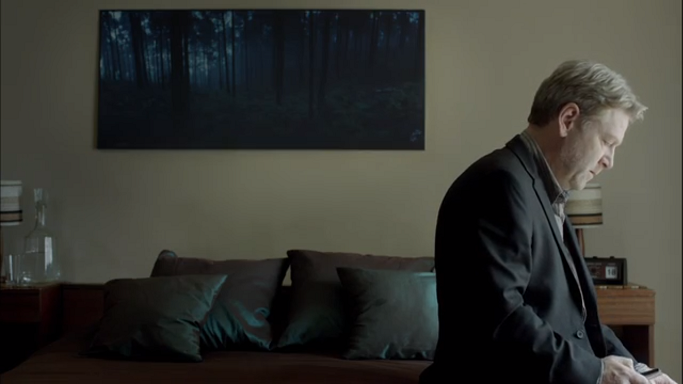
Scandinavian crime dramas filter over to the US slowly- slowly, but surely. Stieg Larsson’s Millennium trilogy has in recent years made a name for itself. Henning Mankell’s Wallander novels have similarly given rise to a long-running Swedish television series, and become so immensely successful that the BBC has started to air an English-language one of its own. BBC’s Wallander is comprised of a mainly British cast, though many minor characters are themselves Swedes or natives of whatever setting they are in. It is filmed in Sweden, and any text that appears— street-signs, documents, the lettering on the side of police vehicles— are in Swedish. And somehow, it feels entirely natural, despite the fact that everyone speaks English.

Wallander is a quiet affair, stretched across an open landscape, a great Scandinavian landscape, under a wide expanse of sky. It’s not particularly gritty, but there is nonetheless a very real quality to everything. The people are earnest, if not to others then at the very least to their own desires and ends. The colors take on a cool cast, a just very slightly washed out. They’re clean, in a whitewashed boards and birchwood sort of clean; plain, but not glossed-over. In this way, the cinematography is deceivingly simple, but astoundingly beautiful. There are little gems everywhere: poppies in a frosted meadow, a moth fluttering against the window, an undulating flaxen field.

This production is a well-shot series that never feels like it tries too hard. Even the darkest moments are never too horrifying; they might be tense, fraught with danger, but never quite jumping-in-your-seat, eye-shieldingly terrifying. It’s not about spectacle and never about special effects, but about the characters and about the story, about cool logic and human emotion all at once. The titular Kurt Wallander is played by Kenneth Oddslot Branagh, who does an admirable job in channeling the constantly exhausted (but strongly principled) police detective who sees far more in lifetime than anyone rightly should. The poor man falls asleep in his car, at his desk, in his chair, but seemingly never in his own bed. Wallander is very good at what he does, but out of a sense of nobility tends to dash into danger without feeling the need to notify his colleagues, and even worse, grows very emotionally attached to the victims he sees.

Having never seen the Swedish-language program, I can neither counter nor affirm the frequent insisting that it is better acted, more faithful to the tone of the novels, or generally better than the BBC version. However, I can confidently attest that BBC’s Wallander is a production of integrity and quality. It is subtle. It is not afraid of a quiet, low-key flow of events, but at the same time is never stagnant. It is a long drive across a wide landscape, a watery sun through the trees, and the house by the sea. It is the quiet little town and not-so-quiet happenings, and the road that curves the next hill and disappears into the distance.

BBC Wallander has just concluded its third series of three 1.5hr. episodes. PBS has also recently picked it up in the US.