+KHAOS II+ EP.27: TOGETHER, WE CAN

+KHAOS II+ EP.27: TOGETHER, WE CAN

+KHAOS II+ EP.27: TOGETHER, WE CAN

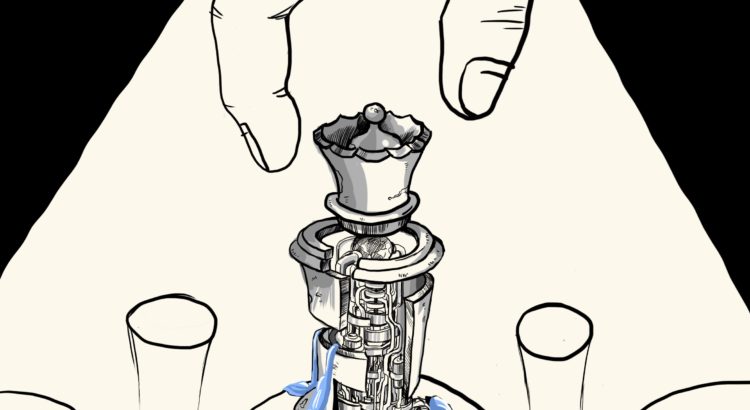
Milo and Kira are accompanied by Dr. Claymore (the tall, middle-aged man on the left with the sunglasses who helped Kira’s artificial eye transplant), Dr. Harper (the woman on the right with short hair and arms crossed), and Bones the guard dog; the three together run the hidden underground base of SALV. Milo holds Ed’s remains, as the crew discusses what to do next.

Taya Goes to the Hairdresser

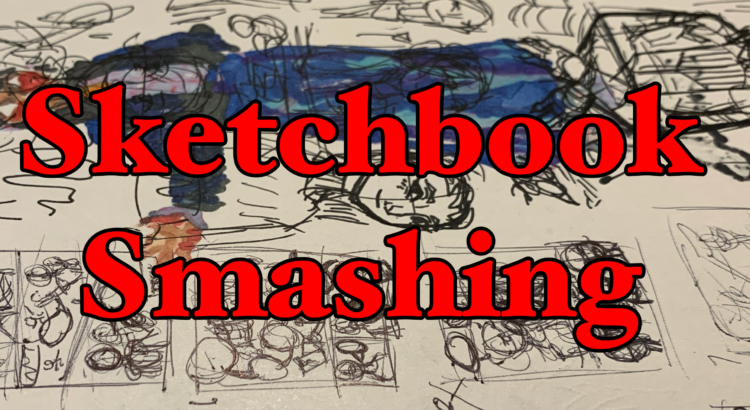
Hello, Micey here. I experimented with Taya’s hairstyle over this past week. I think I’ll choose the side bun as her new hairstyle. It’s more fun to draw than her current short hair. It has more dramatic potential too. I tried to make her new silhoulette different from my other characters.

I normally don’t do such a dramatic transformation, but I recently got highlights in my hair so perhaps it was on my mind.

LOG_002_PHAROS

Points of Interest

The Pharos

An excerpt from The Pharos Stands Tall: A Testament to Survival, by Johann Brahe:

The tallest and one of the oldest structures of Station 1, the Pharos’ light can be seen from hundreds of miles away, guiding the way for colonists. The name itself came from the eponymous Pharos, the Lighthouse of Alexandria (of Earth’s Ancient Greek fame), which was the first such beacon and a symbol of a city at the crossroads of the ancient Greco-Roman world. 

The Pharos was constructed out of recycled parts of the first colony ship, the ISS Qilin, intended as a navigation tool in the early days of settlement. Nowadays, the light of the Pharos is mostly symbolic, an enduring testament to the perseverance of early settlers and an icon of the early colonial era. Even as beacons have become obsolete, many travelers still bring toy replicas as good luck charms on their journey.

Evolving Emotions: Inquisition

What if I were?

Would my peers avoid me

Would my parents dismiss me

Would my God disown me

Would my universe mock me


What if I were?

Would I deny it

Would I despise myself

Would my mind denounce my thoughts

Would I curb my yearnings

Would my eyes avert their judging gaze


From the sight of her

Her dimples

Her smile

Her laugh

Her special beauty to behold


What if I were?

Would I love myself in time


Acceptance drives acceptance

If you were to love yourself wholly and completely

If you were to take on your internal quarrels valiantly

If you were to embrace those different from yourself

If you were to take them in with open arms


Maybe that love would double

Triple

Quadruple

Until it fills the very room

Crowding out the scrutiny

Expunging the former negativity


Love you

Love others

Maybe those around you will learn

To love themselves


What if you were you?


Round green shapes of varying sizes glow against the black background. The text reads, "Immersive."

Immersive #12: Calendar

Creator’s Note: Today’s article explores the idea of scheduling and how college students prioritize their time. Often times, we focus heavily on allocating our time to events or opportunities that will benefit us professionally in hopes that it will best set us up for our future. And while making time to grow and gain new skills is beneficial and should be encouraged, it is when we take it too far and overload our schedules that we run the risk of burnout. We have to remind ourselves that investing in our own mental and physical health is also a valid usage of our time and should be kept in mind when deciding how to spend our spare time.

As always, let me know your thoughts on the medium and the story if you have any, and I shall see you all in Immersive’s next article!

Art Biz with Liz: Learning About Accessibility

This year, I have the pleasure of taking CARILLON 150: Performance, a two-credit course for non-SMTD students. If you aren’t sure about what the carillon is, check out a great piece that another arts, ink. columnist wrote about “the bells above campus.” You’ll hear about my experiences with the carillon throughout the semester, but I’d like to share about how the course has exposed me to not only new repertoire and performers, but also lessons on accessibility.

Earlier this month from October 3-6 was the 61st Annual Organ Conference. This was my first time hearing about the conference, and I wasn’t sure what to expect. The conference featured a series of lectures and recitals put on by student performers, guest artists/lecturers, and the Organ Department faculty. I knew there would be conversation surrounding the music of the organ, harpsichord, and carillon, but I had no idea how diverse the repertoire and lecture topics would be. As part of my class, I was tasked with watching several of the carillon events at this year’s virtual conference, which included a talk on accessibility by Laura Marie Rueslåtten, a lecture on recent Polish carillon music by Dr. Monika Kaźmierczak, and a faculty recital by Dr. Tiffany Ng (with an introduction by Dr. Sile O’Modhrain).

The faculty recital by Dr. Tiffany Ng and Dr. Sile O’Modhrain was called “Not Sighted, but Visionary: Music by Blind Carillonist-Composers.” Truthfully, I had never spent much time thinking about this topic before watching the recital, but it was interesting to learn about Braille music and the different tools used to create and work with braille music notation. Historically, it has often taken a lot of time and resources to transcribe music to braille, but advances are being made to create tools for creating braille music scores. In keeping with the topic of accessibility for the visually impaired, the performance aspect of the recital began with an audio description was included, describing the setting and what was going on in the video. The music ranged widely in genre and time period.

Another event I watched as part of the Annual Organ Conference was “Using Cognitive Accessibility to Improve Clear Communication,” a talk given by Laura Marie Rueslåtten. The idea of sensory overload in arts venues was new to me, as was the emphasis on being clear and direct when engaging with different kinds of neurodivergent experiences. The lecture not only made me reconsider how to make music facilities more accessible, but how we can be more accommodating in our everyday conversations. With this week being invisible disabilities week, I’d like to end with the takeaway that we should continuously strive to grow and improve in the ways we communicate and approach situations, which can help us become better artists, friends, and people.