Meet the Indian Artist

To be completely honest, I have never been much of a writer. Sure I dabbled in my fair share of started diaries that would get tossed aside mere days later, the odd poem here or there, or even small soliloquies, detailing my intensely foreboding thoughts. School essays and papers? Simple. Right up my alley. But deciding to apply for a position as a blogger for arts, ink? Never something that I would have done on a whim.

Instead of writing, I express myself through my artwork. From a very young age, my art was where I found my solace, my home, and my cathartic release. I grew up scouring over the work of my favorite artists, trying to replicate them detail by detail. I got my start through observation and replication. As time has passed, I have found my own style, using mixed media to portray my Indian culture and tradition. Through my art, I demonstrate the most elemental parts of me, the parts that I wish to share with people, and the parts that I keep completely to myself. This blog is something that I wish to use as an avenue for sharing my past and current work. I hope to be able to open up conversations about diversity and equity, culture and worldly perspectives, and even mental health and racial disparities. 

So to all, welcome to my column: The Indian Artist!

A little about myself. My name is Riya Aggarwal. I am currently a freshman in LSA Honors majoring in Molecular, Cellular, and Developmental Biology with a minor in Art & Design. Amongst all of the crazy that 2020 has been, I am learning remotely for this semester. I hope that through this column, I can immerse myself in the arts on campus and find other students who share the same passion, learning about their experiences as well. Art is a powerful force. Being a conceptual artist, I am very attracted to the way that different people can take away different messages from a piece of artwork, the fact that a single painting can speak to so many people in many ways.

The goal of my column is to have a place to open up conversations about different cultures and religions. I plan to write about specific aspects of Indian life that I portray through my art. Each Sunday, I will feature an art piece that demonstrates my experiences growing up in a strict Indian family, simple technical pieces, or videos detailing other cultural aspects. Much of the artwork I will write about has a cultural background and demonstrates Indian traditions, explaining it in detail and showing the intricacies of another culture. These posts will not be limited to conventional forms of artwork such as drawing and painting. Being a henna artist, some weeks will showcase original henna designs and video lessons on how some of the designs can be replicated. These step-by-step videos and demonstrations would hopefully spread an appreciation for the art of mehndi. In order to keep a worldly perspective for this column, I will dive into the work of other artists as well, how they use their art to portray deeply rooted traditions and their own unique cultures. Maybe I’ll even throw in a bit of dance and singing just to shake it up a bit. 

I think that I have said enough. I am truly excited to get this column started and to share my love for art with all of you! If there is ever anything specific that I mention in a post or any questions regarding the topics that I discuss, please feel free to leave a comment!

Looking forward to next Sunday!


~ Riya


Personal website:   https://riyarts.weebly.com/
poco piano: ears, instinct, and emotion

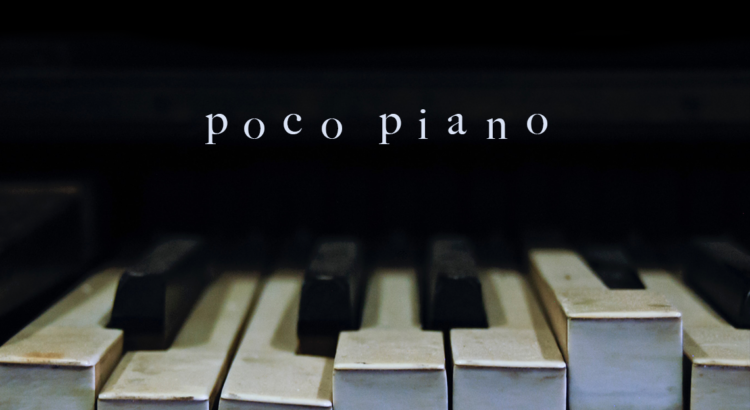
This week I rehearsed with my accompanist. She’s playing the orchestra part and I’m playing the soloist part. This little excerpt is from our first rehearsal so it’s just a little messy… but it’s a work in progress and what’s most important is to keep striving! (I think the vibrations from the pianos and my stomping caused the camera to quake a bit, sorry!)

This is from the first movement of Rachmaninoff Piano Concerto no. 2, just a few pages before the recapitulation (the reappearance of the majestic melody of the first theme).

This is one of my favorite parts to play because of the sweeping motions and the action! There’s real dialogue between the orchestra and the soloist, we play off of each other and there’s really no greater feeling. It’s really a whirlwind of action here and to play it means to really empty your mind and let your ears, instinct, and emotion take control.

Looking Forward: Meet the Writer

Hello arts, ink readers!

Welcome to my new column here on arts, ink.: Looking Forward. My name is Lucy. I’m excited to get started on my journey as a writer in this space, but first, let me introduce myself. 

I’m a senior in LSA majoring in Communication & Media Studies with a double minor in Performing Arts Management and Writing. That’s a really long-winded way of saying that this blog is right up my alley; I’m really passionate about connecting students with the arts on campus. The talent and resources we have access to while we’re at Michigan are incredible, and I encourage everyone to take full advantage of them during your time here.
I’m currently the co-president of MUSIC Matters, a non-profit student organization that aims to use the unifying power of music to drive social impact in the community. Through our capstone event SpringFest, as well as our programming throughout the year, I’ve been able to see the breadth of work that students on campus are doing in the arts and I hope to help showcase that in this column. I’ve also worked as a Program Assistant for Arts Ambassadors through Arts at Michigan, where I got to learn 

more about the campus resources that are available to students wanting to engage in the arts. 

My professional interests lie in the intersection of arts and community, with special emphasis on diversity and accessibility. I’ve seen how the arts can bring people together, it’s a powerful force. By allowing us to see others’ forms of expression, art encourages us to engage in empathy, which the world could use more of right now. I’m excited to continue advocating for the arts and the connections it can forge throughout my career, wherever it may take me.  

Enough about me, I’m sure you’re curious about what this column is. The goal of Looking Forward is to engage in conversations with arts groups and resources on campus. Every Friday I’ll be spotlighting one, exploring the strategies that they’re implementing to continue their programs and engage with the community during this complex public health, social, and political time. I also want to provide a space where students can access information about how to engage with these arts platforms, whether by participating or viewing since it can feel very decentralized at the moment. Hopefully, you’ll find this column to be a place where you can discover arts resources, reconnect with old favorites, or just learn more about the arts scene on U-M’s campus right now. 

I’m excited to get started. If you have any questions or requests for groups or resources to spotlight, please feel free to leave a comment!

See you next week!

Lucy

Art Biz with Liz: Recycled Art and Letters

Last Thursday, I attended a “recycled letter crafting event” hosted by the Residential College’s Letters Forum and Eco Forum. What are forums? RC forums are student-initiated and student-run discussion groups that focus on a variety of subjects. The Eco Forum presents a space where students can discuss issues concerning the environment and how people relate to it, looking at topics such as sustainability, climate change, and more. Letter Forum, on the other hand, focuses on the art of letter writing, allowing students to discuss the history of letter writing, create mail, and connect with people around campus and the world as penpals. The two forums came together to combine their interests and create a fun event for RC students.

For the event, attendees created envelopes and recycled art from a variety of materials gathered prior to the Zoom meeting. After an introduction to the two forums and ideas for possible crafts to make, everyone in the Zoom meeting set forth on their own projects. After about twenty minutes or so, we regrouped and showed one another what we had worked on. People made all kinds of crafts, including wreaths made from leaves, envelopes constructed from scratch paper, and bookmarks composed of old sheet music.

Using a paper grocery bag, I made an envelope and a maple leaf craft. A slideshow presentation in the Zoom meeting showed instructions to make the envelope, and I followed a video online to create the maple leaf. For both projects, I cut squares out of the bag and folded them into various shapes. I wouldn’t quite call it origami, the art of paper folding, since I used scissors and a glue stick; however, these tools were the only things besides the brown paper bag that were needed to make the crafts.

Autumn is my favorite season, and students often host special events during it. While some of the typical campus events have been limited due to the pandemic, the Zoom event was an example of creativity that students exhibit in continuing to plan events and connect to one another. The event was perfect for fall, too; colorful leaves presented a unique medium for crafts, while the season itself served as inspiration for other art. I made a folded maple leaf, for example, because of my fascination with the change that takes place during autumn. I photographed it against the hues of yellows and reds on campus for this blog post.

Note: These pictures were taken outside of East Quad and the MLB prior to the issuing of the two-week stay-at-home order by Washtenaw County.

Artist Spotlight: Maria Medem’s Tranquil Scenes for Hectic Times

Not much is known about Maria Medem’s life, but the Spanish illustrator has been making waves on social media for her simple but charming illustrations. Medem’s atmospheric compositions boast textured gradients, thin lines, and humorous characters engaging in ordinary acts. Kiblind Store describes her art style as “opening worlds… creative space-time: alternate realities where the procrastination of the soul becomes landscapes.” With minimal shadows and colors, the artist effectively transforms the image into a peaceful universe that recalls Japanese woodblock prints. Medem has stated that some of her inspirations are Moebius, Hokusai, Utamaro, Ikko Tanaka, and Cody Cobb among many others.

Medem’s book, Echoes, published in 2019, features beautiful prints that connect intriguing stories and realities. The main character is water itself, as the consistent theme that permeates the book’s pages, meant to be read as both single-page comics and an interconnected work of art. Some other recent publications include Cenit and Satori among a number of zines. But the Seville-based illustrator may be most known for her editorial illustrations, particularly those commissioned for The New York Times and AIGA. Although the subject matter of the illustrations may be sometimes strange or dark, Medem carries the ability to make any scene alluring and calm with the simple tools of ink and Photoshop.

Overall, Maria Medem’s contemplative illustrations call attention to the mundane and finding beauty everywhere. With a simple but bright color palette, Medem’s art boasts the power to capture the viewer’s full attention and forget about the external world. Perhaps that is the best way to view such illustrations, to allow oneself to be in the present moment.


Illustration for AIGA Eye on Design


Poster for the II Festival de Poesía Joven de Alcalá de Henares


The New York Times “At Home” Illustration


Untitled, Instagram


Untitled, Instagram

Everyday Artists at Umich: Julia Khater

Part of Julia Khater’s photo series on eurocentric beauty standards

“I’ve always really liked creating things and doing all different types of art. I didn’t know anything about photography until this summer. I was thinking of taking a class in it, so I talked to my grandfather, and he’s just one of those people who’s had a million different jobs . . . he used to be a professional postcard photographer, so he was super into the idea. 

I know I’ve had a lot of ideas for projects and concepts for shoots, but I guess my brain is still pre-COVID, even though I’m talking about photography, which I learned during COVID. There are things that I just can’t do right now, because I want multiple people and I want to be safe, of course. It just gets to the point where production value is so low that I’m just going to have to postpone it . . . without people, I can’t always convey the message I want to, but I can find creative ways to edit my images and add elements of other photos. 

I’m just finishing a project for class and I’m so happy with my current prints. I’m half-Arab, half-white, and [I’ve been] more fortunate than a lot of non-white people, but I don’t fit that eurocentric beauty standard at all, and I just think those standards are stupid. 

Throughout childhood, when you’re growing up in a majority-white area, and you feel like there’s something wrong with you, those eurocentric beauty standards are kind-of ever-present in your mind, so these photos are visualizing and representing the effect those standards have on people of color. 

I draw a lot of my art from my passions, and right now anger and frustration are really present. A lot of this frustration comes from places where it has to do with race and ethnicity. A lot of people, if an issue doesn’t apply to you, it’s easy to brush off. I’m guilty of it too, [but] when it concerns [my identity], it doesn’t ever go away when you close the app. It’s there. It’s in my thoughts constantly. Identity amplifies my passions and emotions for those topics, and it directs them as well.

Is there anything else I’d like to say? Black lives matter. Free Palestine. Screw eurocentric beauty standards.”


Julia Khater is a sophomore in the RC, currently enrolled in RC Photography I. You can view more of her photography on her Instagram: @julia_khater_