Salvador Dali

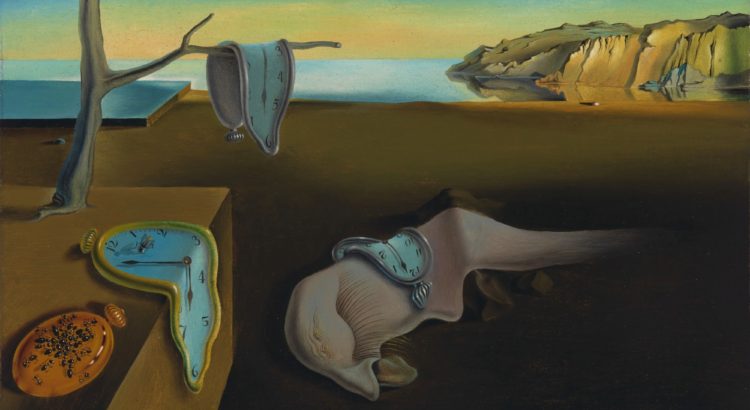
I recently finished Dali the Paintings, an amazing collection of Salvador Dali’s works accompanied by commentary and an interesting account of his life by Robert Descharnes and Gilles Neret. I’ve written about my particular interest in surreal art before, and Salvador Dali was one of the most influential leaders of the movement; as he said himself, “the only difference between me and the Surrealists is that I am a surrealist”. He was well known in popular culture for being eccentric and arrogant, and many of his works are iconic today. In reading through his biography, I was surprised by how much depth there was to him as a person, and how much his personality and art style changed throughout his life. I definitely recommend reading Dali the Paintings if you have the time, even if you aren’t typically interested in art history; the story itself is stranger than fiction. However, instead of reviewing his life, I thought I would highlight some of the most interesting paintings, provide some context, and explain why I find them so fascinating.

Atavistic Ruins after the Rain, 1934 by Salvador Dali
Atavistic Ruins after the Rain, 1934

One of the first paintings I ever saw by Salvador Dali was Atavistic Ruins after the Rain, and it is easily one of the most memorable. I was struck by how different it was from the fine art that I was used to; it was strange and other-wordly, with a feeling of gravity and oppression that was completely unusual. After learning more about surrealism and Dali, I realized that I enjoyed the ominous and unexplainable atmosphere of surrealism just as much as the amazing technical mastery. Most of my favorite works by Dali were made around this time, when he was 30 and leaving his group of surrealists for popularity in America. I find these paintings to be the most haunting, with similar landscapes based on the Catalonian cliffs of Spain where Dali grew up. Many of his motifs were first introduced during this period, such as the crutch, the standing figures, and the soft, melting architecture. In general, this painting represents to me what makes Dali great, not only as a painter, but as an artist of atmosphere.

The Elephants, 1948 by Salvador Dali
The Elephants, 1948

Another iconic painting by Dali is The Elephants, painted in 1948. There is a lot of important context needed in order to understand this painting relative to Dali’s life. Firstly, Dali was greatly affected by the bombings of Japan in 1945; he turned to mysticism, and adopted a unique belief in the atom and nuclear physics as the closest representations of God. These new beliefs led to prominent religious imagery in his paintings and a new form of atomic surrealism. This painting in particular has a nuclear feeling, with its red sky and barren landscape, and the elephants carry giant religious obelisks. Dali was also affected by the death of his older brother who died before Dali was born. His brother’s name was also Salvador and they bore a strong resemblance; as a result, Dali often said that he felt as if he was already dead. This feeling comes across in paintings such as this; even the decay and fragility of the elephants induces anxiety.

This is an incredibly brief introduction to Dali and it’s only the tip of the iceberg as to why I find his work so fascinating. I will definitely be writing more about surrealism in the future, but in the meantime I encourage you to explore the movement yourself. I recommend learning more about Dali and his works as well; he was prolific and each painting is an entire artistic universe.

Kaleidoscope #5: Longing

Honestly, the premise of this post is a bit of a stretch. But stick with me. 

Being cooped up inside has made me discover some things I should have watched/listened to/enjoyed a long time ago. One of those things is the British TV series “Fleabag,” specifically Season 2. For those who haven’t seen it yet, “Fleabag” is a dark and hilarious portrait of a woman trying to heal from her traumatic past. I ate up all 12 episodes in less than 48 hours. 

When I finished binge-watching the show at 3AM, I couldn’t stop thinking about it. I looked up reviews. I watched interviews. I re-watched episodes. And when I found out there wouldn’t be a third season, I felt a wave of sadness, then contentment. Finally, I wondered why. Why had I gotten so invested? What was so special about “Fleabag”? Then Carly Rae Jepsen came to mind.

I was similarly late to listening to Jepsen’s music when I dived into it last summer. I had heard rumblings of how she was so much more than the “Call Me Maybe” girl and I finally set aside time to find out for myself. The rumblings were right. Her latest two albums, Emotion and Dedicated are 80s-inspired pop perfection. I ended up working my way through her discography just as quickly as I consumed episodes of “Fleabag.” But that’s not why I made the connection between the two.

Instead, I think that both operate by touching on a very particular, addictive yet completely obliterating feeling. Both “Fleabag” and Jepsen’s music let you sink your teeth into the “almost.”
Throughout Season 2, the main character in “Fleabag” is on the cusp of a forbidden relationship. Played by the show’s creator and writer, Phoebe Waller-Bridge, this character is having her comeback and the viewer finally feels like she has a real shot at love. Unfortunately, that love is for someone unattainable. A priest.

Strangely enough, Jepsen’s music covers the same theme. I’m not the first one to point this out (a superfan wrote a 150-page essay on the “Jepsen pattern” you can check out here: https://www.ascarnooneelsecansee.com/), but pretty much all Jepsen sings about is longing. She never gets the guy. The relationship never works out for her. But Jepsen’s also never openly heartbroken about it. She just really, really likes this guy and wants him to know it.

I can’t picture Waller-Bridge’s character singing along to “I Really Like You” or “Cut to the Feeling.” Mostly, I think, because she’s British. But the feelings are there. Both “Fleabag” and Carly Rae Jepsen’s music make not quite getting what you wanted feel magical and frustratingly fulfilling. A difficult feat. 

,

Near but so far

As a result of staying at home all day, going out has felt rather strange. Walking to the post office to mail postcards home feels like uncharted territory… it feels almost illegal to be breathing outside air. Why is there no one everywhere?

Recently my watercolor class worked on landscape pictures around Ann Arbor. As I sifted through pictures of Ann Arbor I captured during spring break, I realized how different these places feel now that I haven’t seen them in so long. They almost feel unreal, like some other worldly place yet they are less than a mile away from my apartment.

Physically distancing ourselves can create another form of distance, emotional distance. Even though I live close to the Orion sculpture, I feel far from it. I look at it nostalgically, recalling the many moments I pass by going to the Union for lunch. Other memories flood into my mind, running for buses, braving the flurries during a storm, watching the Orion disappear for a few months as it was taken apart. And seeing it return.

I miss Ann Arbor and the people who bring it to life.

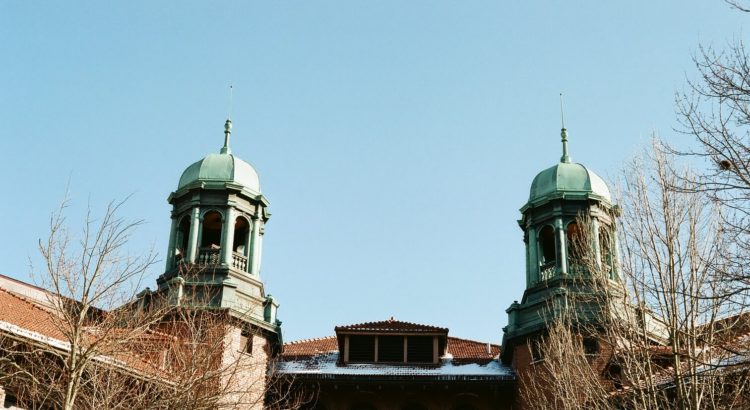
Below are a few pictures I took of Ann Arbor on film during spring break (Pentax K1000, KodakColorPlus200)

“what is art?” #19 – glove fashion

Things are happening outside the walls of my house and it’s hard to be productive when my mind is racing all the time about what is occurring. Each day feels like either 5 or 35 hours and I never know what the actual date is. My birthday is in three days and this seems preposterous to me because it somehow still feels like the beginning of March. What is occurring to the whole world right now is tragic, mystifying, and also I suppose a test about what life can give us. 


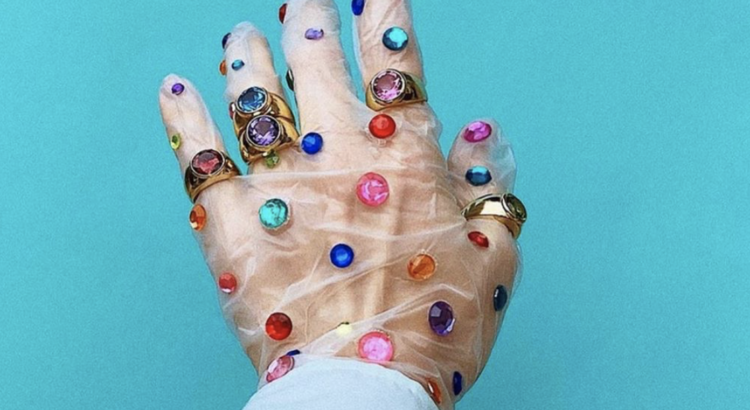
In my new “normal” lifestyle at home, I hang out with my family, continue to finish schoolwork, watch movies, do yoga, and from time to time go on Instagram. This addicting app has its ups and downs for me but today I opened it up to see a post by a Stamps alum Sara Radin about “8 Ways to Decorate Your Protective Gloves According to the Internet” and I had to smile and share. 


Instagram accounts: @ainacarafi (top left), @evazar (top right), @chalmecatecuhtli (bottom left), @maria_bernad (bottom right), @luiny (cover image)

One of the tagged gloves is from creative writer and editor I also follow, Tori West. Not only does she devour the fashion magazine scene with her talent but she is also an individual promoting being a working class woman. She is a part-time cleaner for financial and therapeutic reasons and inspires others to be confident in their own side hustles. On her Instagram, she posts untraditional pictures of her cleaning that challenge what this job can look like. Her style and confident personality consumes each post and encourages a conversation about how these jobs can be intertwined with fashion, art, etc. In this time of quarantine, her posts have reached many and inspired others to get creative with how they clean their own houses now. 

By gluing on gems or even picking up a sharpie and drawing, people have been able to turn their plain ol’ gloves into a fashion statement, art piece, and/or sites of beauty. Quarantine can be a slippery slope to loneliness, boredom, etc. so it is important to stay positive and think of things to help inspire and energize you for your day like these individuals have done. 


Sending my love to all!