A Reminder


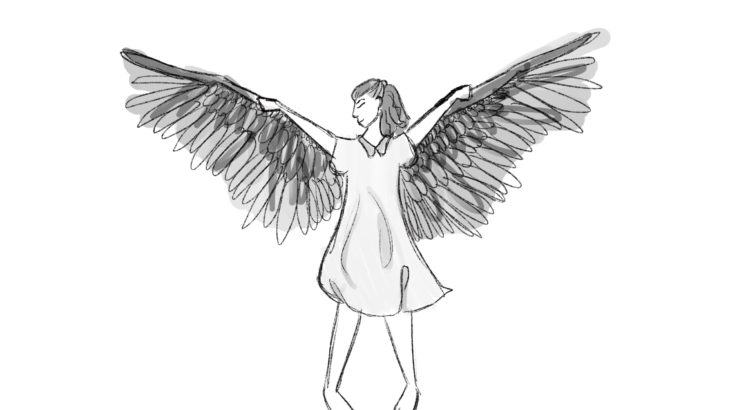
On Friday evening I had the pleasure of seeing Teac Damsa’s Production of  Loch Na Heala (Swan Lake). If you haven’t heard of it, it is and Irish take on the tale of swan lake, with an Irish myth and a true story also mixed into the plot. It was presented by UMS in the Power Center for two nights only, this past Friday and Saturday.

I was encouraged to go see it for one of my classes and I am so glad I did. I managed to get one of only 2 student tickets left for Friday night, which was exciting. Going into the theatre I only knew that it was a take on swan lake and that it had good reviews. But what I actually saw was much different than expected.

For probably the first half of the 75 minute show, I thought I was going to leave the theatre with a sense of disappointment in not liking it. It started in such a strange way, that I’m still not sure what it was supposed to mean. But perhaps that was point.

But as the show continued, things began to click. It turns out that the show deals greatly with themes of abuse and mental illness, and is very raw in its portrayal of each. The sparse set and small cast, many playing multiple personas, was to the shows advantage. It allowed you to hone in on those themes, and to truly see the beautiful dances performed by the cast.

Though the themes were quite dark, it managed to end with an incredible scene of catharsis. At the end of the show, the audience immediately stood up without a pause for a standing ovation, and clapped for so long that the cast had to come back out on stage three times to bow before it died down and people started to leave.

As I left, I couldn’t stop thinking about the show. It was beautiful, haunting, at times disturbing, but mainly it was something different and unique. It wasn’t some American tour of a famous broadway show. It was a work of passion for these dancers and choreographers and they were able to create something that people of all ages and backgrounds seemed to love, despite the themes that are still hardly talked about in today’s society.

That is what this is a reminder of. If you have a story, you can tell it your own way. People will listen. People will care.

Theatre can do this for some people.

And this is the kind of theatre I want to create as a theatre artist.
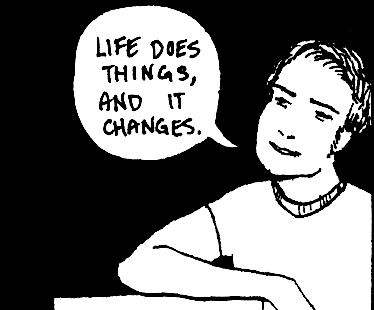
3 Possible Sources of the Meaning of Life – Proust (Part 3)

To understand something is the human obsession. We can understand the value of money; we literally print the value on the face of the currency. We can understand the value of love; we articulate it through words, quality time, gifts, other love languages. However, we cannot understand the value of art. Think about your most recent encounter with a work of art, like that orange structure on State Street between the UMMA and Angell Hall. Some people analyze it in efforts to find meaning in the artist’s choices. Others stare blankly at the piece wondering what the heck is this garbage or I don’t get it.

Everyone processes art differently, creating an infinitely dimensional character. This is precisely the point of my series of 3 Possible Sources of the Meaning of Life. We attempt to outline the nature of human beings through personality tests or zodiac signs, confining a person to a boxed off “type.” While these conceptions are valuable prompts for self reflection, I do not believe that they are completely valid, yet we accept them in order to satisfy our obsession. Each stimulant in the world around us registers differently and our reaction cannot necessarily be calculated. It may be predicted by trends in our personality, I suppose, but personalities can evolve. We cannot understand the value of art because everyone values are differently. You can never fully conclude someone’s motives behind a piece, but you can appreciate the artwork in your own way. Furthermore, you can be the artist, accepting that not everyone will “get you” but you produce your own meaning.

Lucy Liu’s Little-Known Art Career

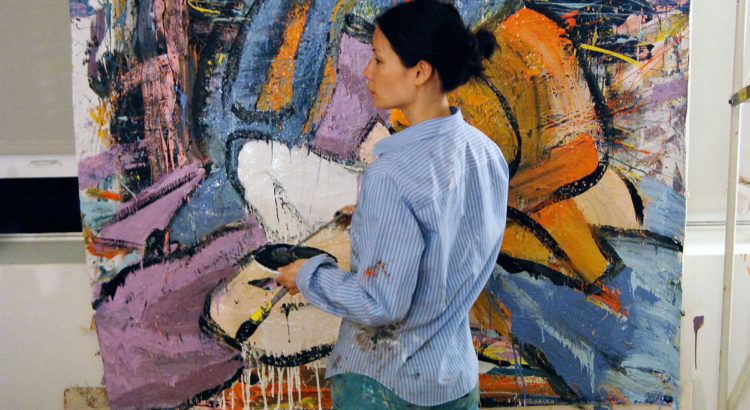
I recently discovered, to my pleasant surprise, that actress Lucy Liu, a Michigan alum, is also a talented fine artist who previously worked under her Chinese name, Yu Ling. Under this alter ego, Liu has sold and auctioned her work for hefty prices up to $70,455. Working with painting, sculpture, collage, ink, and a plethora of other media, Liu’s detailed, intricate work calls upon themes of love, lust, and vulnerability.

Liu has had experience in the art world since her teenage years, and has been featured in both solo and group art shows across the globe for almost three decades. Her work is rich in color and texture, and deeply intimate–thus why she only revealed her true identity in a book a few years ago. Liu explains that “it was incredibly liberating… it gave me a sense of truth in my art and how it was viewed.”

One of Liu’s notable works of art is a collection of books called Lost & Found, which features cutouts filled with discarded found objects. She jokes that people make fun of her for salvaging scraps such as soda tabs or pieces of string for example, but uses these objects as aa invitation for reflection.

Book 24 of Lost & Found

Furthermore, Liu also creates intriguing erotic paintings, styled after the shunga Japanese art of the 17th century. Such paintings depict women kissing, engaging in intercourse, or simply connecting as humans. Her paintings, rife with dynamic brushstrokes and vibrant color truly show her versatility as an artist.

Adieu (Forever Goodbye)


You Are the Bridge


72 Works

(All images from Lucy Liu)