Some Thoughts on Tarot Cards

One of my favorite parts about art is how it can be shared through so many mediums; art is in everything, and being able to see that makes life a lot more interesting. A great example of art being conveyed through a unique medium are Tarot cards: a deck of 78 unique cards, often used for fortune telling and games. It was relatively recently that I gained an interest in the obscure world of tarot cards, having been inspired by an old HBO show that my parents used to watch called Carnivale (a great show and I highly recommend it, but the end leaves a lot to be desired). The show uses tarot readings to further the plot and create dramatic tension, but more interesting is how the show uses subtle tarot symbolism that makes the story feel like a great epic is unfolding and the characters are all pawns of fate. This technique is similar to that employed in classical epics, such as The Iliad and The Aeneid: the use of portents and prophecies that connect the story together using a common thread, often calling back on themselves and revealing the role of divine fate in an extraordinary way.

Artist: Matt Bailey Instagram: @baileyillustration

I absolutely love the feeling when a prophecy is fulfilled, or when I can draw the subtle connections between events and and characters and be able to see how the prophecy influences the events of the story. This is one of my favorite things about tarot card art as well: the use of symbolism and subtle meaning conveyed through the illustrations is fascinating and endless. Each card has lore and tradition behind it, with multiple interpretations that all come together to form a single story. Personally, I don’t believe in actual fortune telling, but I appreciate how the cards are designed to create the effect of prophecy. Each card has identifying symbology that can be found in any version or reinterpretation, and have been tradition ever since they were first created, making each card immediately recognizable and therefore more iconic. This quality of the tarot can be found throughout popular culture as well, from literal uses such as Led Zeppelin and The Hermit figure, and more subtly in the archetypes of The Fool, The Magician, and The Lovers often found in storytelling today.

The other thing I love about tarot cards is the physical aspect of the art itself; there are so many versions and styles of illustrations, and I think the cards are such a great medium of artistic expression. An artist can follow the strict format of the cards and symbology while still illustrating them in their own way, giving them the perfect amount of creative freedom. There’s a lot to be said for the proportions of tarot cards themselves and the powerful effect of the format, which makes them the perfect template for creating something unique. It’s a great endeavor to undertake, illustrating all 78 cards, but it’s a great way to develop and refine your style and to put your creativity on display.

Artist: Micah Ulrich – Instagram: @micah_ulrich

From the Eyes of an Architecture Student: Classwork Loads


Hi Everyone! I know it’s kind of late, but bear with me! I’m suffering too :'(

I’m back again this week, with this week’s topic: Classwork Load!

A little off topic, but I caught myself reminiscing about my days back in grade school and high school, when I was practically praying I’d end up going to college here! It was a sort of bittersweet, unexpected flashback, and I can’t really remember what brought me back into those memories, but I think it was just me feeling really overwhelmed and pessimistic about all of the assignments and projects being thrown at me every single week! I had these flashbacks of me studying as hard as I could for my AP exams, and the awful ACT, and feeling like it would be the end of the world if I didn’t end up going to school for architecture here at Michigan. And now, here I am, begging the workload for mercy, and cursing myself for having chosen such an expensive, draining discipline. It’s just the awful truth, for me at least (honestly, it really depends on who you ask in the program). Architecture for me here has always had its ups and downs. I call it my love-hate relationship with architecture.

Many non-design people would ask me, “so what’s the workload like?” and after hearing me say something like “It’s quite heavy, I’m lucky if I get to work from home, but most of the time I practically live at my studio desk,” they’d say “wow, that sounds like so much fun, it’s arts and crafts in college!”

Yeah, yes but no to that statement.^

Do I enjoy architecture here at Michigan? Yes, BUT I also have moments when I’d say no. Usually, those moments are during the execution of my ideas (ideas, being the “yes” part of why I enjoy this discipline). I say yes for the brainstorming, imaginary fantasy moments of a project- where I’ve developed or am developing a proposal for the prompt’s concepts. Then no, for the execution parts- the actual virtual modeling of my sketches, making sure it’s physically possible and feasible to construct, or sometimes even I get designers’ block (like writer’s block) where I can’t think of any novel ideas!! But all of that was mostly about the studio work (which is a pretty big deal because these are the courses where you can grow as  a creative designer getting feedback from amazing faculty, and the fact that these courses cost your GPA 5 credit hours). The rest of the workload comes from the technical classes that compliment studio work (such as design theory courses, experimental courses, historical courses, etc), which honestly, despite knowing it’s knowledge essential to being a great architect one day, feels more like busy work compared to studio work. Often, I find I focus mostly on studio work, and that gets most of my free hours, and then, (thank goodness for planners) when I finally remember something is due soon or the next day, I’d hurriedly do those other assignments. In other words, to summarize, studio work, no matter who you ask, will tell you it is a heavy workload, and everything gets second priority (much like how you’d probably find your vegetables being pushed to the side during your dinner: vegetables- necessary and healthy essential nutrients, BUT getting ourselves to eat it raw is like pulling teeth).

“So how do you deal with all of this?’ you’re probably asking. Or maybe you’re an Mgineer and think “pssssh this ain’t nothing compared to what I have to do for my classes.”

Well, as I imagine several other students (of all disciplines) do, I definitely invest a great deal of my sanity and faith in my planner- yes, a physical, paper planner.

I don’t know about you, but I greatly appreciate physical editions of books and planners for the like- it’s like I feel more assured knowing I’m clutching the exact item which holds every possible thing that I need to do in a day (or the week), and I love physically crossing things the items on my list off as I complete them- it’s this feeling of a satisfying sort of crisp validation to cross it off and to see the item(s) crossed off. And it operates that way too, since I often find that when I check back with my planner to make sure I got everything done, or a reminder for what’s to come, if I find something isn’t crossed out, I feel guilty and pressured to get it complete! So, for me, a planner serves as a highly necessary device that keeps my tasks in engraved in the grains of its pages, it motivates me to get things done or even prioritize tasks, and helps me to prepare my life for the near future (especially helpful when booking appointments because then I’d just open up my planner and my planner tells me when I am free!).

The second part to my coping mechanism for this workload is to breathe. Yes, as simple as that. I really find it helps me relax a bit, and literally take some weight off my shoulders from the virtual burdens of life that I’ve created for myself. I inhale, exhale, as many times as needed (you can think of it as a sort of meditative ritual) until I feel better again and ready to take on life and classes again. Or if all else fails, I take a nap, since I find it isn’t unusual for me to get a headache or heavy eye strain by the end of my day. A warm cup of tea can help too, I especially love chamomile, black, and green teas! They smell so good, just inhaling the scent, beside a candle really makes me feel relaxed as though everything’s going to be totally okay, even if I have a project due tomorrow and I’m just halfway done as I am right now.

So, what do you think? Did my insight shock you? Enlighten you? And what coping mechanisms do you employ to help you get through life? Drop me a comment, I love hearing from you all! And I’m always willing for you all to pick each week’s blog subject- I want to know what you wanna know!!

And, another shameless plug, if you’re interested in seeing the work I do, or what kinda life I live, give me a follow on instagram at themichiganarchitect !

I look forward to hearing from you all! I love writing for you guys 🙂

Alrighty, I’ll write again next week, goodnight everyone! And hope ya’ll stay healthy cuz GOSH the weather here is driving me insane!!
Culinary Phoenixes: The Glorious Reinvention of Bon Appétit

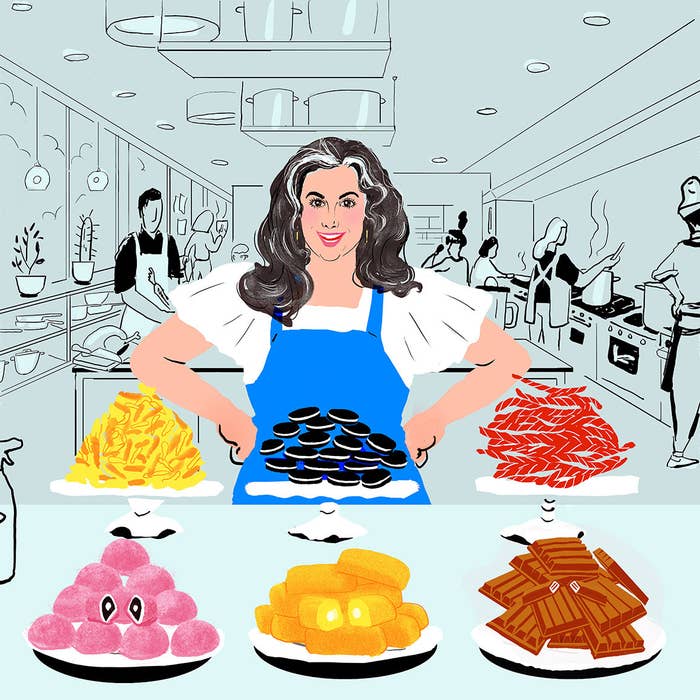
When homework threatens fiercely on the horizon, when the grey sky oppresses even your greatest ambitions, when you are feeling as if there is everything to do but want to do nothing: this is when you turn to Bon Appétit. Though its magazine has been in publication since 1956, Bon Appétit has seen increasing success in an entirely different medium. Rather than staying stolidly in print, the publication has expanded to the Internet space, creating a popular YouTube channel with vibrant personalities and truly delightful videos. What makes Bon Appétit most fascinating is how it has leveraged past mistakes and tactics to form something altogether new. In watching their videos, I am often reminded of where others have failed to adapt. Food Network, for instance, now increasingly favors format over personality. Robbed of charismatic presences, such as Emeril Lagasse, the cable channel has relied on competition shows, which lack vibrancy, even as they invent progressively more ridiculous tasks for assorted chefs to accomplish. Watching cooks running around a grocery store to shop for various jars of pickles can provide only a limited entertainment. Adding Guy Fieri as a vestigial commentator just seems excessive. His sole contributions are a few stale quips and a bottlebrush of bleached blond hair. And who wants staleness from a cooking show?

Image result for bon appetit personalities

The failure of their competitors puts Bon Appétit’s vivid resurrection in an even starker contrast. While their adversaries are barely breaking into the conversation, Bon Appétit’s videos regularly gain millions of views and have a genial cross-audience appeal. The Internet’s endless expanse has allowed them to reach a seeming endless number of admirers, all hungry to watch. It is genuinely impressive to watch a reinvention take place in real time. For, the online space also allows for a more flexible creativity. Often, I will read comments on their videos, only to see the requests of those commenters granted a few days later. The solicitation and eager acknowledgment of audience input is something entirely unique to the YouTube experience. There is a sincere respect for the viewers’ taste. There is an even more candid desire to fulfill their suggestions. It is not that Bon Appétit is the only channel on YouTube asking for audience advice. Indeed, it is almost a trope for YouTubers to fervently ask for subscribers’ commentary. Perhaps it feels so startling because Bon Appétit seems to be the first established company to truly conform to the changing times and recognize its advantages. Even better, their recognition of such trends has resulted in videos that are truly unique, blending the professionalism of a real test kitchen with the aspiring enthusiasm of viewers around the world. For those just discovering their channel, I would recommend the Gourmet Makes series, where in-house pastry chef, Claire Saffitz, attempts to recreate popular sweets. The ascent of channels such as Bon Appétit has made me realize that entertainment yesterday might be easily forgotten tomorrow. However, it is equally exciting to think of the new varieties of entertainment still to be discovered; mediums still unanticipated. The reinvention of Bon Appétit reassures me, though, that even these rapid transformations can result in something deliciously delightful.

Being Moved By Art

There are periods in my life where I completely fall out of love with fiction. I’m not entirely sure why it happens, but suddenly there’s a switch that goes off in my brain, and I hate even the concept of fiction and media– the falsity of it, the mere entertainment, the meaningless indulgence in the aesthetic, as we all slink closer and closer to our deaths, and the earth keeps turning, and we watch a movie or turn the pages of a magazine or forget a poem. 

For example, at some point in sophomore year of high school, I read Aristotle and Dante Discover the Secrets of the Universe by Benjamin Alire Sáenz, a coming-of-age novel about the unparalleled bond between two boys. I still remember crying on the floor of my bedroom past midnight when I was supposed to be doing homework, and just let the book completely wreck me (it’s a very good book, you should read it), and when my mom walked into the room, I had nothing for defense except “It was a good book.” I realized that I couldn’t invest my time into a book without getting so attached and emotionally invested. It controlled me. After that, I went for months without reading anything– I got too invested, it hurt me too much, it surprised me with the pliability of my own emotions. I wanted to dominate my emotions, not let fiction dominate them. 

I got over that, of course– it’s silly to have such powerful connections to books and movies and take it so innocently for reality. I developed a crucial distance from literature, almost as a defense mechanism to not let to get it to me too much, not allow it to break me and tear me apart, scare me or enthrall me. I started to see it from an “intellectually” distanced standpoint, observing it from the superior perch of examining craft and theme and symbolism, stroking my monocle and saying things like, “Ah yes, the intertextuality…”, or, “The symbolism of this hat demonstrates that…” And that helped me understand art, helped me tame the wild and crazy and unexplainable forces of literature. 

Coming to college, things started to feel too crystallized. I stopped connecting to the things I was reading as much, and that may have just been because even though we were reading “diverse literature” in my English classes, it was still taught by white professors to a mostly white student body, creating a strange dissonance with the work. And more than that– the Western-centric perspective of everything I read was so glaringly obvious to me, I couldn’t connect to it at a personal level. The emotional connection I’d once had to art– the kind of cosmic, universe-warping feelings that had made me cry in my childhood bedroom– had all gone. They were replaced with terms and definitions and critical theory. Wasn’t it supposed to move me? 

I can’t say I’ve found conclusions to my constantly fluctuating relationship with literature. But I have found a little reminder of why I love what I love. Columbus is a movie about the unexpected friendship between a homebody architect-enthusiast and the son of a renowned architect set in the town of Columbus, Indiana, known for its modernist buildings. In one of the lines in which the main character is trying to explain to Jin why she likes a building, he stops her and asks if she likes the building intellectually. 

“I’m also moved by it,” she admits. 

“Yes!” He says. “Yes, tell me about that: What moves you?”

“I thought you hated architecture.”

“I do. But I’m interested in what moves you.”

As I most likely move towards a career that intellectualizes art, I must ground myself to my own heart, and remind myself to stay true to the contents of my mind. I want to be committed to that which moves me.

Basil + Gideon: Some people hate endings…

I hate beginnings.

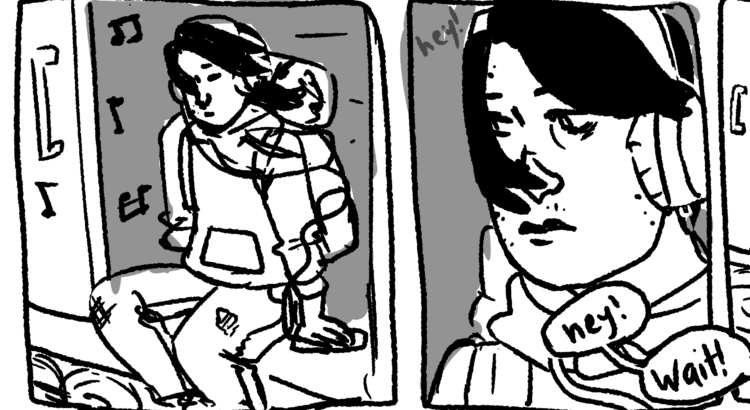
Hey all, welcome to this on going comic series about two lads lost in the woods. I went back and forth on how to start this story for forever. But one of the cool things about comics and about writing in general is that there really are no rules (some folks might tell you there are, but you don’t need to follow them). If I want to, I can introduce my setting with a welcome to town sign and I can have one of my main characters fall off a train to get into said setting, and isn’t that the fun of it?

Why You Should Try Film Cameras


“Oh well,” I said as I noticed that some shots were completely blacked out because I had accidentally exposed some of the film to the Sun. I didn’t think too much about it and moved on. I gave my best shot and thats enough.

I was excited for more after developing this roll. What more can I learn and do? I thought.

  1. Film slows me down, in a sense that before I even to pick up my camera. I have to think of the shot carefully and meticulously and consider the limitations of my camera. What shutter speed? Hm the aperture? So during fall break when my friends and I headed to Upper Peninsula, I stood out looking into the view of Pictured Rocks, wondering if I truly really wanted this shot.  It made me think twice abt picking up my camera. Most importantly, I just enjoyed being present.

2. Film is also not easily lost. With digital, there are always too many pictures and it’s mostly usually stored in cloud storage or laptops. There is a risk of losing them if the system were to crash or accounts get hacked. My negatives are always with me in physical copy (assuming the lab doesn’t cut your negatives). You can also rescan your films and make something new out of them.

3. Its creative and fun! The various and tedious process of film is what makes it interesting and different. You can double expose your pictures, use different chemicals for processing your negatives (if you’re photographing it in black and white). If you get really into it and take more and more pictures, you can buy a kit and do all the developing yourself.

4. You become a better photographer faster: I’m not sure to what extent this is true since I have yet to see it reflected in my digital photos but two of my friends who have had film cameras for awhile remarked this to me. They claim that they take better digital photos now after using film cameras for awhile.

5. You don’t necessarily need batteries. Depending on the camera model, some can be used without batteries depending on whether you can judge the lighting conditions and adjust the aperture and shutter speed to suit the shot. This requires a lot of skill but it’s possible!

6. You enjoy moments better, when you’re not always thinking abt ooh how pretty I must capture this! You live in the moment, not in the future reminiscent you who says awh hey remember the good times when I went here?


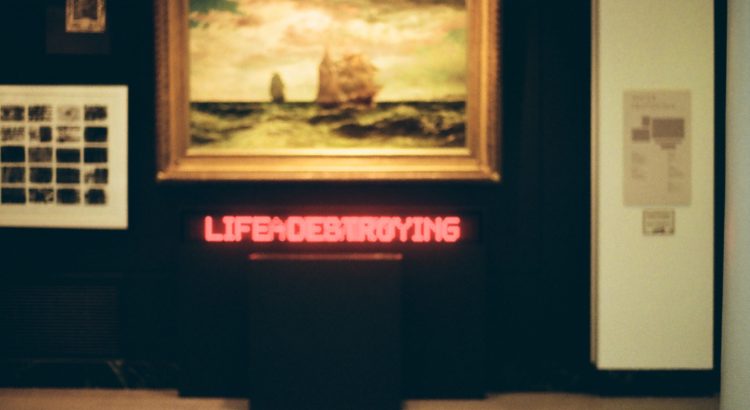
(taken using Pentax K1000/ Kodak colorplus; developed in Camera Mall, Ann Arbor)