Caryl Churchill’s Love and Information

About one month ago, my acting/directing class performed Caryl Churchill’s Love and Information. The production was produced through the Residential College’s drama department, one week before SMTD’s production of the same play. Both productions were done in accordance with the Caryl Churchill festival happening around Ann Arbor, which featured a weekend of free staged readings and lectures to celebrate the ingenious playwright.

To give some background, Love and Information is a jam-packed play consisting of a multitude of short vignettes. The scenes give a glimpse into the different lives of lovers, family members, and friends, evoking laughter, sadness, and more. The script for the play, as well as several others by Churchill, is unique in that it is structured in a way that encourages creativity. There are little to no stage directions, no scene numbers, and no named characters.

When rehearsing the show, the lack of information was a blank canvas that—while incredibly intimidating—forced the director and actors to think for themselves about the direction each scene went when rehearsing it. With limited punctuation and lines interrupting each other, it was initially daunting to successfully define the messages we wanted to send. Besides understanding the text, we were challenged to present a story within a short scene. Additionally, as artists, we weren’t the only ones being intellectually and emotionally challenged; audience members were often left to draw their own conclusions for the stories on stage.

By being both an artist and audience member for this show, I had the opportunity to view the stories through different lenses. To see different renditions was thought-provoking and entertaining. The build up and collapse of relationships between the scenarios varied greatly upon interpretation. For my performance, I played a high schooler, sister (revealed to be a mother), lover, friend, and girl in love with artificial intelligence. It was interesting to see these same roles executed by the SMTD cast. Some scenes were taken in a different direction, whether more comedic or serious than my drama class’s.

Apart from the structure of the play, the stories themselves spoke volumes. The play questioned the balance between knowledge and love, particularly with modern technology. Can one exist without the other? What happens if a person ignores one to rationalize the other? The short scenarios brought life to different characters, situations, and storylines that sparked these questions. Additionally, the use of technology by characters in the scenes acted as either a boundary or a tool in their attempts to communicate with one another. This use of modern technology added an extra layer that contributed to the play’s thought-provoking manner. Overall, through performing scenes, watching other students’ work, and seeing SMTD’s production, I gained an immense appreciation for Churchill’s play, Love and Information.
Album Art Aesthetics

Great album art is incredibly powerful, but I feel as if it’s often overlooked by consumer and producer alike. People take it for granted, thinking of the physical representation as just a means to deliver the real product, the music. However, I would argue that the music is only half of the product, and that the music itself is almost entirely defined by its presentation. I’ve always been fascinated by the wide variety of art styles on album covers, but my passion was recently reignited when I saw the album cover for the new Flume mixtape Hi This Is Flume. It grabbed my attention and didn’t let go; the vivid colors, the straight lines and framing of the picture, and most importantly the beautiful painting on the hood of the car. Even though I knew who Flume was and didn’t mind their music, I never really cared for it much. However, I listened to the entire album right when I saw it, that’s how intrigued I was by the cover. My point: it’s all about first impressions, just like meeting a new person. Sure the music is important, but nobody will listen to it if you can’t get their attention first.

Hi This Is Flume – Flume

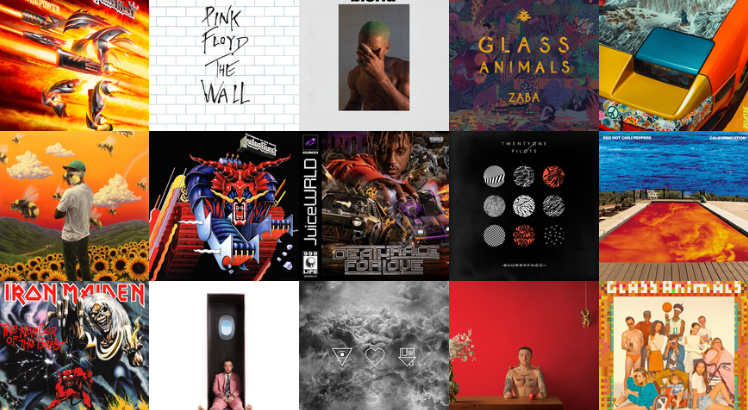
Beyond being eye-catching, I think an album cover has the power to enhance the music and add an entirely new element to the project. It sets a certain mood and interpretation for the album; you listen to it differently than if it didn’t have an album cover. For example, when I listened to the Flume album I expected it to be interesting and experimental, just like the album cover. As a result, I interpreted it through that lens and ended up loving it. I honestly don’t think I would have cared for it much if I wasn’t already expecting it to be different and experimental. I’m not saying the music isn’t good, I’m saying that the aesthetic of the cover opens up your mind to the music before you listen, and then continues to contribute to the overall feeling of the album. A lot of great albums use this to their advantage (such as the ones in the header image), and it makes a noticeable difference. It really ties the project together as a whole, and turns the album from a collection of songs into a musical journey. When I think back on an album that I loved, the first thing I remember is its aesthetic; the feeling and tone of the album that makes it entirely unique. It’s the album art that always determines this, because it’s the album art that gave the first impression.

Looking towards the future and the increase in purely digital music raises a lot of concerns with me. There’s something to be said for being able to hold the music as a product, and experience it in more ways that just auditory. If you’ve ever listened to a vinyl record or a cassette tape, or even just looked at one and admired its ingenuity, then you know what I’m getting at. Not only does digital music lack these things, I’m also worried that album covers for purely digital projects will more often be overlooked. It’s no longer a work of art that you can hang on your wall or collect; if you’re lucky it’s a thumbnail size image with good resolution. Obviously physical forms of music will always be around, and I’m sure there will still be artists such as Flume who continue to realize the importance of presentation, but I also think that we should all take a minute to appreciate the unique artistic medium of album covers and realize their importance in the art of music.

Food is Art

Food is a huge part in everyone’s lives.  Not only is it essential for life, but it is also a huge part of people’s social lives.  One of the easiest activities to do with friends is to have a meal them, and to go out to eat.  The food network and the internet have also brought attention to the idea that food is art. There are so many videos going viral on Facebook of beautiful pastries and cakes being made.

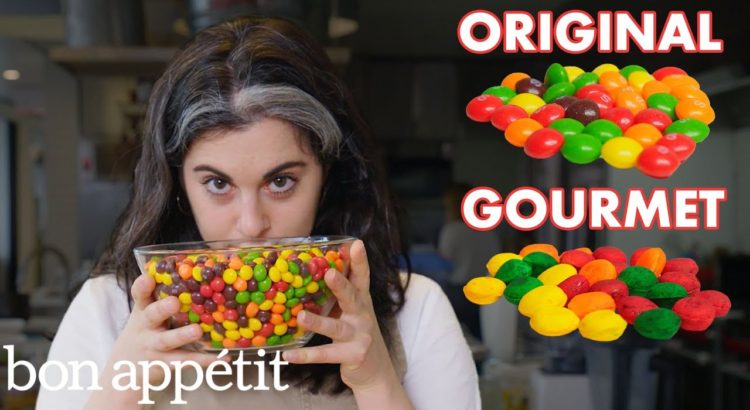
One of my favorite youtube channels about food is bon appetit.  My favorite segment is about this chef remaking people’s favorite childhood snacks from scratch.  She does not have a recipe to go off of, she just looks at how the food is constructed and continues to make it until it is a perfect (if not better) replica of the food.  She will spend sometimes up to two weeks trying to perfect one recipe. Some examples of what she has made in the past is Skittles, Oreos, Cheetos, and Pringles.

Another very popular youtube channel and also has viral videos on Facebook is Tasty.  Tasty does a variety of videos with their most common type being making a dessert with some friendly music playing in the background.  My favorite segment of Tasty videos is when a chef makes gigantic versions of food. He has made a pizza slice the size of a cookie sheet, and a burger the size of a pizza pan.  I enjoy it because you not only watch him cook but he also explains how he is making it so that you learn how to make a normal or giant version of the food.

Another popular food segment is called Worth It.  It is a segment from Buzzfeed’s youtube channel. The videos feature two people who pick one food and go to three different restaurants around town to try the same food at three different price points (low, medium, high).  The show is interesting to watch because you get to see what the different restaurants do to the food that makes it a different price. It’s also great if you live around the area or are planning to travel there to already know of some famous restaurants to try.

What it feels like to be a dance major

This one goes out to all the skeptics of successful artists. We are not myths. We are not lesser than. We are just as professional as you. We are just as career-oriented as you.

Uncomfortable and unacceptable interactions surrounding the topic of ‘dance as a major’ mostly come up when I introduce myself.

Dismissively, “do you have classes for that?”

With glassed over eyes and a pitiful attempt to look interested, “thats so great that you’re pursuing your passion.”

Most large men go straight to, “you must be really flexible.”

What’s even more interesting is that I can feel the attitude visibly shift when I decide to integrate my dual-degree status and STEM pursuits. These reactions are indicative of a gross misunderstanding of the arts and what it means to be successful. By insulting those attaining a higher education in the arts, you are only confirming your own ignorance to the matter. Careers aren’t limited to doctors and lawyers, just like college education isn’t limited to lecture halls and lab sections.

Despite popular belief, a Bachelor of Fine Arts in Dance has requirements. We have to fulfill a large distribution of technique credits, complete a composition class series geared towards choreographic development, and participate in large scale productions for repertory credit. We have anatomy, kinesiology, and body somatic courses to supplement our working knowledge of our own bodies’ mechanics. We learn how to produce and present artistic work, alongside figuring out how to propagate that knowledge through pedagogical training. We take regular classes in English, music, theater, art history, and dance history to understand the robustness the world of art has to offer. We are constantly in late night rehearsals that lie outside of the enforced degree requirements because we are taught to always be making and finding and performing. If that already wasn’t enough, most every student in the Department of Dance is interdisciplinary who actively seeks out all the resources that the University of Michigan has to offer—whether that be another minor, major, or degree altogether.

We turn in papers and take exams just like the conventional college student. But unlike the accepted norm, we are asked to reveal the deepest parts of ourselves and not only put them on display, but make them available for criticism. It’s all a part of the job: to embody human experience and be a vessel for communication through a kinesthetic medium.

I implore whoever reads this to spread the word. This is not a slap on the wrist, this is a call to action. Reshaping what it means to have an education in the arts is going to require change from the ground up. Respect your peers and never underestimate the power of art.

Sometimes I question how people would look at me if I weren’t getting a dual-degree. Its almost as if microbiology coursework legitimizes my place here as a serious Michigan student, and dance stands in as an outstanding extracurricular.


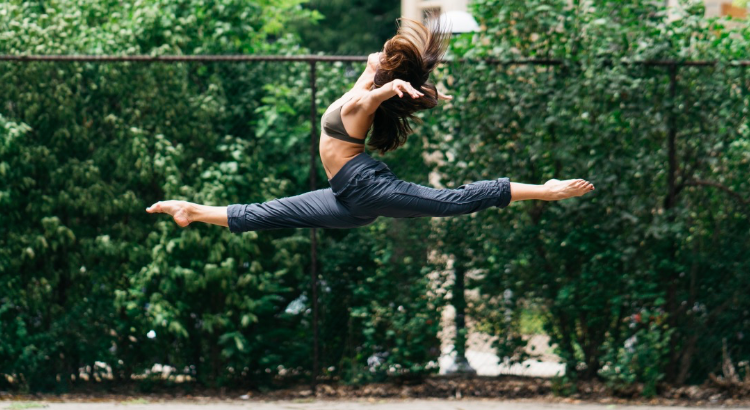
(Image credit: Derek Crandall)

Last Saturday

Hearing about the terrorist attack that happened in New Zealand was terrible but unsurprising. This time though, it was rather different. I had friends who studied in New Zealand and my mum’s colleagues was present at the mosque there when tragedy struck. My mum’s colleague lost her son. I felt numb when I heard this. Again? Someone I was faintly connected to was killed.

Friday came and I joined the congregation, listening to the sermon we all badly needed during Friday prayers. To say it was deep is an understatement. The imam (person who leads prayers) reminded us that we needed to have courage in these trying times, to hold on to our faiths despite looming threats of Islamophobia. He stated, “Islam began as strange and it will end as strange”. This gave me pause. True, I thought.

Incidentally during the prayer, the imam read a prayer that I had memorized, a prayer inscribed on my whiteboard near my study table. The prayer translates to “Did We not relieve your heart for you, and remove the burden that weighed so heavily on your back, and raise your reputation high? So truly where there is hardship there is ease, truly where there is hardship there is also ease. So when you are free, work on and direct your requests to your Lord”. Within moments of realizing that the imam was reciting this prayer, tears trickled down my face. I had written the translation down to remind me that things are going to be okay when I was stressing out from exams. And here it is, revealing itself when I needed it.

Me and my friend attended the vigil together. The mood was somber but the weather seemed to empathize with us, cloudy one moment, snowy the next. Out of nowhere, a beam of light shone on the crowd while snowflakes fluttered away like the fragile little things they are. Stories were shared and the Quran was recited, casting a solemn aura in the atmosphere. The crowd slowly grew as more people stopped by to give their support for New Zealand’s victims.

My head swiveled at the sound of someone yelling. My eyes averted to see two security guards saying one word, “Run”. There’s someone with a gun amongst us, I thought. Immediately, I grabbed my friend’s arm and ran, fear and adrenaline fueling my sprint. I couldn’t think, I couldn’t think. A sense of danger engulfed me.

The next sequence of events were mostly of distress. I headed to the basement with two friends. When rumors spread that the shooter was headed to the Ugli, I became very scared and started crying in my friends arms whilst shaking. Another friend called me – she had noticed I was distressed – and she told me to get out of the Ugli. “I can’t they already barricaded the doors. Oh okay, its okay just stay in there its going to be okay. I’m so scared, Anis. I know but you’re going to be okay, you’re safe in there”. 

I was uncontrollably crying and shaking at this point that my friend had to physically guide me into a room so we could barricade ourselves inside it. Lots of students poured in and huddled together, some in confusion, some in disbelief. I cycled between periods of being calm and occasional crying. Loud thumps were heard coming from upstairs, making all of us jerk with every thud.

An hour later, we all got out.

People joked about the ’emergency’. “Oh it was just balloons popping” said one. I didn’t think it was funny one bit. “Easy to say if you weren’t the one at the vigil or being barricaded in the targeted area”, I frequently thought. Even if the threat wasn’t real, the fear a lot of us felt was. 

Every time I heard the joke packaged in different ways, I still winced. It hurt me. It hurts me to hear this being joked about because when I went home that day, I couldn’t think. My knees shook from time to time. Joking makes my aftermath stress reactions seem invalid, when they aren’t.

(Featured photo, an example of Islamic tile art: Google Images/ First picture: taken during the vigil/ Second picture: being barricaded inside a small room inside Ugli’s basement)

Poetry That Sings: Sharon Olds

My first experience with poetry is usually on the page, but with Sharon Olds’ poetry, it was through performance. Her work reveals a versatility to the stage and the page that is phenomenal and exciting. Unlike poems like “Blues in Yellow”, a poem about the marginalization of Asians in America– some of the powerful metaphors– very intricately constructed, so delicate– almost become watered down when performed. Emily Dickinson’s poems are fun to read out loud, but I don’t think they do well in that medium. However, there was something deeply touching about hearing Olds’ work read out loud. It shimmers. I love it. If you get a chance sometimes between classes or before bed– listen to her recite her poetry. It’ll give you an appreciation for language that is like learning to see a new color. 

Her images are so ordinary, as she says, “just ordinary things in an ordinary life”, and follow a mostly narrative structure– again, as she claims, she is an autobiographical storyteller– that it becomes striking and interesting to hear them performed. There are so many parts of her reading (linked above) that strike me– parts of her poems that are funny and feminine and smart without being sentimental.

Olds says she is not a confessional poet. I believe her. Something about her poetry is markedly different from Sylvia Plath’s, which is slightly less narrative, more declarative, more description-based. Olds is here to tell a story, and I love that. I love her sense of humor, as well– “Douchebag Ode” got many laughs from the audience, as did “Rite of Passage” about her six-year-old son’s birthday party, and the first poem she read, about her sense of humor. It seems more funny and comical when it is read in her voice with her tone with her slight pauses and microcosmic built-up drama that she creates.

I found it interesting as well that while Olds was reading “Wonder to Wander”, she actually sings the song mentioned in the poem, which is simply impossible when when reading it. All of these performative elements give her poetry a sense of life and character, a keen understanding of the author and her life.