
Why Basketball is the Universal Sport

If you ask someone what the most popular sport is, chances are they will answer with soccer. For team sports, enrollment in soccer, lacrosse, basketball, and rugby are growing more and more widespread. However, I truly believe that basketball is for everyone.

Invented by James Naismith in 1891, basketball continues to be dominant as a major sport for both amateurs and professional athletes. The fast-paced, exhilarating game can be played by almost anyone–people who use wheelchairs, tall, short, young, old, any gender. All you need is a hoop of some kind and a ball; this simple equipment closes the gap for people of different socioeconomic statuses, unlike sports which require tons of expensive gear like skiing or hockey. Also, the fundamentals of basketball are easier to learn than those in other sports: you need to dribble, pass, and shoot, but can go on much farther and improve upon your skills from there. The rules are relatively simple, and games can be adapted for different people. Of course, not everyone is going to like basketball, but overall basketball is an accessible and enjoyable sport.

Another interesting point about basketball is that it is linked to contemporary culture, particularly streetwear style. They are closely connected and play off each other. From the famous Jordans that catalyzed the sneakerhead movement to a constantly-changing collection of fashion collaborations, basketball enriches global style. Furthermore, basketball has influenced many conversations about race and equality throughout history. Basketball is more than a sport; it allows people to connect with one another and others around the world, get active, and learn how to impact one’s community.

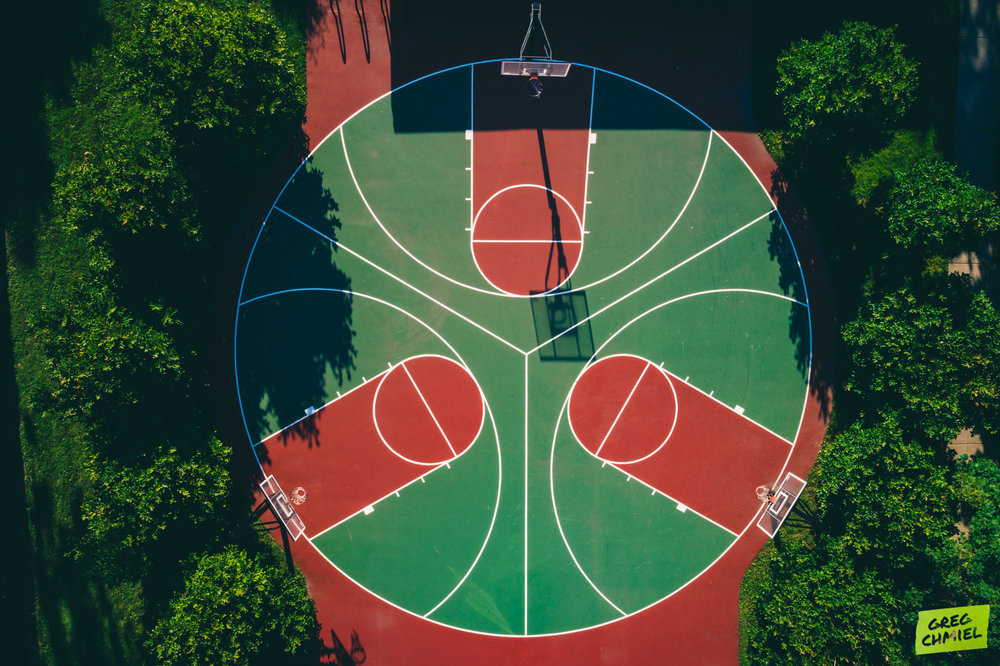
To get inspired, check out these awesome basketball courts from @HypeCourts:

Image result for hypecourtsRelated image

Image result for hypecourts

Art in Toronto

Last week was spring break. For some people, this meant heading south to enjoy warmer weather. For me and several of my friends, spring break provided a chance to go north across the Canadian border, where we spent a few days in Toronto, Ontario. There, it’s no surprise we faced blustery winds and cool temperatures. While my Instagram feed was filled with girls at the beach in their bikinis, my winter boots were covered in salt residue and melted snow; however, I wouldn’t have had it any other way.

There were plenty of amazing things to do in Toronto. Besides eating our fair share of Asian food in Chinatown, we visited the CN Tower, Ripley’s Aquarium of Canada, and Allan Gardens. Places such as the Royal Ontario Museum (ROM) and Casa Loma presented opportunities to learn about art, history, and culture. At the Royal Ontario Museum, there were textiles, sculptures, paintings, and other artifacts from various different cultures and time periods. Some of my favorite sections of the museum included the Rome and Egypt exhibits, which included impressive busts and other artifacts. Additionally, one of the most unique and grand exhibits was the Daphne Cockwell Gallery dedicated to First Peoples art & culture. With over one thousand works of art and cultural heritage—including contemporary art—the gallery provided a sense of what life as an Indigenous person was and is like, including as a person of ancestry living in the contemporary world.

A view from the outside of Casa Loma

Visiting Casa Loma was another beautiful and interesting experience. Casa Loma is a grand mansion that was built in the early 1900s by an electricity multimillionaire. Famed for its extravagance, Casa Loma had (and still has) elaborately decorated rooms with authentic period furnishings. It was too cold to visit the gardens when we visited, but we were able to go up into its two towers. Besides the magnificent architecture, we admired the ornate sculptures, stained glass, and indoor fountain.

An image of Graffiti Alley

We also appreciated seeing Toronto’s Graffiti Alley to discover a different kind of art. What seemed to be a little stretch of grimy back-alley was home to a mesmerizing series of murals. In addition to being a  narrow stretch of art, the alley represented moments in Toronto’s history concerning street art versus vandalism, and was worth the cold open-air visit.

Last but not least was the Art Gallery of Ontario (AGO). On Wednesday nights, AGO offers free admission to their collection galleries. We took advantage of this and explored the extensive gallery for a few hours. 

Still Life: Flowers 17th century by Jean-Baptiste Monnoyer at the Art Gallery of Ontario

There was a vast number of paintings, whether from the Middle Ages or Impressionist movement. Besides paintings, there were drawings, photographs, and sculptures. Moreover, full volumes, videos, and mixed medium art were on display. The basement had a collection of model ships, while the fifth floor had a temporary exhibition called Mickalene Thomas: Femmes Noires. This collection explored how Black women are represented in art and popular culture by using colorful, dazzling, and provocative paintings, photographs, and screenprints. Another collection I found interesting was that of the gothic boxwood miniature carvings, which were small, intricately detailed religious wood sculptures.

Overall, the trip was a memorable one, and I enjoyed exploring all the art and culture Toronto had to offer.


Juice WRLD and the Rise of Emo Rap

On March 8th, rap artist Juice WRLD (who gained popularity from his single Lucid Dreams) dropped his latest album, called Death Race for Love. The album cover is what caught my eye; it’s in the style of an old PlayStation 2 video game, which made me feel a major sense of nostalgia for the older days. I gave it a listen, and I was surprised to find that it started off strong, with catchy hooks and simple instrumentation. And then I realized there were 22 songs on it. Who in their right mind thought it was a good idea to make an album with 22 songs? Not to mention some of the songs are incredibly short, and the average is about 3 minutes, which is nothing to boast about. Needless to say, I got bored around the halfway mark; I couldn’t distinguish one song from another and I couldn’t even tell you the names of them. It got me thinking though; what is the appeal of an album like this? How is it supposed to be listened to? And that brings me to the recent trend of emo rap.

The pioneers of this movement were XXXTentacion and Lil Peep, who have both passed away within the last two years. They were known for simple, melodramatic music, but more importantly for their personalities and presentations. They both gained a large musical following, and their deaths were incredibly tragic. However, rappers like Juice WRLD have carried on what they started. Namely, music that combines the simplicity and lyricism of rap with the themes and ideas of emo culture. Emo culture is a topic in itself entirely, so I won’t try to engage that too much, but basically these rappers appeal to the sadder side of people.

Taking this into consideration, it’s easier to see why Death Race for Love is so long and uninteresting musically: the emphasis is on developing a gloomy, mournful, and emotion heavy atmosphere. It’s something you put on in the background when you’re feeling a little down, or on a rainy day when you’re stuck indoors. It’s consistent and without surprises, which makes it perfect for background music. To me, this is a shame; no music should just be reduced to background music. Music is art and should be appreciated as the center of attention. However, viewing the album in this way helps me better understand its appeal, and actually enjoy it. I can’t say there’s anything inherently wrong with Death Race for Love, or really any other emo rap album that has this appeal. They have a purpose and they achieve it well, even if it’s a bit self-deprecating. In the long run, I don’t think these albums will be classics, they’re just too forgettable. But I do think they’re part of a unique movement, and I’m sure it will only get more interesting in the future.

(Image Credits: Google Images)

Live Action Disney Movies

There has been a new trend over the past couple of years in the Disney movies that have been released.  Live action Disney movies started with the live action Cinderella and are still continuing now. There are three that are being advertised right now: Dumbo, Aladdin, and The Lion King.

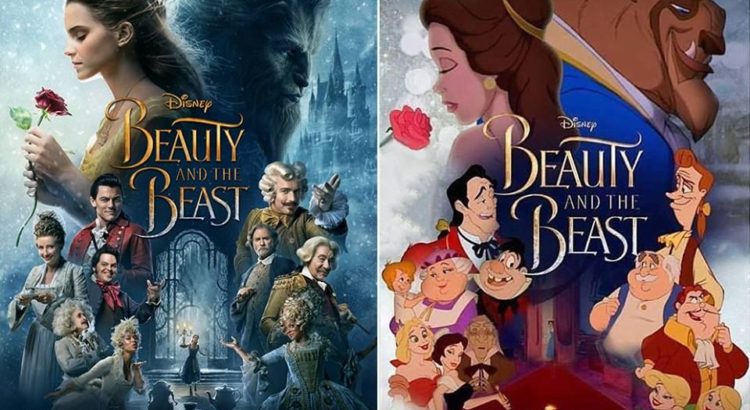
The trend started with Cinderella.  The movie was almost an exact replica of the animated version.  They had tweaked a couple of things and made the movie as beautiful as possible.  This movie was beautiful to watch, and gave you the same magic as the animated version.  Beauty and the Beast was similar to Cinderella in the fact that it was very similar to the animated version.  Both movies included the most popular songs and followed the plot very closely.

For some of the movies Disney has changed the formula a little bit.  The live action version of the Jungle Book was very different from the animated version.  In the live action they only include the most popular songs and they add more to the movie to make it more cohesive and have more substance.  The live action Jungle Book improved upon the original animated version of the movie. The movie Maleficent also didn’t just recreate a past movie.  But this is because there was no Maleficent movie before this one. This entire live action movie was based off of Maleficent’s part in Sleeping Beauty.

The new Disney live action movies are coming out throughout the rest of this year.  Based on the trailers for the movies, we cannot tell if they movies will follow the plot lines to a T like they had for Cinderella and Beauty and the Beast.  I think that The Lion King and Aladdin will follow the original’s plot very closely but Dumbo might stray from it a little more. Dumbo might not follow the movie exactly because the original is not as popular with children now.  The animated version of Dumbo was also a little darker than most Disney movies are now, so I think that it might have a more happy and positive tone than the original.

Your body only wants to protect you

Antibodies are a hallmark of the adaptive immune system. Put simply, they’re blood proteins forced into cardiopulmonary circulation in response to a cascade of molecular signals that scream, “there’s an invader here!” They’re made specifically to target and neutralize pathogens by flagging them for destruction by other, more violent immune cells.

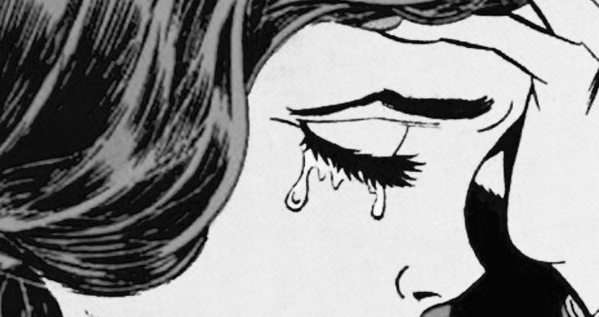
Yet, antibodies are not limited to existing in blood. Tears also contain antibodies.

Suddenly, I can’t help but go down the word association rabbit hole.

Immunity. Resistance. Protection. Exemption. Freedom. Unaffected. Healed.

Aside from crying being a physiological manifestation of the deeply psychological, could it be the body’s natural way of trying to treat itself by the only way it knows how? Inside all of our bodies lives a healer: a sort of system in place whose only job, is to treat and fix and mend. If our immune system could step out of the bounds of our skin, what would it look like? I’d like to think it would be different for everyone, since ways of recovering from person to person are not standardized, linear, or transferrable.

What’s to be suggested then by immune disorders—ones in which that create an antibody excess or deficiency? What is your body trying to communicate to you by continually producing antibodies for something that doesn’t exist? Or by producing no means of protection via antibodies, is your body surrendering itself without consent of the owner?

What’s more curious is that antibodies are not produced all the time; their production is triggered by the entrance of disease agents. Does this suggest that the presence of tear-engaging emotion is a foreign substance that needs to be disarmed? Tears of joy exist, along with tears of relief, but I think the strong association that exists between feelings of sadness and tears is no coincidence.

No one wants to be sad, just like no one wants to be ill. It is an emotion that is regularly avoided and pushed aside, because it’s one that takes away from the breadth of day to day life. Sadness creeps in like clouds and mist that grey out vibrancy and constantly exercise the dimmer on the light switch. It’s a parasite that grows stronger at your expense. It keeps you from operating at 100%. If there were a medicine at the store that was branded as a fast cure for swallowing negativity, it would surely fly off the shelves. Taken together, all of these considerations paint a pretty good picture of sadness as a sickness.

If the body’s natural state is one of strength and poise, it makes sense to want to exterminate anything that could possibly be construed as weakness. Immunity quite literally means “the lack of susceptibility, especially to something unwelcome or harmful.” The body strives to constantly rise above by building walls upon walls of protection, in efforts to be a beacon fortress. A fortress that doesn’t comprehend what it means to be a victim. A fortress that knows no vulnerability.

If I am one that believes in the truth of emotion, am I the immune system’s archangel? I see beauty in fragility and delicacy. Feelings are not hideous, they’re gorgeous and the most misunderstood forms of strength. When the time arrives to face actuality, maybe the immune system is only trying to soften the blow by making it harder to see through the tears.


(Image credit: Google images)

A Writer’s Block

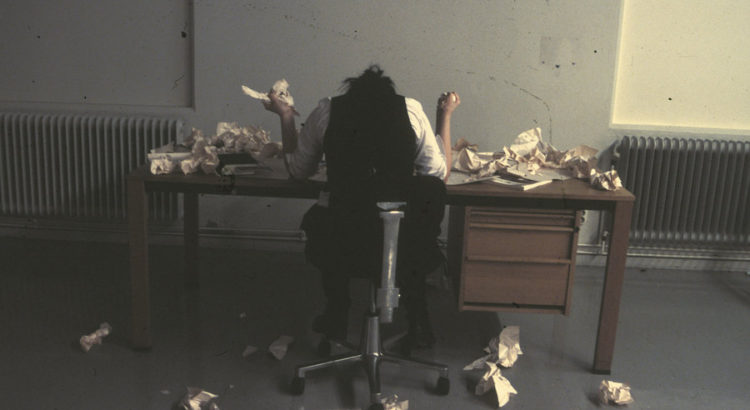
The worst of all feelings for a writer. Writing is easy, its always the ideas that are hard. When one is inspired, great things, ideas and thoughts can flow easily from mind to paper. But when you’re stuck with a deadline looming, all you can do is hope, pray and mull over your worries. The anxiety over the unwritten is real.

“The reason I admire writers is that they have the ability to come up with things to write”, someone commented. To be forthcoming, I don’t know how I come up with ideas to write about. They usually come in the shower, or when I am sitting quietly doing something else and suddenly it creeps upon me, tugging at me to put it into words. Things are easy when I have ideas. I can edit them, change them around and structure them beautifully. Nevertheless, all is difficult when I have none to write about.

These are moments when you start doubting your ability to write. “Am I even good enough as a writer?”. You doubt your abilities to conjure something good if you can’t even come up with something good to write about. This challenge is definitely one of the hardest ones I’ve ever (and am still) facing as a writer.

Till then, I’ll keep on daydreaming till better ideas for material come to me.

(Image credits: Google Images)