The Umich Bucket List

Image result for bucket list

Almost everyone has some sort of bucket list–a list of goals to accomplish, places to see, or things to do within your lifetime. In my second year at Michigan, I’ve begun to think of all the wonderful things I’ve done or have yet to do before I leave. There’s so much to explore on campus. Here’s my (wholesome) Umich bucket list; maybe you can add a few items to yours!

  • Cheer in the student section at a game in the Big House
  • Attend a performance at Hill Auditorium
  • Watch a movie at the State Theatre
  • See a famous person speak
  • Explore the artwork at the UMMA
  • Feed a squirrel
  • Ride a Boober
  • Paint the Rock
  • Float down the Huron River
  • Stroll through the Botanical Garden
  • Ring the carillon bells at Burton Tower
  • Enjoy a meal at Zingerman’s
  • Experience dinner at a plethora of Ann Arbor restaurants
  • Have a picnic at the Arb

Image: SeeJH

Maps as Art

If you handed me a printed map from a rest stop, I’m not sure I would be confident in telling you which direction to go. To me, physical maps are geographical puzzles you shove into the back of your car’s glove compartment. In the past, I never thought of a map as beautiful, let alone as an example of art; however, this perspective was challenged after a field trip to the Hatcher Graduate Library.

Instead of the normal lecture, my digital research class was treated to a brief tour of the Shapiro Undergraduate Library and Hatcher Graduate Library. Out of the numerous books, resources, and study spots, what caught my attention the most was something I would have never expected: maps. I was mesmerized by the Unique Perspectives: Maps from Tokugawa & Meiji Japan exhibit, which was on display until October 30th. While slightly faded, an array of swirling colors and intricate details captured my attention, and I found myself wandering back to the exhibit after class.

For a moment, I forgot about the stresses of essays or homework and was whisked away to another time and another place. Triangular mountains and waving rivers somehow made me feel at peace. While granting me historical facts, these displays stretched my imagination. All the lines and jagged squiggles weren’t meaningless marks on paper, but places, history, and art. I daresay the mere size and grandeur of some of the maps resembled priceless paintings. As someone studying Japanese through LSA’s Residential College program, I was also drawn to the uniqueness and artistry of the symbols. I imagined shiny black ink caressing the paper in gentle strokes, forming different characters with something important to say.

In moments I saw maps – and art – in a new light. I found myself no longer cringing at the series of puzzling lines, but captivated by the complexity and splendor the maps held. Now, I’m not educated on traditional map making rules, nor am I an analytic art critic; it’s possible my perspective of the display simply reveals my ignorance about maps. However, I viewed even the most simple of maps as anything but stereotypical or boring. This is my first blog post, and if a small trip to the library prompted me to see maps in a new light, I can’t wait to explore what other artistic treasures are in store during my journey here at the University of Michigan.


Fall Decorations

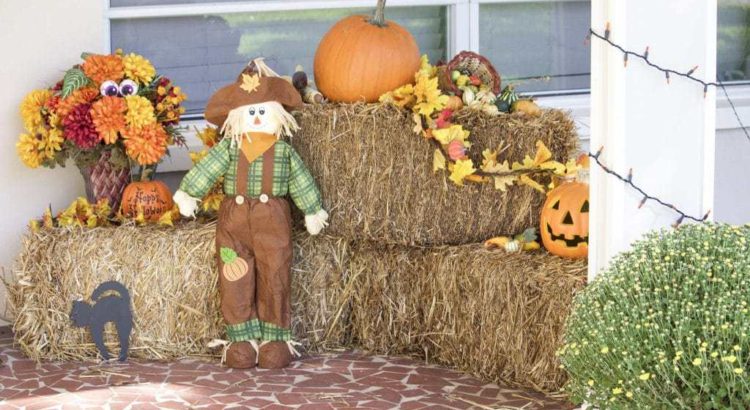
Happy Halloween!  It is a little late to decorate your dorm room/apartment/house for Halloween, but don’t start putting out your Christmas decorations yet.  You can still decorate for the fall season. Here are some fall decoration ideas that will help you celebrate the season.

My house is always decorated with hay bales and corn stalks on our front porch.  This is generally decorated with our Halloween decorations of spider webs and ghosts in the front yard, but after Halloween we take down the Halloween decorations but keep up the corn stalks and hay bales.

An easy decoration for the fall season is to put fake orange, yellow, and red leaves around your house.  You can put them around the coffee table, in bowls, and on ledges. This will give your apartment color and make it brighter so that your apartment is not so dark as the sun sets earlier in the fall.

Another way to make your apartment or house brighter is to buy and light fall scented candles.  This will not only light up your home but it will also make your home smell like fall. This is not a good idea for a dorm room because you are not allowed to have candles in the dorms.  Having a couple different scented candles will mix things up with your house always smelling wonderful.

An alternative to candles if you do not have a lighter or are not allowed to have them, like in dorm rooms, is a scent that you plug into the wall that will dispense a specific scent throughout the day.  This is also more discrete and does not take up much room in your home.

Other ways to decorate for fall that are not Halloween related are to have pumpkins on the inside or the outside of your house.  Pumpkins are not just for Halloween, jack-o-lanterns are for Halloween. If you have pumpkins that are not carved then you can use them for decorations until Thanksgiving.  You can potentially have painted pumpkins to decorate for fall, but the paint has to be a neutral pattern and cannot be too loud. A silver or white painted pumpkin with polka dots or chevron pattern is good for decorations, but a teenage mutant ninja turtle pumpkin is not a fall decoration.

The last way that you can decorate for fall is to have fall hand towels, kitchen towels, and bathroom towels throughout your home.  These decorations are great because they are also useful. Towels are bold enough for people to notice and so you do not have to have many other decorations because towels are in almost every room in a house.  The towels are also useful and have a purpose so they serve two purposes.

Navigating Burnout

 Photo by Julia Rose Lawson. 

I started playing violin when I was eight years old, and the Suzuki method of teaching guided my studies for about four years until I started playing the viola. I never saw myself becoming a musician; I was more interested in becoming a famous actress or singer, and viola was just a hobby. But the more I practiced, the better playing viola felt. Eventually I went to a summer camp and experienced playing in an orchestra for the first time, and I realized what passion felt like. I became a music nerd by the time I was a sophomore in high school, but more specifically, a classical music nerd. Classical music felt so special to me. I started listening to it all the time and dedicated hours upon hours of my week to practicing and various musical commitments. It became everything to me. And my experience at a classical music camp gave me a glimpse of what my life could be like if I pursued music full time. I loved it: the feeling of success from becoming a better player, the adrenaline that flooded my limbs during performances, and the friends that I made who inspired me artistically and showed me what real love in a friendship felt like. When I left camp, I wanted to commit to being a classical musician because it showed me how perfect my life could be. For the next three years, I put everything I had into becoming a good enough viola player to get into my top choice college: the University of Michigan School of Music, Theatre, and Dance. (Surprise, surprise, I got in… hence my writing a blog post for Arts at Michigan.)

I am a junior now, still pursuing viola performance. Sometimes, I feel so immersed in music, that it doesn’t feel like music to me anymore. It’s analyzed, fragmented, repetitive, robotic. It’s causing me anxiety when I work on anything else. I have spent almost eight years with this viola on my shoulder– my longest relationship. I love it because it has taken me everywhere that I have needed to go in my life. Without it I would not have met my closest friends and because of that, I would not be myself. I wouldn’t be here, in Michigan. And maybe it’s cheesy to say, but I feel connected to it. In my heart. How could I not? Eight years and thousands of hours. It is my part of my body and it is my voice. But I have done so much. It is so integral to my identity that I don’t know who I am without it, and that’s not necessarily a good thing. Lately, practicing has become more mundane and I constantly question myself about what I really want.

I know classical music isn’t my path anymore. I have to stick with this degree because the training is good and I care about being a good violist, but I also have to start challenging myself again. It’s dangerous to pursue an art if you don’t love it. And I know that deep down I love it, but it’s been a really long time since I’ve felt genuinely passionate about something.

The truth is that my ideas about what music is are changing. Since I’ve gotten to college, I have been more exposed to jazz, world music, roots music, and improvisation. Musical improvisation has been this big concept looming over my head as I question what it really means to be a musician. Improvisation requires you to make music in the moment, like a real-time composer. To be a good improviser is to have a musical mind, but what if I can’t improvise? If I can only play what’s printed on a piece of sheet music, do I have a musical mind? No, but I know I want to. Every musician wants to know music like that. If you know music like that, and you have the technical abilities to play whatever you want, your creative expression will be endless. And that’s what I really want: to be able to fully, freely, creatively express myself in a musical way.
Romanticizing Chores

(Soiled Counters by Sarah Shu)

After writing this poem, I thought to myself, “Do I really romanticize my experiences when I write them down?”. I kept thinking about that question. For some part, it rings true, because I’ve written about things that may seem rather dull to some people, such as the rainy days when I walk back to my apartment soaked, sad and miserable. Yet I write about those rainy days as if every moment of it begs to be noticed. I write as if every raindrop that soaked me had to be felt, deeply or otherwise. The raindrops have to be reflected upon, whether it be the damp sensation of it or what the dampness may mean in the overall context of my life or in the life of others. I jot down the vivid feelings I was feeling at the time and how it may or may not seemingly fit in the present timeline of my life. My thoughts needed an outlet, oh so badly.

As for this poem, after stress-cleaning the kitchen countertops, I was far from inspired to tackle my bottomless pile of assignments. At this point of the semester, I was in the phase of feverishly writing despite my lurking exams. I needed to make sense of my thoughts through writing while my adrenaline was high. At the end of writing this poem, I wrote down; why am I romanticizing chores? Because I can. 

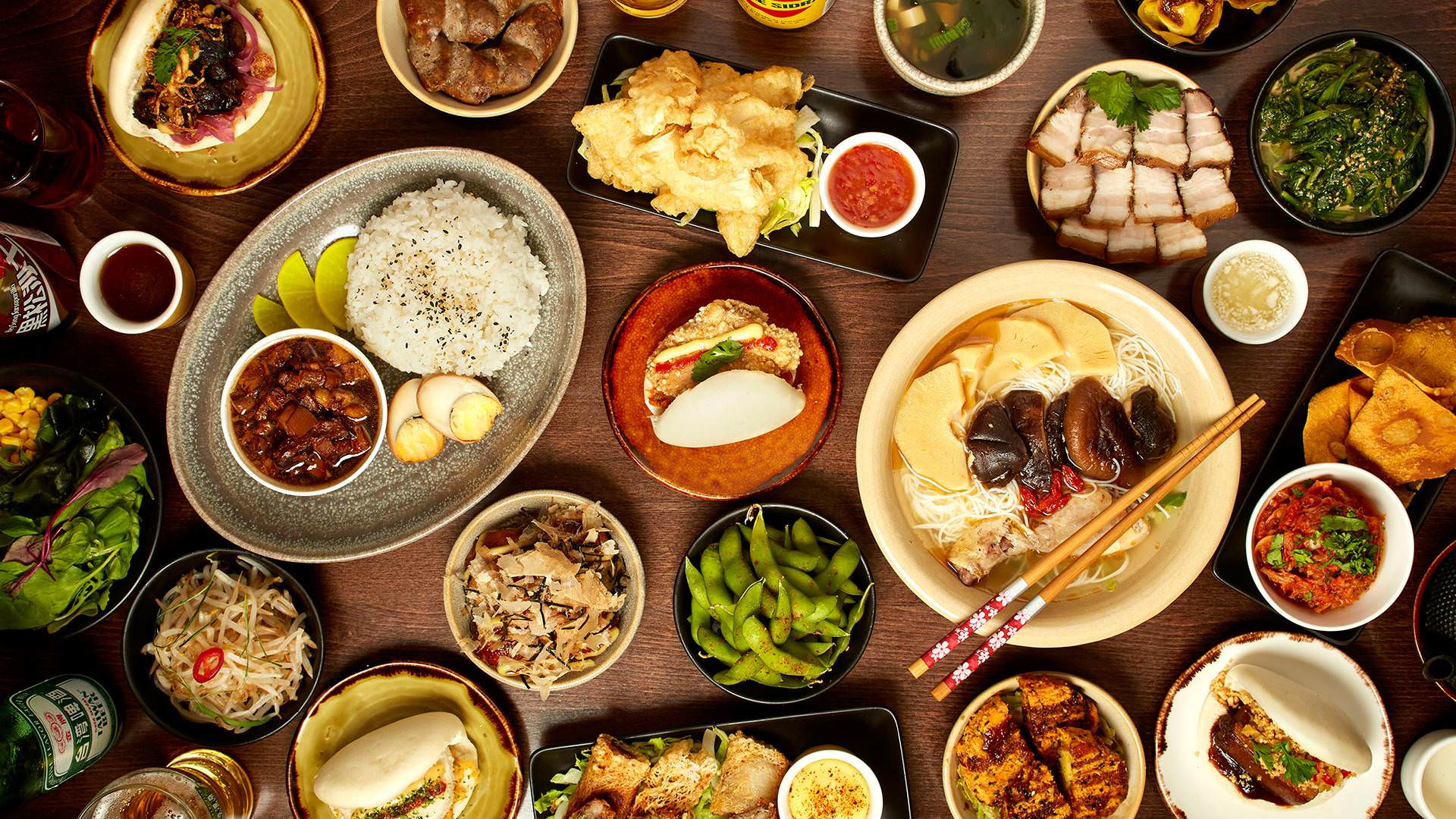
We Are What We Cook

I was always fascinated by the flickering flame that lit up the stove top. The blue lights gave off a seductive heat that I was warned against. The results were magical too. My grandma conjured up steaming concoctions of Chinese broccoli and sausage, sweet pork ribs, and sticky pork knuckles, glistening with a fine sheen of oil and love. But all my efforts, even under her tutelage, were met with disappointment. “Too much shrimp paste”, my grandma says, after the briefest taste of my limp green beans. “Not enough soy sauce”, she says of my steamed eggs. She teaches me how to wield the cleaver, but its overly large handle keeps slipping from my hand. She shows me how to shake and shiver the wok, but my garlic keeps burning anyway. I end our endeavors at the age of twelve in a petulant fit, disappointed.

It was years later, before I approached the kitchen again. This time, I was hesitant, much readier to leap away from the flame than to embrace it. I changed tactics. Instead of homegrown techniques, I turned to the endlessly tacky. Instead of the intimacy of family, I chose the distance of a stranger. Thus, began my journey into the depths of food television, starting with the most generic channel of all, the Food Network. As I watch Bobby Flay chop onions for his Chicken-Posole Soup or Giada De Laurentiis grate parmesan with a pearly smile, I wonder why I and thousands of others have fallen for their effortful charm. I am not sure that I am really looking to be an excellent chef. For I don’t need to know how to perfectly poach a chicken breast nor do I care how to pulverize a mixture of pine nuts, parsley, and peppercorns into a pesto. It even feels traitorous in some ways, to pursue this life of domesticity, instead of the modern, working woman that I was taught to be. Why do cooking shows, then, continue to entrance me?

But cooking shows were not born in the modern era. The first cooking show was an invention of the late 1940s by a balding British man named Philip Harben. According to current standards, he is not telegenic, but there is a jolly workman look to his crumpled tie and rolled up shirt sleeves. Harben taught people how to cook, not for entertainment, but out of necessity. With Britain still on rations, his cooking show showed how to cook with a nearly bare cupboard. Not so today, when television shows promote only fresh, organic, picked-minutes-ago produce. Perhaps Harben’s show does not seem to be the direct answer to my question. But one can easily see the key characteristics of the modern cooking show already germinating underneath the surface. By 1947, a year after his show first started, the BBC began referring to him as a ‘television chef’. It is more than a simple name change. It is the birth of an entirely new profession, a new genre of television. It turns what was once relegated to an individual kitchen to something broadcasted into a million homes at once.

It is a community that I thrive in. I eagerly look up recipes on the official Food Network website. I buy cookbooks and collect all the recommended gadgets. I have become a dedicated fan, not of cooking itself, but of cooking as an imagined lifestyle. It turns out I didn’t need cooking as a reality; only as a fantasy.