I should have the right to be average, or great, or sub-par. I should have the right to have an infinite amount of stories told about me, an eternal range of nuanced, kaleidoscopic representations of my life and my identity. I should have the right to not be limited to one narrative.
But perhaps these rights only exist in an ideal world where people of color– especially those who are artists of color– don’t have to labor twice as hard to get our stories told.
In an op-ed written by Pulitzer-Prize winning author Viet Thanh Nguyen, he posits the idea that we live in a culture of “narrative scarcity” in which “we feel deprived and must fight to tell our own stories and fight against the stories that distort or erase us.” In a culture of narrative scarcity, every story told about or featuring people of color or other marginalized groups will automatically define those people. In a culture of narrative scarcity, people like me– immigrant, Muslim, Indian, hijabi– or people with similarly unrecognized or misconceived identities, simply cannot afford to tell bad stories. Our stories have to be good, captivating, enthralling, so our privileged counterparts can see us as human. Otherwise, we become the quirky black sidekick who occasionally blurts out, “DAMN!”, or the strange Indian foreigner who can’t pick up any social cues, or the Latina maid working late into the night, or the Native American woman depicted as being “exotically beautiful”. We become stock characters pulled out of some dusty corner of the white writer’s shelf to satisfy their diversity quota.
Few artists of color achieve widespread recognition in America– like Oprah, or Hasan Minhaj, or the up-and-coming Lana Condor to name a few– and most are just lay citizens trying to get by. In either case, though, people of color have to work twice as hard to achieve what any privileged person takes for granted: visibility in media, an assumption of ownership over the national culture, and the idea that they aren’t defined by a single narrative. Not only do artists of color and other marginalized people need to fight to be seen and heard, we have to create a place from scratch for ourselves in a narrative framework that for centuries hasn’t included us except as sidekicks, villains, inferiors, or foreigners in the margins of a larger, whiter, more christian narrative. We have to fight, all the time, and if we make a mistake, or write a bad story, or film a bad movie, we take on the risk that our nation views us as that single monolithic mistake.
We need to come to a point where artists of color don’t have to work as hard to have the same visibility as more privileged artists. We have to come to a point where a bad story about an Asian American is just a bad story about an Asian American, and won’t define all Asian Americans. As Nguyen eloquently writes, “The real test of narrative plenitude is when we have the luxury of making mediocre movies. And after having made mediocre movies, we would be rewarded with the opportunity to make even more mediocre movies, just as Hollywood continues to make enormous numbers of mediocre movies about white people, and specifically white men.”
I have the right to be mediocre. The paradox is that I’m just going to have to work twice as hard to get that opportunity.
(Read the New York Times article by Nguyen here: https://www.nytimes.com/2018/08/21/opinion/crazy-rich-asians-movie.html)
Words have the power to tell a story. The words that you chose determine how you tell the story. The purpose for saying the words is why you tell the story. You use words to explain whom the story is about and where the story takes place. Most people use words every day to communicate with others. We can understand each other because we share words in a common language. The language you use influences the fundamental process that you use to think. The language in which you think modifies how you perceive an external stimulus. These words, thoughts, and perceptions create an identity for you as the speaker.
Now, I want you to reflect on the identity of different countries. What does this have to do with words? Their language? Oh, but it has everything to do with their language. So back to my first reflection prompt: reflect on the identity of various countries. Let’s start with the United States of America. Typically, the United States is viewed as a collection of independents, indulgent to a point of selfishness, and with a strong emphasis on self sufficiency. Heck, the American Dream is a national ethos built on the freedom to achieve. The majority of this country’s inhabitants speak English. In English, the standard syntax is subject, verb, object. Because of this, the frame in which we speak is implicitly selfish. The center of the sentence is the personal pronoun “I”. Everything proceeding the sentence reacts to “I”. The behaviors and attitudes of English-speakers largely reflects their language.
Translate these following sentences into Spanish:
“I like to write.” –> “Me gusta escribir.”
“I forgot my book at home.” –> “Se me quedó el libro en casa.”
If you literally translate what was said in Spanish, it will sound like “Writing is pleasing to me” and “My book stayed at home.” Sounds odd, right? Typically, English speakers do not frame their sentences in this way. Notice how the Spanish translations places writing and book as the subjects of the sentences. It’s not about the speaker; it’s about the subject of interest. Writing embraces the role of being a desired activity, a pleasurable activity if you will, therefore the significance is placed on writing, not one’s self. Notice then how Spanish culture is notably generous. In the two summers I spent in Belize, lower-class mothers catered to my needs, giving me a home and what food they had. Children would offer me their most prized drawings. They hadn’t even the supplies to make the drawing until I provided it for them and yet they offer me the product of hours of their time with notes of gratefulness and love. The benevolence in these people was astounding. A component of this kinds is surely due to the selfless nature of the language in which they think, speak, then act. Furthermore, Spanish speakers tend to be less uptight than inhabitants of American society who generally takes blame heavily upon themselves. In the sense of forgetting the book, my Spanish professor, a skinny mellow 5 foot 6, black sneaker-wearing old man, once phrased it “the book takes the blame for being forgotten.” Americans hurry through an extensive schedule. Every single day. (Stereotypically speaking. But stereotypes don’t come from nothing…) People in Granada, Spain take a nap around 2-3pm. Every single day. The streets are quiet during this time. People relax.
Clearly, language dictates how you interpret the world around you. Knowing another language is like having another perspective on life.
So I declared a major in Spanish as part of my studies at the University of Michigan because I wonder how having another language would influence how I perceive the world around me and how I perceive myself. Not a bad idea for you, in any language, to try out a new perspective.
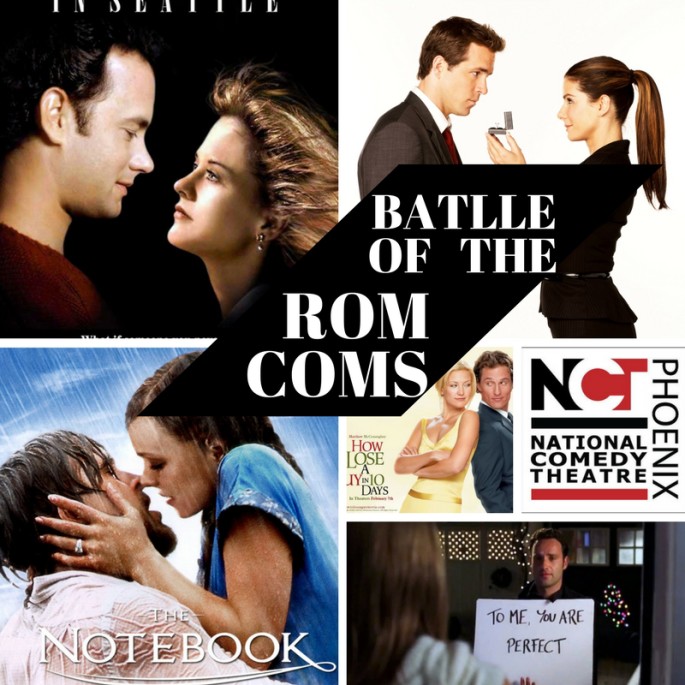
Since the late 1980’s romantic comedies (romcoms) have been a staple genre. It was popular all the way until the late 2000’s when the genre feel out of popularity. Now Netflix is bringing it back.
There seems to be a gigantic list of romantic comedies that came and are now classics from the 80’s. There is “When Harry Met Sally”, “16 Candles”, “Pretty In Pink”and “Can’t buy Me Love”. These romcoms are now classics and must watches for all romcom lovers. The 80’s also had several romcom stars. The most notable being Molly Ringwald who starred in “Pretty In Pink” and “16 Candles”. The theme of female romcom stars continued all the way to the present.
The 90’s was the arguably the golden age of the romcom. Movies from “Notting Hill” to “10 Things I Hate About You” were somewhat popular while some of the biggest hits that every person still knows are “Sleepless In Seattle” and “Clueless”. “Clueless” was the “Mean Girls” of the 90’s and became a quotable icon very quickly. “Sleepless In Seattle” is one of the most iconic romcoms that everyone knows and loves. It is one of the most must see romcoms and movies in general. Some of the stars from the 90’s romcoms are Meg Ryan and Tom Hanks. Not only were the two popular romcom stars but they also starred opposite of each other in two of the biggest romcoms of the 90s (“Sleepless In Seattle” and “You’ve Got Mail”).
The 2000’s were the downhill slope of the romcom. The theater and tv were getting so saturated that not that many stood out to the general public. Some of the big romcoms were “27 Dresses”, “Bridget Jones Diary”, “The Proposal”, and “13 Going On 30”. The 2000s split romcoms into several categories because there were so many movies. Romcoms were split into teen movie romcoms, made for tv romcoms and then hit romcoms. Some of the teen romcoms were “She’s The Man”, “What A Girl Wants” and “A Cinderalla Story”. The star of the teen romcom category was Amanda Bynes who starred in over 5 romcom movies. There were many stars of the popular romcoms, One of the stars of the popular romcoms was Sandra Bullock who starred in “Two Weeks Notice”, and “The Proposal”. Two others were Anne Hathaway and Jennifer Lopez.
After the early 2000s were over saturated with romcoms the genre died down for a little bit. There was only made for tv romcoms, with most of them coming out of the Hallmark Channel. Over the past year Netflix has tried to redeem the genre and have been creating a large amount. There most recent movies have gotten a lot of attention and they are bringing new romcom stars. The most popular Netflix romcoms are “The Kissing Booth”, “Set It Up”, and “To All The Boys I Loved Before”. With these movies the biggest star that has risen is Noah Centineo who starred in “To All The Boys I Loved Before”. With all of these new Netflix romcoms the genre is coming back into the lime light and is being revived.
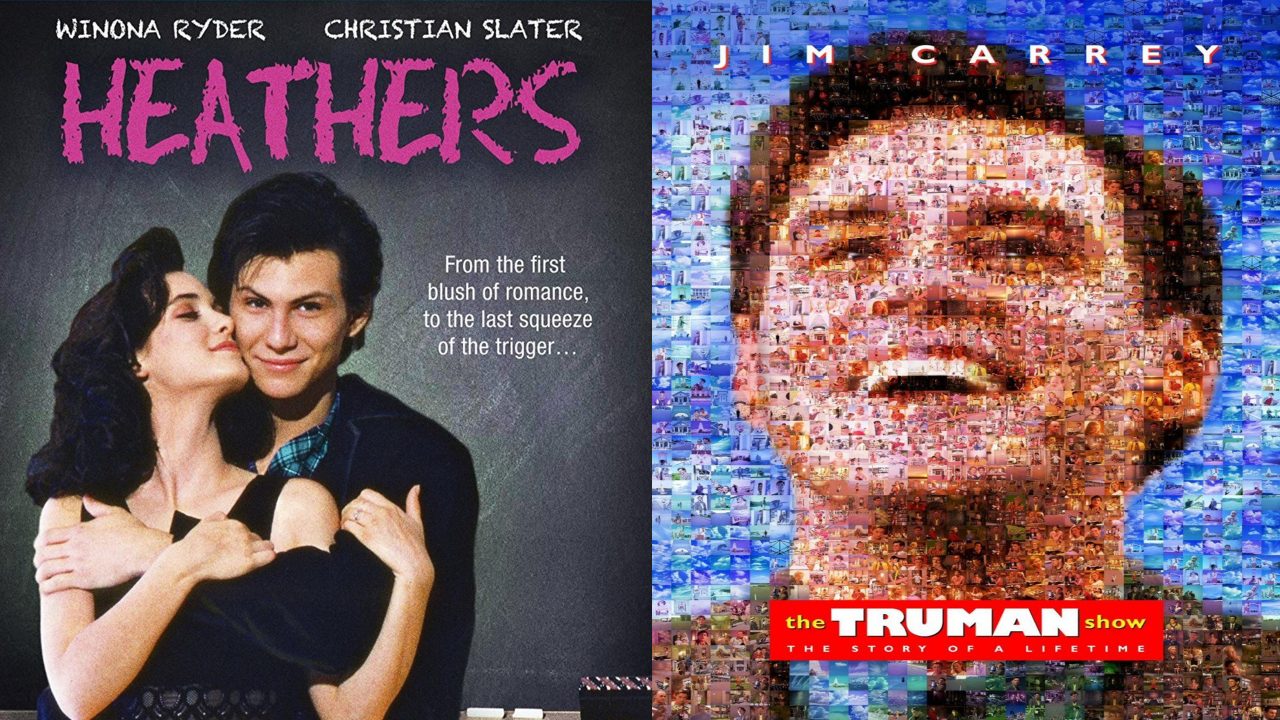
In my experience, black comedy is edgy by nature. Since the most common theme I’ve seen explored in the genre is death, I’m not surprised what makes black comedies so unique for me is how they force me to laugh at things I wouldn’t laugh at otherwise while still being in good taste. I watched the films “Heathers” (1988) and “The Truman Show” (1998) back-to-back in order to catch up on some highlights of the genre, and found another element it experiments with to great effect: the expectations we have of a film based on the age of the main characters. I only knew the basics about the protagonists of both of these films, so the dissonance between its subject matter and its treatment of said subject blindsided me so much I had to write about it.
All I knew about “Heathers” was that it was about the most popular (and mean) girls at school. This is a a well-trodden premise, and I was worried at the beginning when the basic high school stock characters were established that the film would be a straight-forward high school drama. And yet something feels off; the characters of the movie are more cruel and crass when dealing with sensitive issues than I can ever remember seeing when I was in high school. I found it hard to believe that even in the 1980s young people could be so nasty. Then, the film hits a turning point when the least-mean popular girl Veronica (Winona Ryder, “Stranger Things”) tries to do the Heathers’ bidding by talking to the mysterious JD (Christian Slater, “Mr. Robot”), who has been watching and smiling at her from a corner of the cafeteria while the Heathers wreak havoc all of lunch. At this point I got worried. Another high school romance? But then the movie shows its true colors.
JD pulling a gun on bullies literally out of nowhere in “Heathers”. Source: Internet Movie Firearms Database
JD gets harassed and called a “fag” by jocks because one of the most popular girls in school just talked to him, a prime example of the absurd logic bullies use to target others. He in turn brandishes a gun out of nowhere and shoots them (with what we later learn are blanks). What?
This scene is a prime example of the unique power of black comedy by being subservive on two levels. For one, suburbia is known for having low crime-rates, which makes them appealing to move to in the first place. This establishes the magnitude of how dangerous JD is to this community from the very first time we see him, and it is both fricking hilarious and fricking horrifying at the same time. But on a broader level, this disrupts our expectations of what a high school movie is like. It is a good introduction of the very dark and twisted view of high school presented in “Heathers”. I had zero idea the film is rated R, but I wish I had.
I had the complete opposite emotional reaction when watching “The Truman Show”. It is unexpectedly sweet and tender at its core, following 30 year-old Truman Burbank (Jim Carrey, “Bruce Almighty”) on a quest to find his high school crush who he loved but had whisked away, as he realizes something is very off about his hometown. I did not expect such a touching driving force for a movie about a man who is the star of a crazy successful reality TV show with everyone knowing it but him.
One of the darkest aspects to the film, in my opinion, is the idea that we do not really know the intentions of other people because we do not know what we do not know. It made me sad to think that Truman, who is kind, has intimate relationships with those he considers loved ones that are actually all actors. A notable example is when his closest friend Marlon (Noah Emmerich, “The Americans”) holds back tears after Truman says he is his best friend. I felt that.
After seeing that Jim Carrey was the lead and that the film was about a 24/7 reality TV show, I was concerned that “The Truman Show” would take a turn for the grotesque regarding sexuality and violence. Yet surprisingly, there is not any sex or violence. When Truman’s sexuality is addressed, it is to show how artificial his marriage to his wife Meryl (Laura Linney, “Sully”) is. When Truman is shown to have a habit of buying ambiguous magazines “for the wife”, I assumed it was porn. But instead, the magazines are shown to be full of close-ups of women’s faces, which he uses to construct a portrait of his love interest in high school whom he still misses dearly after so many years. It is sweet and shows a pure and romantic side to Truman that makes him a very sympathetic hero.
Meryl promoting hot cocoa to the camera after her husband Truman shares he believes his world is a lie in “The Truman Show”. Source: YouTube
In contrast, his relationship with his wife Meryl is dull and full of repetition, with scenes of them together focused on mundane daily marital life like saying goodbye before going to work or uniting at the end of the day. The fact Meryl is only acting like his wife is palpable, but she never misses a beat despite her regular advertising of sponsors’ products. But the injustice that Truman faces by having everything he knows be fiction is brought to the forefront when he finally confronts Meryl that something is very fake about their city and that he must go follow his dreams of travelling. She becomes visibly panicked, no doubt well-aware of all the anti-travel messaging he received to keep him on set, and tries to dismiss his ideas. And out of nowhere she pulls out hot cocoa and offers to make him some as she advertises the specific brand. While it is funny that she would stick to the script at such an inopportune time, it is also very depressing to see how she and all the other actors on the show value their professional relationships with Truman over their personal relationships with him. This makes his genuine, albeit short-lived connection with his love interest Lauren (Natascha McElhone, “Californication”) so charming. They are able to recognize their chemistry in spite of all the obstacles between them, making the movie a lot more heart-warming and fairytale-like than I anticipated.
When I found out the film was rated PG, everything clicked into place. The 1950s-inspired clothes and decor lent a sense of authenticity to the sanitized world that is supported by sponsors and the average Joe watching. I’m glad I didn’t know that, however, so I could feel firsthand how disarming it was for Truman to take to heart the idyllic artificial life his show’s creator Christof (Ed Harris, “Mother!”) made in an effort to shield him from the real world’s horrors. I would have expected the family-friendly PG rating to detract, not enhance the movie centered on the unfiltered human experience. And yet by showing how unnatural it would be to live in a world that is monitored and approved by the masses, the plot rises from science fiction thought experiment to social commentary, with a lot of heart added to the mix.
In conclusion, I found it very refreshing to see age groups redefined in “Heathers” and “The Truman Show” through the use of comedy. The movies take the stereotypes of the teenage bad boy and the wholesome adult everyman to extremes, which lends itself perfectly to critique the societal norms that allow these figures to emerge in the first place in an original and memorable way.
I am walking with my head dipped down. My steps pound the pavement with a steadiness that can only come from familiarity. There is no more frantic rushing or hesitant pacing. There is only one schedule, one week at a time until another semester is over. At least, this day is over. Lecture following lecture, staring at a PowerPoint slide, staring into oblivion. There is an easy complacency between exams, when only minimal attention is required. I take notes without reviewing them. I ignore the extra readings. I will return to them, eventually, in the frenzied night before the test. But for now, I am calmly ignorant, willing to leave the inevitable chaos for the future. It has been a typical Thursday in a typical life.
I return to my room in the same quietness. It is a feeling that isn’t negative or positive, isn’t happy or sad. It is just the feeling of existing, floating in the middle. I am not exactly aimless, but I don’t know where I am going. It is a simple feeling, because it doesn’t excite any outcry of grief or burst of excitement. One can simply feel it, no further reflection needed. But these feelings, ultimately, are a trap of our own doing. We may wake up, engage in conversation, walk from class to class, but we aren’t truly there. We may be in attendance for all these things and never be truly present. Then, something shakes, and the careful holding pattern is broken.
On Thursdays, I run. Like the classes, it holds my day in order. I struggle out the door with my half-tied shoes and suddenly, the sun is beating insistently on my face, urging me to look up and around. All seems to be well, only a few stragglers adorn the sidewalk. They absorb the sunlight without acknowledgement. I easily dodge them as I push my legs into motion. I need to focus on my breathing, I need to get it under control. But it is abruptly impossible because there is something in the air, too, that is strangely compelling. In the middle of the track, I stop and look, breathe and feel. The perfect blue of the sky takes up my view, until it becomes all I can see. It makes me feel miniscule. The world surrounds me, in a magnitude I can’t imagine. I reach out my arms and my combined wingspan is so insignificant that it makes me laugh. The careful schedule is rendered immediately ridiculous. In the context of the world, I am running on the smallest little hamster wheel. Perhaps this should have summoned some sort of existential despair. Instead, only exultation in an order much greater than myself. Somehow, the world had arranged itself into a storybook. A perfect fall day in every aspect lay before me, from the still-vivid grass to the crackling, drying leaves. Yet, I had failed to see it all until this moment. Perhaps it is not the world that suddenly becomes extraordinary. Perhaps it is our vision, usually so dim, that becomes luminous.
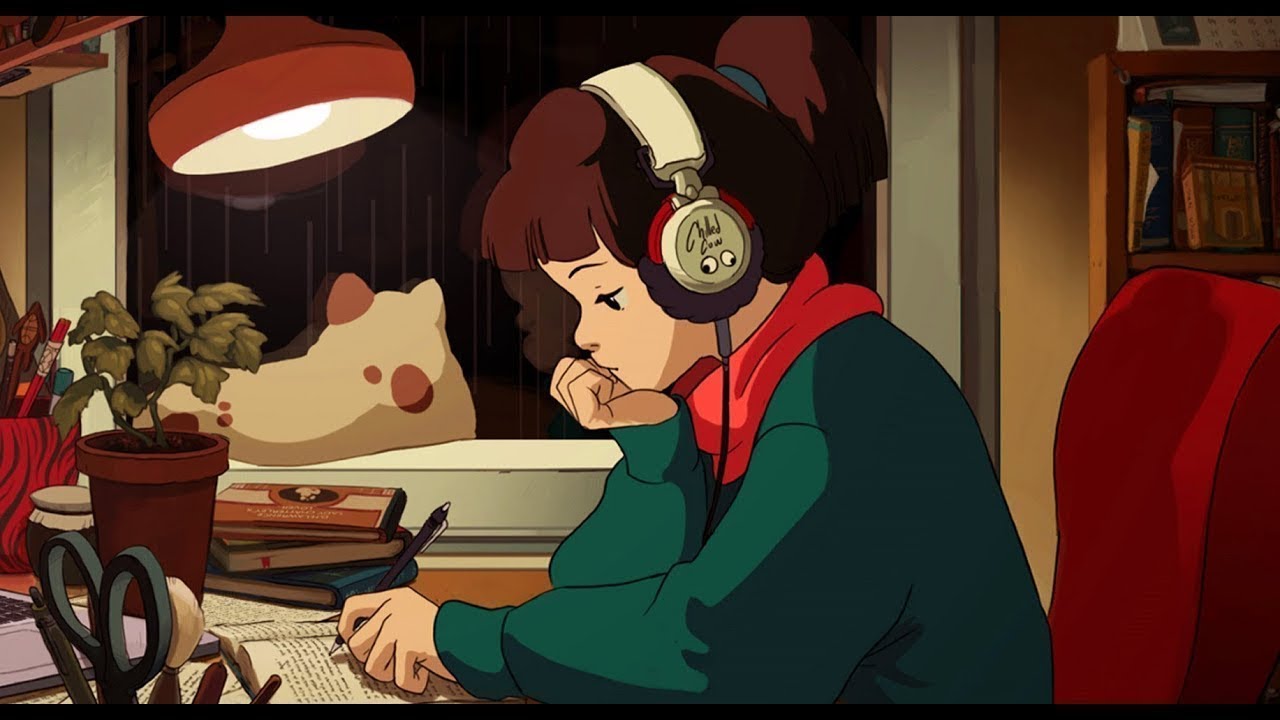
Listening to music while doing schoolwork can increase concentration and relaxation for many people. I certainly enjoy listening to laid-back tunes in the background to destress after classes. It’s been a hectic, tiring week for everyone, so I thought I’d share some study music playlists and artists. Here are my (Spotify) recommendations, in no particular order:
Classical Essentials
Study Vibes
Chill Lofi Study Beats
study & chill
Studio Ghibli
Chopin
Bach
Joji
Lofi Hip Hop Radio – Beats to Relax/Study to



 Listening to music while doing schoolwork can increase concentration and relaxation for many people. I certainly enjoy listening to laid-back tunes in the background to destress after classes. It’s been a hectic, tiring week for everyone, so I thought I’d share some study music playlists and artists. Here are my (Spotify) recommendations, in no particular order: