In the Aftermath of a Super Bowl

It’s a strange thing to watch a Super Bowl when your team is at home. It is not an unfamiliar feeling, though. Only two teams make the Super Bowl, and for the past seventeen years, the Patriots have dominated the Eastern Conference spot. They have played in the  Conference Championships eleven times since 2001 and made it all the way to the biggest game of the year, eight times, in the same period. Their record is impeccable. Their ascent, inevitable. Sometimes, I fear that our robot overlords have seemingly already arrived, in the form of an ageless Tom Brady and the emotionless Bill Belichick. It is an unbearable dominance, worsened by the Patriots’ air of smug duplicity.
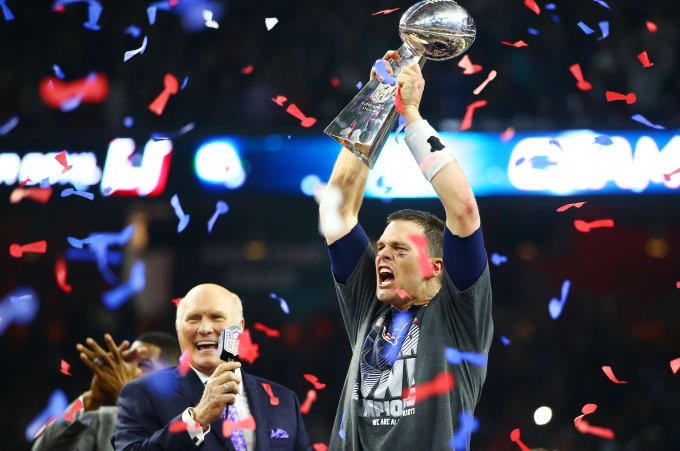
Yet, for all my endless rants, I tuned in, along with millions of others, to watch the Super Bowl this year. I sat in a crowded room, ate wings, and watched the full four hour-long broadcast. I watched despite the Seahawks, my team, having been eliminated weeks ago. I watched despite the homework sitting undone in my dorm room. I watched, hypocritically, for the Patriots. The team’s domination of the sport has created something rare indeed: unity. Unity among the fans of the thirty one other teams who have watched helplessly from the sidelines as the Patriots have collected ring after ring. Fans that have had trophies ripped from their grasp by another Patriots comeback, another Patriots miracle. This is the special anger, engendered only by sports; one that feels both overwhelmingly important and staggeringly petty. Perhaps it is a hateful kind of unity, but it’ll have to do in times like these. Only the Patriots could make me feel this way. Only the Patriots inspire such passion. The Jacksonville Jaguars were four points away from playing the Eagles in the Super Bowl. I would have abandoned that game at halftime. But to watch the Patriots play, to root for them to lose, is obligatory viewing. To watch a Patriots game is a gamble with high risk and higher reward. It is dreadful for most of the four quarters because one is always on the lookout for the next freakish Brady third-down conversion or well-timed interception. Belichick ensures that his teams run like clockwork, infuriating in their precision and competency. There are brief moments of hope, such as when the Falcons held a twenty five point lead midway through the third quarter of Super Bowl Fifty One. But even then, there was trepidation in even believing that a blow-out of this proportion could occur against this team of well-oiled cyborgs.

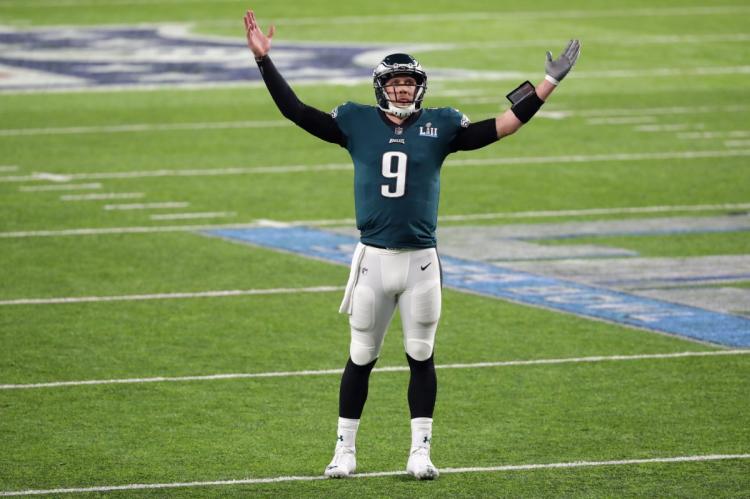
Yet, in the moments after the Eagles clinched Super Bowl Fifty Two, there was also an unbelievable happiness. All of that fear suddenly became joy, all doubts suddenly vanquished. That is the power of a Patriots loss. A power that could only be borne from repeated championships and utter greatness. It pains me to admit it, but I’m happy the Patriots made it to the Super Bowl. I’m even happier that they lost.

Dan and Phil’s ‘TATINOF’ is the most fun you’ve ever had (in meme hell)

As I debate over whether or not I want to see my favorite YouTubers Dan and Phil again on their 2018 “Interactive Introverts” tour, I reflect on my experience seeing their first tour two years ago. For those uninitiated in Internet culture, many YouTubers are going on tour to promote their books. While most fans are happy to see them in person, there’s been debate on whether this is “selling out” when a major source of their appeal to begin with is the earnest sincerity of their home-made productions.

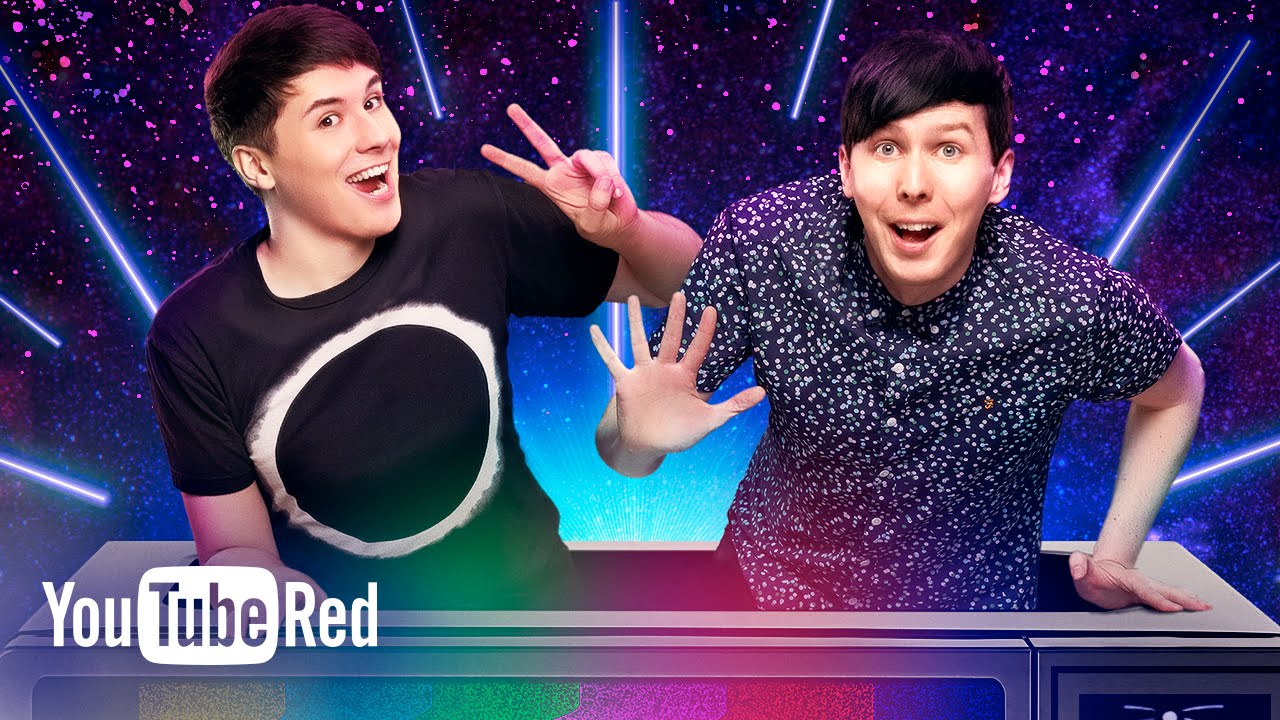
The sea of young fangirls that turned up at Detroit’s Fox Theater on May 10th, 2016, proved this isn’t the case with English YouTubers Dan Howell and Phil Lester, better known online as danisnotonfire (five million subscribers) and AmazingPhil (three million subscribers), respectively. They performed in Michigan on May 10th and 11th as part of the American leg of their “Amazing Tour is not on Fire” at packed venues. It is of note that the highest-priced VIP front-row tickets, which a meet-and-greet session and a large tote bag with merchandise and treats, sold out within hours of being available online. The tour is in promotion of their aptly-titled book “The Amazing Book is not on Fire,” which was a bestseller in the UK’s Sunday Times and topped the Young Adult Hardcover category of the New York Times bestsellers’s list for several weeks. The tour is a celebration of the duo’s vlogging careers in the same vein as the book it promotes.

The show’s premise is the ever-whimsical Phil put his laptop in the microwave in the hopes of getting superpowers. Instead, all of the content from both vloggers’s channels spills out onto the stage, including props emblematic of their online personas and their devoted subscribers watching their antics in real life, sitting in the audience. This sets up a night full of banter that has become their hallmark.

Audience participation makes up the majority of the spectacle. Staff from the tour search attendees waiting before the show to share their stories to be part of a live version of the regular series “Why I Was a Weird Kid” on Phil’s channel and Dan’s “Internet Support Group,” a video-medium advice column, respectively. The pair review fanart gifted to them by attendees onstage in the style of their popular “Tumblr Tag” videos. Additionally, there are moments when the two YouTubers let the audience choose what direction the show will take.

There are countless references to their videos and travel vlogs, so the show is clearly geared towards their dedicated watchers. However, there are plenty of twists to keep the audience on their toes as well. The show is unusually family-friendly considering danisnotonfire’s regular content, perhaps in foresight of the disproportionate number of younger girls in attendance, yet Howell and Lester share sides of themselves that are not explored on-camera. This makes “The Amazing Tour is not on Fire” feel like a sincere opportunity for the British vloggers to become closer to their fans, physically and mentally.

The show is a loving tribute to Dan and Phil’s achievements on the Internet throughout their ten-year careers. Everything from their modest beginnings to their gaming channel is included, with many inside jokes created by their fans referenced in-between.

Howell and Lester have been expanding the mediums they have worked with since 2013 — when YouTube saw an upsurge of popularity for YouTubers in the UK. They were hired by BBC Radio that year to present a weekly radio show titled “Dan and Phil,” later renamed “The Internet Takeover” when hosting duties began to rotate among the duo’s Internet friends to accommodate further endeavours. They also had cameos in the UK’s cut of the Disney film “Big Hero 6.”

Success stories of YouTubers like Dan and Phil crossing media platforms signals the transformation of YouTube from video depository to entertainment platform in its own right, with tours are a natural advancement in YouTube culture. The creation of YouTube conventions in 2010 like VidCon in Los Angeles and Playlist Live in Orlando has further established a unique type of celebrity status among these individuals, evidenced by long lines of devoted subscribers waiting to meet their idols reminiscent of meet-and-greets by more traditional celebrities like singers and actors. And that’s what YouTubers are becoming.

Media outlets have been tapping into YouTube to reach younger generations, from publishing houses to television channels. And theatrical cross-country tours, pioneered by Tyler Oakley and Lilly Singh (better known as iiSuperwomanii), have become the latest realm of YouTubers’ influence. It’s hard to believe that website has been able to create such a powerful form of media so quickly. The fact that London-based Dan and Phil were able to fill venues across the pond, where half of their subscriber base lives, from the comfort of their own bedrooms is testament to YouTube’s far-reaching appeal.

Arts in Color

I grew up in a small town in Connecticut where it was impossible for me to get lost. In a place where 95.7 percent of the population is Caucasian, Asian stands out in a crowd. My school, my dance studio, my friends all reflected that demographic. As a result, I was my differences. My black hair, my dark skin, my almond-shaped eyes defined me. And from a young age, they defined who I portrayed onstage. The first featured role I ever got was in The King and I.  I played the Spanish dancer in my dance studio’s Nutcracker. The next year, I was an Arabian princess. When we did Swan Lake, I played the black swan, not the white one. The list goes on.

The performing arts world I knew growing up was an isolating one. I believed I was always going to be the one that was not like the others. I was always going to play “exotic,” or I was going to be at the keyboard by myself. On top of that, there was a belief in my house that the arts were not a career. Both my parents grew up in the Philippines. My mom and dad immigrated to America to give their children a better life. They come from a culture where a career in the arts is virtually unheard of and essentially impossible. To them, the idea that their child might grow up to be an artist was so far-fetched it was almost absurd.

I was sixteen when I was accepted to the summer program at the Alvin Ailey American Dance Theatre in New York City. My life changed entirely. It was my first experience living entirely on my own. My first experience living in a big city. My first experience immersed in an arts community made up primarily of people of color. For the first time, I was surrounded by other artists who looked like me — artists that were my peers, my teachers, my mentors. I was actually a bit invisible. I had to work to be seen in a sea of brilliant artists, amazing story-tellers, incredible humans. For the first time, I felt what it meant to really be lost in a crowd of people. That freed me.

I was going to be a dancer. I craved my parent’s approval. I wanted to excel at everything I did because I didn’t want to let them down. I imagined myself as a doctor, a lawyer, a diplomat, a marine biologist, because I knew my mom and dad had moved across the world, away from their moms and their dads and their sisters and brothers and cousins so that I could have a better life. I have always wanted to make their hard work worth it. I have always wanted to make them proud.

Comprehension is the key to pride. My parents could not comprehend why I would want to be a dancer when I could be something else that pays better and more consistently. They could not comprehend how being a dancer could be sustainable, how being a dancer required using my brain, how I was not throwing away those years of hard work they both put into raising me. Even in a well-developed country with a vibrant arts scene, the arts are treated like a frivolity. It’s the only mindset my family has really known. My parents could not be proud of me because they could not comprehend the arts. They could not comprehend me.

I wanted to become a dancer for selfish reasons. My life was already a performing art. For most of my life, I didn’t need to be on a stage for people to stare. But I wanted people to look at me the way I looked at those dancers at the Ailey School — I wanted to command space and time and respect because of what I did, not because of what I was. I wanted to be strong and fierce. Elegant. Sensual. Beautiful. Intensely smart and incredibly generous.

I’ve come to realize, however, the pursuit of dance or any art form cannot be a selfish one, especially for a person of color. There’s a responsibility that comes with inviting people to look at you, to look at your body. At its simplest, that’s what watching dance is. Watching bodies. What they do, what they create, what they say. As dancers, we are inextricably tied to our bodies. We are what we do, what we create, what we say. We are what makes us different.

I can list every time a person of color has impacted my dance career, a timeline of every time I’ve seen or heard someone who looked like me. A little notch in the line every time my life has taken a different direction. Every time my views on dance and art and life have changed. I can list those moments because they stick with me, they define me. Pursuing dance means I might define other people’s timelines, other young Filipino girls and boys that grew up knowing themselves only as the kid with dark eyes and jet black hair.

There’s an importance, then, that’s inherent in the way I move now and in the future. I would be lying if I said I could even begin to comprehend what that responsibility might mean. But the beauty in art is that comprehension isn’t the goal. It’s just the beginning.    

Winter Olympics 2018: Snowboarding

The Winter 2018 Olympics in Pyeongchang, South Korea are a week and a half away.  One of the most popular sports events to watch is snowboarding.  When most people think of snowboarding they think of freestyle where the snowboarders perform tricks similar to skateboarders on a halfpipe.

There are many different types of snowboarding events at the Winter Olympics.  There is giant slalom, cross, slopestyle, big air, and halfpipe.  Each event is separated into men and women competitions.  In giant slalom, two athletes start and snowboard down two separate courses and whichever athlete gets to the bottom the fastest wins.  The two courses are not identical, but parallel to one another.  While snowboarding down the course there are at least 18 gates that the athletes must go through.

The snowboard cross is a team event.  The teams are of four or six athletes who race down a course and the team with the fastest time wins.  After the first round, the top two to three athletes from each qualifying team compete in the finals.  The course that the athletes snowboard down has a variety of obstacles such as banks, rollers, spines, and jumps.

Slopestyle snowboarding is on a course that has various obstacles that athletes can choose to use in competition.  This event is scored by six judges who judge based on the athletes height, rotations, techniques, and degree of difficulty in their performance.  A perfect score is 100 points.  The obstacles that the athletes can choose to use are rails, tables, boxes, walls, and jump pads.  Slopestyle is similar to halfpipe in that both are not just snowboarding down a hill.

The big air event is similar to the  most popular, halfpipe event.  Athletes snowboard down a hill and perform tricks after launching off large jumps.  The athletes do complex tricks while trying to look secure and make a clean landing.  Depending on the competition, there are certain tricks that are required for each athlete in order to place well in the competition.

The halfpipe event is the most popular event that the public watches.  The athletes perform jumps, rotations, and twists in the air as they snowboard across the halfpipe ramp.  There are six judges that judge based on the height, rotations, techniques, and difficulty of their skills.  A perfect score is 100 points.  Each athlete gets to perform twice and the athletes best score of the two is used.

Snowboarding is one of the most popular sports in the Winter Olympics, with the main focus being on the halfpipe event.  While this event is very popular and skilled, there are other events in snowboarding that can be glossed over.

A Moment of One’s Own

This is an article that I didn’t want to write. Perhaps it was some lingering sense of shame. Probably because it felt all too natural to me and abhorrent to everyone else. But most of all, I didn’t want to write something about myself. To explain oneself, after all, is an impossibility. Getting even half of my meaning across without nervousness or embarrassment trapping the words in my throat is a miracle. It’s a good thing that I am writing this, then. Now I have approximately five hundred words to get my point across. Which after a meandering one hundred words is that, I like to be alone. That is not the world-consuming revelation that you came here for. It is not even the mildly-interesting tidbit that you may have glanced for. But it is what you are going to get (if you stay, of course). The best part of being alone is that you have the chance to get away from the endless hubbub, the meaningless chitchat. Not that I don’t appreciate the more-than-occasional bout of jibber jabber. I can certainly jabber on with the best of them, especially if it concerns my current obsession on television. Sometimes though, after a day, or a week, of being talked at by professors or buzzing around with friends, it is nice to simply be in a room without anyone else. To sit, unobserved and unneeded. To move, unencumbered by the personal needs of someone else. To have the environment around you, the sights, the sounds, be entirely your own. Maybe it’s selfish. But it’s a ‘mine’ that I need to have. To be alone, at least to me, is also resisting the allure of the GroupMe notification, the newest Facebook update. These are unnecessary connections to the outside world, at least temporarily. They are the nagging voices, urging me to return to the loud place, but given digital shape as birthday reminders and life updates. They are distractions posing as something meaningful. I know that. But they are also act as admonitions. The smiling friends and memes show me lives where being alone does not exist. Instead, there appears to be constant social entanglements happening all around me, even as I sit in a room, alone. The pressure permeates through every aspect of the college experience. This expectation of having the best years of your life, right here, on campus drives students to late-night parties and dinner with friends. One feels the need to spend every second of those four, short years in the company of others. Others that may soon be lost to new jobs in new places. But lost in the deafening, striving progress is the need to not be needed.  I am free to pursue my own creativity only when I no longer have to fulfill any outside demands. In these moments, completely alone, I don’t need to answer to anyone or anything else other than that strange, instinctive hunger to write. I can explain myself without having to get the words out in time or even express the words semi-cleverly. Perhaps that is why I found this article so difficult to write. Perhaps that is why I needed to write it.

When Product Placement Aspires to Be Art

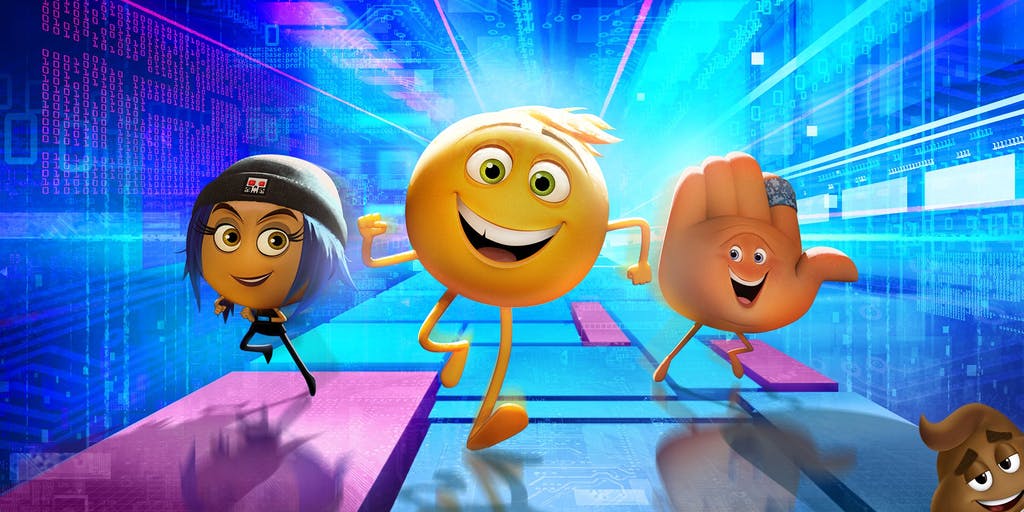
The Emoji Movie sucks in a depressing way I’ve never seen before. It has all the trappings of children’s animated movies, like bright colors, an annoying comedic sidekick, and a quest filled with challenges along the way, but the weight of all the product placement broke its spirit. It’s sad to see Hollywood care so little about the average moviegoer that they would put together such an original corporate cash grab.

I’ve heard people compare the Emoji Movie to Inside Out because both look at the inner workings of a teenager’s mind, the former through his cellphone and the latter through her psyche. I was reminded of Wreck-it Ralph as well because of how familiar characters from video games were an easy way to make a connection with a young audience, who may not care enough to learn about your movie but will definitely have their eye drawn if they already know and love the characters in it. Those video game characters have star power in their own right. Phone apps, on the other hand, do not.

That’s why the Emoji Movie looked so eerily similar to a Disney animated feature on the outside while not having any emotionally intelligent writing on the inside. It was all a farce to stuff as many apps into the movie’s plot as possible, and most of it was just plain boring. I don’t appreciate the fact that this movie still got made with an A-list cast and everything despite all the laughter it received when production was announced. Hollywood executives believed in it when nobody else did, and the idea that youth today are so addicted to their phones that this movie speaks to a cultural zeitgeist or something makes me sick. I learned in a class that adults were concerned by teenagers in the 1950s for using landlines 24/7 to talk to their friends, so I’m convinced that putting down young people for using technology to deepen their relationships is an age-old sign of fear of change. That doesn’t make the Emoji Movie more timely, though, or universal; just cheap. Unfortunately, I can think of other examples of entertainment that were just vehicles for advertising.

The cast of the worst animated movie I’ve ever seen. Source: The Telegraph

The notorious animated move “Foodfight!” ripped off the Toy Story franchise in 2002 with the plot of food logos coming to life at night in a supermarket. Charlie Sheen starred as a dog detective who has to save the day when a femme fatale voiced by Eva Longoria from a generic brand takes over the store with the help of fellow Nazis(!) from the same company and tries to replace brand-name food products and their logos, i.e. nearly all of the other characters. It’s gross that a movie for little kids is teaching them that cost-effective products that are just as good as the national brands are evil and killing big brands, or big business for the owners of those brands, anyway. Thankfully, the film’s animation was stolen and apparently never re-done, so what looks like its first draft went straight-to-DVD in 2012. This is a decade after the celebrities in it were in their prime, but due to the stupid plot and abundance of sexual innuendo between the canine and the evil woman I doubt many people will hear about it.

Boys can buy from Sanrio, too! Source: next-episode.net

Another example of this genre I can think of is the anime Sanrio Danshi, literally Sanrio Boys in Japanese. This show is about a group of high school boys who all love Sanrio products, like Hello Kitty and friends. The main character, Kota Hasagawa, is embarrassed to have other people know he’s a guy who likes cute stuffed animals until by happy coincidence he meets other boys who are huge fans of Sanrio, too. The show was created by Sanrio itself (who would have guessed?) and I’m bitter that a positive message like men can like delicate things, too, is being used just to market their products. I felt completely pandered to with such a cute concept, and find it interesting that this show has a different view on economics than Foodfight! by showing buying as a positive way to express what you’re like on the inside.

The Emoji Movie is more realistic in that buying only really comes up at the end when the boy who owns the phone tries to get it fixed. Still, it was a waste of my time to watch. I hope the movie industry tries to think more about originality and creativity soon, but seeing how many box-office hits are sequels in franchises, I won’t hold my breath.