Stop Romanticizing the Suicide Forest

Trigger Warning: Suicide

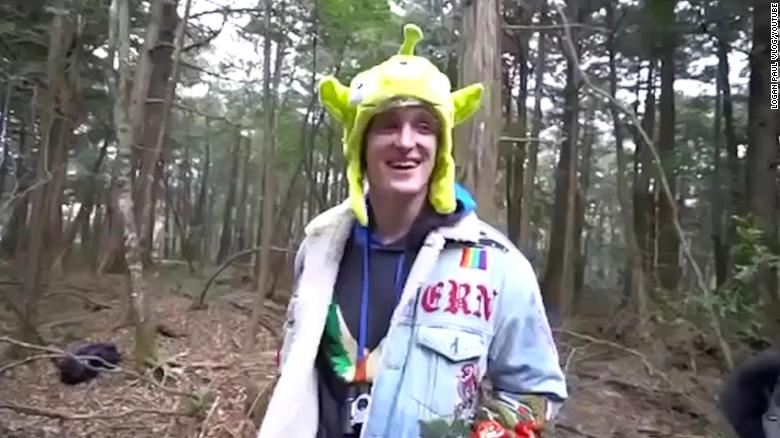
YouTuber Logan Paul has stirred controversy at the start of the new year after filming a vlog in Aokigahara, a forest in Japan that is a popular location for suicide attempts. Paul, who is 22, caught on camera the dead body of a man who hanged himself in the forest and made this the thumbnail of the since-deleted video. The intense criticism he received led him to write and film an apology that focused on the intent of his actions rather than their impact. This not only put into question the boundaries of the new Internet celebrity in the digital age, but it also made me ask more broadly how Americans engage with Japanese culture.

As someone who is diagnosed with major depression disorder and has been hospitalized twice for suicidal ideation, I do not take lightly to the claims that Paul laughed and smiled when he found a dead body in the Suicide Forest. Against my better judgement, I took the risk to my mental health and watched the video myself. What I found was less offensive and yet more dangerous than what I heard claimed. It is difficult to summarize a 14-minute(!) video, so I will consolidate my reactions instead.

Source: YouTube

Logan Paul is an idiot. He tries to set a respectful tone in the video by doing things like have trigger warnings and giving affirmations for those who are struggling with mental illness to seek help. And he clarifies that his laughter and smiles after finding the corpse come from his use of humor as a defense mechanism, which I believe. But his lack of consideration for people who are mentally ill in real life is evident by the fact he would videotape A LOCATION FAMOUS FOR SUICIDE ATTEMPTS in the first place. You do not visit a place of death for pleasure; that’s morbid. You do not maintain your lucrative brand by showing off a place of death (regardless of the fact the video was not monetized); that’s unethical.

The fact Paul says he visited Aokigahara because he wanted to end the year on an introspective and quiet note is offensive. The mentally ill and disabled are not here to make you, the neurotypical and able-bodied, feel better by showering us with pity without listening to our needs to make our lives easier. That would be enough to see that Paul was not respectful of the suicidal in the forest since the conception of his plan.

Source: YouTube

But then he crosses a line as a YouTuber (having foregone basic humanity long before this point) when he demonstrates that his interest in visiting was, in part, to maintain the attention and expectations of his fan base. Though his followers have argued that he should not be blamed for randomly capturing a corpse on film because he vlogs his life everyday, Paul’s self-serving interest is evident when he ignores one of his friend’s request to turn off the camera and leave. Instead, Paul walks to the dead body, bringing the camera along with him for the ride, only saving the viewer from having to see the corpse with a text screen explaining that doing so would violate YouTube’s guidelines. I was at a loss as to why he would do this when he looked so visibly distressed throughout the entire ordeal until the end of the video, when Paul reminds the audience he had made a commitment in one of his first vlogs to entertain his audience everyday. This somehow seems to be his excuse as to why he found himself in such a terrible predicament: he insists on sharing the “positive” and “negative” times of his life because he and his fans are family (the Logang) and this is “part of it”.

I am disgusted at the thought of impressionable young people learning about suicide and mental illness from this man-child. Scarier still is seeing members of the Logang defending him because he was doing his best to please as an entertainer when he stumbled across the body. I could write for a long time as to how fucked up this near-sighted vision of celebrity is, but I believe it has been better said by people before me. I would like to use this space as a blog dedicated to the arts to focus on how our media informed Paul’s decision to go to Aokigahara in the first place, which he said was based on what he had seen in books and movies.

“The Forest”. Source: The Mary Sue

When he said this I immediately thought of the 2016 film “The Forest”. The film loses itself in its attempts to scare with traditional-looking ghosts appearing from thin air while it illustrates the landmark’s role in Japanese folklore and contemporary society. This matches Paul’s description of wanting to visit Aokigahara because he heard it was haunted by the tormented souls of the dead suicidal who try to tempt visitors off the trail, presumably to meet the same fate.

The movie stars an American protagonist named Sara (Natalie Dormer, “Elementary”) who receives a call from police informing her that her twin, Jess (also played by Dormer), is assumed to be dead after having last been seen in the Suicide Forest. She goes to Japan to find her, driven to explore the forest in spite of countless of warnings to not go off her path at the risk of making herself vulnerable to being terrorized by the angry spirits that live there. At the hotel she is staying at, she meets travel journalist Aiden (Tyler Kinney, “Rock the Kasbah”) who knows a guide who can assist them navigate the forest. Once she begins exploring the forest with Aiden and tour guide Michi (Yukiyoshi Ozawa), traditional Japanese ghosts and American demons begin to haunt her. Once one of the angry spirits of the forest warn her to not trust Aiden, she loses her peace of mind and becomes increasingly paranoid.

The superficial jump scares used are pointless and only serve to conform to the horror genre, echoing Paul’s interest in exploring the “haunted” aspect of the forest’s reputation without being prepared to face the real life tragedy that inspires it. The sudden apparitions of traditional Japanese ghosts and modern American demons in “The Forest” invoke short-lived fear in an otherwise dull film, showing the same lack of respect on the part of the director that Paul displayed in thinking that co-opting and exploiting icons of a foreign country’s social issues is somehow an appropriate subject for cheap and otherwise unoriginal entertainment.

The fearful tone of “The Forest” is poorly conveyed through closeups of branches and insects, and ghostly wails in the wind, which are not scary in the least. Additionally, several aspects of the real forest are distorted, making the purpose of exploring the tragic location unclear. Not surprisingly, the normal forest (even with an unfortunate association) is not scary by itself. The film decides to take creative license in an effort to bolster screen time by having Sara see that various corpses of people who committed suicide in the forest are held at the Aokigahara Visitor Center, which blatantly contradicts the fact that in real life the Japanese government and police work hard to conceal the dead bodies in order to not only avoid attracting more people contemplating suicide, but also to deter potential tourists like Sara due to the notoriety of its basin. Logan Paul is more than willing to play fast and loose with the meaning of the Suicide Forest as well, failing to make the connection of the sad suicides he’s heard of and the ghosts that are said to haunt Aokigahara as a result.

Something that I fear is that people struggling with mental illness will only ever be seen as weak and objects of sympathy, which is a key issue I take with Paul’s brand of raising awareness and “The Forest”’s plot development. The gruesome death of Sara and Jess’s parents in the movie is referred to throughout the film for no apparent reason. It’s confusing purpose finally appears right at the nihilistic end. Sara is warned by locals that she possesses “inner sadness” and that she should think twice about embarking on her journey. It is implied she begins to be haunted by the angry spirits of those who committed suicide once she enters the forest due to her being incapable of coping with her loss. To the movie’s credit, this defies my expectation that the loss was that of her sister due to the sheer amount of time spent on establishing the close relationship she has with Jess. But once the significance of her parents’ death is revealed, it makes her suffering at Aokigahara seem justified for being innately weak, devaluing her noble mission and painting every victim of suicide as the product of avoidable emotional damage. This is a grave misconception considering that most people with depression cannot trace their mental illness to a direct cause, which is irrelevant because even if there was a cause feeling depressed for long period of times is not healthy and deserves attention and care regardless of circumstances.

The movie overall is anti-climactic in the extreme despite its rich source material, much like Paul’s vlog. Not once does the YouTuber bring up the high suicide rates in Japan that allowed the creation of such a place like Aokigahara to exist in the first place. The lack of depth is a direct result of the stigma of mental illness that both works perpetuate. Paul in his video did not even stay in the forest to camp as he had intended, failing to realize his goal of ghost-hunting due to him going unprepared to face reality. “The Forest” ends with (spoiler) Sara annoyingly having no impact in the disappearance of her sister while still having invited the spirits of the forest to plague her anyway, equating the devastating deaths by suicide of the ghosts in Aokigahara with her untimely demise that she chose while in a perfectly healthy state of mind. Moral of the story: the media can take its lazy sensationaliztion of deadly illnesses and shove it up their ass.
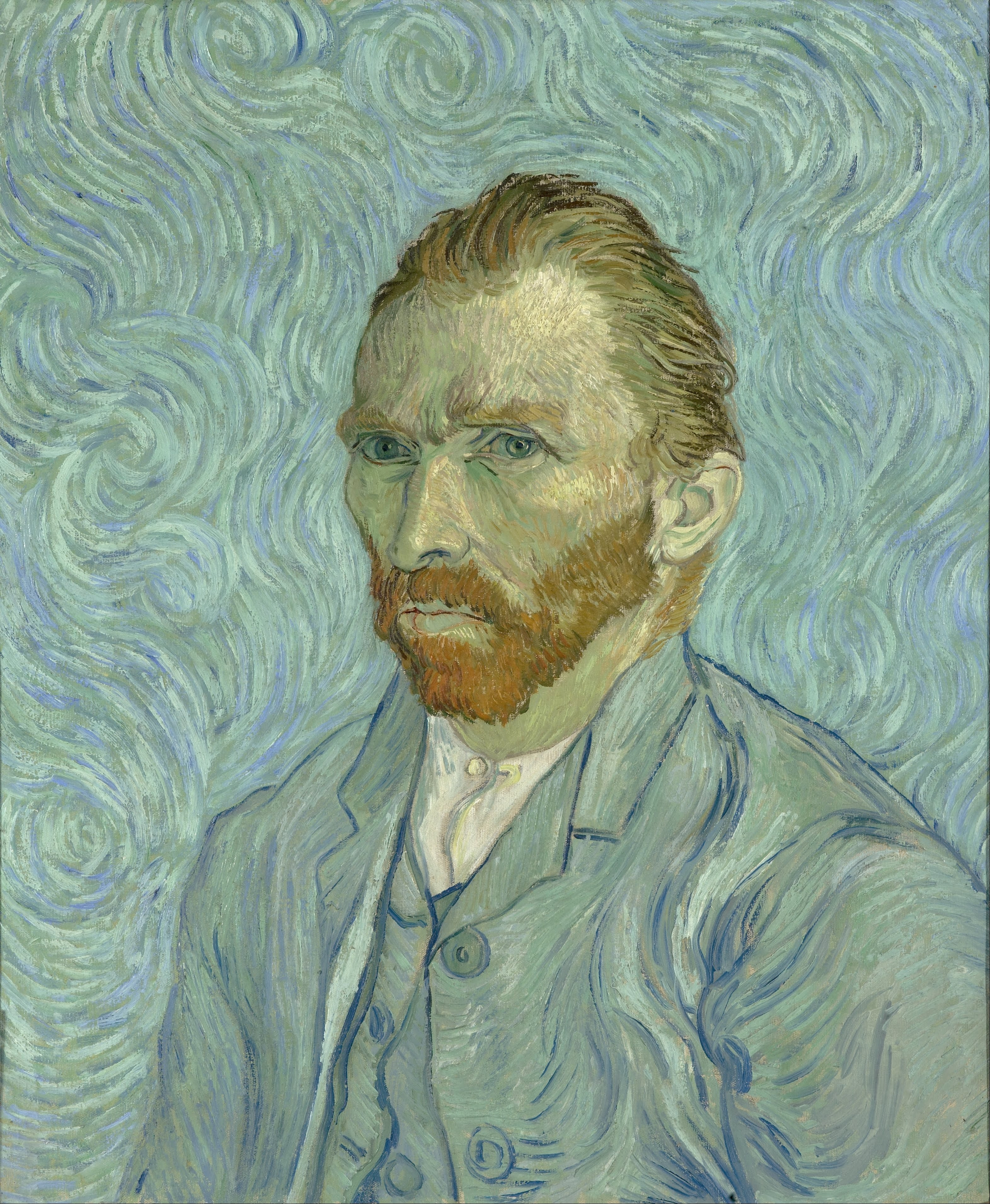
First Ever Fully Painted Film

*Take two on my attempt to see Loving Vincent: On a Friday afternoon post orgo final, I set out to the Michigan Theater once again to see Loving Vincent, this time accompanied by a couple friends I picked up along the way. Three tickets to Loving Vincent and here we go.*

Loving Vincent is the world’s first ever film to be entirely painted. This was not done to set a record, but rather because the creators believe that you cannot truly tell Vincent’s story without his paintings.

“We cannot speak other than by our paintings.”

-Vincent van Gogh

Director Dorotea Kobiela followed her passion for painting until she the luster of the film industry drew her away. Then, realizing her passion once again, she merged film with painting to create a one of a kind production. After filming actors in Gdansk and Wroclaw, a team of over 100 artists literally painted over the 65,000 plus frames one by one, and over a 1,000 canvas and years of intensive labor, this story came to life.

I felt as though the movie was centered around his death. Likewise, the character of Margaret, played by Saoirse Ronan, inquires why Armand, played by Douglas Booth, is far more invested in learning about Vincent’s death than his life. Why is it that we focus on his death but seem to pay less attention to his life? Death is strange. It’s strange that we scale a life based on a timeline. By this, I am bringing attention to the first fact you typically learn about someone: their birth date and their death date. Look at Wikipedia. Look at any reference on someone. It gives you a range of years to start the biography. A quantity almost makes a life seem measurable when with all the layers to someone oh my god how can we even try measure a life?

When people die, the living replay memories from the life of whom they mourn until slowly these memories fade. Memories faded and mantras forgotten. After time, the memory of person all together dwindles, sort of an object permanence effect in a way; this is one of the most terrifying aspects about dying. With artists, however, they become significant when they die. That birth-death span seems irrelevant. Think about it. How many people knew Vincent van Gogh when he was alive versus how many people know Vincent van Gogh now? When artists themselves are gone, a message from them begins through their masterpieces. Granted the way Vincent thinks, would he have considered himself alive during that year range we see on Wikipedia? Or has he finally found life through his paintings? Strange it is.

Perhaps this is why the movie focused around his death, because leaving behind only his work focused the world’s attention on his purpose, thus it was the gateway that enabled Vincent van Gogh to finally teach the world his message all along. What is this message? Surely, I do not know. Though, when you study a painting of his, then maybe you will know. This seems to hold pattern with any kind of artist: Beethoven, Elliott Smith, Albert Einstein, Vincent van Gogh. Wherever their creativity lies, this is where they see something that the rest of us cannot, and they pour their whole life expressing that something.

I mentioned the creators said “you cannot truly tell Vincent’s story without his paintings.” Through his paintings, Vincent has been alive long after his death. You might even say he has found a way to immortality. If you think about it like this, we can all live forever…so in order to tell your story, what would your “paintings” be?

Classic Holiday Entertainment

From Black Friday to January first, Holiday music and movies are playing nonstop in stores and on TV.  Most of the classic holiday movies also have very popular songs to accompany them.  Here is list of classic holiday songs and the movies that accompany them:

Rudolph, the red nosed reindeer

The popular song, “Rudolph the red nosed reindeer” actually came from a book written in 1939 by Robert May.  The song was created in 1949 by Johnny Marks.  The first claymation movie adaptation was created in 1964.

Santa clause is coming to town

The song “Santa Claus Is Coming To Town” was written in 1934 by John Frederick Coots.  The claymation movie was made in 1970 starring Kris Kringle, A.K.A. Santa Claus, and his journey of becoming Santa.  A book was written in 2008 to accompany the song and movie.

Frosty the snowman

The song “Frosty The Snowman” was written in 1950 by Walter E Rollins.  The first movie adaptation was a 2D animation created in 1969.  Many more movies have been created after this showing Frosty’s life and featuring the song.  There have also been countless books that depict his life as it is laid out in the song.

Little drummer boy

The song “Little Drummer Boy” was written in 1941 by Harry Simeone, Katherine Kennicott Davis, and Henry Onorati.  The claymation movie were released in 1968.  Ezra Jack Keats wrote the book adaptation in the same year,1968.

The Year Without a Santa Claus

The classic songs “Heat Miser” and “Snow Miser” were in the claymation movie “The Year Without A Santa Claus”.  The movie was created in 1974.  Unlike the other classic Holiday songs on this list, the songs were written for the movie and become classics and popular through the movie.

Grandma Got run over by a reindeer

The song “Grandma Got Run Over By A Reindeer” was written in 1979 by Randy Brooks.  The animated movie adaptation was created in 2000.  This newer movie has quickly become a classic for people under 30, with the movie appearing on Cartoon Network frequently over the Holiday season.

Jingle Bells

The song “Jingle Bells” was written in 1857 by James Pierpont(not the man Pierpont Commons in named after).  The song was originally called “One Horse Open Sleigh”.  There have been many movie adaptations of this song, and many other movies have used the song to add a Holiday feeling to them.  “Jingle Bells” was the first song to be broadcast from outer space.  The two astronauts sang the song to mission control with bells and a harmonica after pulling a prank on them!

Desperation Writing


Keyboards click, are you listening,

In the Diag, snow is glistening

A beautiful sight,

We’re studying tonight,

Avoiding the winter wonderland.


It is that time of year again. No, I’m not talking about Christmas. Everyone at the University, professors, and students alike, have only one thing on their mind. Its finals season and suddenly, many things have decreased in importance. Food is eaten at faster rates and lesser frequencies.  If we could change human anatomy to accommodate even fewer hours of sleep, we would. If we could stop the Earth’s rotation, so that the next day of tests and deadlines would never come, we would. Even the strongest force in the universe could not tear us away from our laptops, our math notes, our unfinished papers. We are racing toward the finish line of another year and more crucially, another semester. New classes loom ominously on the horizon, but the only future that matters now is the next due date. We finish one assignment only to start the next. And there are so many assignments.


Perhaps that is what makes it both the best and worst time to be a writer. Everyone has some paper that needs to be written, meaning at least, there is a great quantity of writing is being done. The quality, however, can be questionable, when one is frantically typing to meet a word or page-count. There is simply no time to carefully consider structure or tone when one has another test at the end of the week. Although I finally get to write at this time of year, I also find myself without words. I realize that I have spewed them all out over the course of endless reflections and short essays for classes over the year. My brain only returns old ideas gone sour and dusty math equations. Writing out of desperation instead of inspiration turns the experience into some new and strange torture. The process of writing, already frustrating at times, now transforms into a slow march toward an unseen destination.  I type out words only to be disgusted at their inanity, their pompousness. I usually delete everything.  That is why I always dally over every paper, shelve my English assignments. I want to enjoy this process, no matter how tedious it may seem. Every forward step through that flood of reluctance and impatience is a triumph. Writing during finals seems like cheating instead. I am not doing the necessary work. Instead, I rush my thoughts onto paper without reflection. Turning in a rushed paper is cutting the conversation midway before anything of importance has even been said. Perhaps it is not the appropriate time to be reflecting on the writing process. Sometimes, things just must be accomplished. It is better to have something written then nothing at all. Yet, I worry that this is teaching us all the wrong things about writing. Writing is not quick and easy. It is not some frozen dinner, to be popped in to the microwave for five minutes, and popped out, perfectly done. Writing is agonizingly slow. And I love it.

The Magic of the Midnight Movie

What I think makes midnight movies so special is that they remind me that art is a communal experience. Hearing people interact with the movie heads-on reminds you that you, the audience, have a say in supporting work you like and rejecting work you don’t. The last time I felt glad I was watching a movie in a movie theater was when I saw “Get Out” (spoilers ahead). When the police car pulled up at the end of the film with Chris over the body of his now-dead girlfriend, the entire audience audibly gasped. I was scared myself, worried our hero would get framed and his evil girlfriend’s family would win after all. But when Chris’s friend Rod the TSA officer emerged instead the entire theater was filled with moved, genuine applause. It was a magical moment that spoke to how the film touched a nerve in today’s political climate that I would not have been able to experience for myself had I seen it alone. I can only assume this must have made the midnight circuit very empowering for film-goers in an era before social media could affirm my experience or prove once again I am surrounded by idiots. But what I find fascinating with my exposure to two such cult classics is how darn mean people get when watching something they paid to see.

The two midnight movies I have seen are “The Rocky Horror Picture Show” and “The Room”, which both required an audience to make the experience memorable because of how bad they are.

The Rocky Horror Picture Show. Source: Intergalacticrobot

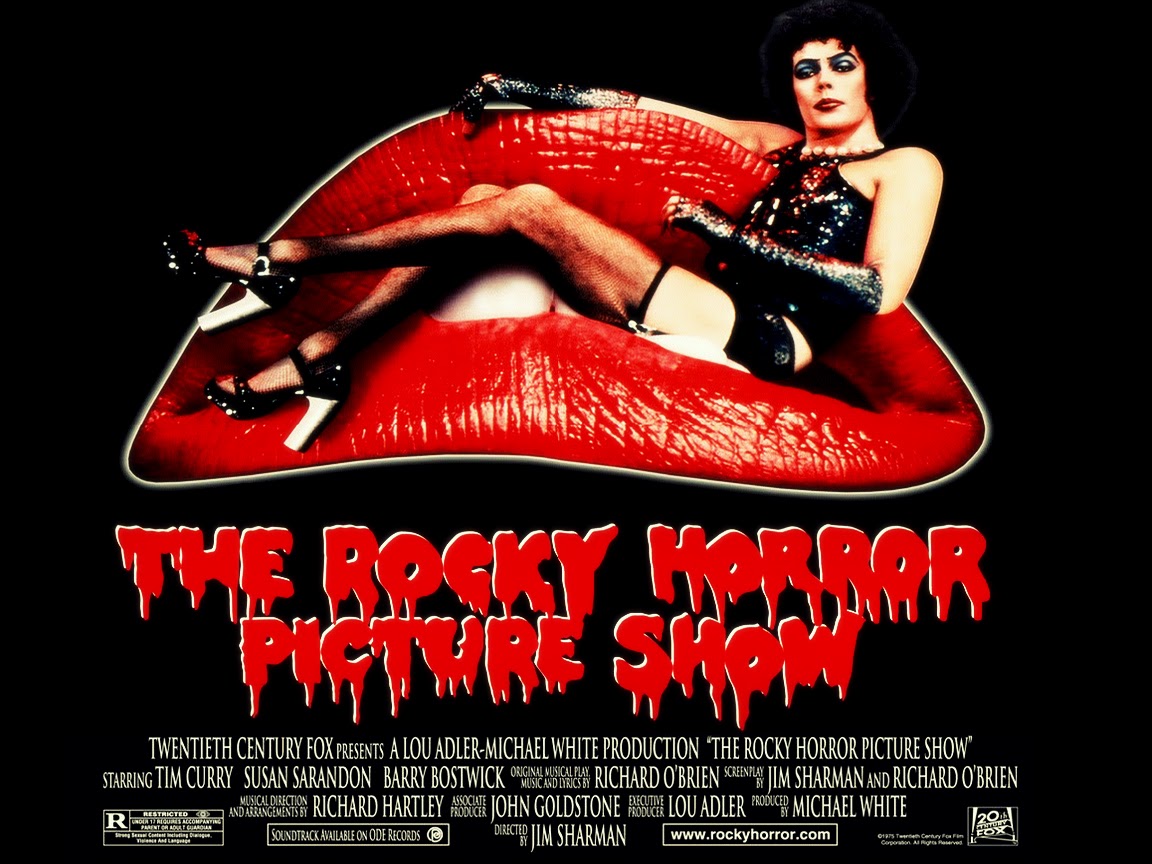
My main problem with “The Rocky Horror Picture Show” is that it is completely composed of B-film horror and sci-fi tropes. This is completely understandable because it is a satire of B-films in the horror and sci-fi genres. And yet, it just wasn’t that fun for me to watch after already being very familiar with the films it was parodying. Plus, I felt that the song numbers from the original musical translated very poorly to the movie’s cramped mansion of Dr. Frank-n-Furter. But seeing it shadow-acted live was truly a spectacle. It was great fun to see people mock every memorably cheesy line and throw the same stuff at the screen that was being thrown in the movie. At first, I thought it was a little harsh to hear people constantly berating the film in unison. If it was that bad, why did so many people come to see it? But I quickly learned that the movie was just plain fun to bash. I, of course, would be remiss if I didn’t mention how fun it was as a queer person to see so many fabulous LGBT people dress like the characters of “Rocky Horror” to see the fabulously campy movie. But I think that the over-the-top plot was what made it the original midnight movie in the first place.

The Room. Source: The Daily Beast

“The Room”, which came out nearly thirty years later, follows the precedent set by “Rocky Horror” due to how unbelievably bizarre it is. It is one of the most iconic midnight movies I have heard of, and interestingly enough its fame is specifically attributed to how awful it is unintentionally. It is brazenly bad, from the writing to the acting, to the point that the fact it managed to come to a coherent end at all (despite its many non-related story-lines) is impressive. But hearing people mimic Tommy Wiseau’s strange delivery (“Oh hi, Mark!”) and even stranger action, like throwing footballs across the theater every time Wiseau tosses the pigskin with friends on-screen for some inexplicable reason, made me better appreciate and laugh at the strangeness of “The Room”, to the point I felt I was taking part in some film-loving tradition bigger than myself. That’s saying a lot for someone who usually watches indie movies alone.

Of course, not all midnight movies follow the mold I came up with above. Other midnight movies I’ve seen (“Eraserhead”, “Cannibal Holocaust” and “Pink Flamingos” in case you don’t want to sleep easy tonight) are NOT meant to be seen with people you care about, or anyone, really, for very different reasons. These lead me to suspect that perhaps there are different kinds of midnight movies: ones you can laugh at and ones that leave you feeling weird on the inside because of the harsh depictions of sexuality and violence. In these cases, I am happy I saw these movies alone so no one will know (with you being the exception, my dear reader). Regardless, midnight movies are a testament to the power film can have on people’s sense of boundaries when it comes to them and the art they consume, and I look forward to the midnight movies of the future. I just hope they’ll be on the funny side.

Voices

There has been an outpouring of sexual harassment and assault claims in the media from women across generations against men of all races, careers, and ages.  Some of the most talked about have been against men in all genres in the arts: Louis C.K., Matt Lauer, Peter Martins. These men have been put under investigation, removed from their positions, and in some cases, fired completely. After they are gone, however, a question stands: should their art remain?

Can an artist and performer really be considered separately from his or her body of work? In my own personal experience as a performing artist, I have found that every project I work on has a little piece of myself in it, even if I am portraying a character with an entirely different personality. If this assumption is true, that a piece of art has at least a small part of an artist, then does art made by people who have been found guilty of sexual harassment and assault deserve to be easily accessible and shown?

One might say that what these men have done in their own personal lives does not reflect their work. It is true that each of these men and other accused have contributed a great deal to each of their fields respectively as well as the arts world as a whole. The argument could be made, then, that their art is still important, regardless of what the artist did. Their art deserves to be seen and heard and listened to because it is a stand-alone entity in of itself.  And what of the other people that might have been involved in the work—in removing, say, one of Louis C.K.’s movies from a popular streaming database, the goal of not supporting a sexual predator would be achieved, but at the cost of other artists whose work was also important in the movie.

On the other hand, it could be considered impossible to separate the artist from the art: how do you tell the difference between the dancer and the dance, the actor and the monologue, the musician and the music? In allowing art by men who have admitted to or found guilty of sexual harassment and assault, the message that these men’s voices still deserve to be heard through their work. The arts are a universal language, and one that should be utilized as such. But is it worth it to let an already loud voice perpetuate the arts world at the cost of silencing other voices out of fear, shame, or sheer volume? Or should the arts be a vehicle for quiet voices to finally be heard?