Book Review – The Martian

This was great.

I’ll begin by saying the main strength of the book is probably its sentiment balance. On one hand, it’s sensational and sentimental; as the climax approaches, the whole world is watching Mark on TV, so the ending is destined to be either heartbreaking or enormously crowd-pleasing. On the other hand, none of Mark’s log entries are particularly sappy. We don’t get any musing about the meaning of life. We don’t get any sections where Mark is seriously distraught or on the verge of suicide. He’s calm, methodical, and good-humored, which makes it fun to spend time with him.

It really proves that (in my opinion) when it comes to getting your reader to root for a character, building a personality for the character is more important than simply creating a backstory for them. We learn next to nothing about Mark’s family or friends back on Earth; the book is fairly minimalist, and we don’t even get physical descriptions of anyone. It’s a corrective to stories like Gravity or The Shallows that, while good, resort to unnecessary tragic backstories to get us to like the character. We don’t need that! They just need to be believable people!

For the first half of the book, I preferred the sections focused on Mark Watney alone on Mars. I don’t think dialogue is Andy Weir’s strongest suit, and some of the conversations back on Earth between the supporting characters – Venkat, Teddy, Mindy, Annie, etc. – were a little predictable. I didn’t think the humor came across as well in those sections; Mark was by far the funniest character, and sometimes when other characters tried to be snarky, it didn’t land as well for me. There’s something particularly funny about Mark’s brand of sarcasm, something about the way he’s primarily just joking around with himself, and with an imaginary reader. Hearing Mitch and Teddy exchange Sorkin-esque, half-inspirational, half-snarky dialogue wasn’t as amusing for me. Besides, the Mars sections don’t feel quite as isolated and dangerous when the NASA perspective is introduced; part of me longed for a Gravity– or All is Lost-esque story limited to one guy alone trying to survive in a foreign environment.

As the book went on, though, it became clear that those sections back on Earth were very necessary, both to build the stakes – wow, everyone on Earth is watching, and if anyone screws up, this will be a colossal waste of time, money, and human life – and to offer a break from the dense scientific material of Mark’s survival tactics. Weir is careful to keep the book fairly accessible, and based on the audience reaction, he certainly succeeded at appealing to the public. But at times it did become slightly difficult to visualize everything that was happening, and that made some chapters from Mark’s perspective a little slower. I wouldn’t classify the book as a ‘slog’ at all; that’s too far. But there were a couple times when I was ready for a break from the science.

That said, most of the science worked great. I have no idea if anything in this book is accurate – I imagine it’s at least partly based in truth based on Weir’s background and the way he made sure to meticulously acknowledge potential plot holes at every turn – but the point is that it’s convincing enough that you completely believe everything in the story could really happen. There’s something that’s just so fun about watching Mark try to finagle his way out of certain issues; there’s something irresistible to me about survival stories focused on a character who takes a breath, concentrates really hard, and figures out an ingenious way to get out of a seemingly unsolvable problem. There’s enough complex science in the story that you can’t really guess what the solution is going to be, but it’s based enough in fact and makes enough sense that the solutions never really feel like deus ex machina.

All in all, just a fun hard sci-fi thriller that manages to avoid cliches by staying focused and minimalist, and not resorting to cheesy sentiment until it’s absolutely necessary.
The Only Thing To Fear

         Over the years, I’ve discovered that I’m afraid of many things. When I was young, it was the instinctive fear of the dark. All the associated phobias of monsters or killers in the night were still unformed. That came later, after watching too many Chinese television soaps. Instead, fear began undefined and nebulous. The dark was its own being that could reach out and grab me right out of my bed. Then, I was afraid of my parents. Their disappointment was always palpable when I did something wrong. These fears pursued me in the daylight at school and the darkness of my room became my shelter instead. They also became more concrete. They were the grades on my report card, the group of girls that always shared a table, and the feeling in my stomach right before a test. They multiplied by the day and I began to yearn for the day where all I ran from was the boogie man.

Fear is a gift. Without fear, a sabretooth tiger would have torn apart the last of the human species an ice age ago. We learn from what we dread the most. In fact, many of our fears are manifestations of previous wounds. Perhaps it was a bee sting or a scraped knee. Perhaps it was a particularly awkward third-grade presentation that creates a life-long aversion to public speaking. There is always something that prevents us from achieving our full potential. Even when the entire affair is forgotten, that twinge of pain casts a shadow upon our aspirations. Other fears are instilled by society. By the time high school began, I had even learned to fear my own body. There was too much fat here, not enough there. Suddenly, I started fearing the prospect of walking through life alone. It was the terror of never meeting someone that truly, intimately understood me. And so, I fretted over outfits, over parties, over a thousand little things, because now, there was a new formless fear, love, or more specifically, that I would never, ever, ever, ever find it.

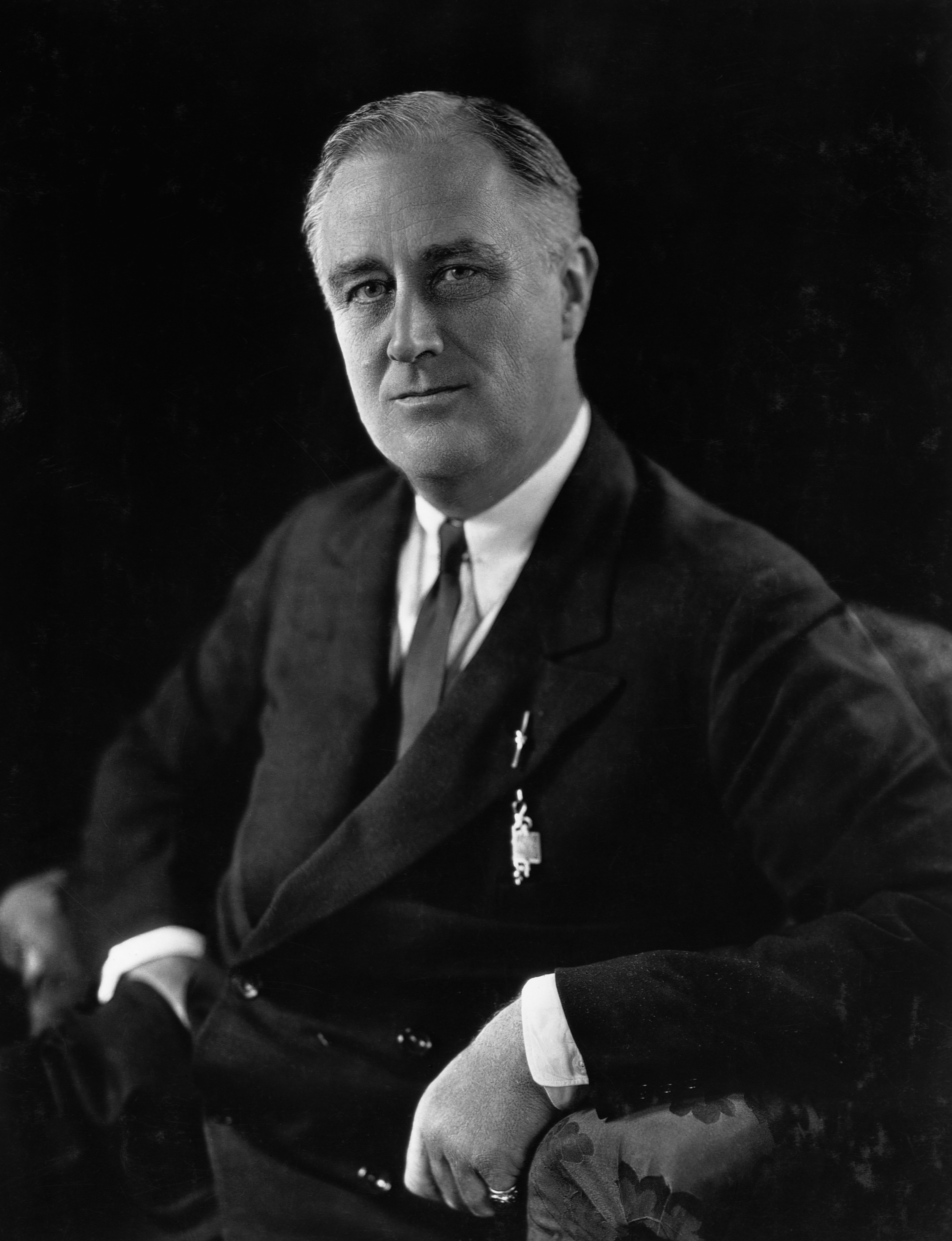
FDR, of course, would come to say that “the only thing we have to fear is fear itself”. What is often forgotten is the extension of that idea. That we should fear that fear keeps us from achieving our true potentials. That we will let fear control us our entire lives and never truly live or be ourselves. This is the fear spawned by the inevitability of death. The last and greatest despair is that we will leave nothing behind and be forgotten without a protest. Perhaps that was what I saw as I considered the dark all those years ago. But I think the worst thing that you can do in the face of fear, is refusing to acknowledge it. Fear is as legitimate and useful as any other feeling. After all, there is no love without fear. You love someone because they alleviate that fear of loneliness, because they can accept you for all your vulnerabilities. It is only when fear overwhelms everything else that it becomes something to be afraid of. Confronting fear is easier said than done. But it also the only path to a truer understanding of self.

Glass Wall

There is a fantastic one-time gag on The Eric Andre Show, where the host, Eric Andre, hits his head on a glass wall during the middle of his interview with Tyler, The Creator. Isolated from the simultaneous dialogue between Hannibal Buress and Tyler, the Creator, the gag lasts maybe three seconds. Not even. After the glass to head collision, the camera cuts away, only to return to Andre waving his hand around where the invisible wall supposedly was, only to find nothing there.

This is a tame gag when considered in context with the outrageous comedy permeating through the show – a show that features an intro composed of an always-changing selection of debauchery and destruction. But for some reason, although I enjoy gags like Andre getting his head pulled off while attempting to pull a tooth out, enjoying carnal pleasure with a disco ball, or a Sprite plug superimposed on an actual wolf that is staring at the host, there is something about the glass wall that is so totally pleasing.

The pleasure of the glass-wall-gag cannot be considered with the sole factor of nonchalance – a trait that pervades almost every gag on the show. It is also not as shocking as the other jokes. However, it is incredibly concise. Although each episode is short, resulting in an often-disorienting segmentation of gags, the combination of nonchalance and oddly banal delivery leads to a gag wide open to interpretation. In other words, the show suggests that it does not have the time or patience to spell out the joke for you, or even explain it to you in conjunction with the ferocity of the surrounding content. It does not even spend the time to say, “That happened.” Instead in my first viewing, I found that I’d actually missed the gag entirely. It kind of happened and I never consciously registered the joke.

From a metaphysical standpoint, the gag has many ramifications. Considering how I had to return to the short interview to discover the gag, is oddly reflected in the characteristic of the gag itself – did I just hit a glass wall? Following question: never mind, what were we talking about? Simultaneously, it is just funny to watch Andre’s physical comedy at nothing beyond the basest form of comedy. Perhaps that is why this gag has forever left an imprint in my psyche. It kind of happened and now I know it happened and I keep considering how it happened and enjoying it while ironically, it is a joke that kind of happened.

Short Film Nominee: Sing

The Hungarian short film directed by Kristof Deak “Sing” explores the life of a young Zsofi as she transitions to her new school. Amongst the stress of the adjustment, she finds comfort in the her love of singing. This happiness is quickly denied when the choir director Miss Erika tells her to mime the music. Zsofi and her friend Liza scheme a way to expose the malicious nature of the revered teacher.

While the short film peers through the lens of the sweet, timid Zsofi, Liza has the same degree of significance in the story. Sometimes the main character isn’t always the conductor of the story. It’s not the person standing in the limelight that drives the plot, but often the people who place the spotlight on them who have anchor roles in the production. Because of the limelight’s ample advertising, we might find ourselves accrediting the center of attention such as the main actress, the highest scoring player, the wealthiest entrepreneur. With that being said, these publicized roles are not greater nor lesser than the more subtle roles; they are equal. Every element of the work forms a network with elements dependent upon one another, bringing them to their maximum potentials. As Liza helps Zsofi find her voice. Zsofi helps Liza harness her leadership skills. Besides the context of the entertainment industry, someone who brings out the best in another demonstrates the ideal friend. Although Liza is highly regarded as a vocalist and seemingly unaffected by Miss Erika’s maltreatment, she initiates the movement to bring justice to those who are afflicted. In this short film, Liza encompasses all the qualities of a good friend. Someone who takes your concerns as his or her own to attest to your best being, who seeks to understand why you are not acting yourself, who will not let you be defeated by a challenge…that’s a good friend.

Overseeing it all, the excellence was made possible by director Kristóf Deák and his team. This is why I greatly appreciate the Short Film Academy Awards; those behind camera are put in the spotlight.


Book Review – The Magicians

Based on the first book of the Magicians trilogy alone, it’s unclear as to what exactly the arc of the story will be – is this series about its main character, Quentin, struggling to find happiness? Is it about whether magic can be good or if it’s only an expression of unhappiness?

I think one of the biggest strengths of this first book, though, is that it doesn’t just feel like one small piece of a greater whole; it’s fairly self-contained. All the major bits of foreshadowing pay off by the end, and everything is so perfectly structured. As an example, the story of Emily Greenstreet we hear early on serves three purposes: it gives us important exposition about two major characters’ pasts, it establishes the concept of the niffin, and it directly foreshadows a connection Quentin is able to make near the end of the book. The book is so ruthlessly, efficiently structured, with so many mysteries introduced and resolved, that I’m impressed Grossman was even brave enough to take a stab at writing two more books. But we’ll get to those when we get to those.

It’s beyond redundant to compare these books to the Harry Potter or Narnia books, but it’s also impossible not to, because they’re very aware that those books exist, and they make efforts to both channel the influences and subvert them. There are layers of fantasy to the multiverse of The Magicians – first there’s the ‘real world’ fantasy of Brakebills, which obviously echoes Hogwarts from Harry Potter, and deeper in, there’s the even more fantastical parallel universe of Fillory, which obviously echoes Narnia. This is a series where the protagonist longs to be like the protagonists of those books, children whose mundane lives are miraculously upended by the exciting new worlds they discover. It’s clear from the first chapter that this book is going to comment on that desire, not simply fulfill it and tell another story in the same vein.

Grossman is intent on subverting that sense of whimsy that series like Harry Potter and Narnia provide, which would lead you to think this world isn’t fun at all. But that’s not quite true, either; Grossman pulls off an admirable balancing act where he’s able to conjure just enough wonder and magic that readers are entertained and want to know more about the world, but at the same time undercut that wonder with many suggestions that it’s not quite right. Seeing Quentin drinking and playing Quidditch-esque games with his friends at Brakebills is fun, and you recognize the familiar college-y aspects, but it’s clear that not everything is unambiguously whimsical and carefree. The presence of alcohol alone indicates that this isn’t the same as Harry Potter and Narnia, and eventually you kind of think, Wow, these characters get drunk a lot, don’t they?

And while the Harry Potter books mostly ignore the fact that these teachers are probably violating child endangerment laws with stuff like the Triwizard Tournament, these books are much more upfront about how borderline-abusive the staff is. A trip the students take to Antarctica is mostly depressing. There’s darkness in Harry Potter, of course, but most of the sadness in those books is caused by something concrete and exciting: tragic backstories, filled with lost loves and painful deaths. The characters of The Magicians are certainly mostly unhappy, but aside from Alice’s grief over a painful loss, most of the unhappiness is caused by something else, some nebulous, great ennui. It’s greatest with Quentin, but it’s there with his friends, too. Since I haven’t read the later books yet, I can’t tell exactly where this is going to go – is all this a metaphor for mental illness and depression, or is it simply an expression of the occasional sense of unmotivated sadness we all have, the sense that there has to be something more?

I love that the book actually uses magic to ponder the question of happiness and its attainability. Other books about magic don’t really explore why it exists in the context of the story, and what philosophical and ethical questions it poses. There are tidbits of that in Harry Potter, essentially the same light vs. dark concept as the Force in Star Wars, but The Magicians seems intent on really exploring that philosophical territory. At one point in the story, Dean Fogg raises the fascinating possibility that magic is a necessity to these people because they can’t bear to see the world as it is without it.

This stuff I’ve been writing about is almost entirely abstract, and it’s a testament to Grossman’s writing that he’s able to ground it in a fascinating concrete world. Because aside from all of these questions, there are drunk talking bears, a romantic subplot that kicks off when two 20-year-olds turn into arctic foxes and have sex in fox form, memory spells a la “Obliviate” from Harry Potter, godly rams buried deep underground, evil ferrets getting their throats stomped in, and a creepy monster antagonist in the form of a small British man with a branch perpetually obscuring his face. The co-opting of the fantasy genre for genre subversion and psychological probing is what’s most interesting about this book, but that couldn’t exist without indulging in the fun elements of fantasy itself. Lev Grossman successfully has it both ways, and I can’t wait to see how that continues in the next book.

The Nun

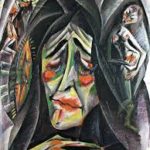
German artist Otto Dix expresses themes about religion and sex in his piece “The Nun.” This oil on cardboard is displayed in the MoMa in New York, New York. The viewer’s eyes are drawn to the center of the piece where the focus is a nun, weeping and heavy hearted. On her right is Jesus Christ nailed to the cross with blood streaming down his body. On her left is a naked woman cradling her child in the womb. The nun has devoted her life to her religion for a divine relationship with Jesus Christ and therefore has given up all worldly relationships. Her commitment to the church prohibits any sexual experiences or nakedness. No longer will she be able to bear children of her own or hold them as the naked woman holds her child. She clothes herself in the heavy cloak of her conventual obligations. The black lines resembling flying buttresses on a massive cathedral surrounding her represent the isolation she feels from a life of passion and romance while she remains obedient to the church.