The Sun Also Rises… Again and Again

Image vias CBSSundayMorning on Twitter

I’m no octogenarian, but I love the CBS Sunday Morning show. So much so that it has now become a sort of tradition…

Ever since I was a wee little girl, my dad and I had woken up bright and early on Sunday mornings (though sometimes pushing the limit with only one minute to spare!) We would pad down the stairs, careful not to wake my still-slumbering mom. Armed with warm beverages and the coziest of blankets, we would snuggle up together as the show’s notorious sun yawned and stretched out his rays.

There was Wynton Marsalis’ trumpeting fanfare, which we’d mimic by putting our fingers to our lips and wiggling them around, making sure to hit all of the invisible and silent octaves. “Good morning, Charles,” we would say to each other in Bob Schieffer’s famous grandfatherly voice. And then, suddenly, Charles Osgood himself was speaking directly to us, welcoming us to a wonderful new day. Even though we would have to mute yet another commercial for arthritis medicine and tio-tropium bromide inhalation powder, this Sunday morning tradition became the thing I looked forward to most each week. I hope my dad did, too.

Now, of course, I am in college and come back home less and less frequently. But my dad makes sure to write down all of Steve Hartman’s heartwarming stories and Mo Rocca’s squirrel-eating shenanigans on tiny little sticky notes, so we can still bond and learn together over a breakfast at Angelo’s.

During my sophomore year of college, I was taking an introduction to theatre course through the RC. One of my fellow students happened to be a woman from CBS who was spending a year at U of M for a journalism fellowship. I asked her if she knew Charles Osgood, Tracy Smith, and Anthony Mason, and she said “Yes!” She even had been at a dinner party at Osgood’s house, where he played the piano for her (the episodes where he plays the piano are very special occasions in the Finch household). I asked my classmate if she would become a messenger between myself and the CBS reporters who had secretly shared Sundays with me for the past ten years. I had a very important message to send.

Following a discovery and proceeding obsession with the odes of Pablo Neruda, I had tried my hand writing odes for the previous weeks. I would write about anything: yawns, bubbles, robots, jelly beans. And then I had an idea. I would write an ode to the sun. But not just any sun. The CBS Sunday Morning sun. This is what came out:

ode to the sun 
 
patient, 
like the quenching juice
of a ripened orange
trapped behind its rind, 
the sun
waits 
within its black box
in all its shining glory
like an armored knight 
summoned 
by regal trumpets
to its kingdom.  
A moment ticks by-
The horn is blown.
Footsteps pad like shadows.
And here again…
the sun,
with rosy 
cherubic cheeks,
has come:
just in time
for Sunday morning. 
* * *

I had remembered that sometimes letters and poems by fans had been read on the show by Charles Osgood himself! What did I have to lose? The girl in my class eagerly did some magic behind the scenes and sent my poem to the friends at CBS. I wasn’t sure what would happen next. Perhaps, it would be seen, swallowed, and cast down to the bottom of the intern’s inbox.

But no! One night as I worked late on a paper for class, an email dinged. <From: Steve Hartman> it said. Steve Hartman – the man who each week reports on a story of real everyday heroes who battle diseases, help strangers for nothing in return (let’s face it, basically stories that end with you running to the bathroom to grab a tissue to stop the tears forming in your eyes) – had written an email to me, from his own personal email address.

The email basically acknowledged that he had seen my poem and wanted to let me know how sweet it was. How it touched him to know that what he and his colleagues did at the Sunday Morning show was meaningful to my dad and me. Although my poem was never read aloud on live air, I can’t help but feel like it’s almost better that it wasn’t. The people who needed to know now know and we can keep that knowledge between ourselves. They know they have a fan who appreciates what they do. They know that the sun shall rise again and again, because someone will watch it. That’s what traditions are for: they are little private moments that don’t need to be vocalized to the whole world, just to the ones who are there to share it with you.
 

Gwen Stefani: This Is What The Truth Feels Like

Gwen Stefani has always been a part of my life. Who can forget Hollaback Girl or her promotion of Harajuku fashion? But even before all of that, Gwen Stefani was part of one of the most successful rock bands of the ’90s, No Doubt. This is where my personal love of Gwen Stefani begins. No Doubt is absolutely my favorite bands of the ’90s and Tragic Kingdom is one of my favorite albums ever, up there with Fleetwood Mac’s Rumors or Alanis Morissette’s Jagged Little Pill. You can imagine my surprise once I heard that Gwen Stefani was releasing her first solo album in 10 years. My expectations were raised even further once I learned that it was inspired by the end of her marriage and her new relationship. I was expecting a Sia-like come back with deeply personal songs mixed in with pop-y love ballads. While I don’t find it as impressive as Sia’s 1000 Forms of Fear, it is far from disappointing and is a great listen.

Let’s start with the negatives. The albums starts off spectacularly, but falter near the end with the 8th, 9th, and 10th songs being tonally dissonant and surely the most strange of the album. Luckily the album picks it back up with the next songs, but it never reaches back to the magic of the beginning of the album. Perhaps my least favorite song of the album is Asking 4 It featuring Fetty Wap. I’m alway wary when artists firmly rooted in pop (or rock) and artists firmly rooted in hip hop work together. It can be great when done right (like B.o.B’s Ariplanes featuring Hayley Williams) but more often than not, the two sounds cannot find a middle ground. It definitely doesn’t work here. Not is the song dissonant from the rest of the album, but the two artists themselves don’t fit well. Gwen Stefani’s clean and clear vocals fights with Fetty Wap’s unique, rough fuzzy vocals.

But of course the album has some knock-out hits as well. In fact, the entire first album is great, my personal favorite being the album’s first song (and sure to be next single) Misery. This song has all the work of a great pop hit that people will be singing along with for years. The lyrics are catchy, the beat is endless fun, and the bubblegum-pop style really suits Gwen Stefani’s solo work, though that is not to say that she can’t do incredible work in other genres as well. Listening to Where Would I Be? provides us a great look at Stefani’s musical talent as it flits between genres throughout the entire song and it works as a comprehensive package of everything that she can do as an artist. While it is not the best song on the album, it is impressive none the less.

Overall the album is a fun listen, though lacking in the sadder songs that are usually featured on break-up albums. To hear the best of the album, I suggest starting with Misery, Make Me Like You, or Truth. These songs are my personal favorites of the album. They are classic Gwen Stefani and will certainly please old fans of her solo work. I am looking forward to hearing more songs from Gwen Stefani as clearly she still has a lot of musical potential left within her.

Science Fiction For Dummies: Orphan Black

Although I’m not proud of it, I spent almost all day Saturday marathoning season three of Orphan Black, this crazy awesome show that some people have heard of but most people haven’t. But for those of you that don’t know, Orphan Black is a show about clones. Crazy, cool, awesome, kick-butt clones. And I absolutely love it.

My time with Orphan Black started this past summer, when I was studying abroad in England. Although I definitely had zero time for Netflix, and to be honest who wanted to spend time watching Netflix when you could literally explore Oxford, I still explored the offerings that UK Netflix had to offer and was pretty satisfied. And though I wanted to watch all the things, I decided that perhaps starting one show would be good. So when the pubs closed at midnight, I grabbed some food from the awesome food trucks and started a new adventure with Orphan Black.

Needless to say, I was hooked, and burned through both season one and season two pretty quickly, although I ended up stopping around episode 6 of season two because I couldn’t completely ignore my papers, even if I wanted to.

Although I tried to pick it back up once I got back stateside, I never really had time for it, and since I didn’t have it on the convenience of Netflix, I ended up kind of giving up, at least for the time being. Instead, I picked up awesome shows like Jane the Virgin and Quantico on TV right now, and I was satisfied.

But for some reason, last week I decided I wanted to watch Orphan Black, and my roommate chimed in “it’s on Amazon Prime,” which we have on our amazing smart TV in our apartment. So, of course, the order of the day was to finish it as soon as possible. Last night I finished season three and season four thankfully starts next week, and actually at a time when I can watch it live.

As I was watching it, though, I started to wonder what made me like it so much. I do like sci-fi, and I love that the lead is a woman, and it’s definitely a woman-empowerment show, without it necessarily being in your face about it, because Sarah Manning definitely has other things to worry about besides the patriarchy. I love watching the intricacies of Tatiana Maslany’s acting, how freaking amazing she is at portraying all of these completely distinct women. Like seriously, she often has to play one version of a character pretending to be another version, which is honestly mind-blowing from an acting standpoint. Give this woman an Emmy already.

But I also realized that one thing I love about it is that it’s not just sci-fi. It’s almost a whole new genre, realistic sci-fi. I remember when I learned about magical realism and how it essentially blew my mind. That’s what Orphan Black is. It’s sci-fi realism. Although the science, I’ve been told, is pretty far from being accurate, it’s really fascinating how they use the science throughout the show. It grounds the entire plot, making it not “clones from another world,” but real people dealing with this scientific thing. It sometimes gets out of hand, and you are thrown into a world where things happen not as logically as they would in real life, but for the most part, everything seems plausible. Everything crazy that happens on the show happens for a reason.

Science fiction is definitely a strong, diverse genre that often does not get enough credit, being written off by people who don’t like “that Star Trek stuff.” And I’m sure Orphan Black is not the first sci-fi narrative to use science as a way to make something unrealistic seem plausible. But it’s possibly one of the most successful, which is really, really cool, and I hope there’s more like it in the future.

Seeing ABT’s Sleeping Beauty

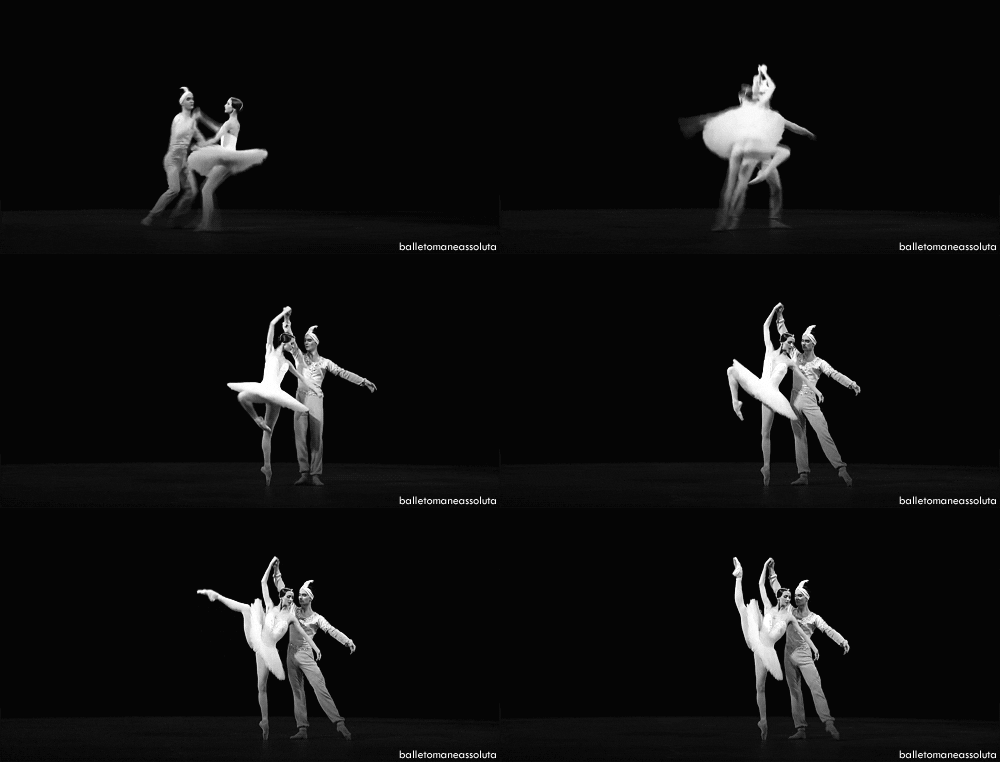
Two ballet dancers dance in black and white. The man holds the girl's hand while she jumps and lands to go directly into a relevé with her leg pointed up.

My sister has always been a big fan of the ballet. When I was younger, she’d pull her hair up to the top of her head, twist it into the tightest bun she could, and shove as many bobby pins as were necessary to make it stay. Then she’d walk around with her toes pointed out, her chest up in the air, and her arms in a tight en bas as if she were holding her dream of becoming a dancer in a giant fishbowl before her.

I used to feel uncomfortable watching this little play. I didn’t want to go to the ballet. I didn’t want to sit through hours of silent dance and old music only to end the night trailing behind my sister and her stifled pirouettes. I never wanted to be a ballerina, so none of it made sense to me, and I found the whole thing a bore.

All that has changed now. I’ve come to realize what it is about the ballet that had my sister up all night practicing standing on her tiptoes all those years ago (and probably now, too). You see, a few years ago I had the good fortune of becoming friends with a real life ballerina and she put into words the feelings my sister had every time she watched Center Stage on repeat in our family room. She told me that what she loved about ballet as a dancer was the challenge—that you can always learn more and be better. But that didn’t seem like enough to me. Didn’t most art forms do that? What was so special about ballet? Then she told me what she loved about ballet as an art, and that I understood. She said it was the way it made what should be impossible movements look effortless and beautiful, and I realized how true that was. I began to come around to the idea of ballet as an actual form of art worth looking at, and boy was I late to the party.

This past weekend, the University of Michigan paired with Michigan Opera Theatre and gave hundreds of students, including myself, the opportunity to go to Detroit to see the American Ballet Theatre perform Tchaikovsky’s Sleeping Beauty. When I got the invite from said ballerina friend, I was excited to go to the ballet for what felt like the first time. But when we got there it was a whole other story.

Of course, there wasn’t a bad performer on stage. Every dancer moved across the floor with grace and beauty. The jumps were high and sprightly. The expressions were grandly enticing. The spins were fast and steady. The relevés were tall and mighty. The outfits were incredible and envy creating. And the music was big and bold with a lavish conductor working every second of it.

Then there was one big surprise that really overjoyed everyone in my group. Misty Copeland would be at our performance, and our performance only. For those of you who don’t know who Misty Copeland is, Copeland is the first black woman to dance as principal dancer at the American Ballet Theatre, widely considered one of the best ballet companies in the world. That’s a big deal. A very big deal. Getting to see her dance is an incredible opportunity because damn, she’s amazing, and, lucky me, I got to see her! I could watch her move across the floor any day.

Gaining a true appreciation for ballet has been one of the best things about going to college, but this was really the icing on the cake. Sitting in the Detroit Opera House and watching that almost three hour performance pass as if it were only a few minutes was a special treat. I could see why all of the little girls there had their best dresses on and their hair in buns, eager for the chance to look and feel like one of those dancers in even the most minimal of ways. And yes, I will admit that when I walked out of that theater there was a small part of me that felt like turning out my toes, holding my chest to the air, and sporting a great big en bas just like my big sister.

Oh Snyder…Tsk Tsk

In preparation for a project, I re-watched Watchmen this weekend. Let me get this out of the way – I’ve never been a fan of Zach Snyder. I haven’t seen every film that he’s directed, limiting to myself to his disappointing comic book adaptations instead. I’ll make the argument that 300 was probably his best comic book adaptation because that was the only instance where the source material actually benefited from Snyder’s muted colors and penchant for sporadic slow motion and extended fight scenes. Should there be any more narrative involved with the film, Snyder becomes utterly lost in his own artistic tendencies, producing a film that may entertain during certain sequences but one that is easily forgotten as soon as the film is over.

Snyder’s allergy to good story is probably best exemplified by Sucker Punch, a film he both directed and wrote. The film is filled with characters that suddenly get incredibly strong and gain Superman-like powers with little to no explanation. It also follows a boring structure where the characters have to get three different items after having their quest literally explained to them by a character that exists solely for exposition. What are their names? I don’t know and I don’t really care. Never before have I been too lazy to even provide a plot summary, but this film has broken my back.

So this was the film that proceeded Snyder’s adaptation of Watchmen. Which contextualizes, somewhat, why the studio would let him create his own project from scratch. I remember when the first trailer for Watchmen came out and one of the title cards read, “From the Visionary Director of 300.” I was cynical even at that point. Visionary? Really? You know what, fine, I’ll give it to him, at least 300 looked nice. At the time, I hadn’t read Watchmen yet and I didn’t even know about Alan Moore either. However, during the time the film was announced, my high school was ripe with anticipation because our very own drama teacher played Nixon in the film. It was a minor role (and honestly, looking back, I cannot say that he was the best Nixon I’d ever seen) but still, it was exciting. So in response to all the energy at my school, I finally read the “greatest graphic novel of all time.” After I’d read it, I could finally remove the quotations – it truly was a work of genius.

Now the problem with adapting something like Watchmen is just that – it cannot be adapted. The way in which the graphic novel is genius is its ability to utilize the medium in ways that only this particular medium can be used: the nine-panel grid repeats certain character positions in order to mirror how Dr. Manhattan exists in a fluid time; the chapter title pages all feature a clock that slowly clicks towards midnight; the image of the blood stain on the smiley face is repeated over and over again; we never quite see the entirety of the slogan, “Who watches the Watchmen?” and so on.

At the very core, film and graphic novels are astronomically different because the means in which they juxtapose images is entirely different – graphic novels use space while film uses time. All those techniques mentioned above are examples of a precise use of spacial juxtaposition: from panel to panel, page to page, or chapter to chapter. The fundamental natures of these two mediums are different! So why does Snyder think the graphic novel is a ready-made storyboard for his film? This is not only a failure to understand the graphic novel, but it’s also a failure to understand film.

It doesn’t quite surprise me that Snyder’s latest comic book movie was regarded with much disdain. Dull colors, mass destruction, a lack of story, it’s the same flaws over and over again, yet studios keep entrusting him with comic book adaptations – it’s about as mind numbingly nonsensical as Snyder’s understanding of adaptations in the first place. I haven’t seen Batman v. Superman and something tells me I never will. I know this post reads like a grilling of Snyder…well that’s because it is.

But to be fair, I don’t think anyone can do justice to a graphic novel like Watchmen, so long as we consider the film as an adaptation. The day a good “Watchmen” film is made will be when a director is able to pluck the very themes and motifs of the graphic novel, while restructuring and rewriting a large portion of the source material in order to accommodate a new medium. In other words, the best adaptation won’t be an adaptation at all.

Making Music Sincere Again

At college, I’ve often felt the pressure to be a more cultured person. Especially as an arts editor at The Michigan Daily, it sometimes feels like everyone knows more about art than you—I feel like I have so many blind spots when it comes to movies (The Godfather, Forrest Gump), TV (Gilmore Girls, The Sopranos), and, especially, music.

To a degree, I’ve made strides to correct my blind spots, and it’s sometimes not that hard to do. I realized recently that I really didn’t know much of Kanye West’s music, and, like him or hate him, he dominates culture so much that I feel like I need to know him. So I’ve been listening to his music a lot, even if it’s in the background while I’m doing other stuff, and now that’s one blind spot that I’ve begun to correct.

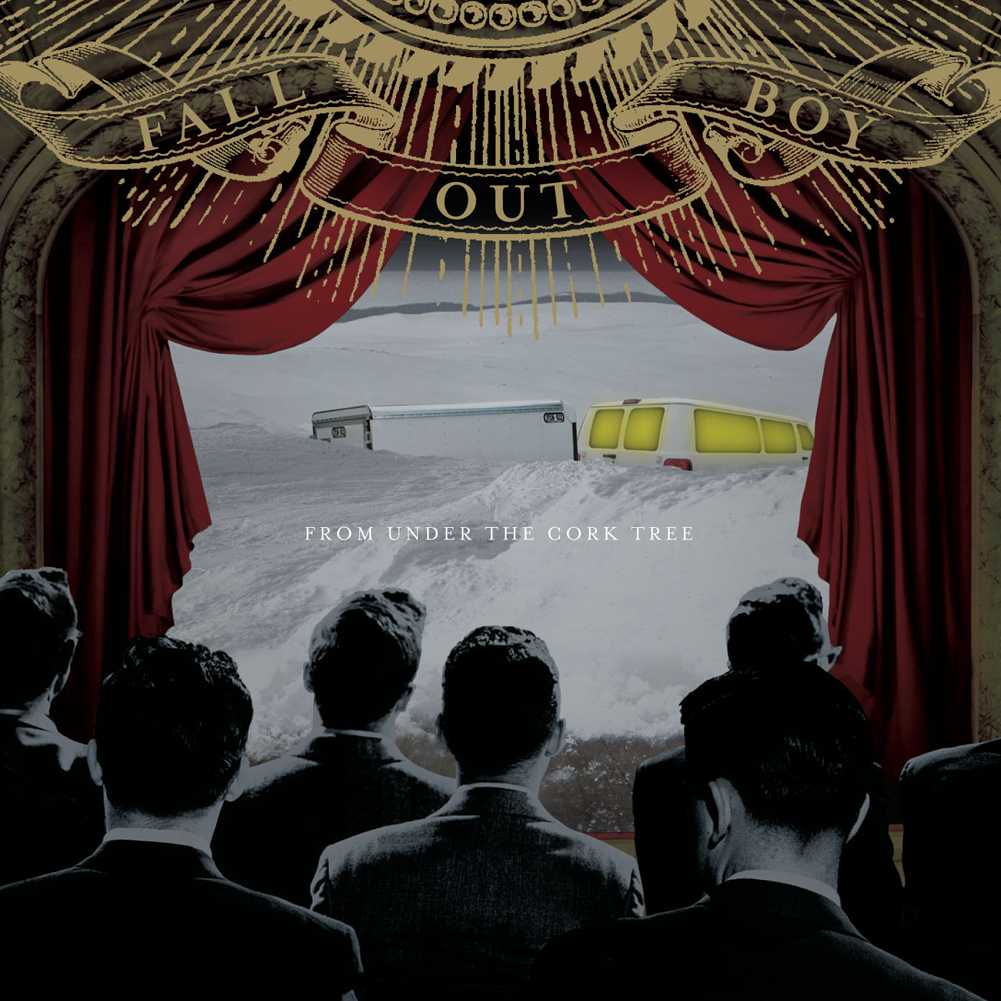
But after listening to new music for hours, after going through playlist after playlist in pursuit of greater music knowledge, sometimes I need to just relax and play the music that I’m comfortable with. And that often means bands I discovered in high school or even middle school: Fall Out Boy, Simple Plan, The Story So Far, Yellowcard, All Time Low, A Day to Remember.

My Chemical Romance is one of those bands that usually gets dismissed as something you listened to when you were in your middle school goth phase. Pretty much any band classified as ‘emo’ fits that label. But you know what? I listened to the entirety of The Black Parade a couple days ago, and that shit is so good! Gerard Way’s voice is funny to imitate, but it’s so good, and the production is so good, and every hook is so infectious, and the lyrics themselves aren’t bad. The album got really good reviews when it was first released, being praised as “one of the most cohesive, engaging rock records of 2006,” “one of the best rock albums of the last decade,” and “a piece of work that will challenge every preconception you ever had about the people who made it.”

So why do people tend to laugh a little when that band is mentioned? Why do I feel a little reluctant to wear a My Chemical Romance t-shirt to a party that isn’t themed?

We all think of our tastes in music as evolving. We tend to think that whatever music we’re listening to now is the best music we have ever listened to, that whatever we listened to as kids was automatically worse because we objectively didn’t have as much musical knowledge. And so when we are reminded of those songs we used to like, we don’t get to enjoy them sincerely; we enjoy them ironically. We can dance to them and sing along, but we have to laugh a little and remind everyone around us that we know this isn’t good music; it’s just nostalgia working its magic. Apparently none of the music from our childhoods can be enjoyed on its own terms anymore.

Okay, let’s be fair: some music we used to listen to was genuinely shitty. I have no interest in returning to “Don’t Trust Me” by 3OH!3 or “Shake It” by Metro Station, though even those songs would still probably trigger a frisson of nostalgia at a party. There are some songs out there whose infectious hooks feel genuinely empty; I don’t really admire 3OH!3 for creating one catchy hit. There are some songs that are catchy despite not being especially well-crafted.

But most of the songs we loved when we were younger were great for a reason, and listening to The Black Parade, I don’t feel any embarrassment. There’s nothing ironic about how fucking good Gerard Way sounds when he sings, “My eyes are shining brrriiight” on “Famous Last Words.” There’s nothing ironic about the irresistible urge I have to tap my feet whenever the chorus of “Dead!” kicks in, nothing ironic about the heartfelt mourning of “Cancer” or the iconic piano opening of “Welcome to the Black Parade.” Great art resists irony.

In a way, I’ve already written this same article. In a post about the Disney Channel show Phil of the Future, I described the way people laugh at mentions of shows from their youth, as if those shows were enjoyable then but hold no value now. I argued that it’s worth it to check out the stuff that you used to enjoy, because there’s a good chance it’ll still hold some value. That’s partly what I’m trying to say again, but with regards to music—just because you liked something years ago doesn’t mean it’s automatically shitty.

But I’m also saying irony is a dangerous thing for art. It’s easy to dismiss your younger self, but think back to the time you first discovered those bands. Yeah, maybe “I’m just a kid and life is a nightmare” sounds laughably angsty to us now. But it held a certain appeal for a very specific generation, and it probably helped a lot of confused adolescents realize they weren’t alone.

And hey, maybe it could still help you as an adult. As adults, we’re so quick to layer everything in irony, but maybe what we could all use is a little more sincerity. And after all, if there was one thing Simple Plan and My Chemical Romance were, it was sincere.