A List of Writing Mediums

Some scientific research concluded that writing in cursive better encodes information into your brain. This is due to the number of neurons that are fired with pen-strokes, as a wide variety of hand movements are required. Cursory writing accomplishes this goal more effectively than other forms of writing. Printing by hand is the next most optimal means to encoding thoughts. Typing fires the least neurons, so this is the least effective for memory. It is, however, the fastest, and also rather unavoidable in today’s world. After spending so much time in front of a screen, we get caught in a rut of typing and information cascades.

In the age of information overload, reductionism is a coping mechanism. Lists are a means of reductionism. So to combat the bulk of information you are overloaded with on daily basis, I’m going to present a list. This list will be a compilation of different writing mediums you could explore–both on and off the screen. Experimenting with new mediums may change the way we remember and relate information. And that’s important. We could generate new thoughts, just be placing them on a different surface.

So here are 35 new mediums to try:

1. Plastic milk jugs

2. Dried leaves

3. Whiteboards

4. Blackboards

5. Corkboards

6. Rocks of varying shapes and sizes

7. Wax paper

8. Your body

9. Somebody else’s body, with verbal consent

10. Napkins

11. Money, but you didn’t get the idea from me

12. Apples

13. Cardboard

14. Glass panels

15. Rubber erasers, for the irony

16. Paper plates

17. Tin foil

18. Candy wrappers

19. Bricks

20. Brick walls

21. Drywall

22. Tabletops

23. Table bottoms; watch out for gum

24. Table legs

25. Seashells

26. Turtle shells

27. On computer screens

28. On the sides of pencils

29. Watermelons

30. 2×4 boards

31. Dead skin

32. Chicken bones

33. Jeans

34. Toilet paper

35. Your bed sheets

This list is not conclusive. Feel free to add more for yourself. The process of writing on different mediums, even if the words/ideas do not change, may make you think about the writing in a different way. This divergent thinking may help you overcome mental road blocks. It is a worthwhile activity, I think. So explore. Let your pen roam wild. Bleed ink on inappropriate places. You’ll never know what you may find.

Headphones Rant, aka I Can’t Stand Earbuds

When I was little-er (like 10 or so), I got a Walkman Portable CD player, either as a gift for Christmas or just as something my parents got me, and I got these really, super comfortable headphones to go with it (not really). I actually still have that Walkman, in the little nook area under my nightstand drawer at home, along with my embarrassingly small CD collection.

When I first got that thing, I was in heaven. My mom often played me her CDs in the car, and we had a decent if not nice stereo system (for the time), along with a turntable for her to play her records. I guess I was 12 or so when I was allowed to use the stereo, and I still remember how, when I opened the cabinet in our entertainment center that held all her CDs, my mind was blown with how many she had. Now that I’m older and taller, the collection doesn’t look as big, but it still makes me smile how those were the CDs she listened to when she was in high school.

In short, my mom loved music, and thus, so do I. There is a deep tradition of car singing and dancing between the two of us, and even though my mom tries to tell me that she’s my mom and not my friend, I know that when it comes to music, she’s happy we both love it the same way, even if our taste in artists now differ.

But back to the Walkman. As someone who grew up with music, and my mom fostering that love by buying me my own CDs (early additions to the collection? Hilary Duff’s CD and the Jonas Brothers’ second ((and best)) album). One clear memory I have with that Walkman was the time my aunt pulled me and my cousin away from Houston and the impending Hurricane Rita, taking us to “safety” (and A/C) in College Station in the middle of the night with everyone else trying to get the heck out of town. What is normally an hour and half, maybe two hour drive quickly turned into a 4 hour trek, and so all I had to lull me to sleep was my trusty Walkman. What makes this memory so vivid, however, is not the long ride or even the music I was listening to, but the headphones.

I absolutely hated those headphones. They drove me insane, especially since they were the kind with the fake cushy things that slide over the hard plastic, and one had fallen off and I had lost it. After my experience with those headphones, and the introduction of the earbud, all the rage and of course all my friends had a pair, I told myself I’d swear off over the ear headphones for good, and besides, they weren’t cool anymore anyways.

So, headphones. All this now leads me to the most random (and ironic) thing ever, which is that I love over the ear headphones now. Frankly, the topic of headphones has been on my mind recently because mine broke right before thanksgiving, and while I now have replacements, they are the dreaded earbuds. What I loved in my childhood has now become what I hate.

And what’s strangest is the fact that there’s a part of me that really really needs over the ear headphones. Like, my inner soul is yearning for it. Which is how this relates to arts, because, well, headphones and music, but also because I’ve never really recognized how crucial my headphones were to my creative process.

I’ve always liked listening to music while I write (case and point: I’m currently listening to “I Got A Boy” by Girl’s Generation), and I’ve always known that music has been a big inspiration for me. My last short story was named after a Phoenix song, and I have not one, not two, but three playlists on Spotify called “writing” (I, II, and III respectively).

But now, even though I have in ears, I feel like I’m missing something, like I’m open and exposed to the world without my over the ear headphones. It’s the strangest feeling, but yet so telling about me and what I value.

Plus, my ear isn’t properly shaped for in ears and it’s annoying as heck to push them back in when it’s 20 degrees outside and I’m walking to class.

So I guess my point is don’t disrespect headphones. I mean really, they’re invaluable, if you love music as much as I do.

Oh, and if you’re curious, I’m saving up money to buy nice headphones instead of the cheap ones I usually get, like Bose or Beats or something. If you have any suggestions, let me know in the comments.

The Art of the Outline

I’ve been writing a lot for classes lately – one TV script (final draft due tomorrow!), one movie screenplay, an essay, and also this weekly gig. I got pretty sick of staring at my old-school style of outlining:

  1. Thesis – this outline’s goal is to show how I used to outline
  • I used a hierarchy of bullet points
  • relating back to my main theme
  • each sub-point adds another intricacy to my core argument
  • And finally, I tie it all back together in a:
  1. New direction – this may be another
  • topic paragraph for a blog post
  • scene for my screenplay
  • Section of my essay
  • And finally, I reach

****THE CONCLUSION – That this gets really boring to do for hours.

So, I came up with a new style of outlining. Something refreshing, colorful, exciting – something that I could do for 5 hours in a row without wanting to kill myself and cure the overwhelming boredom.

I created: The Board.

photo 2

The board uses color-coded post-it notes and color-coded ink on them to divide up my themes, plot twists, character arcs, by color so I can keep track of them visually. Post-it Notes also let me feel my story out, literally moving scenes by hand to visualize the order and progression of arc, theme, or plot.

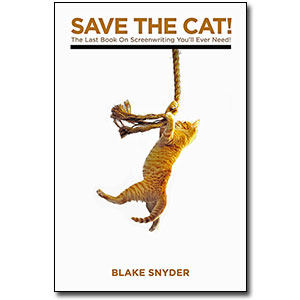
I got this idea from Blake Snyder, a screenwriter who wrote an awesome book on screenwriting advice called Save the Cat.


I created a second board for this screenplay (a super-hero stoner comedy, that’s why I have green post-it notes for the main plot and green ink for the super-hero’s dialogue-lulz) using one of Blake’s ideas from his sequel book Save the Cat Strikes Back, in which Blake notes the value of using different organizational logics in order to stimulate the creative process.


photo 1

(This board’s structural logic is inspired from Snyder’s Chart Called the Conversion Machine)


Moreover, the board’s physical presence really helps me feel connected to my writing. My writing isn’t just an electronic file on my computer anymore, it’s a physical object I spent time and energy creating. And it looks so PRETTY!!! Every part of the writing process becomes a work of art in its own right, filling me with a fresh creative energy to push through writer’s block. So I guess what I’m saying is, don’t underestimate the value of outlining – and also, don’t underestimate your ability to invent creative, artistic ways to innovate on the very nature of the outline – an outline says a lot about your creative sensbilities.

Perfect Art of Acting

I am not a theater major, but I would like to think I know something about acting. Acting is the art of expression and convincing an audience of the reality of the scene. The expression, the voice, and the body language must all be perfectly aligned in order to be as truthful to the emotion as possible. Personally I believe that acting is truly impressive when one or two of the three components is removed from the scene. There are two instances from movies that I feel perfectly encapsulate these ideas. One being Scarlett Johansson in Her and Jennifer Lawrence’s last scene in Catching Fire.

I truly believe that Scarlett Johansson portrayal of Samantha in Her deserves an Academy Awards. In radio (or podcasts), one only has the voice to portray emotions, so one’s mind is forced to find the emotion within the voices. Her, on the other hand, is a film, so we become accustomed to using the face to convey these emotions. Johansson does not have this option, only her voice is ever heard. She must have truly mastered voice acting, because one can sense every emotion of Samantha’s with perfect clarity without any safety nets of body language or facial expression. Despair, anger, and joy are easy to convey, but she is able to be incredibly nuanced in her role. We know when she is nervous, slightly sad, disappointed, or off-put. I would suggest everyone go see this movie, if only for Johansson’s performance.

I think it is safe to assume that most of my readers are familiar with Catching Fire. I think it was a great movie, one of the best “popcorn films” to ever be made. Part of this movie’s success is Jennifer Lawrence’s acting. Ifyou want to see her amazing ability, then watch the final scene of the movie. Without speaking or moving, we can see the full range of emotions that experiences after (SPOILERS AHEAD) learning that her home district was destroyed by the Capitol. She moves from depressed to confused to angry and, finally, to determination. This was one of the best scenes of acting that I have ever experienced. I applaud both Lawrence for her ability, and the director for choosing to shoot it this way and trusting Lawrence enough to allow it.

If you are studying acting and need help in either of these departments, then I suggest you look towards these two actresses. Watch Her and study it. Any voice acting lessons you are taking are probably telling you how to act like she did in this movie. As for expression, definitely look towards Lawrence, not only in Catching Fire, but her other movies as well. Every time I watch these movie, I am still amazed by these two performances.

Over The Garden Wall: Musings

sh020204320000

So two days ago I was on the interwebs (as I usually am, no surprise there), and I happened across a thing. I wasn’t sure what this thing was so obviously I googled it, and it came up, no problem.

This thing was called Over the Garden Wall and I realized that this was probably a really, really big thing.

Over the Garden Wall is a miniseries that aired on Cartoon Network around three weeks ago and apparently gained a lot of attention from kids my age. Really though, I wasn’t surprised, because the show is made by someone who worked on Adventure Time, and I can’t tell you how many times I’ve been told that I should watch Adventure Time (protip: it’s a lot). I haven’t gotten around to it yet, and really, I’m not sure it’s gonna be my thing.

But the other night while I was in desperate need for a break from writing (protip: I do a lot of writing), I decided to go ahead and watch the first episode since Cartoon Network so kindly put it on YouTube for me to enjoy.

The first thing I’ll say about it is that it’s dark. Like I probably wouldn’t show it to my kids dark. And it;s not necessarily anything plot wise, the show just gives off a creepy vibe. And I absolutely love it.

However I’m not sure how I feel about the show. It’s intriguing to be sure, and I’ll definitely finish it (I’m currently on episode 6 out of 10), but I’m really on the fence about it.

On the one hand, the animation is absolutely gorgeous, though I’d expect nothing less. The dark colors, deep plums and greens from the forest don’t mute the show but make it stunning, and the style is somewhat reminiscent of Gravity Falls and Adventure Time, but it’s still completely unique.

And the format is nice, the episodes being bite sized rather than full length. And I’m really enjoying the writing, it’s smart and at times witty and the characters are really unique, even the comic relief.

But still, in terms of liking it, I’m not sure. I’ll have to wait until I’ve seen the whole series until I can judge, but nonetheless it’s very well executed and it deserves a lot of praise. Smart programming for children (though, I’d argue, the target audience isn’t exactly children) is always something I enjoy and look forward to, so hearing about Over the Garden Wall was a nice breath of fresh air for me.